Enhancing problem-solving skills Addition & Subtraction Worksheets for Ages 5-6
5 filtered results
-
From - To
Enhance your child's problem-solving abilities with our engaging Addition & Subtraction Worksheets designed for ages 5-6. These worksheets offer interactive activities that promote critical thinking and a deeper understanding of mathematical concepts. By exploring various problem scenarios, children will develop essential skills such as reasoning, analyzing, and applying strategies to solve addition and subtraction tasks. Our resources cater to different learning styles, ensuring every child can grasp foundational math skills effectively. Ideal for parents and educators, these worksheets provide an entertaining way to build confidence in math. Start fostering problem-solving skills today and watch your child's love for learning grow!
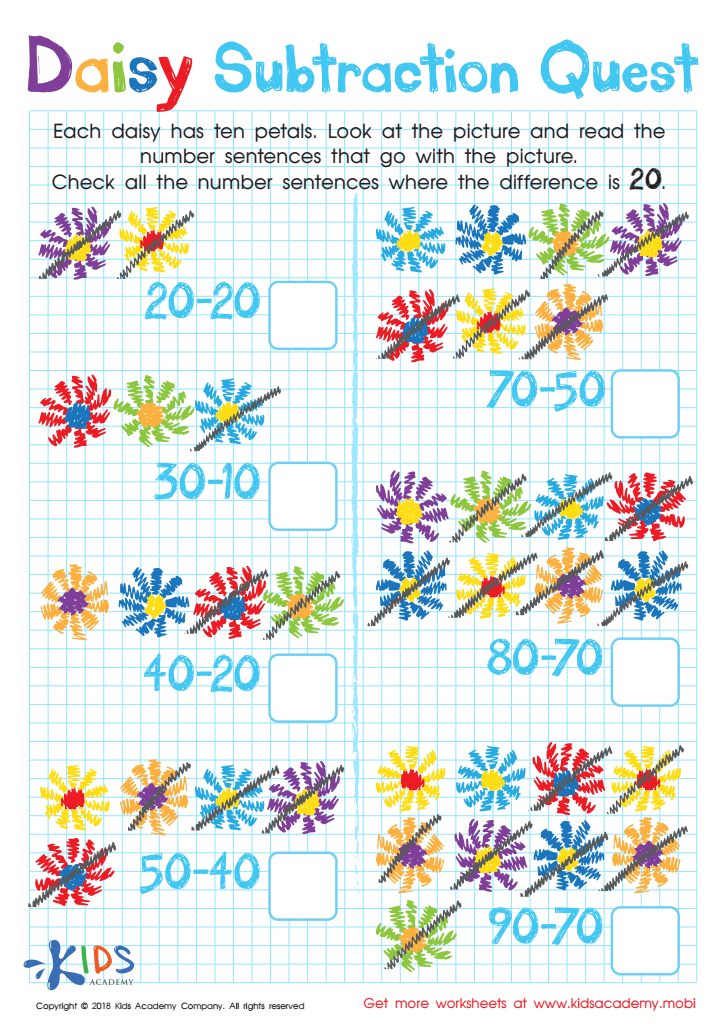
Daisy Subtraction Quest Worksheet
 Assign to My Students
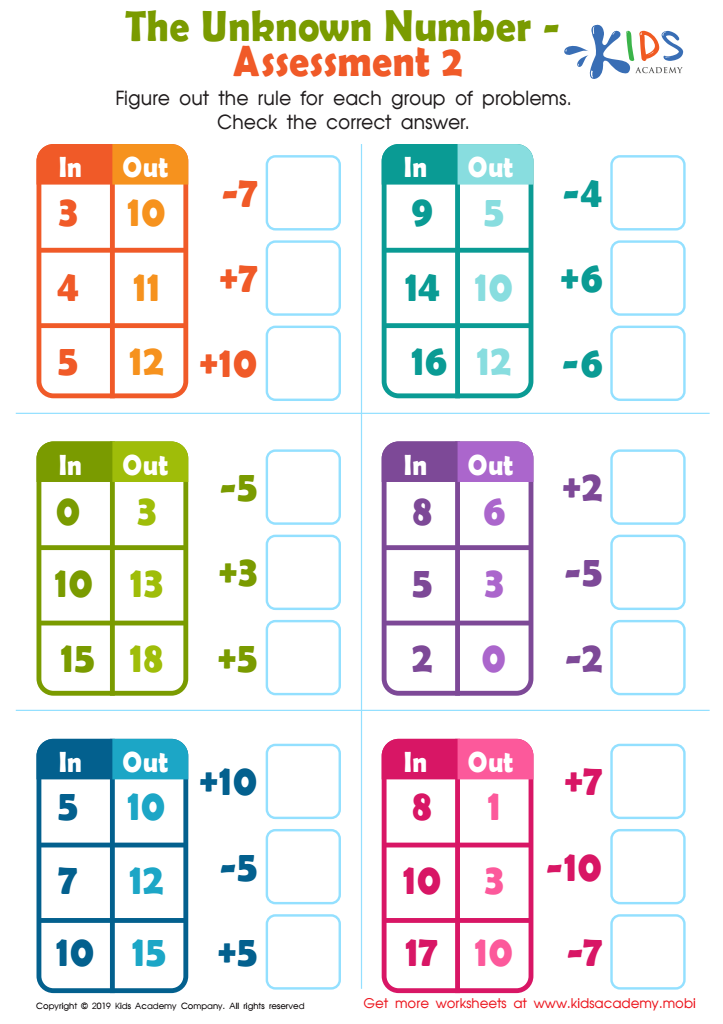
The Unknown Number - Assessment 2 Worksheet
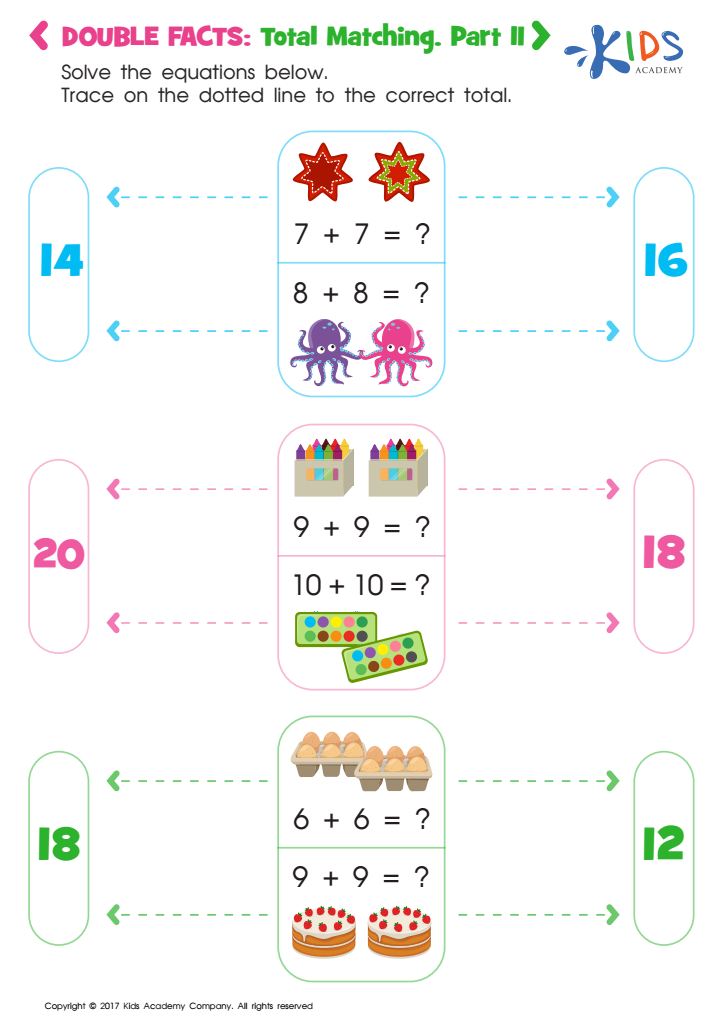
Double Facts: Total Matching 2 Worksheet
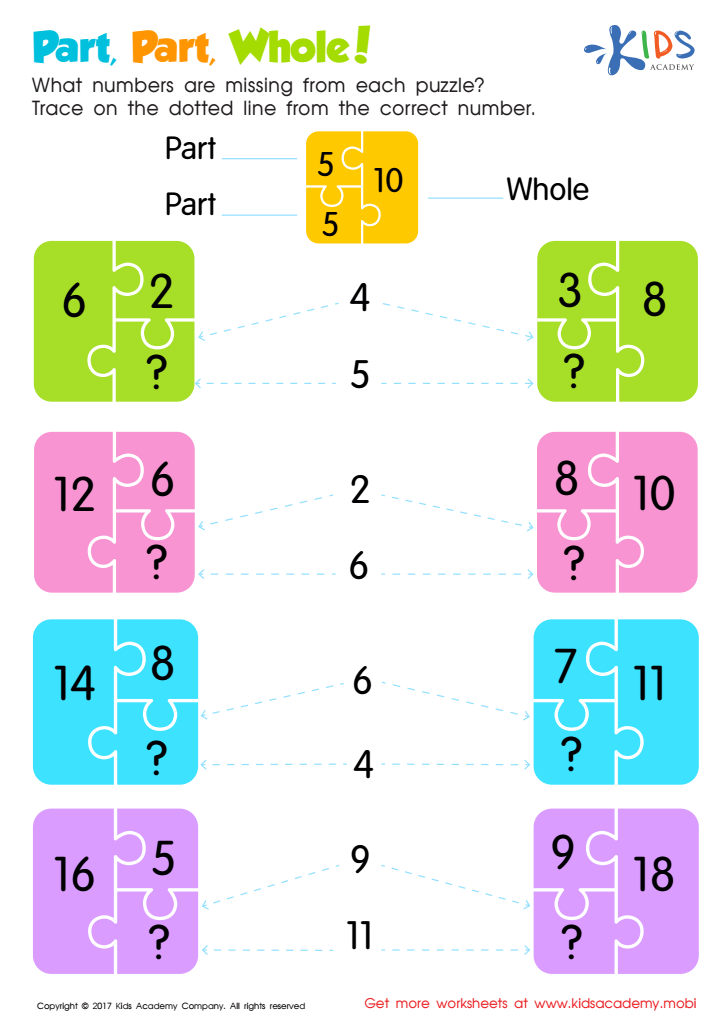
Part, Part, Whole Worksheet
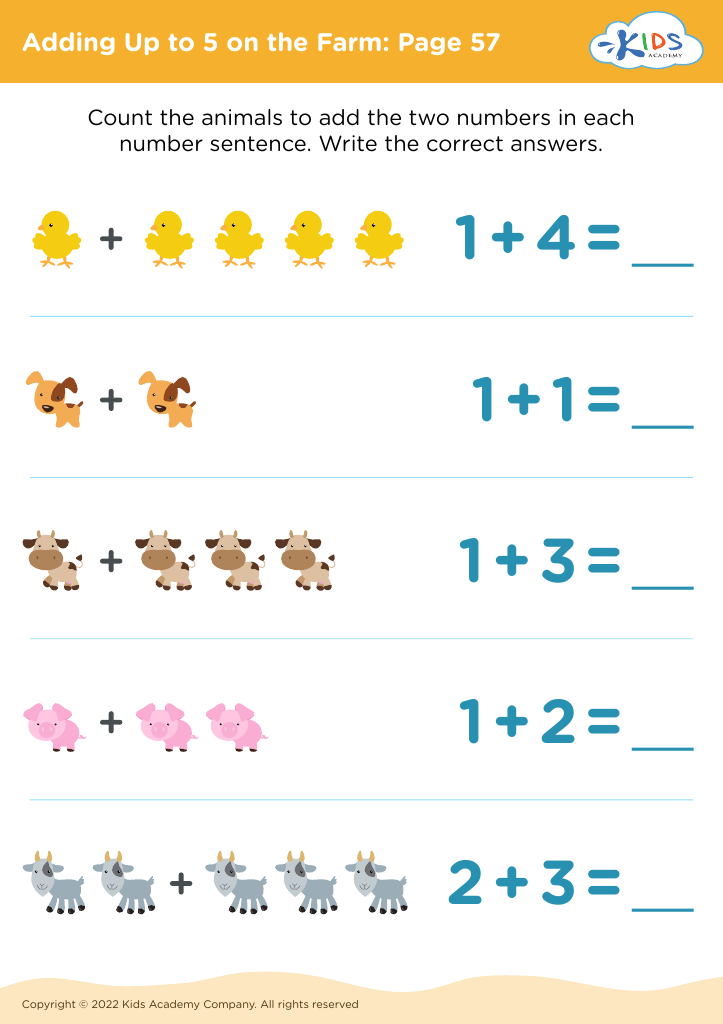








Enhancing problem-solving skills in addition and subtraction for children aged 5-6 is crucial for several reasons. At this stage, children are developing foundational math skills that underpin their future success in mathematics and related subjects. Strong problem-solving abilities help young learners approach challenges with confidence, fostering resilience and creativity.
Moreover, learning to solve math problems encourages critical thinking, which is essential not just in mathematics but in everyday decision-making and reasoning. As children engage with addition and subtraction, they learn to identify patterns, analyze situations, and draw conclusions, skills that translate to various aspects of life.
Teachers and parents play a pivotal role in this development. By incorporating games, hands-on activities, and real-life scenarios into practice, adults can make math enjoyable and relevant. This helps to create a positive attitude toward learning, reducing math anxiety in the future.
Additionally, early mastery of these skills lays a solid foundation for more complex concepts, ensuring children are better prepared for subsequent math challenges in school. Ultimately, enhancing problem-solving skills in young learners not only sets the stage for academic success but also equips them with lifelong skills essential for informed and critical citizenship.








