Logical Reasoning Addition & Subtraction Worksheets for Ages 5-6
7 filtered results
-
From - To
Discover our engaging Logical Reasoning Addition & Subtraction Worksheets designed for children ages 5-6. These worksheets blend essential math skills with logical thinking exercises, helping young learners enhance their reasoning abilities while mastering addition and subtraction. With a variety of colorful, age-appropriate activities, children will solve puzzles, complete patterns, and tackle fun challenges that make math an enjoyable experience. These resources not only promote mathematical understanding but also foster problem-solving skills that are crucial for their academic growth. Perfect for homeschooling or classroom use, our worksheets provide an interactive approach to learning essential math concepts in a playful, stimulating environment.
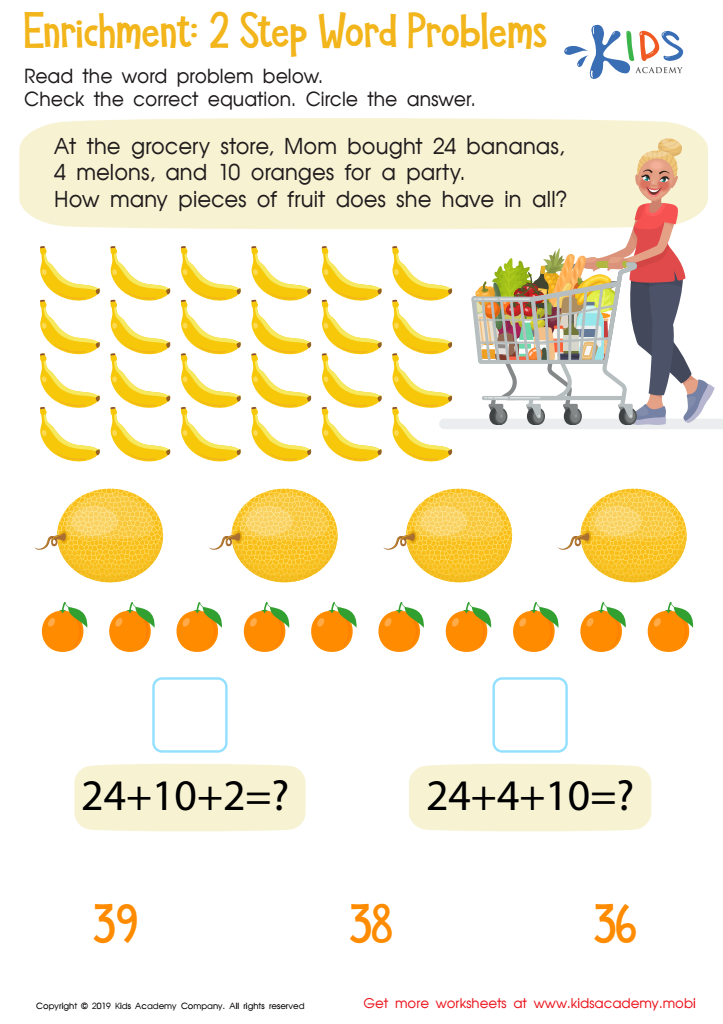
Enrichment -2 Step Word Problems Worksheet
 Assign to My Students
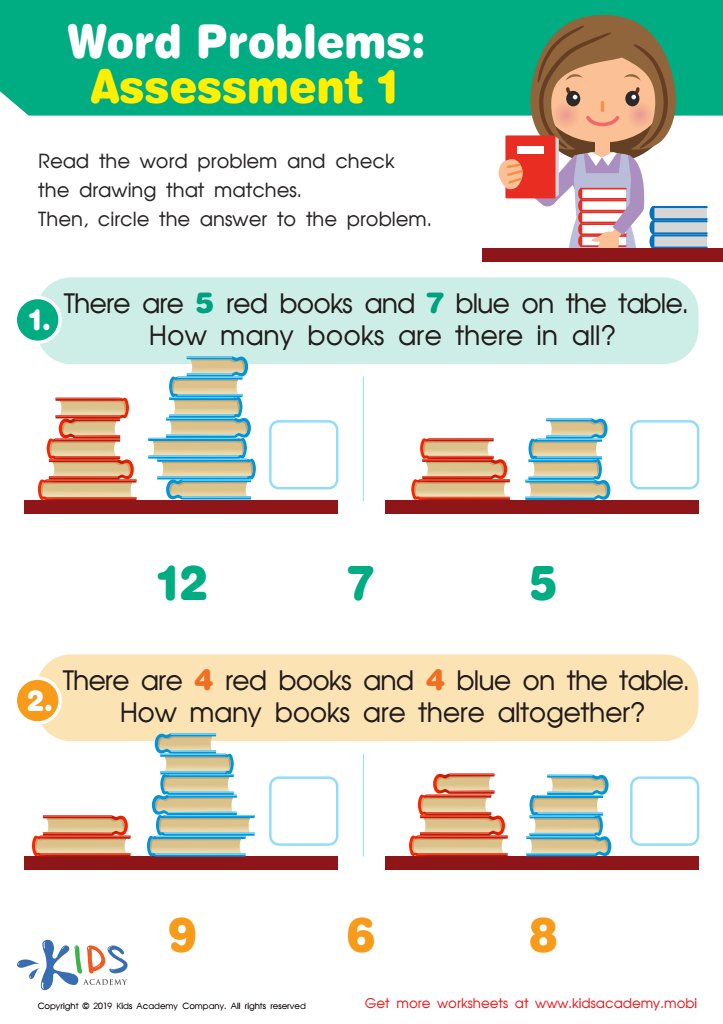
Word Problems: Assessment 1 Worksheet
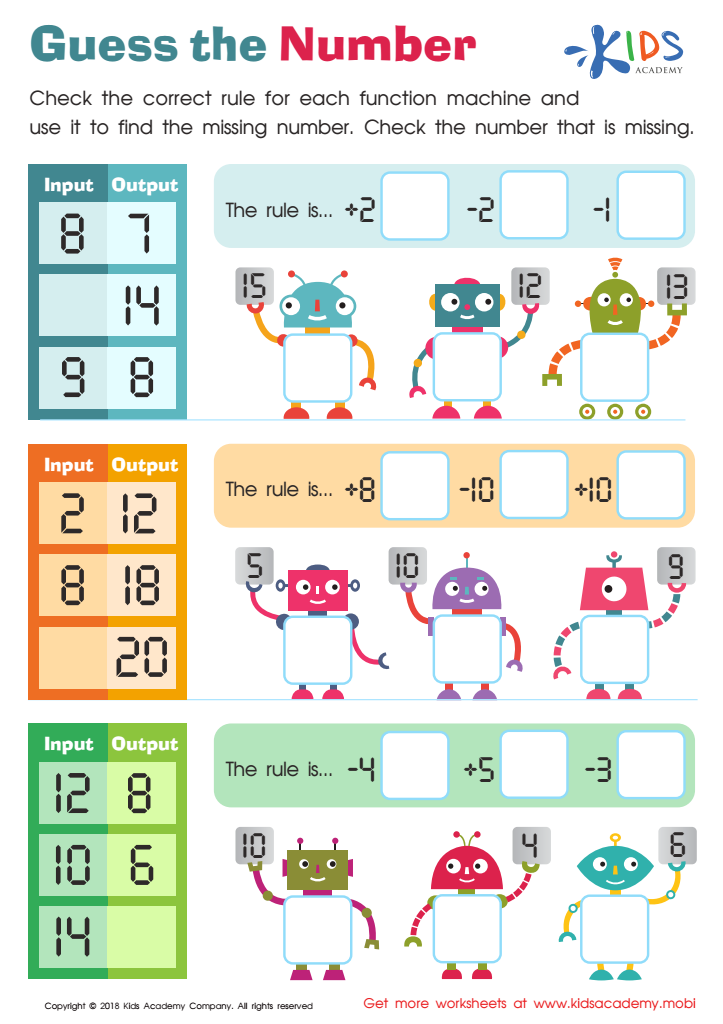
Guess the Number Worksheet
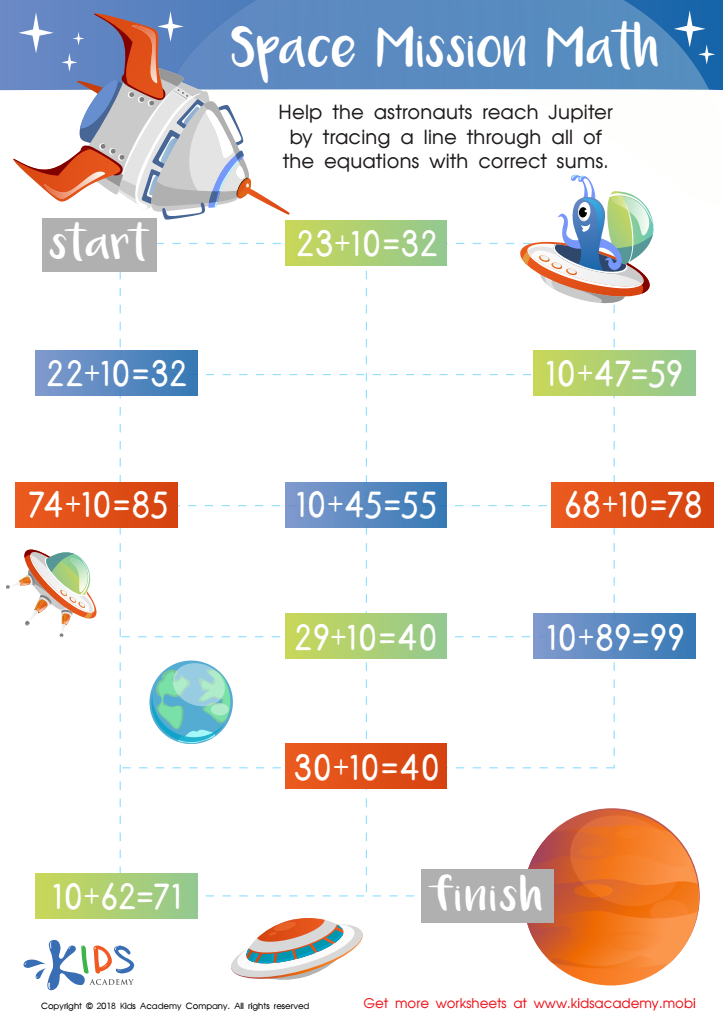
Space Mission Math Worksheet
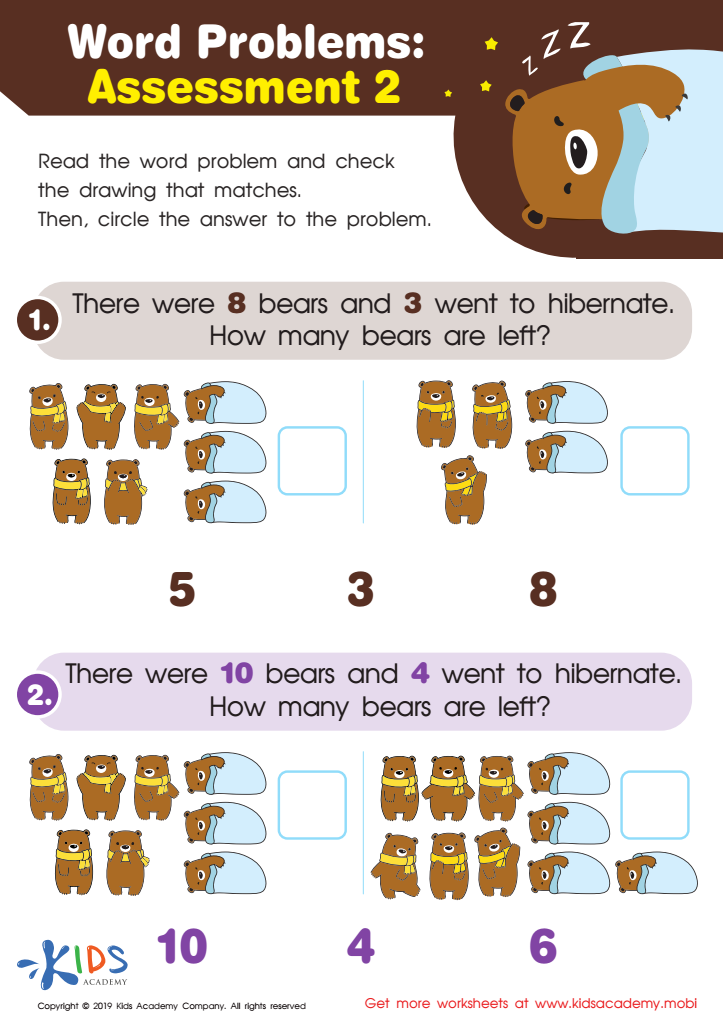
Word Problems: Assessment 2 Worksheet
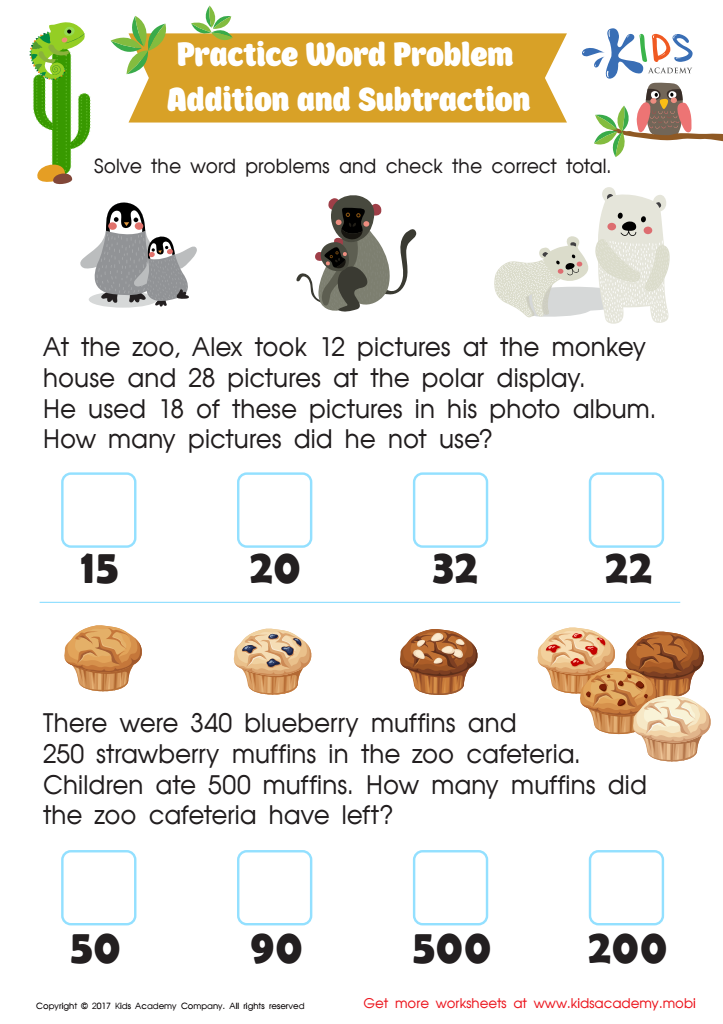
Addition and Subtraction: Word Problems Worksheet
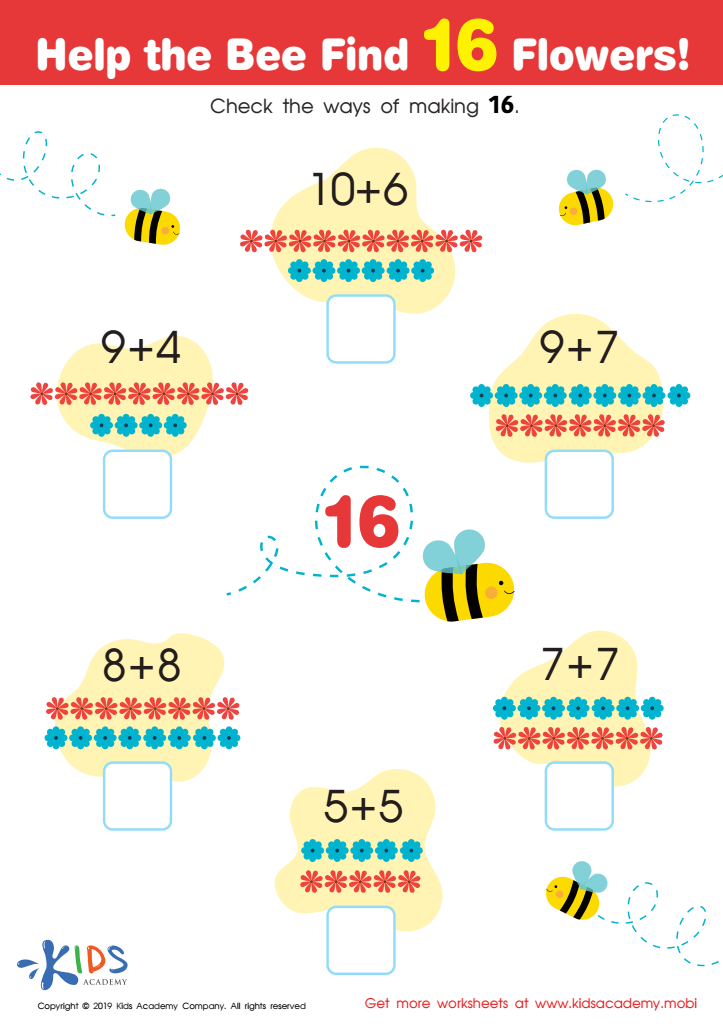
Help the Bee Find 16 Flowers Worksheet








Logical reasoning in addition and subtraction is essential for children aged 5-6 as it forms the foundation for their mathematical understanding and problem-solving skills. At this crucial developmental stage, children begin to grasp more abstract concepts and develop critical thinking abilities.
Engaging in logical reasoning helps students not only compute numbers but also understand relationships between quantities, enhancing their cognitive skills. This can lead to improved performance in math and other subjects as they learn to analyze and interpret information systematically.
Furthermore, fostering these skills encourages a sense of curiosity and creativity in problem-solving. Children learn to tackle challenges independently and build confidence as they successfully work through math problems.
Parents and teachers who emphasize logical reasoning in addition and subtraction also instill resilience. Children learn that struggling with a problem is part of the learning process, promoting a growth mindset that will serve them well throughout their education.
In a world increasingly driven by analytical skills, cultivating logical reasoning in early childhood sets the stage for future academic success and equips children with the essential tools to navigate everyday life efficiently. Thus, supporting this learning at home or in the classroom is critical for lifelong learning and problem-solving skills.








