Mental arithmetic Addition & Subtraction Worksheets for Ages 5-6
6 filtered results
-
From - To
Boost your child's math skills with our "Mental Arithmetic Addition & Subtraction Worksheets for Ages 5-6". These engaging and educational resources are designed to help young learners strengthen their mental math abilities in a fun and interactive way. Perfect for kindergarten and first-grade students, our worksheets focus on simple addition and subtraction problems to build a solid math foundation. With colorful illustrations and easy-to-follow instructions, your child will enjoy practicing math, enhancing their confidence and speed in mental calculations. Explore a variety of worksheets tailored to support your child's learning journey while making math exciting and enjoyable.
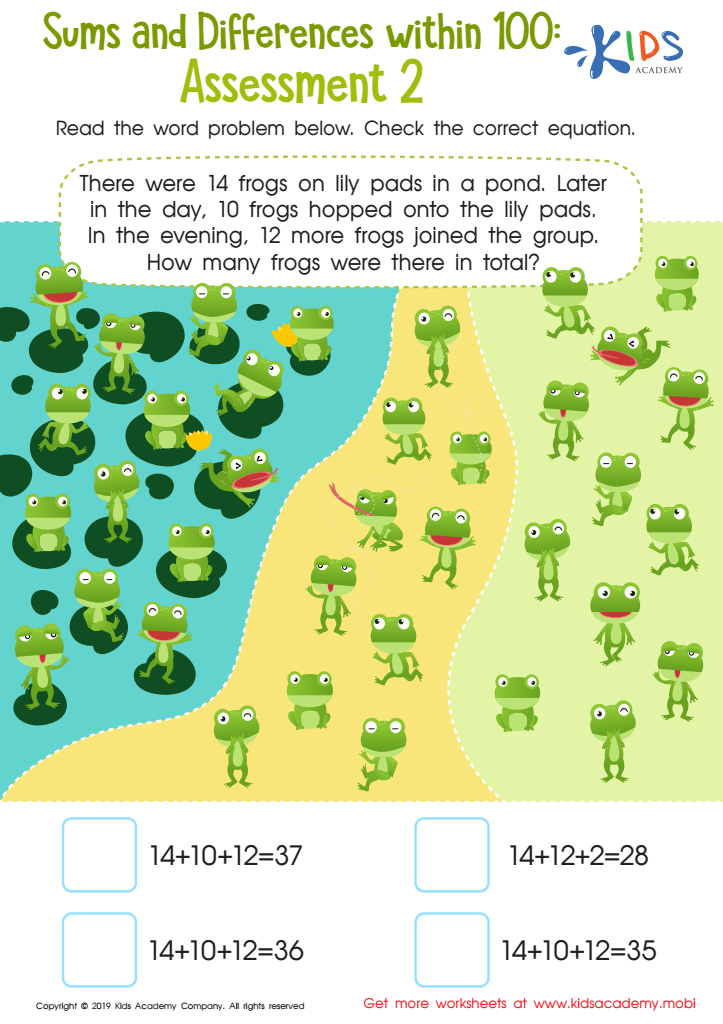
Sums and Differences Within 1 - Assessment 2 Worksheet
 Assign to My Students
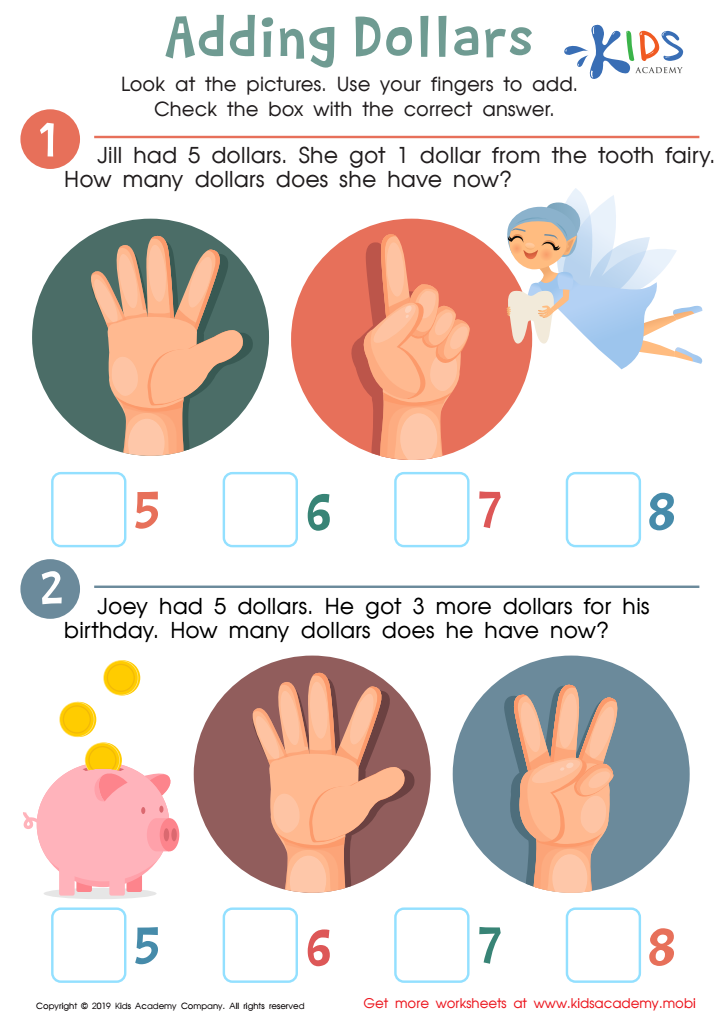
Tooth Fairy Addition Worksheet
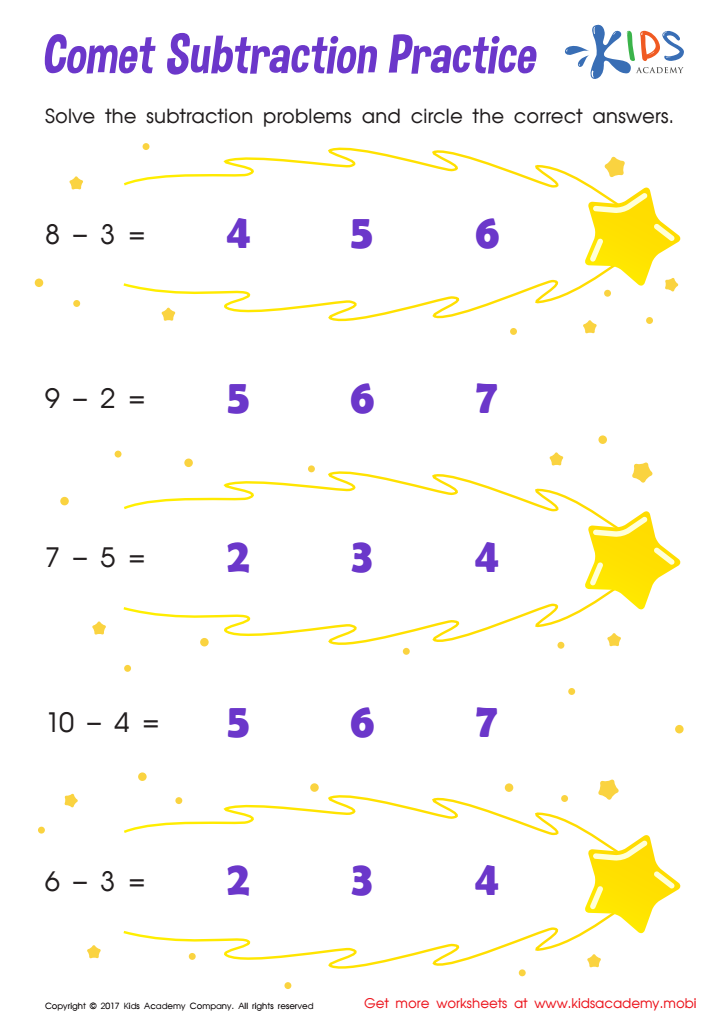
Comet Subtraction Practice Substraction Worksheet
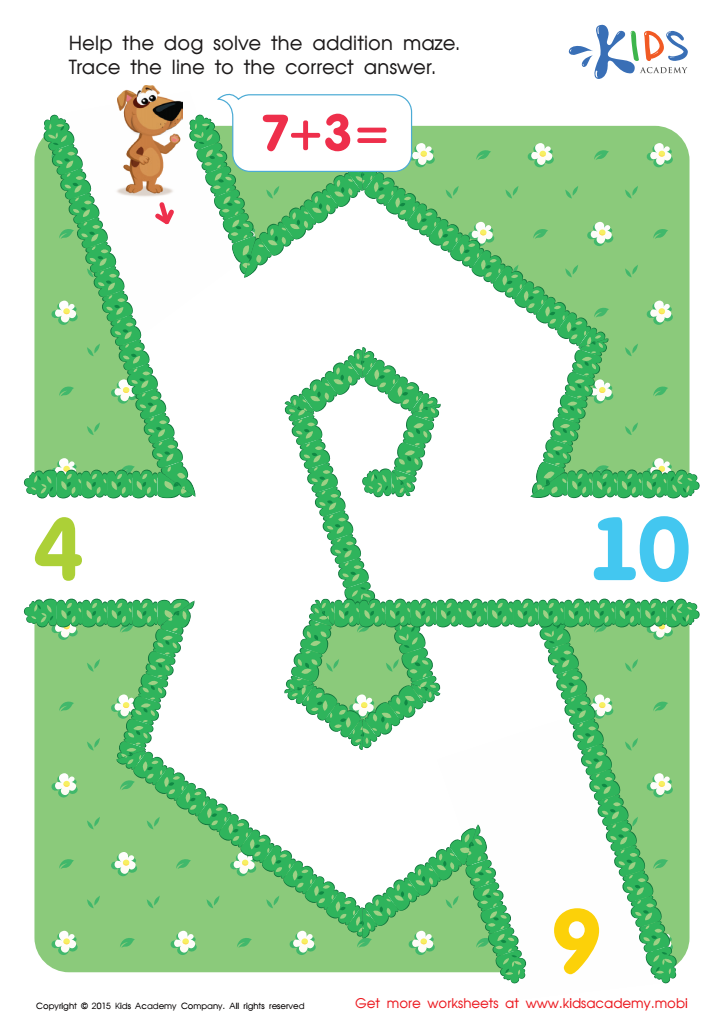
Seven Plus Three Worksheet
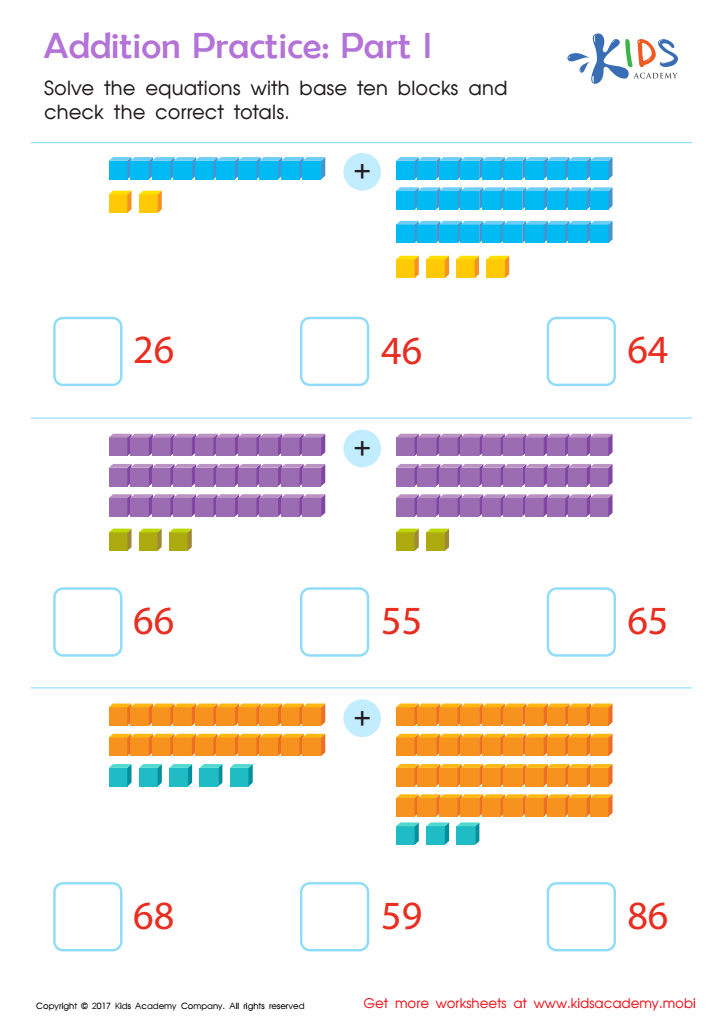
Addition Practice Sheet: Part 1
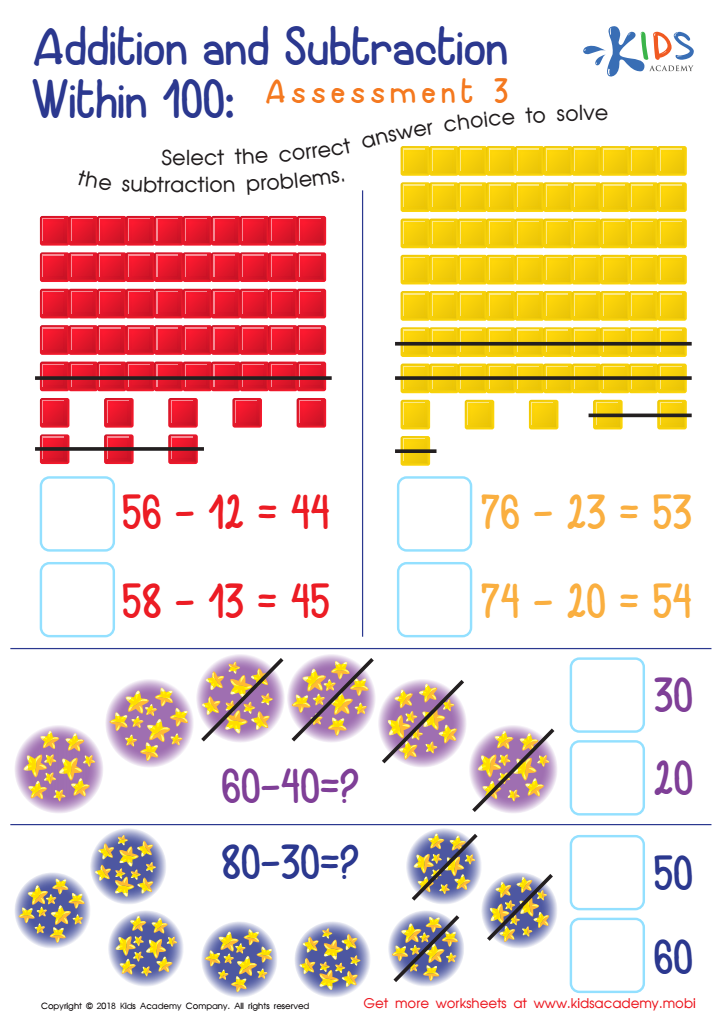
Addition and Subtraction Within 1: Assessment 3 Worksheet








Parents and teachers should prioritize mental arithmetic for children ages 5-6 because it builds a vital foundation for all future mathematical learning, enhances cognitive development, and fosters critical life skills. Initial years of schooling are pivotal; children at this age are highly receptive and can absorb basic concepts more easily. Introducing mental arithmetic, like addition and subtraction, strengthens their number sense, allowing them to understand relationships between numbers intuitively rather than relying solely on memorization or written methods.
Mental arithmetic enhances memory, concentration, and problem-solving abilities. It stimulates brain development, leading to quicker and more efficient neural connections. These skills go beyond math, benefiting overall academic achievements through improved logical reasoning and attention span.
Furthermore, cultivating these abilities early instills confidence in young learners. When children can tackle basic numeric problems mentally, they acquire a sense of accomplishment and positive reinforcement, making them more likely to engage in and enjoy learning activities. Engaged and confident students are better prepared to face more complex subjects later on.
Importantly, integration of mental arithmetic in everyday contexts, like counting objects or discussing time, makes learning relevant and fun. Engaged learning experiences shape lifelong learners, and early math competence sets the stage for future academic and personal success.








