Pattern recognition Addition & Subtraction Worksheets for Ages 5-6
4 filtered results
-
From - To
Enhance your child's math skills with our Pattern Recognition Addition & Subtraction Worksheets designed for ages 5-6. These engaging and colorful worksheets help young learners grasp fundamental math concepts through fun pattern identification activities. By recognizing mathematical patterns, children develop a strong foundation for addition and subtraction while improving problem-solving skills. Our worksheets promote critical thinking as kids explore various sequences and relationships in numbers, making learning interactive and enjoyable. Perfect for home schooling or classroom use, these resources create excitement around math. Encourage your child's love for learning today with our thoughtfully crafted worksheets!
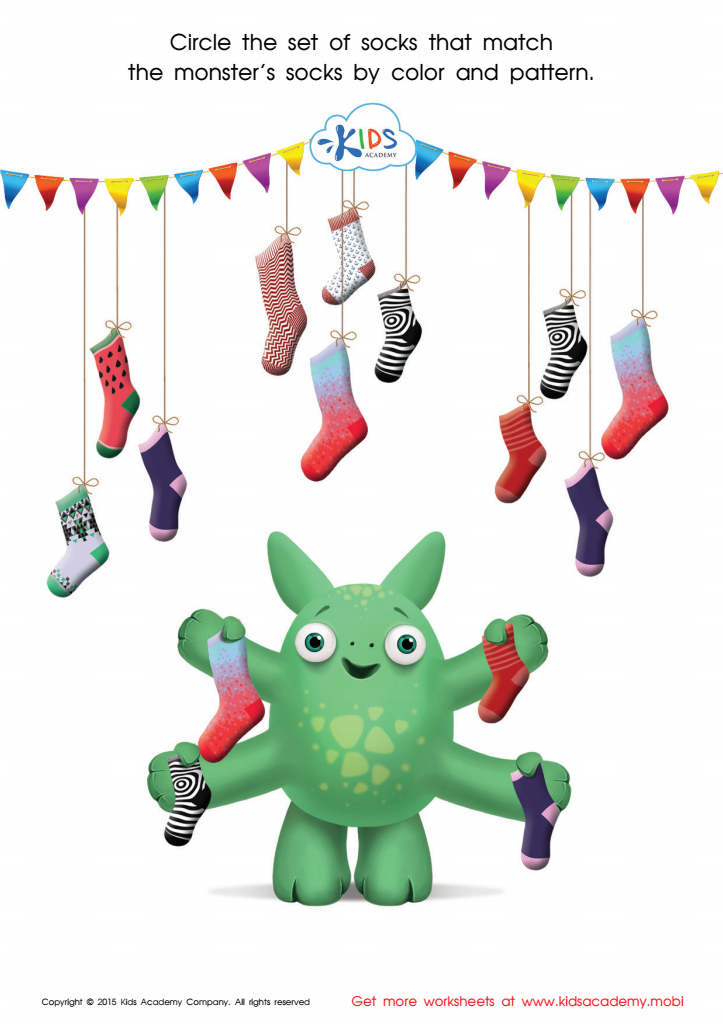
Sort the Monster's Socks Worksheet
 Assign to My Students
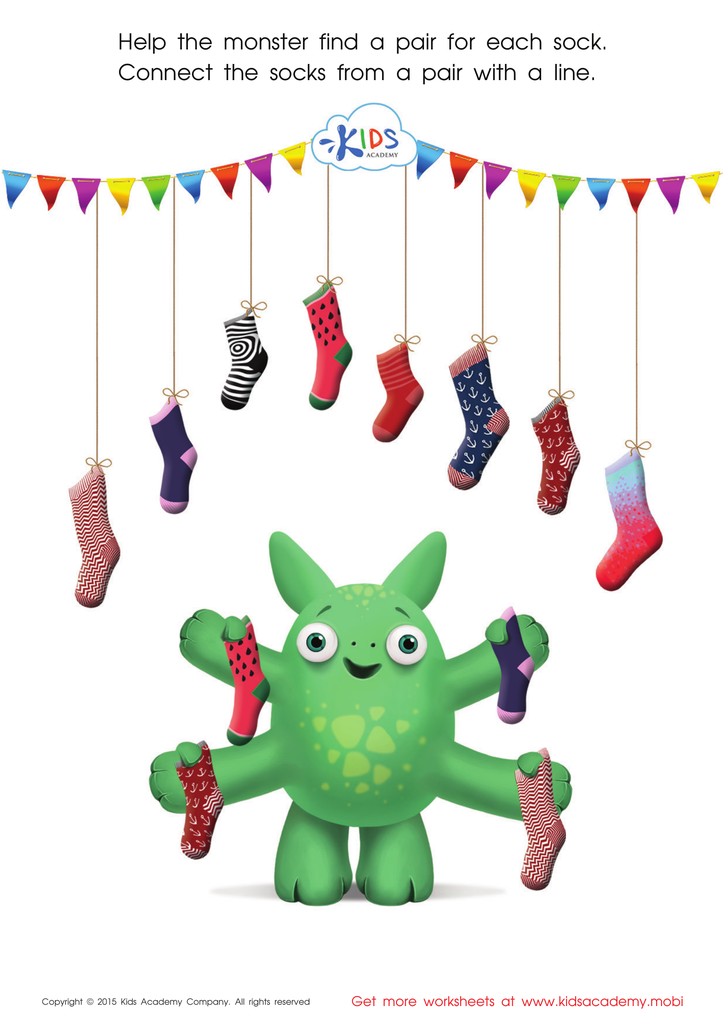
Math Matching Game: Monsterв's Socks Worksheet
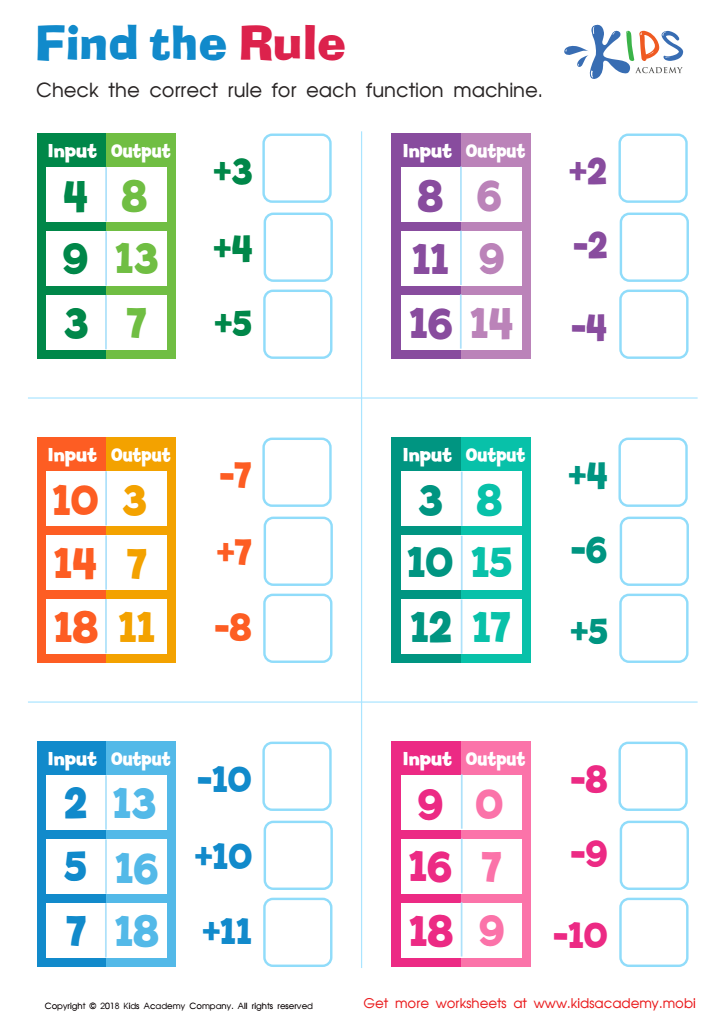
Find the Rule Worksheet
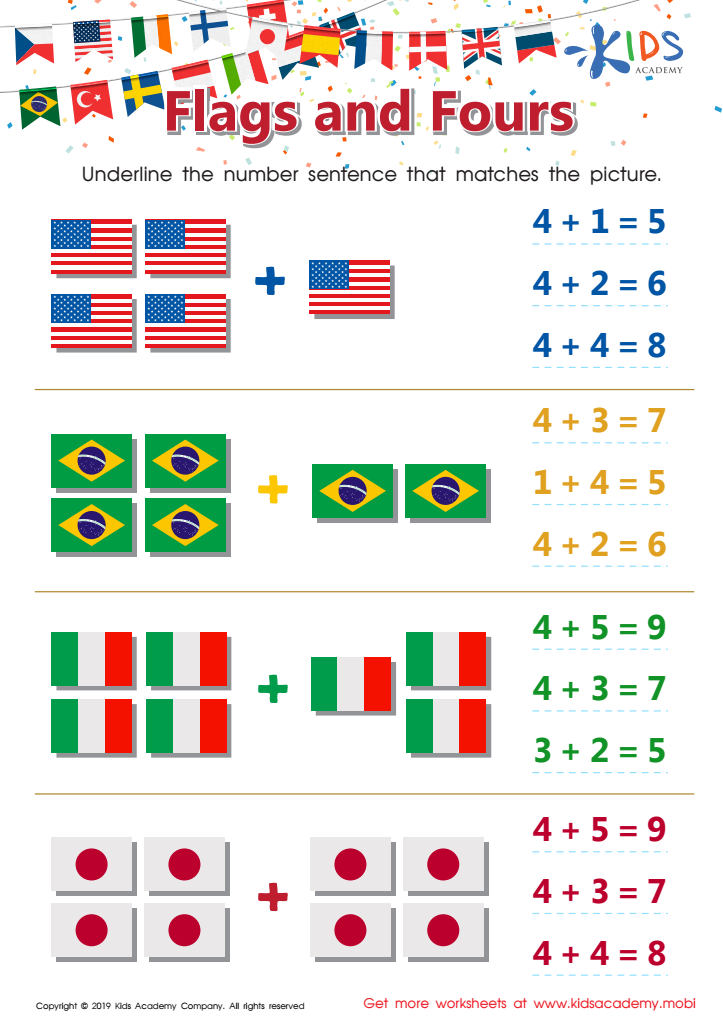
Flags and Fours Worksheet








Pattern recognition in addition and subtraction is a crucial skill for young learners, particularly for ages 5-6. At this age, children are developing their foundational mathematical abilities, and understanding patterns can enhance their overall cognitive skills. Recognizing patterns helps children make connections between numbers, allowing them to see the relationships and sequences involved in addition and subtraction, which facilitates quicker problem-solving.
When children grasp the concept of patterns, they can predict outcomes, which fosters critical thinking abilities early on. This foundational skill not only aids in mastering basic arithmetic but also serves as a building block for more advanced concepts in math.
Moreover, pattern recognition promotes confidence in young learners. When students can spot patterns, they are more inclined to engage with math activities, leading to a more positive attitude toward the subject. This confidence often translates into better academic performance as they progress.
For parents and teachers, supporting children in developing pattern recognition in addition and subtraction is important because it sets the stage for future learning. A solid grasp of early mathematics ultimately lays the groundwork for lifelong mathematical understanding and proficiency. Thus, prioritizing this area encourages a stronger educational foundation and prepares students for more complex mathematical tasks ahead.








