Visual comprehension Addition & Subtraction Worksheets for Ages 5-6
7 filtered results
-
From - To
Our Visual Comprehension Addition & Subtraction Worksheets for Ages 5-6 make learning math fun and engaging! Designed specifically for young learners, these worksheets reinforce essential addition and subtraction skills through vibrant, colorful visuals and interactive exercises. Each worksheet aims to enhance both comprehension and retention, turning abstract math concepts into easily understandable tasks. Perfect for home or classroom use, these resources provide endless opportunities for practice, helping young learners build a strong foundation in math while boosting their confidence. Encourage your child's mathematical development today with our thoughtfully-designed visual comprehension worksheets!
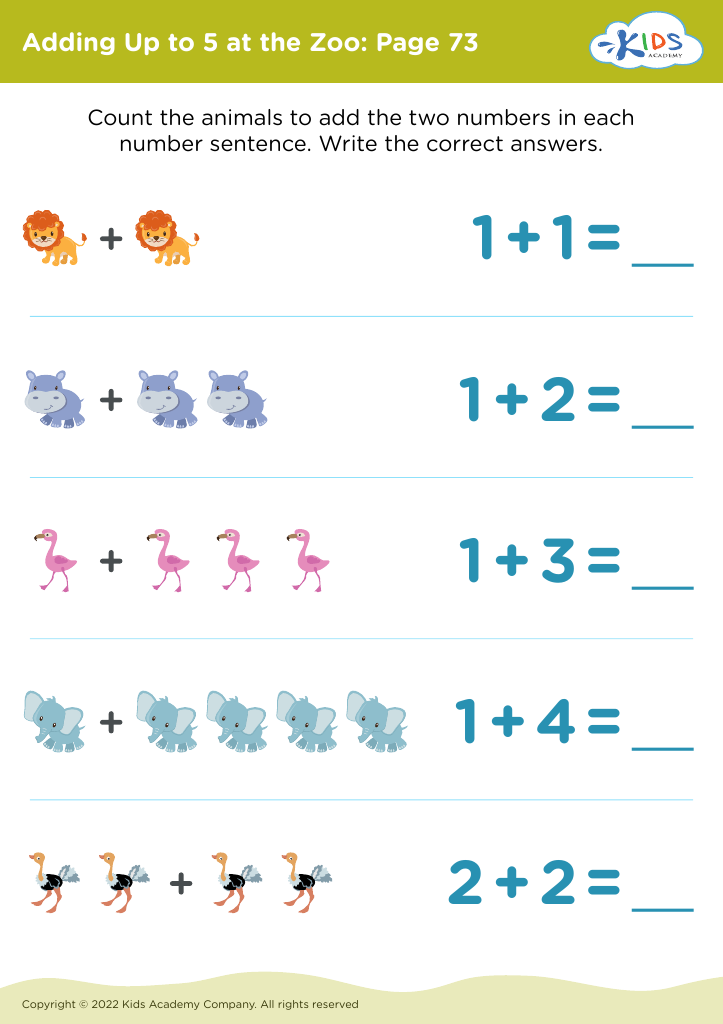
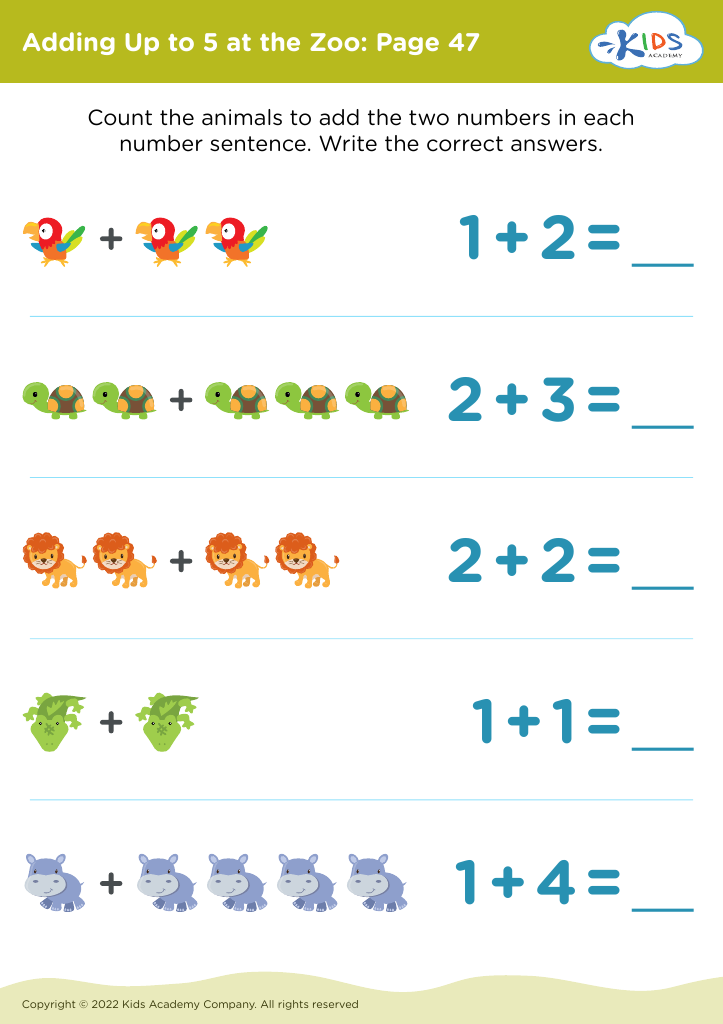
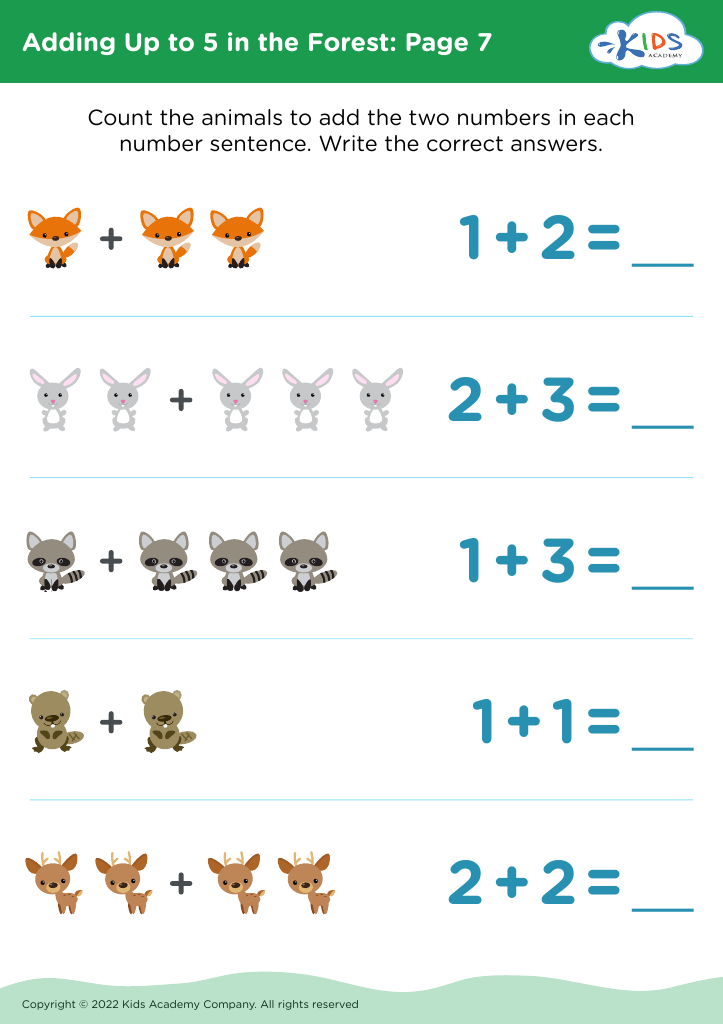
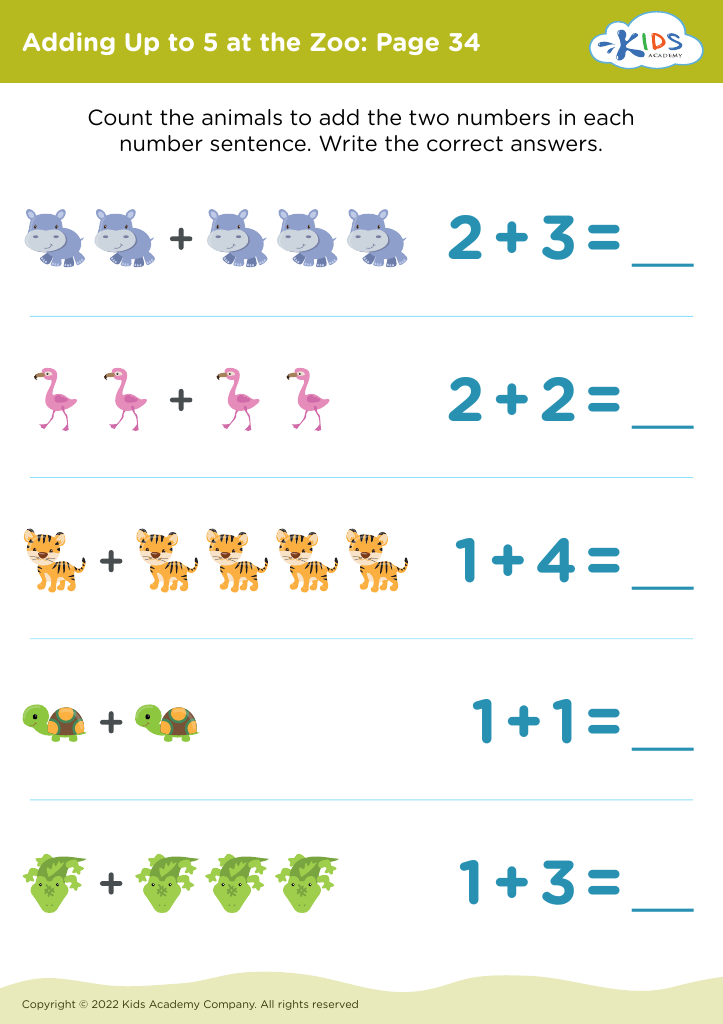
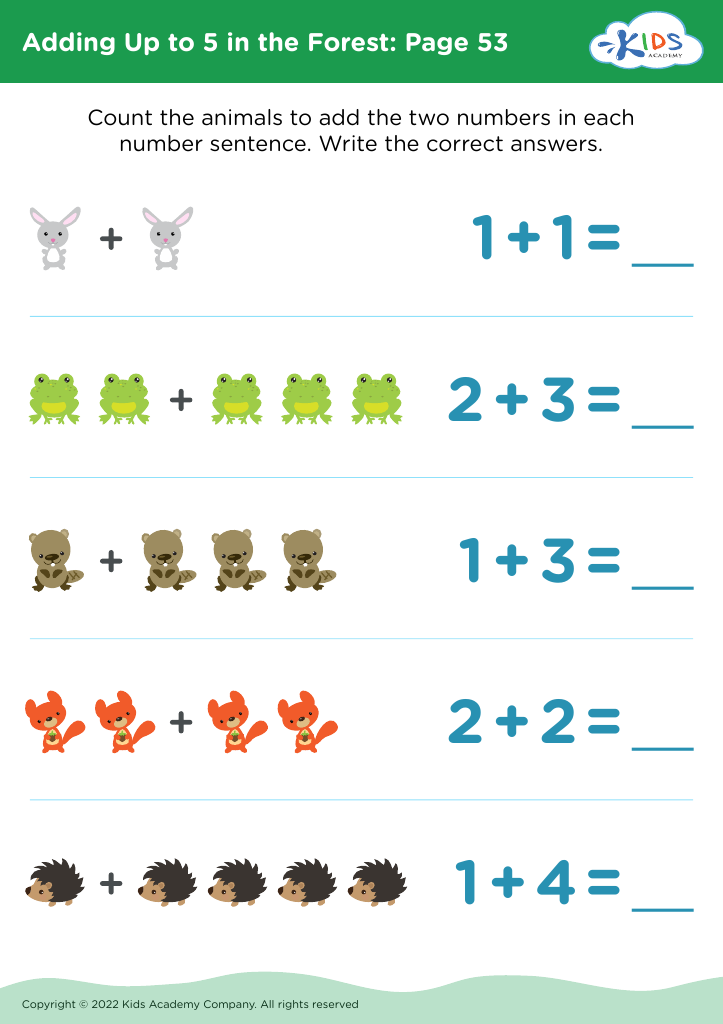
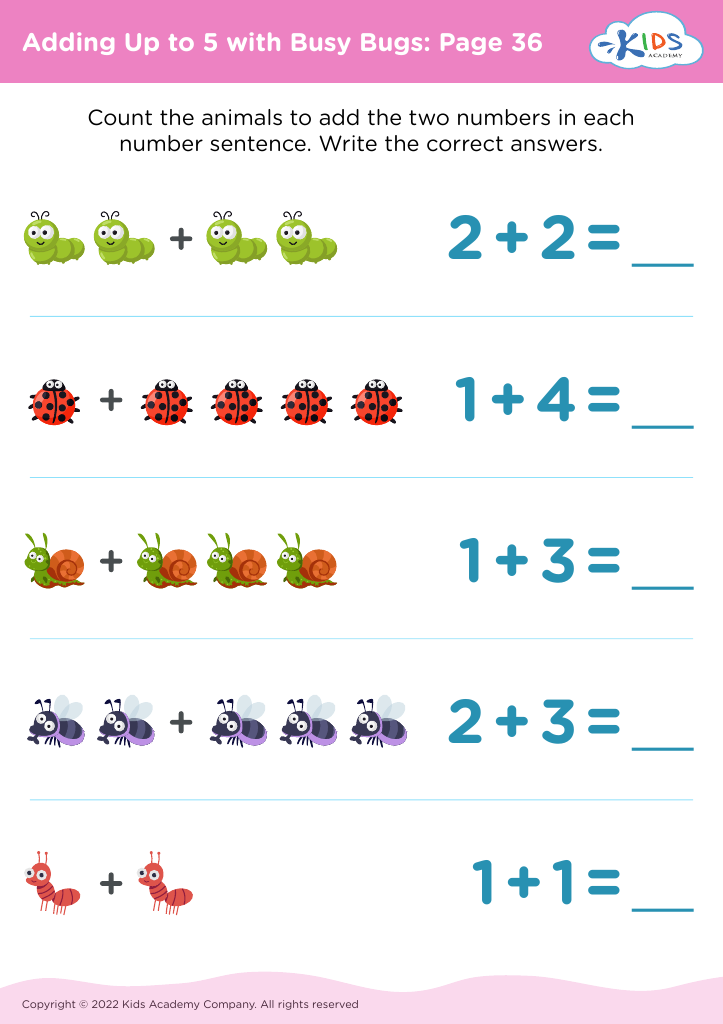
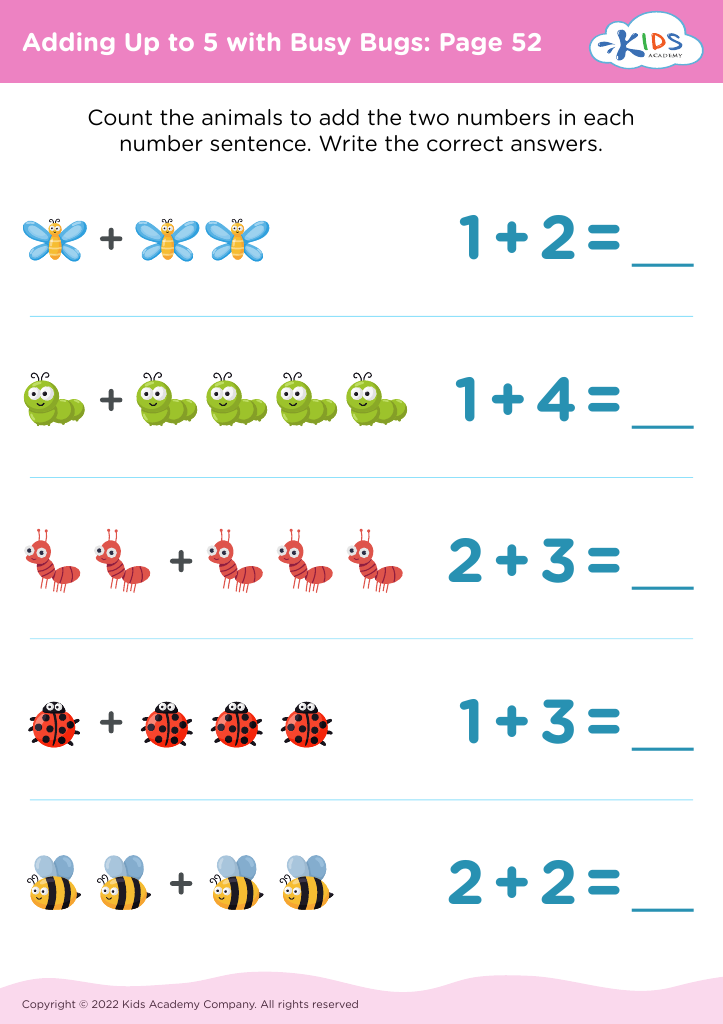








Visual comprehension of addition and subtraction for children ages 5-6 is crucial because it lays the foundational skills for their overall mathematical development. At this age, children are concrete thinkers and learn best through visual and hands-on experiences. Using visual aids like objects, pictures, and diagrams helps young learners grasp the basic concepts of adding and subtracting, which can be abstract and challenging if taught purely through numerical symbols.
Visual comprehension encourages active participation and engagement. When children see math problems represented in a visual format, such as using counters, number lines, or ten frames, they are better able to understand the process and logic behind addition and subtraction. This approach helps in developing their problem-solving skills and ensures a deeper, more intuitive understanding.
Furthermore, strong visual comprehension skills in math can boost a child's confidence. As they successfully solve problems using visual methods, they gain a sense of achievement and are more likely to view math positively. This early success is important because it can influence their attitude towards math in later grades, encouraging a willingness to tackle more complex mathematical concepts. Therefore, parents and teachers should emphasize visual comprehension to foster an engaging, supportive, and effective learning environment for young children.








