Visual learning reinforcement Addition & Subtraction Worksheets for Ages 5-6
6 filtered results
-
From - To
Enhance your child’s math journey with our Visual Learning Reinforcement Addition & Subtraction Worksheets designed for ages 5-6. These expertly crafted worksheets make learning engaging and fun, utilizing bright visuals and interactive elements to help young learners grasp essential math concepts. Each worksheet focuses on building strong addition and subtraction skills through visual cues and hands-on activities. Perfect for both classroom use and at-home practice, our resources aim to build confidence and foundational math skills in an enjoyable way. Download now and watch your child’s understanding and love for math grow!
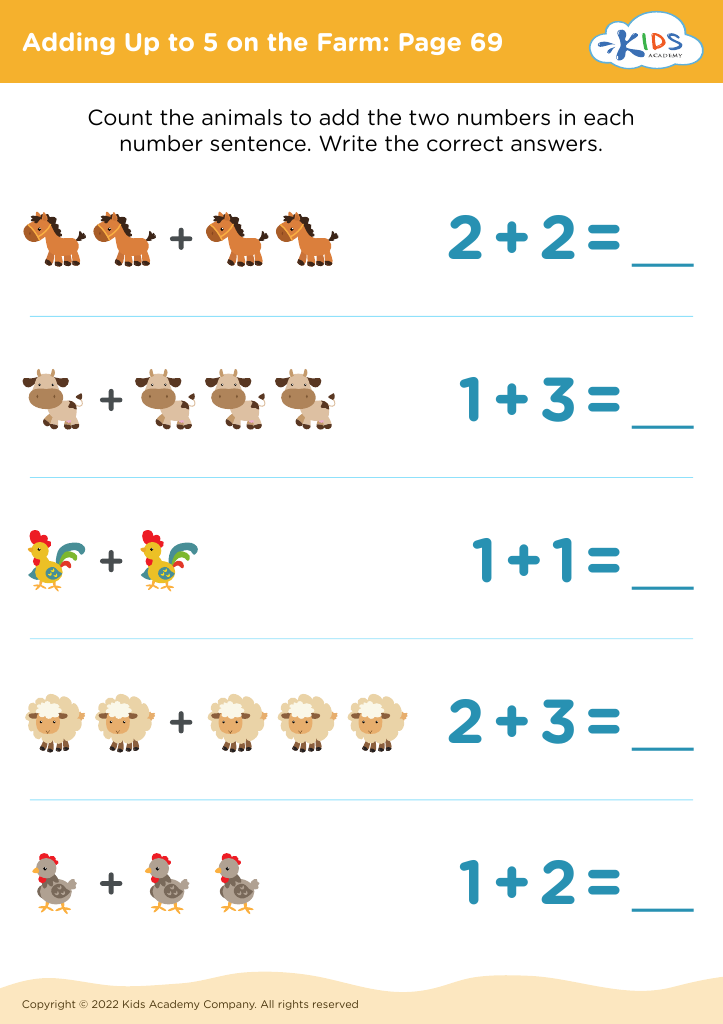
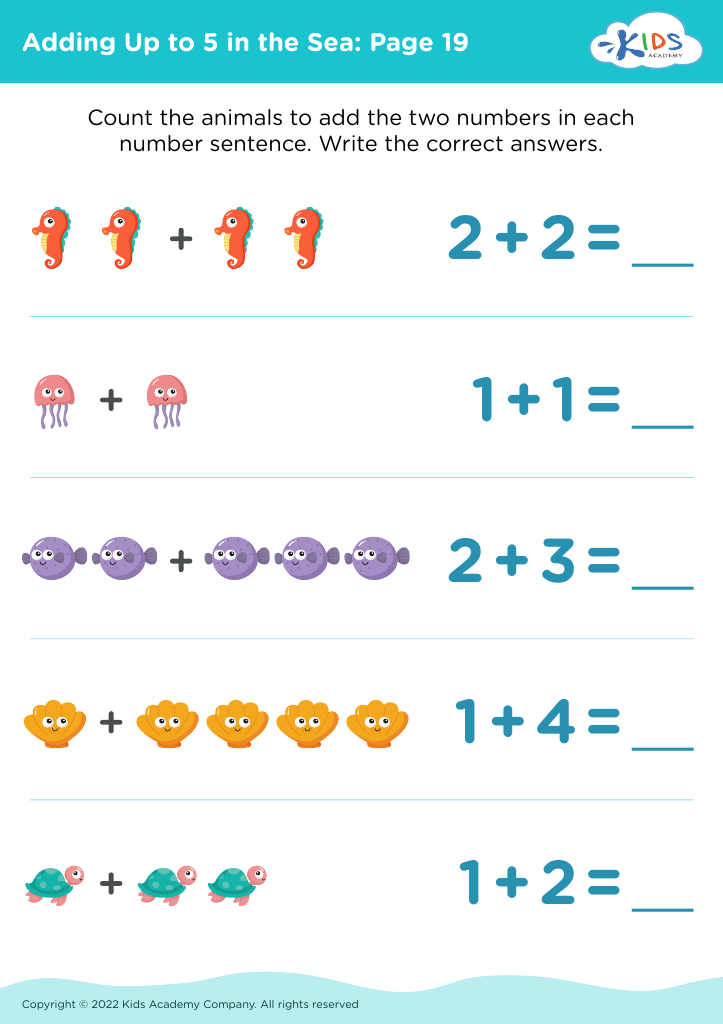
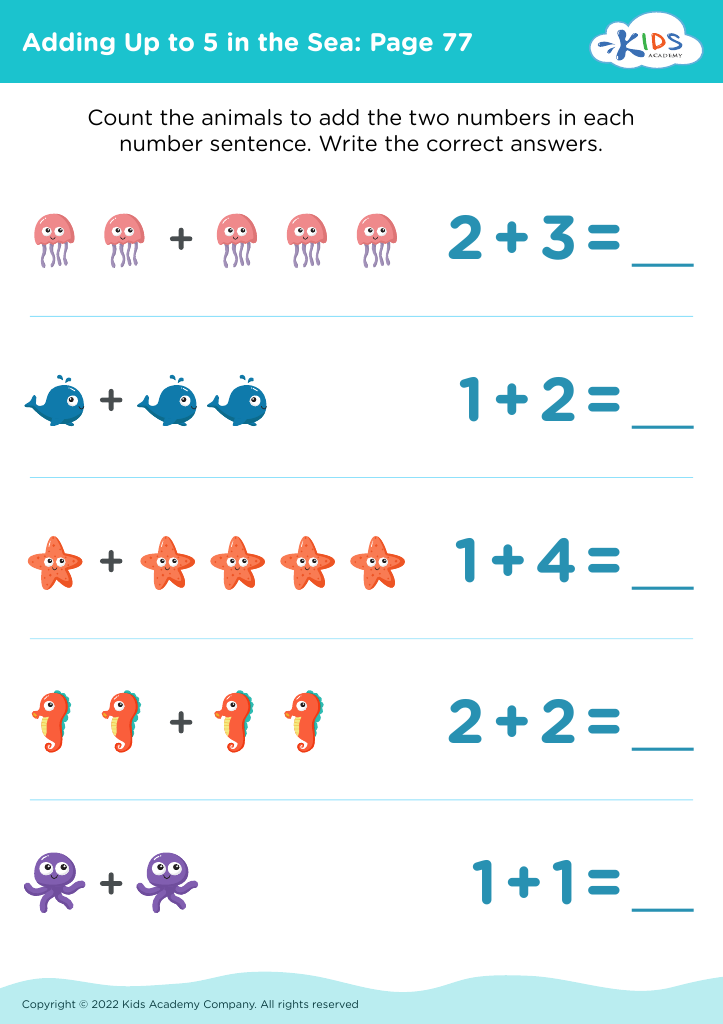
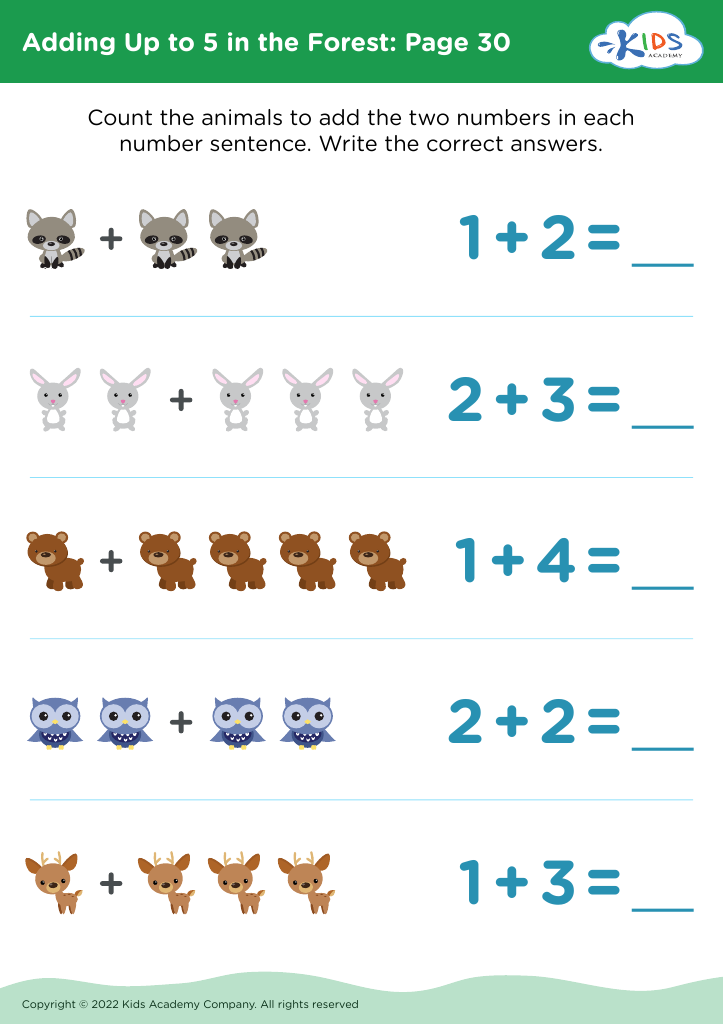
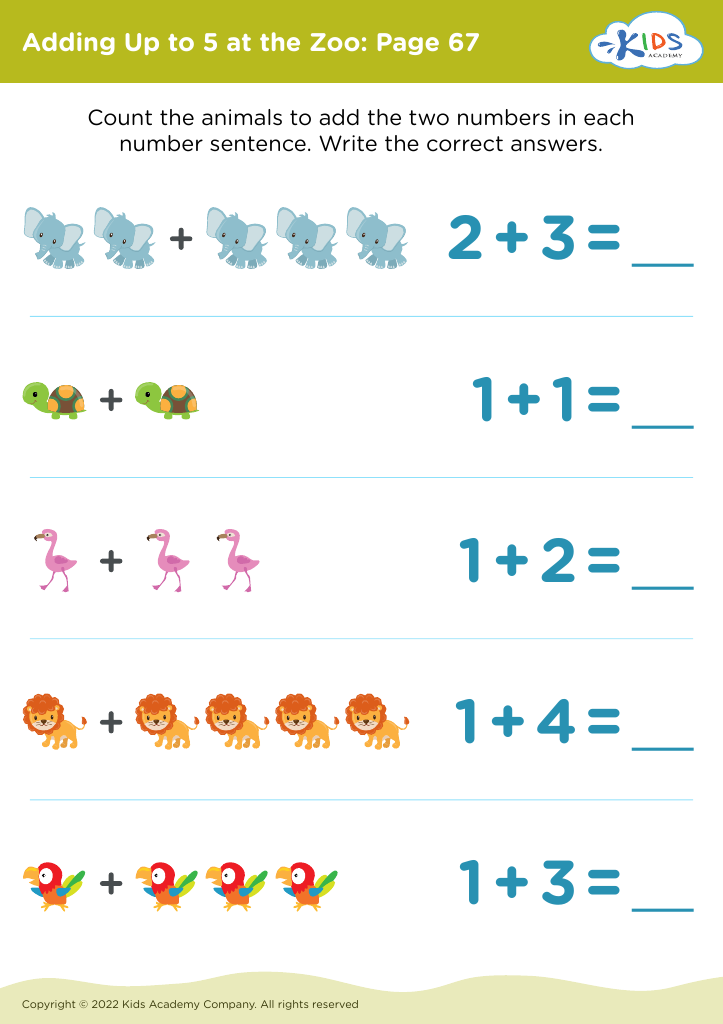
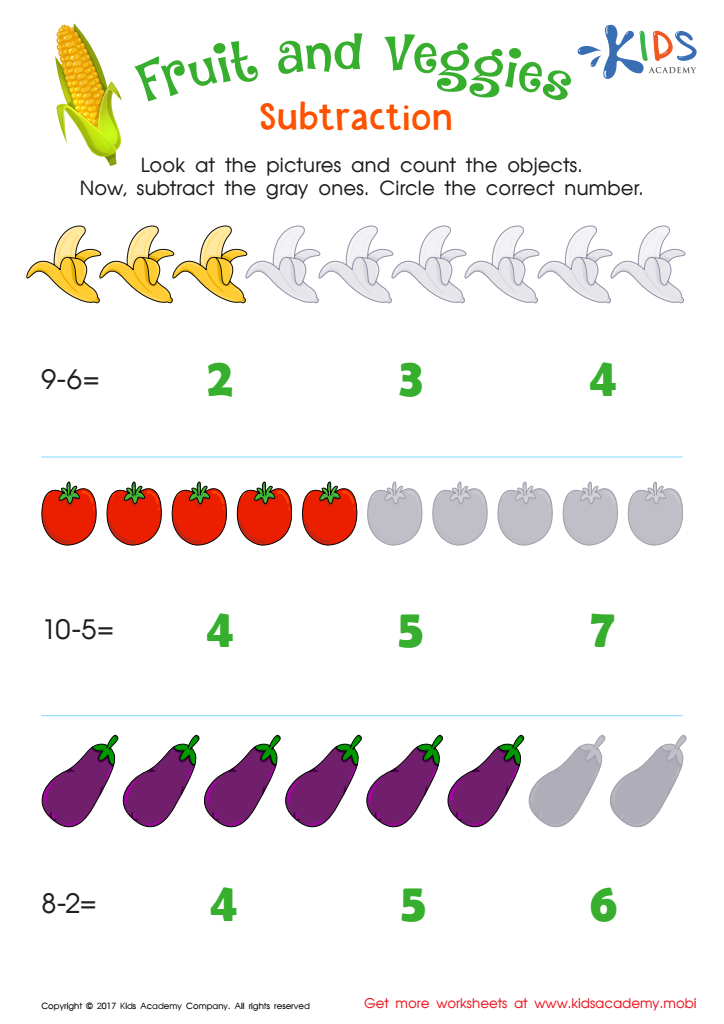
Fruit and Veggies Subtraction Worksheet
 Assign to My Students








Visual learning reinforcement is crucial for teaching addition and subtraction to children aged 5-6, as it aligns with their developmental stage where concrete and pictorial representations greatly enhance understanding. At this age, children are often unable to grasp abstract concepts readily. Visual aids such as counting beads, number lines, or illustrative pictures transform abstract numerals into tangible elements that children can see and manipulate, making mathematical concepts more relatable and less intimidating.
Research indicates that young learners are more likely to remember and comprehend mathematical operations when visual representations are used. For example, using visual aids helps students recognize patterns and relationships between numbers, fostering a deeper understanding of addition and subtraction beyond rote memorization. It lays a strong foundation for future learning, allowing children to build confidence that is crucial for tackling more advanced mathematical concepts later on.
Moreover, visual learning stimulates multiple senses, including sight and touch, enhancing cognitive connections and memory retention. Parents and teachers should care about incorporating visual methods because it supports diverse learning styles, ensuring that every child has the opportunity to succeed. By using visual reinforcement, educators and parents can make learning more engaging and effective, setting students on a path to sustained academic achievement and a lifelong appreciation of mathematics.








