Check out this FREE Trial Lesson on Addition & Subtraction for age 5-6!

Match Objects that Fit Together

Favorites
With answer key
Interactive
  • 5-6
  • Visual Learning
  • Addition & Subtraction
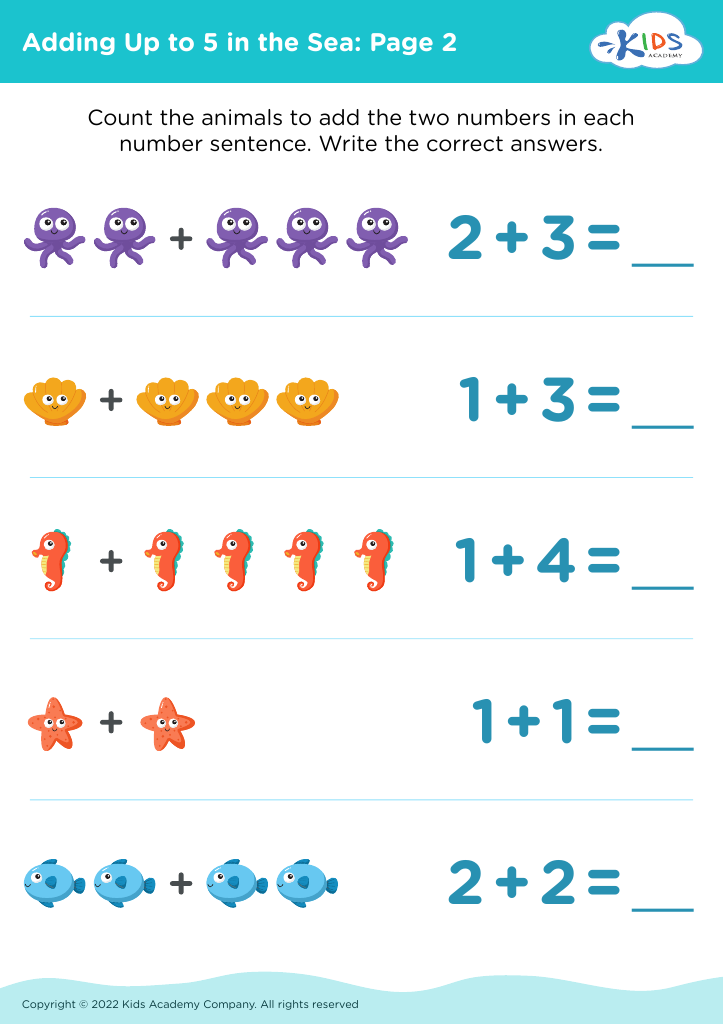
Adding Up to 5 in the Sea: Page 2

Adding Up to 5 in the Sea: Page 2

Adding Up to 5 in the Sea: Page 2
Worksheet
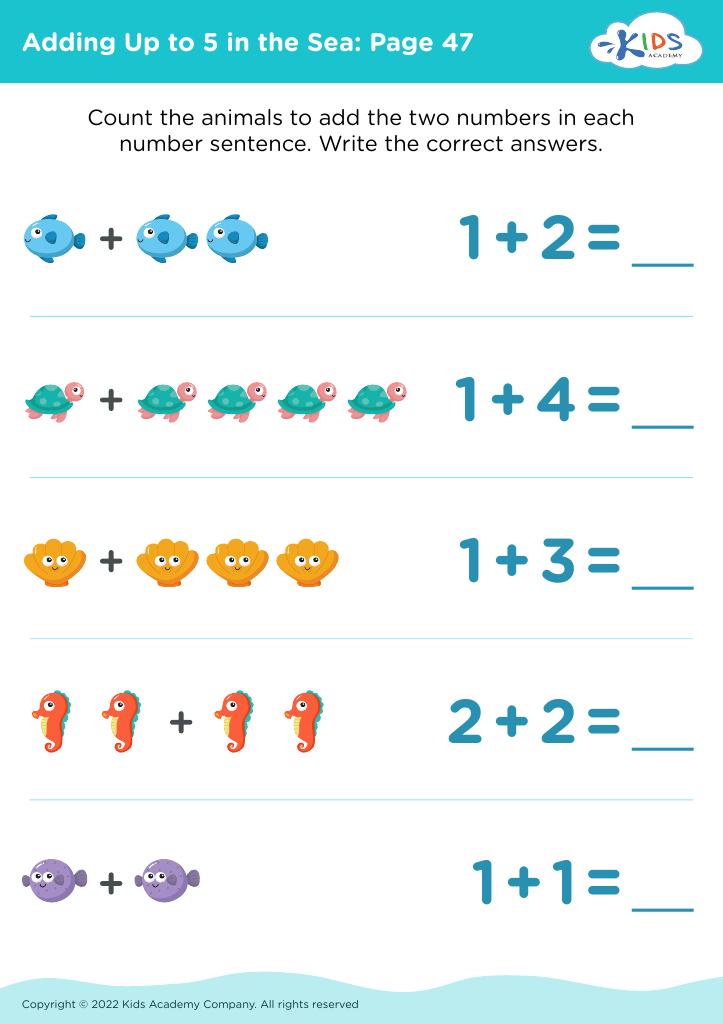
Adding Up to 5 in the Sea: Page 47
Worksheet
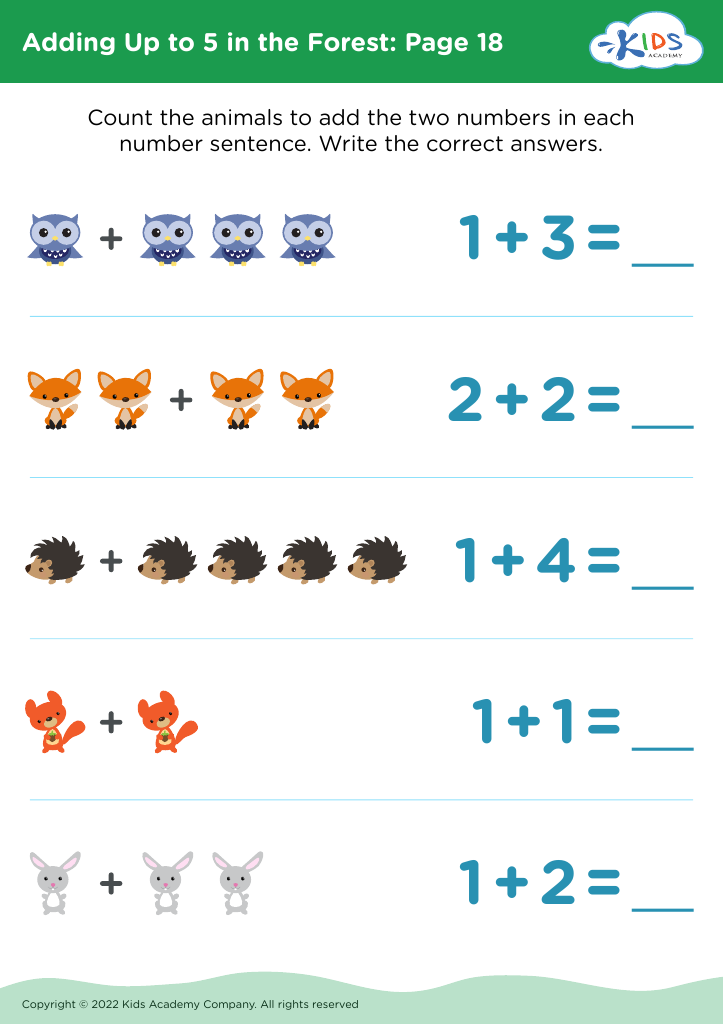
Adding Up to 5 in the Forest: Page 18
Worksheet
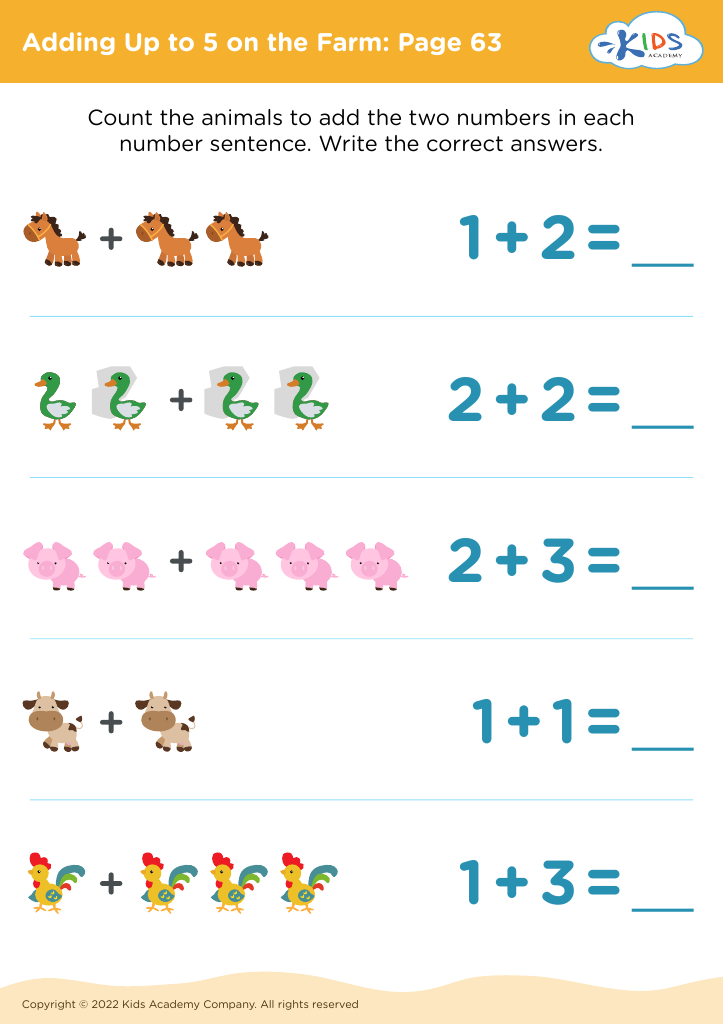
Adding Up to 5 on the Farm: Page 63
Worksheet
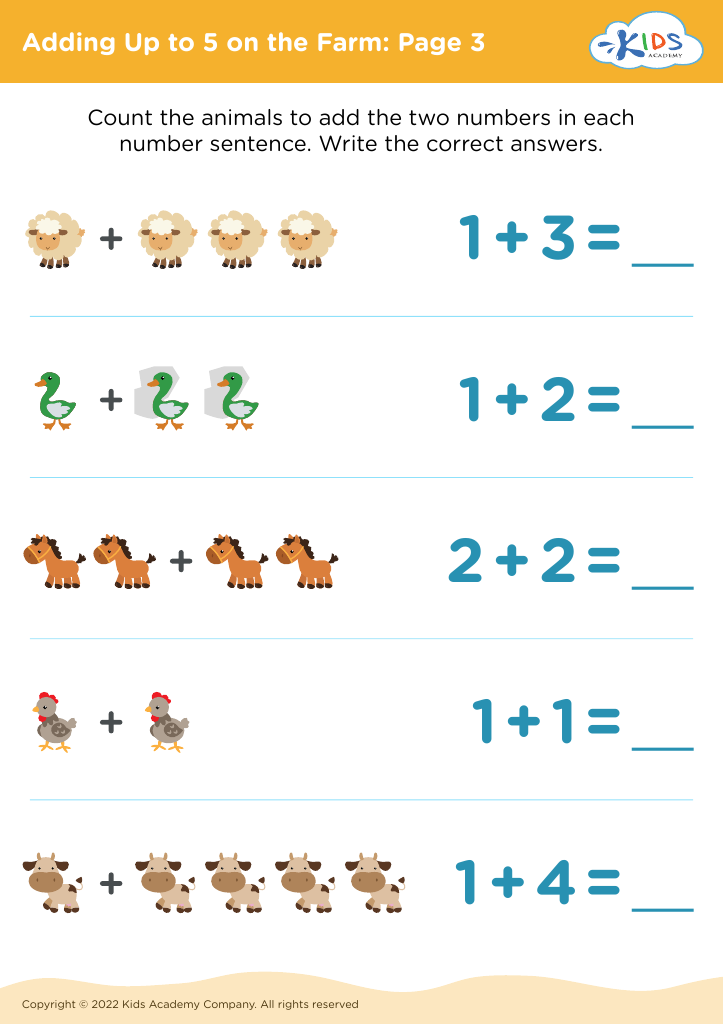
Adding Up to 5 on the Farm: Page 3
Worksheet
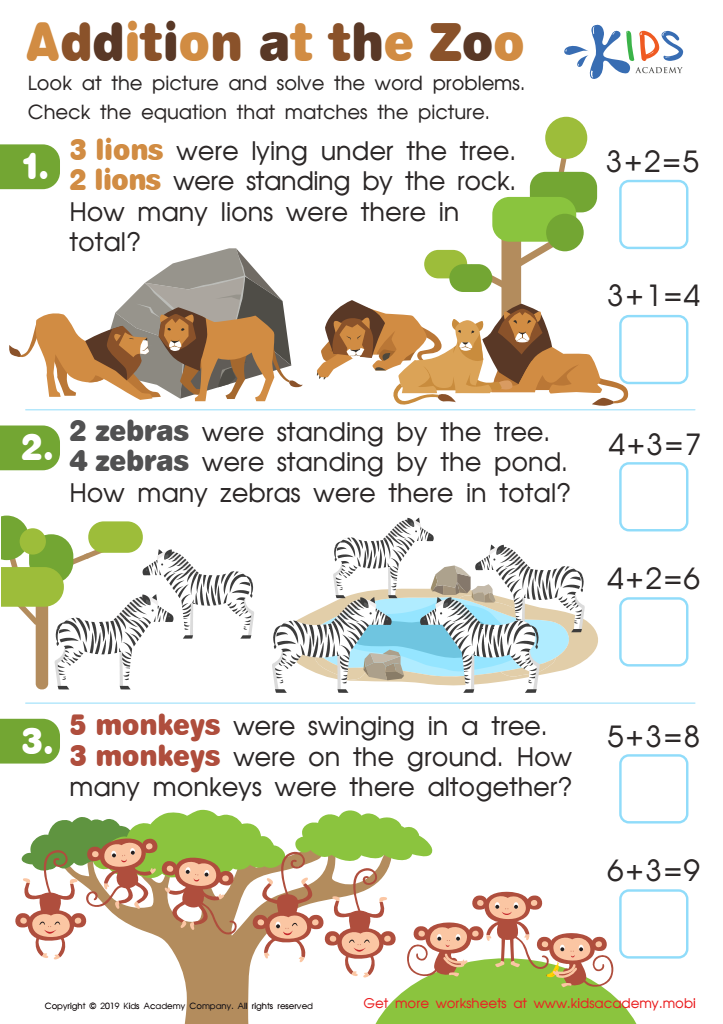
Addition at the Zoo Worksheet

Addition at the Zoo Worksheet

Visit the zoo with your kids and point out all the different animals. Ask them to name their favorites and identify animals on a worksheet. Challenge them to solve word problems related to the pictures. Ask them for the equation that fits the picture and check the answer.
Addition at the Zoo Worksheet
Worksheet
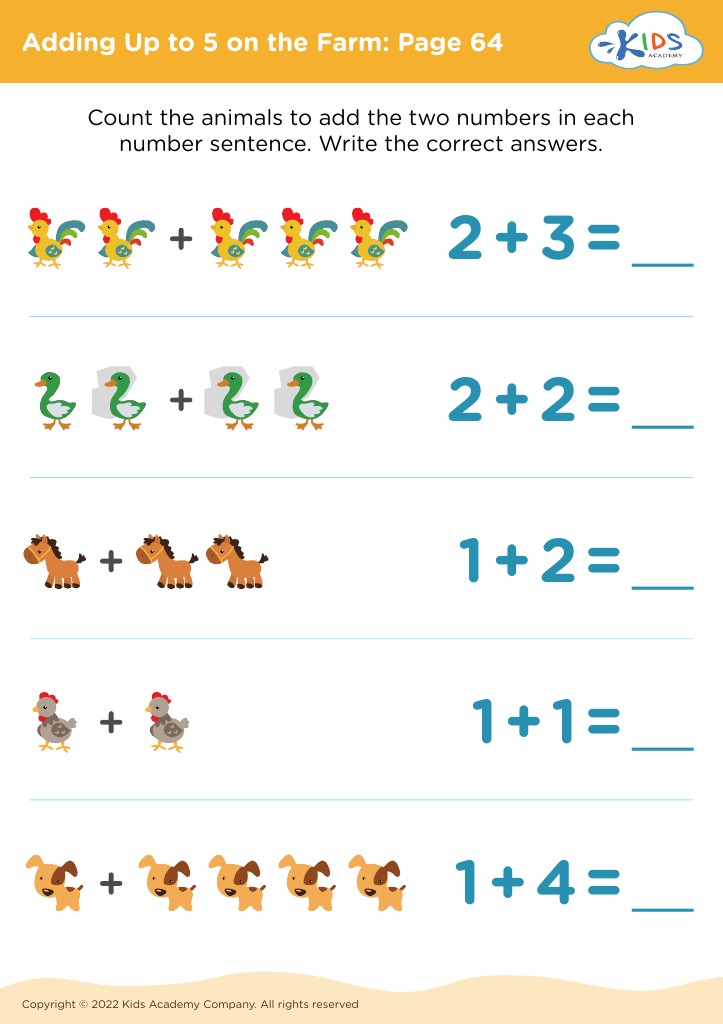
Adding Up to 5 on the Farm: Page 64
Worksheet
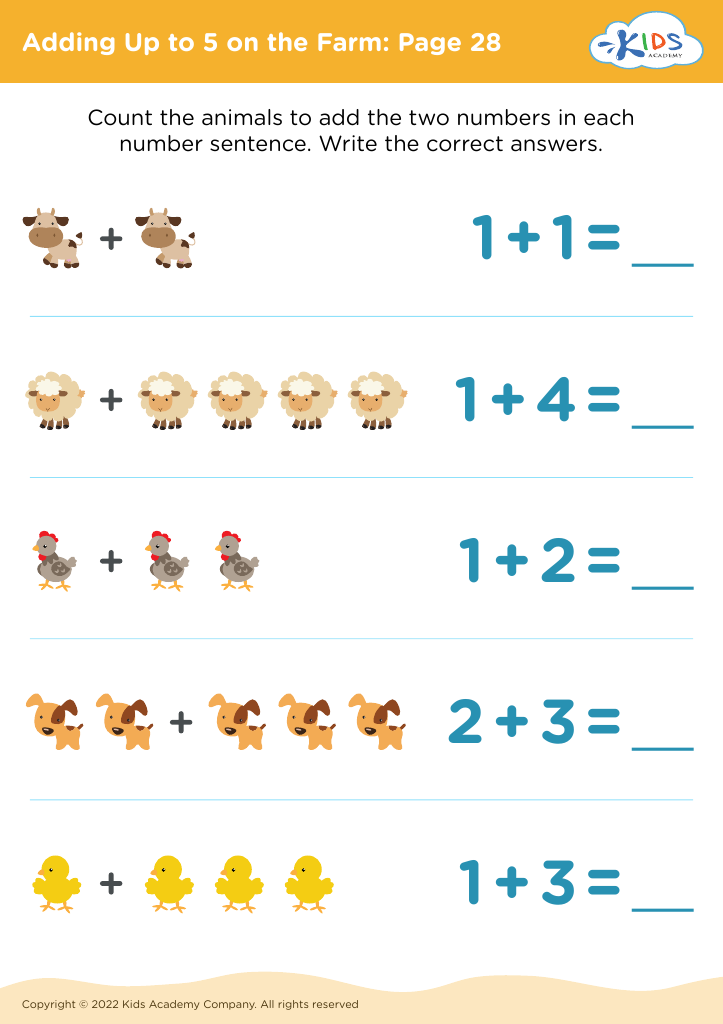
Adding Up to 5 on the Farm: Page 28
Worksheet
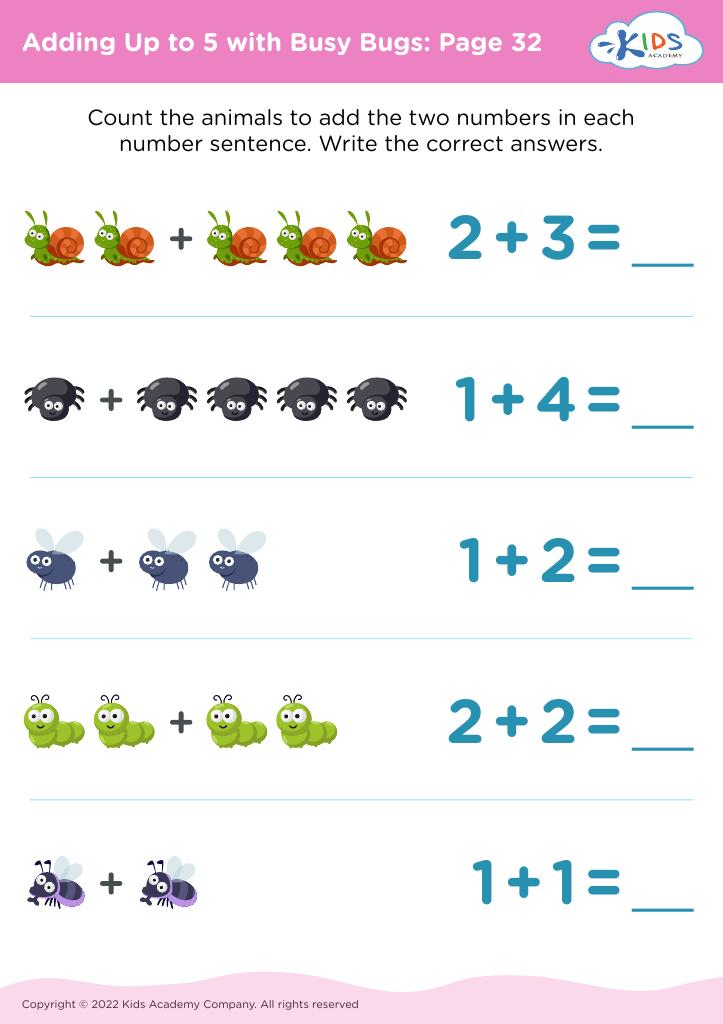
Adding Up to 5 with Busy Bugs: Page 32
Worksheet
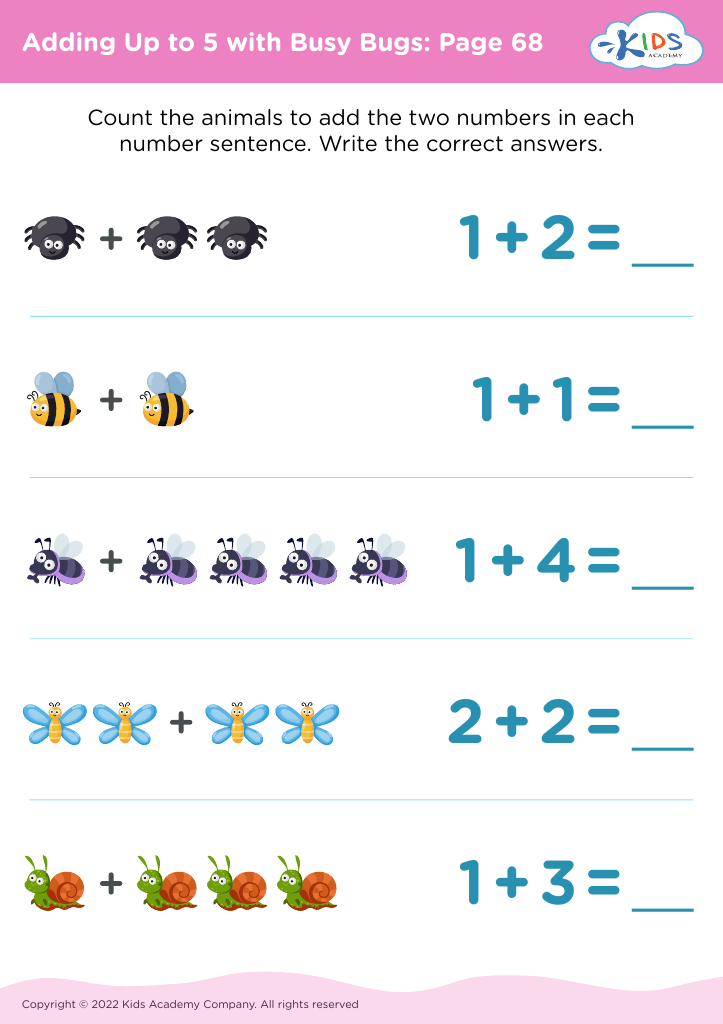
Adding Up to 5 with Busy Bugs: Page 68
Worksheet
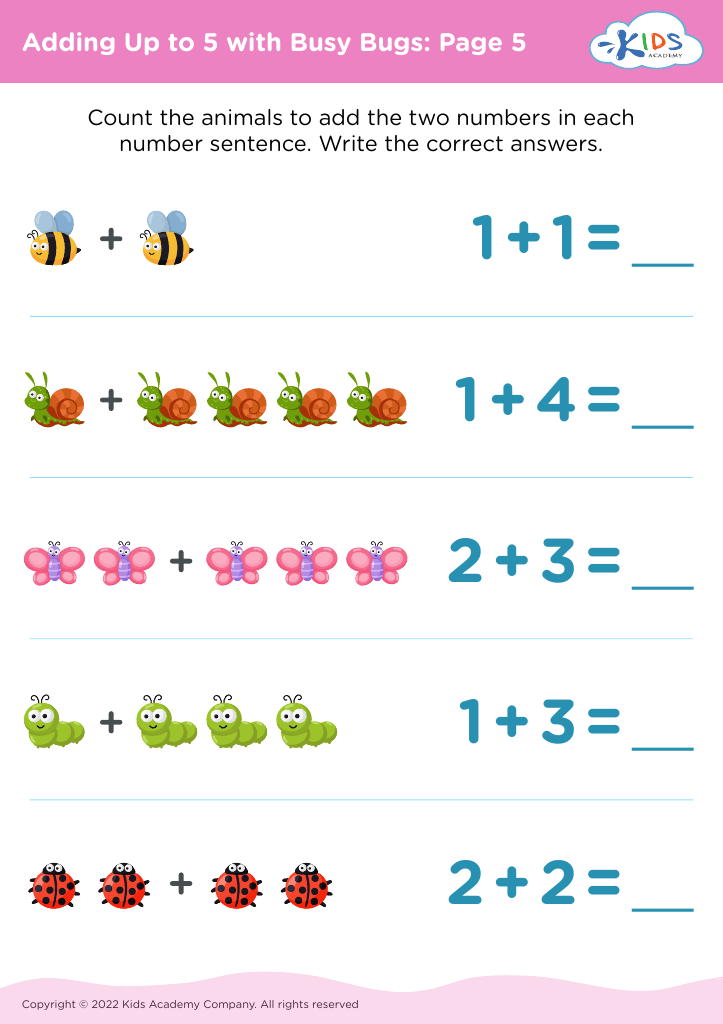
Adding Up to 5 with Busy Bugs: Page 5
Worksheet
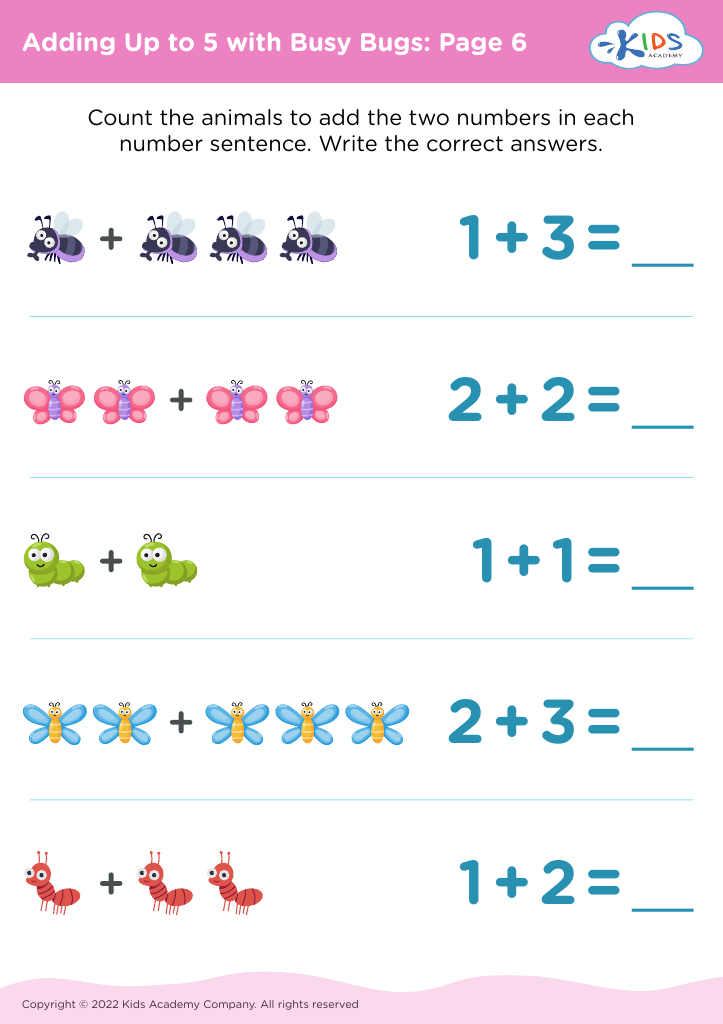
Adding Up to 5 with Busy Bugs: Page 6
Worksheet
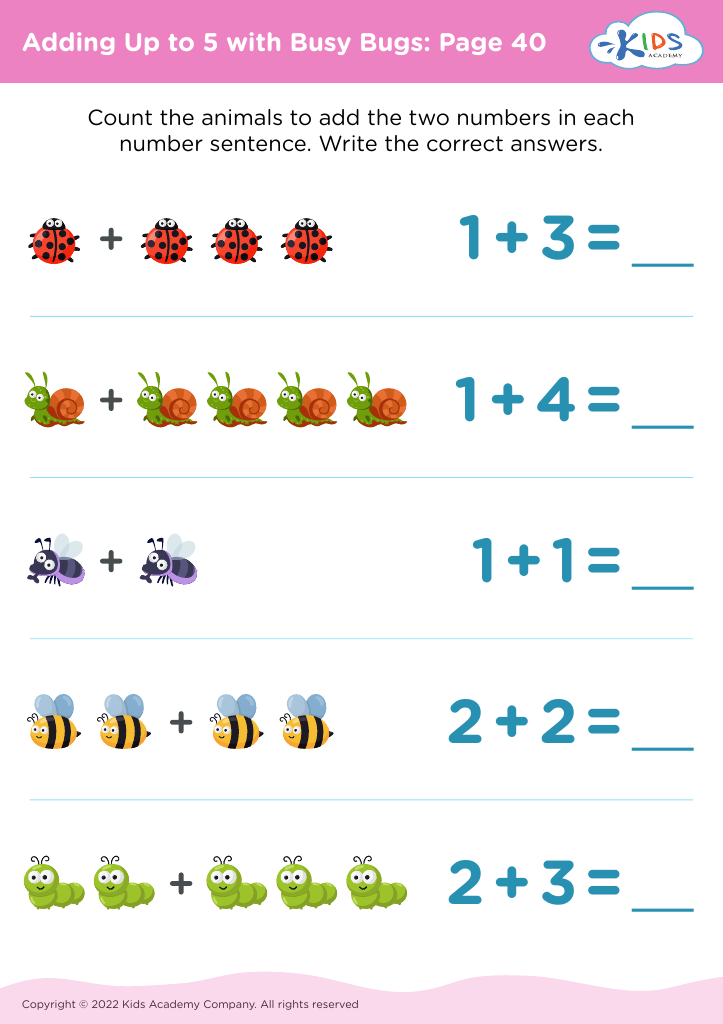
Adding Up to 5 with Busy Bugs: Page 40
Worksheet
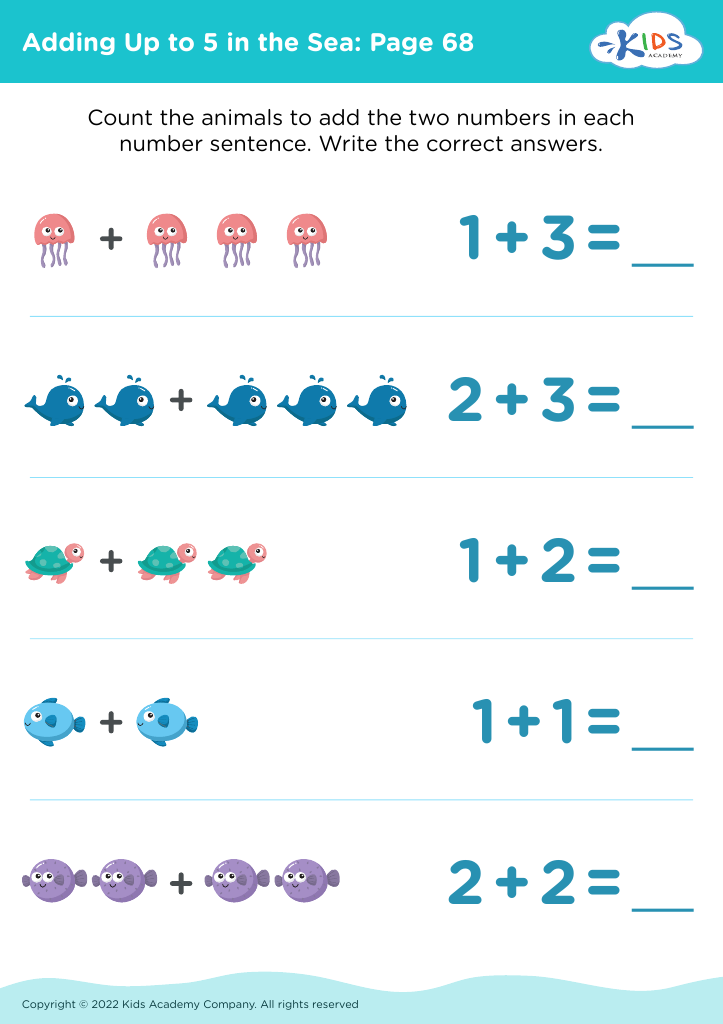
Adding Up to 5 in the Sea: Page 68
Worksheet
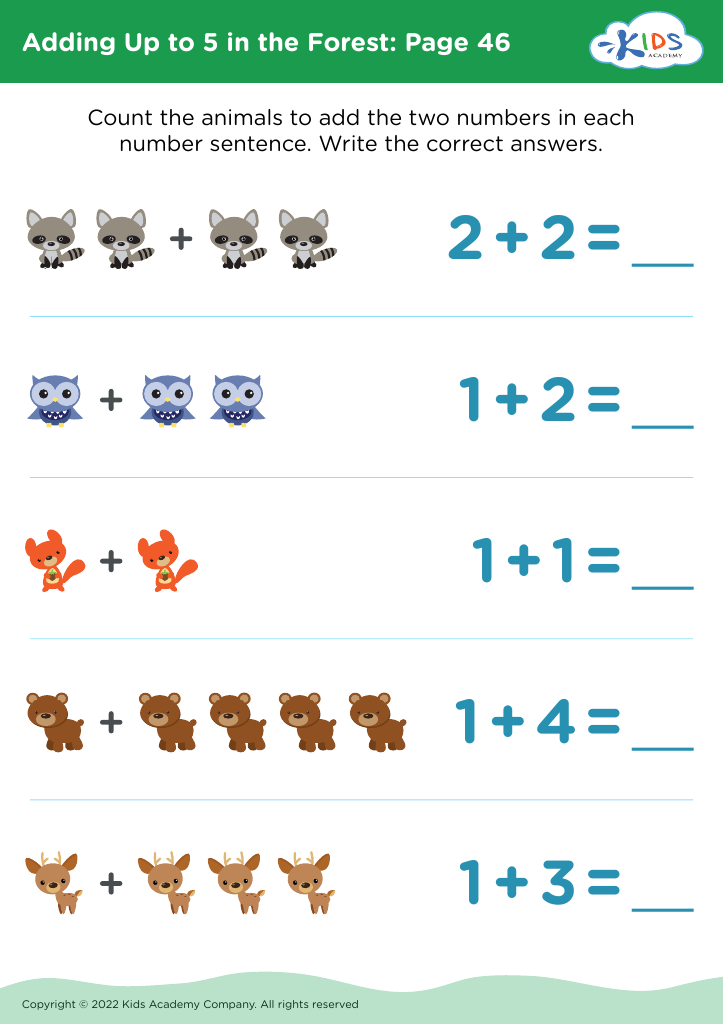
Adding Up to 5 in the Forest: Page 46
Worksheet
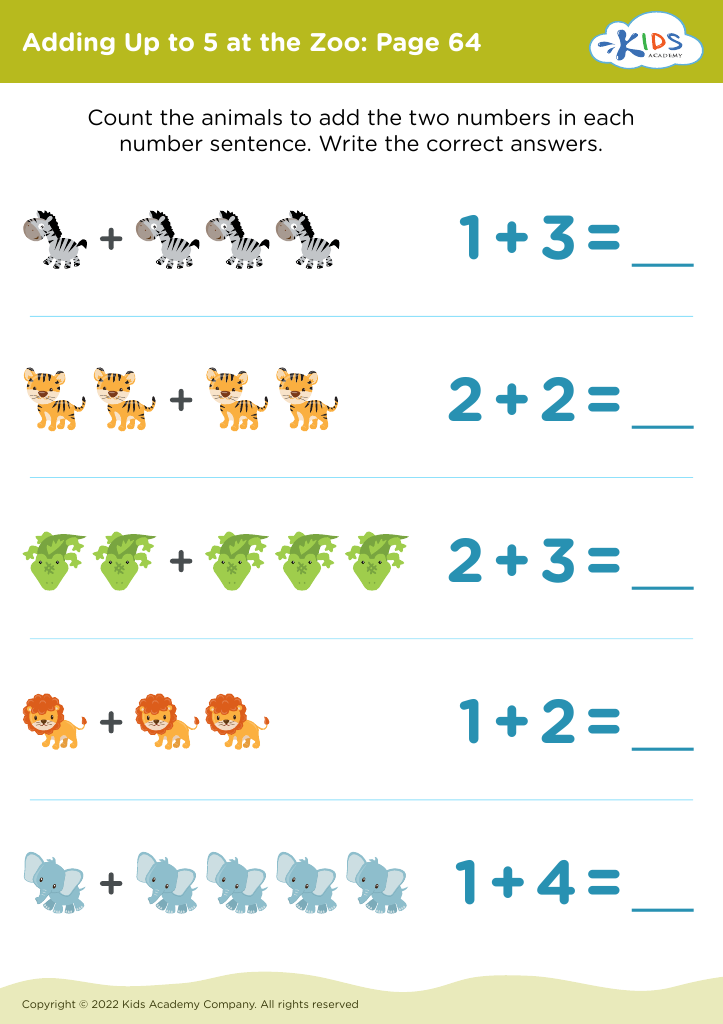
Adding Up to 5 at the Zoo: Page 64
Worksheet
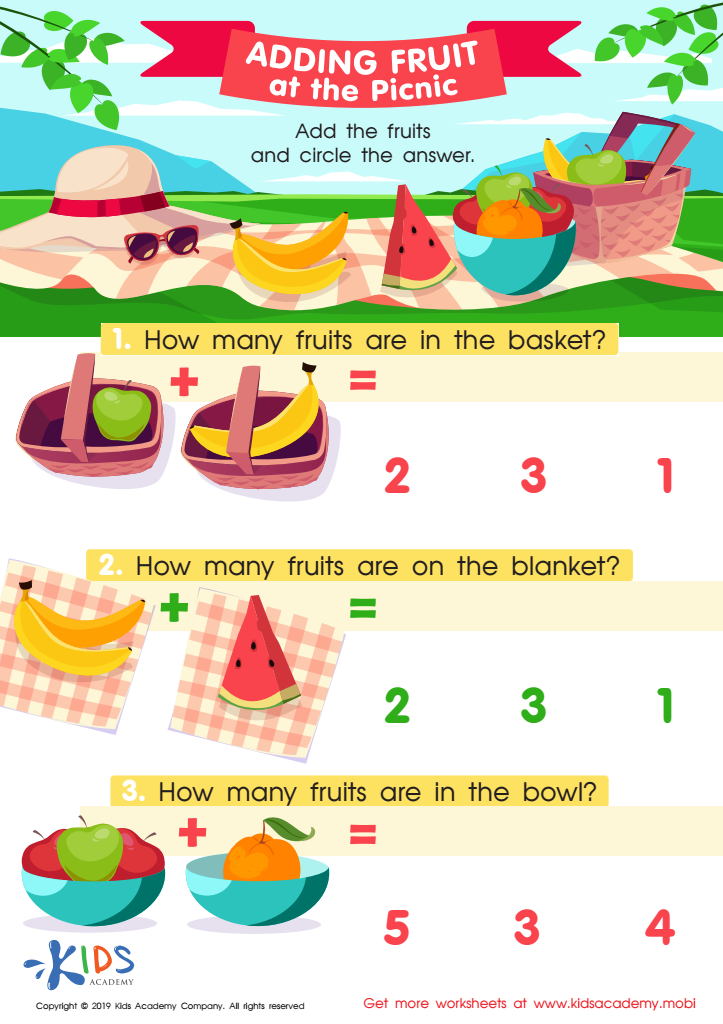
Adding Fruit at the Picnic Worksheet
Adding Fruit at the Picnic Worksheet
Picnics are a great way for the family to enjoy a fun day in the sun! Get your kids involved by having them help load the picnic basket and do this worksheet to practice their math skills while they get ready. Identify the fruits in the picture, add them up, and circle the correct answer.
Adding Fruit at the Picnic Worksheet

Worksheet
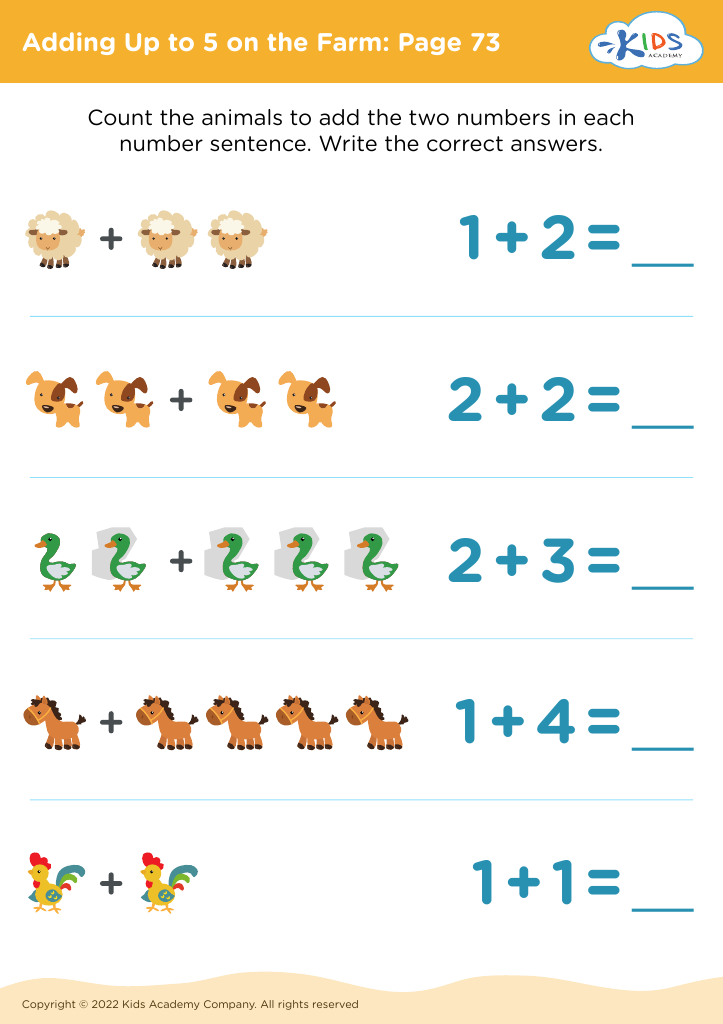
Adding Up to 5 on the Farm: Page 73
Worksheet
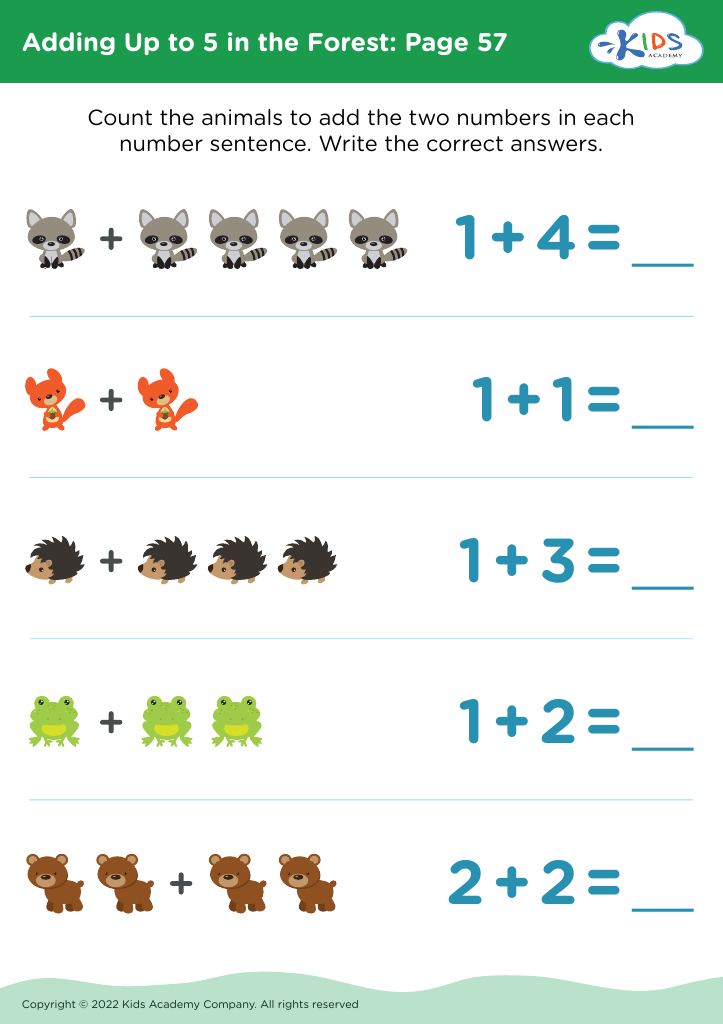
Adding Up to 5 in the Forest: Page 57
Worksheet
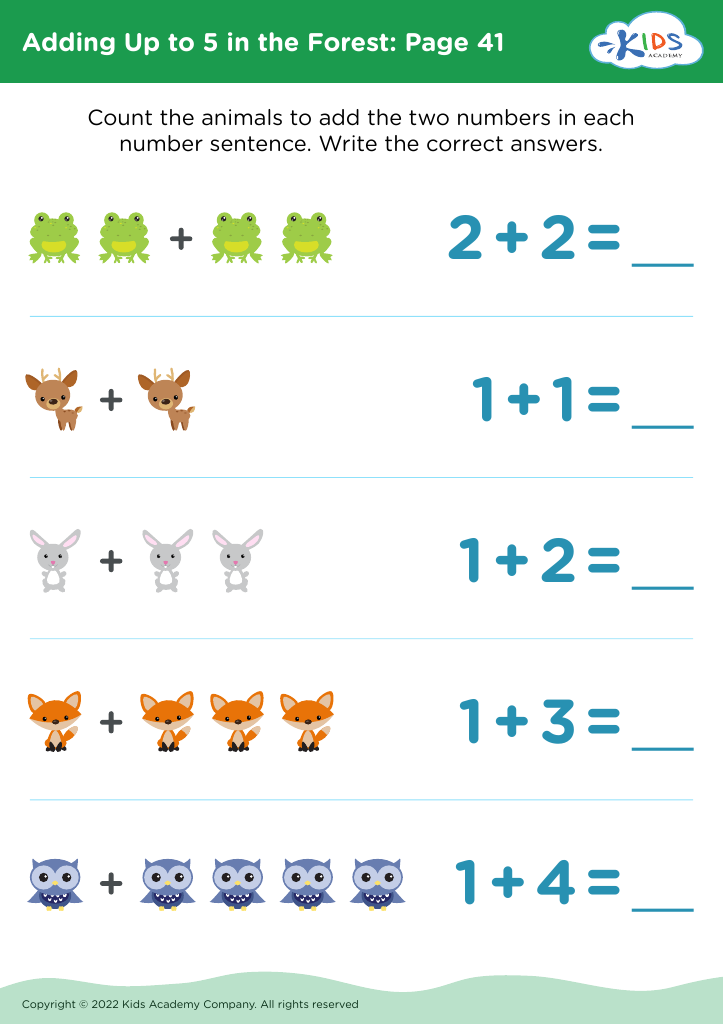
Adding Up to 5 in the Forest: Page 41
Worksheet


... 3 4

Visual Learning for Addition and Subtraction is particularly important for children aged 5-6, as it aligns with their cognitive development and learning styles. At this age, children are often more responsive to visual stimuli because they are developing their ability to understand numerical concepts and relationships.

Using visual methods, such as counting objects, using number lines, or pictorial representations, helps children grasp abstract concepts become more tangible. This tangible approach aids in building a solid foundation in mathematics, fostering number sense and logical reasoning. Through visual aids, young learners can see the physical representation of adding “more” to a group of objects or taking “away” from a group.

Moreover, visual learning supports different learning paces and styles. Some children might struggle with purely numerical or textual explanations but can find understanding through visual means, thus catering to diverse learning needs.

Parents and teachers focusing on visual learning for addition and subtraction ensure that students develop strong, intuitive mathematical skills early on. This fundamental comprehension prevents future struggles with more complex mathematical concepts. Additionally, visual learning can make math feel more engaging and less intimidating, fostering a positive attitude towards the subject. Ultimately, this approach promotes long-term academic success by rooting young learners in an enthusiastic, supportive environment for early math skills.