
Visual perception improvement Addition & Subtraction Worksheets for Ages 5-6
7 filtered results
Difficulty Level
Grade
Age
-
From - To
Subject
Activity
Standards
Enhance your child's early math skills with our "Visual Perception Improvement Addition & Subtraction Worksheets" designed specifically for ages 5-6. These engaging worksheets not only introduce foundational addition and subtraction concepts but also focus on enhancing visual perception abilities. By tackling fun and age-appropriate puzzles, children will improve their spatial awareness and visual discrimination skills, which are crucial for future learning. Each worksheet is crafted to be interactive and enjoyable, making math a fun exploration. Perfect for home or classroom use, our resources aim to build confidence and competence in young learners. Get ready to make math an exciting adventure!
Favorites
With answer key
Interactive
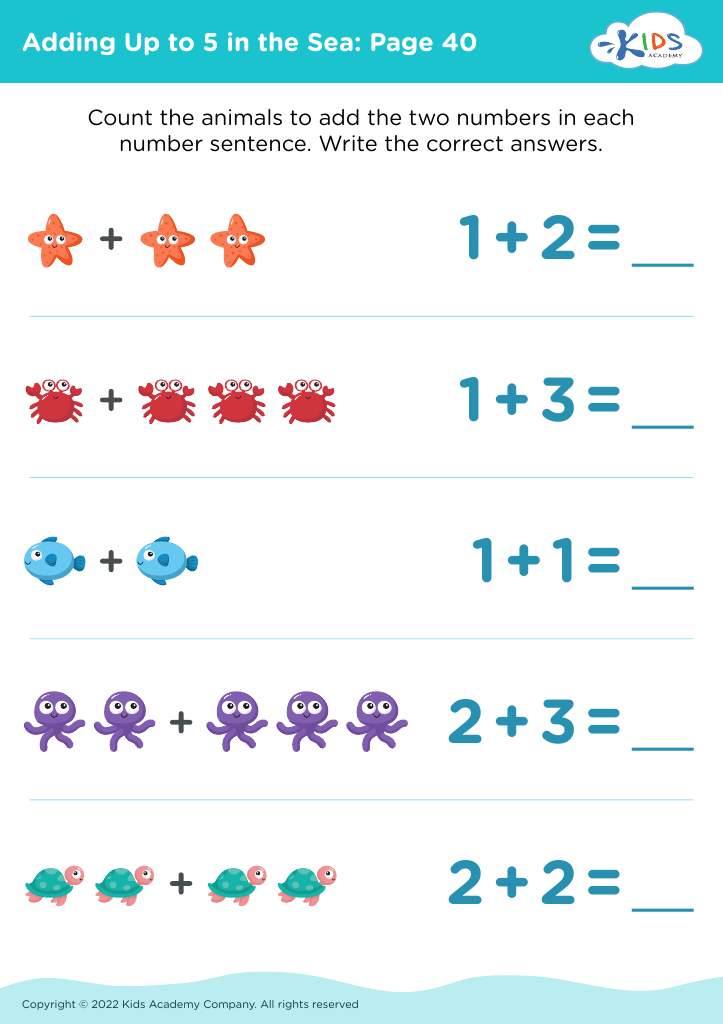
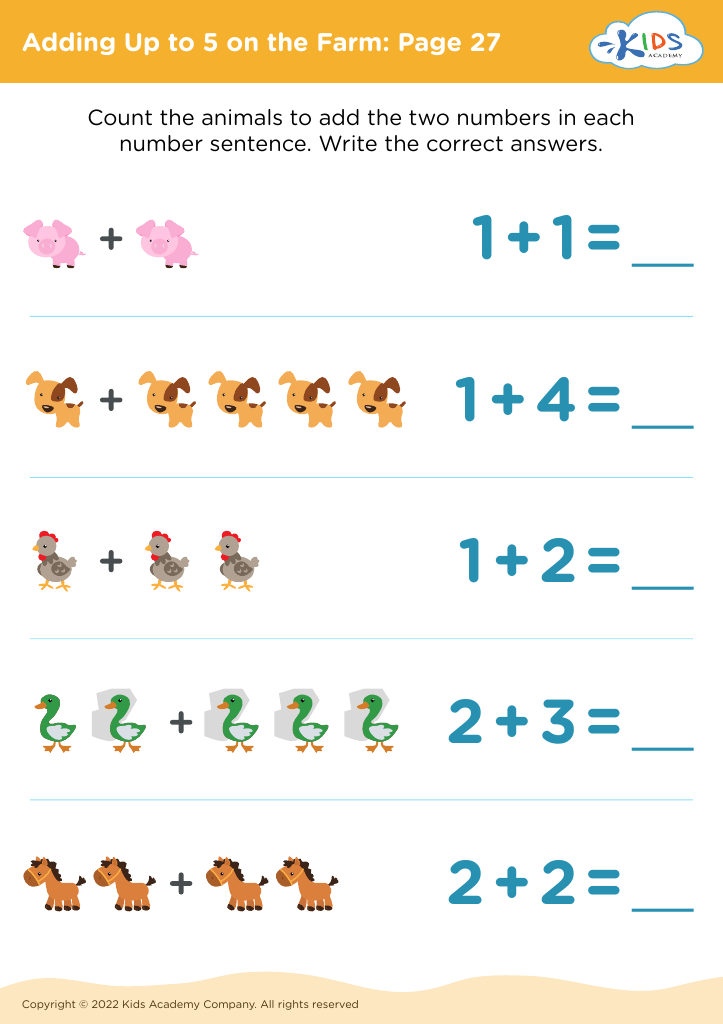
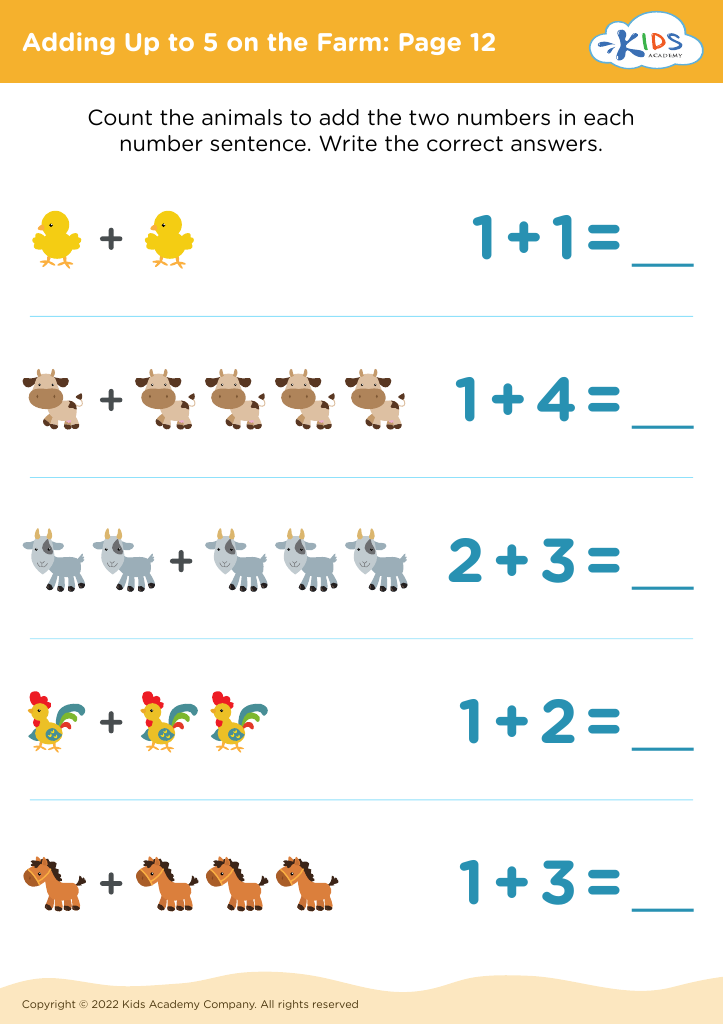
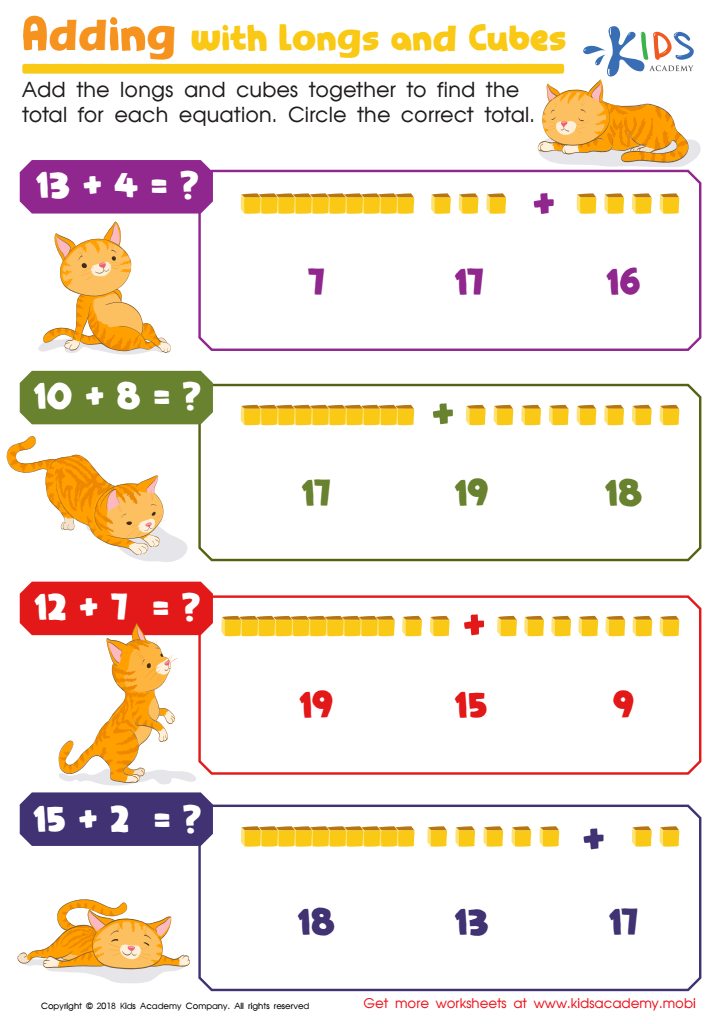
Adding With Longs and Cubes Worksheet
Math might not be your child's favorite, but they must master it to advance. If they're having difficulties or don't like it, use this worksheet to make it easier. Have them add longs and cubes together to find the total for each question, then circle the correct answer. This exercise can help make math experiences better.
 Assign to My Students
Adding With Longs and Cubes Worksheet
Worksheet
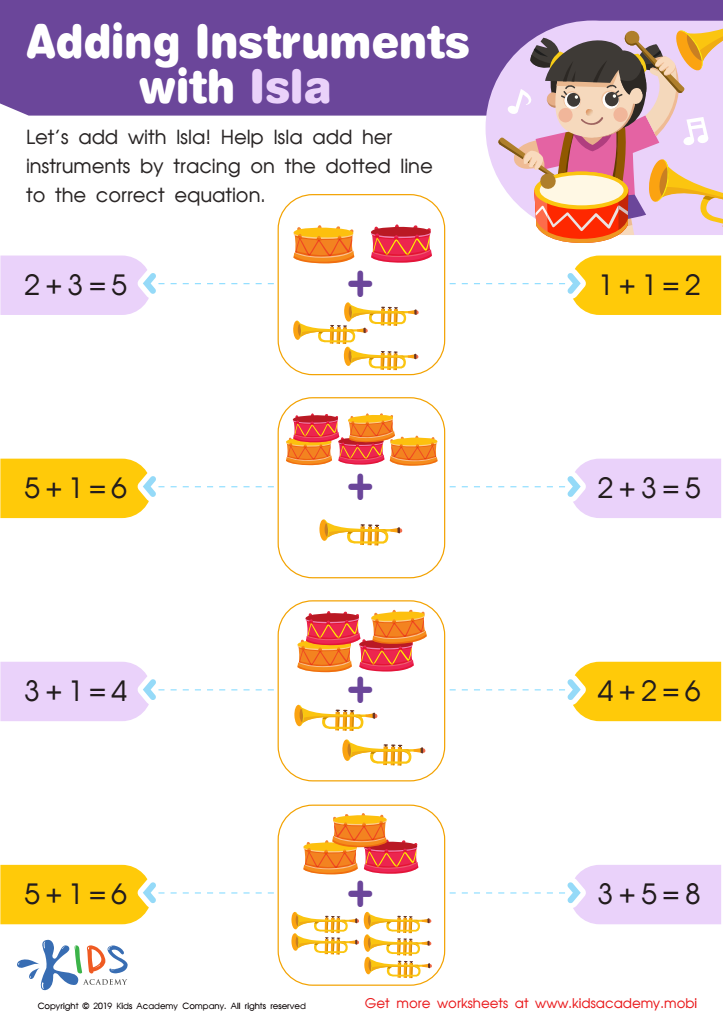
Adding Instruments with Isla Worksheet
Your kids can have fun helping Isla add her musical instruments. With colorful pics and one-to-one representation, they can pick the correct addition sentence. They can connect each pic with traceable lines and get to the right sum up to 10.
Adding Instruments with Isla Worksheet
Worksheet
Join Kids Academy for Free
Who is primarily going to use this learning content?








Visual perception is crucial for young children as it impacts their ability to understand and engage with mathematical concepts, especially during early learning in addition and subtraction. For parents and teachers, focusing on visual perception improvement enhances a child's overall cognitive development and lays a strong foundation for future learning.
Children aged 5-6 are rapidly developing their ability to interpret and organize visual information. Strong visual perception skills enable them to recognize quantities, compare numbers, and understand spatial relationships, all of which are essential for grasping addition and subtraction. Improved visual perception can lead to increased confidence and interest in math, reducing frustration often associated with challenging concepts.
Additionally, activities that strengthen visual perception, such as puzzles, games, and visual-motor tasks, provide a fun and engaging way for children to learn. By incorporating such activities into daily routines, parents and teachers can promote a positive attitude towards math while enhancing critical thinking skills. Ultimately, supporting visual perception is an investment that contributes to a child's academic success, ensuring they are well-prepared for more complex mathematical challenges in the future. Prioritizing these skills is essential for nurturing young learners holistically and fostering lifelong learning habits.








