Check out this FREE Trial Lesson on Addition for age 5-6!

T

Favorites
With answer key
Interactive
  • 5-6
  • Basic Arithmetic
  • Addition
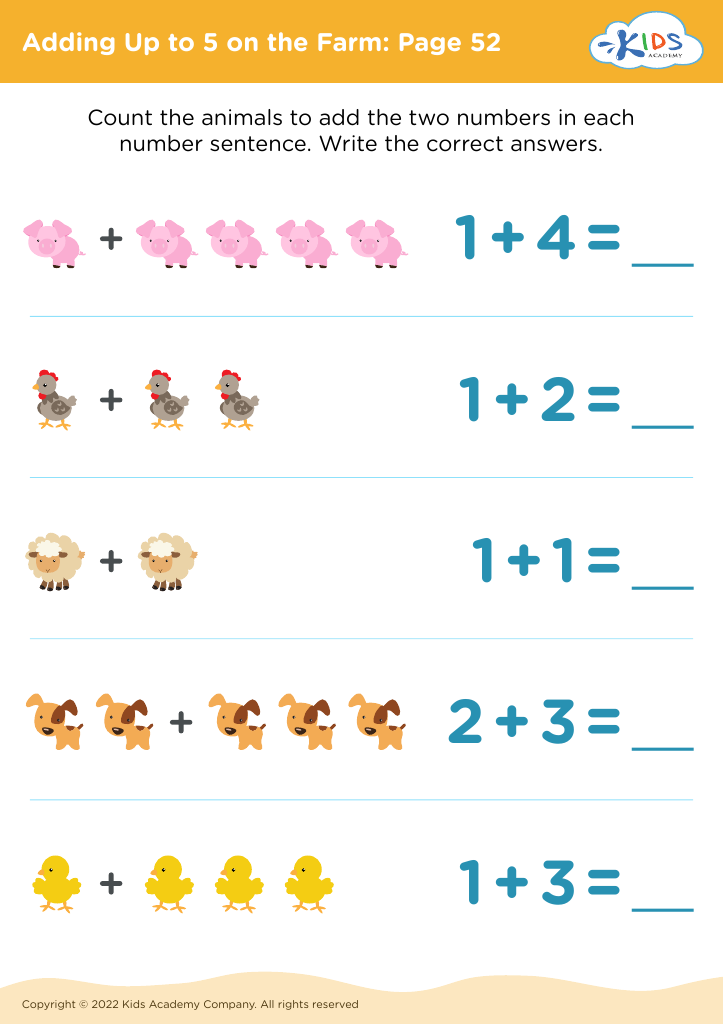
Adding Up to 5 on the Farm: Page 52
Worksheet
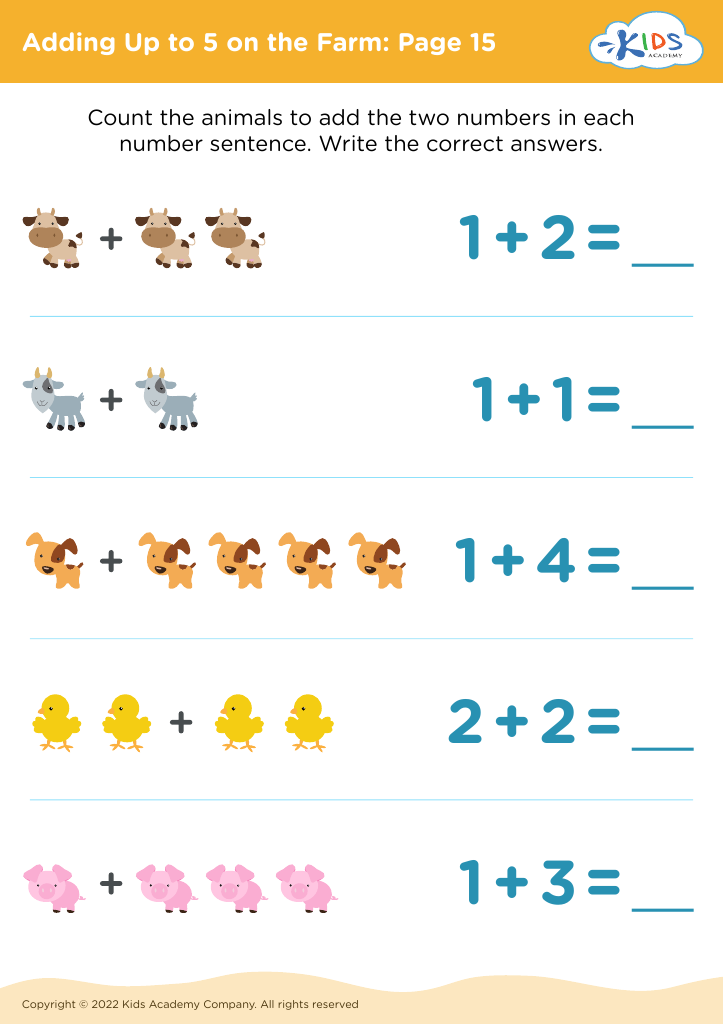
Adding Up to 5 on the Farm: Page 15
Worksheet
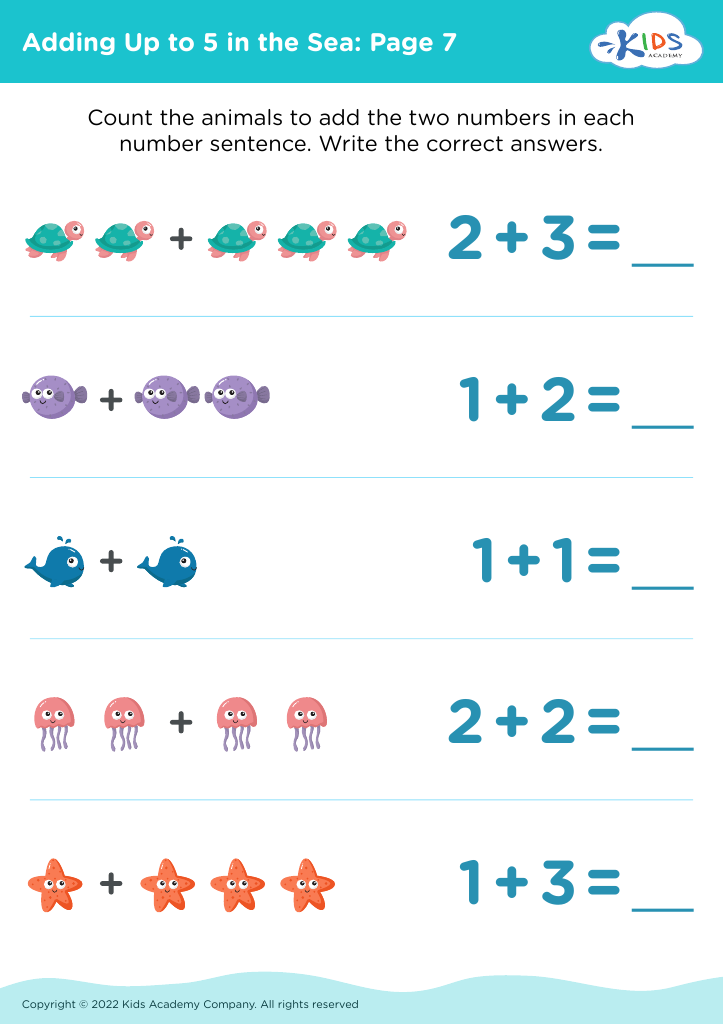
Adding Up to 5 in the Sea: Page 7

Adding Up to 5 in the Sea: Page 7

Adding Up to 5 in the Sea: Page 7
Worksheet
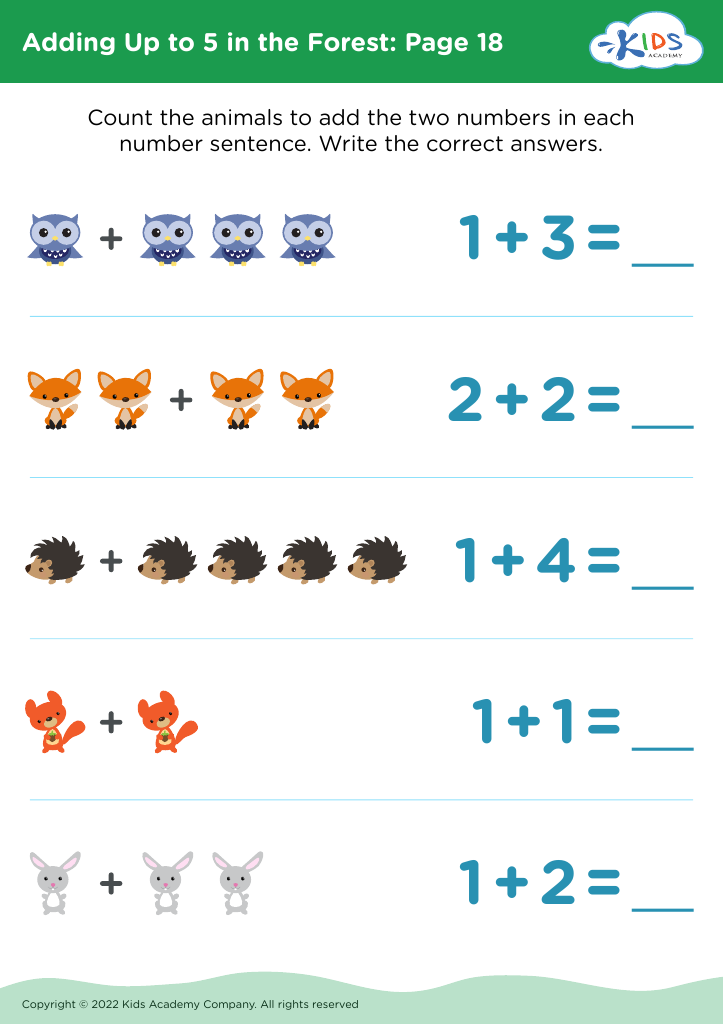
Adding Up to 5 in the Forest: Page 18
Worksheet
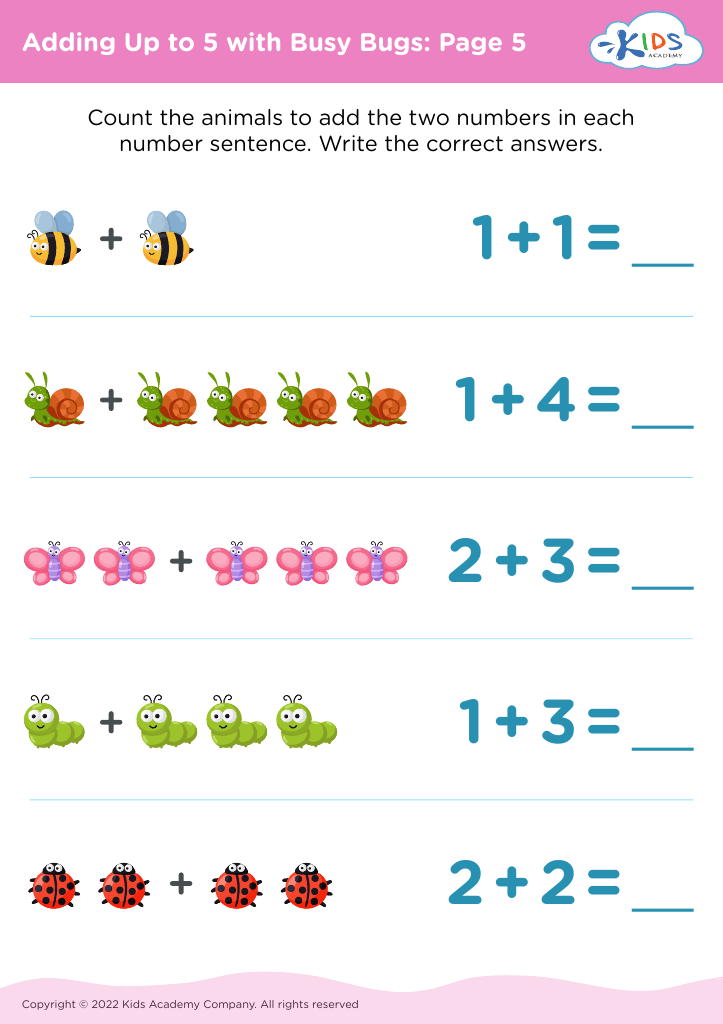
Adding Up to 5 with Busy Bugs: Page 5
Worksheet
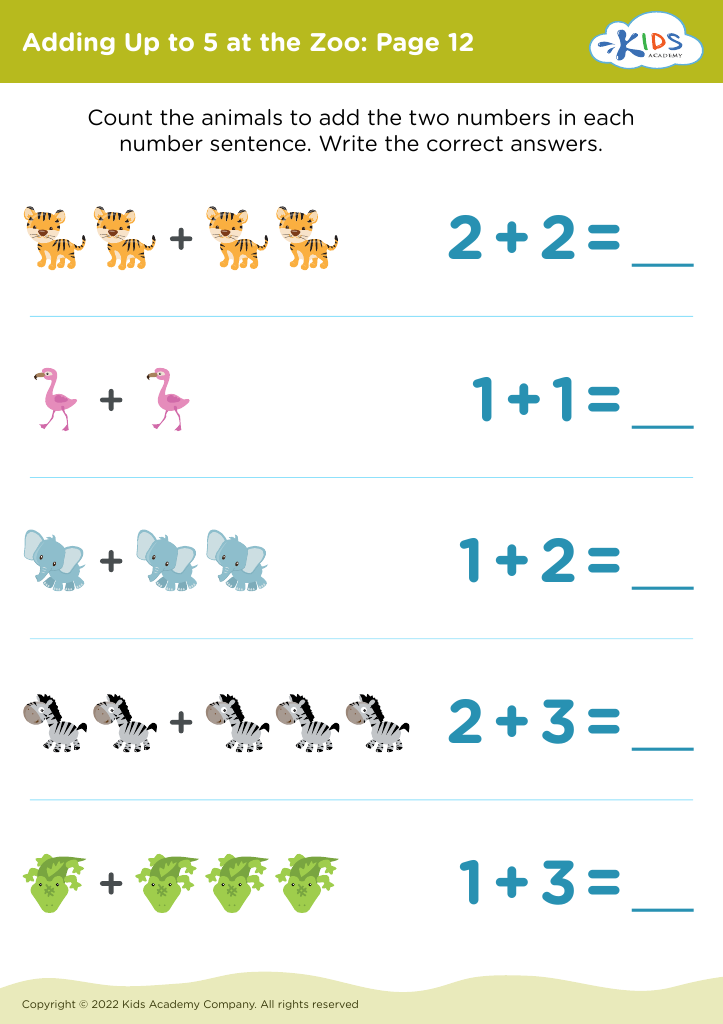
Adding Up to 5 at the Zoo: Page 12
Worksheet
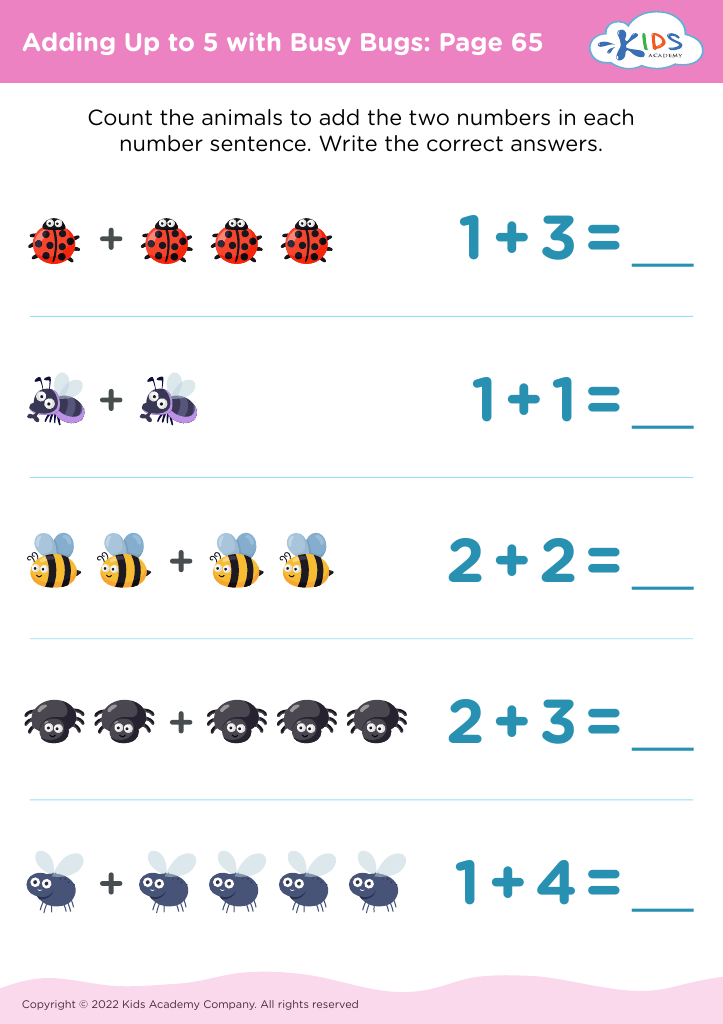
Adding Up to 5 with Busy Bugs: Page 65
Worksheet
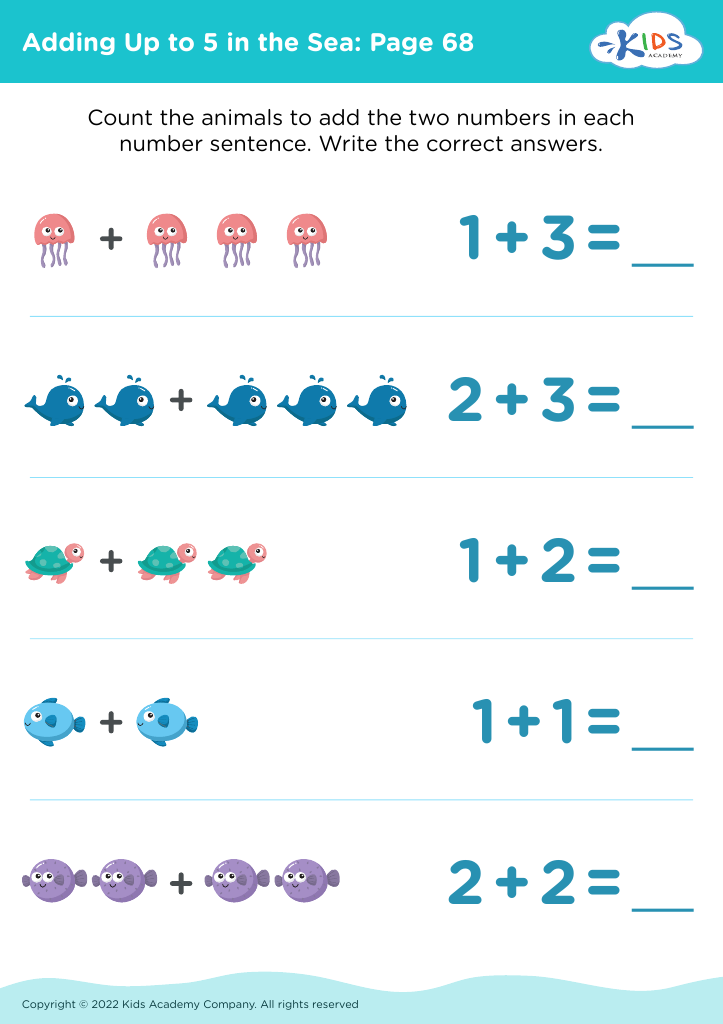
Adding Up to 5 in the Sea: Page 68
Worksheet
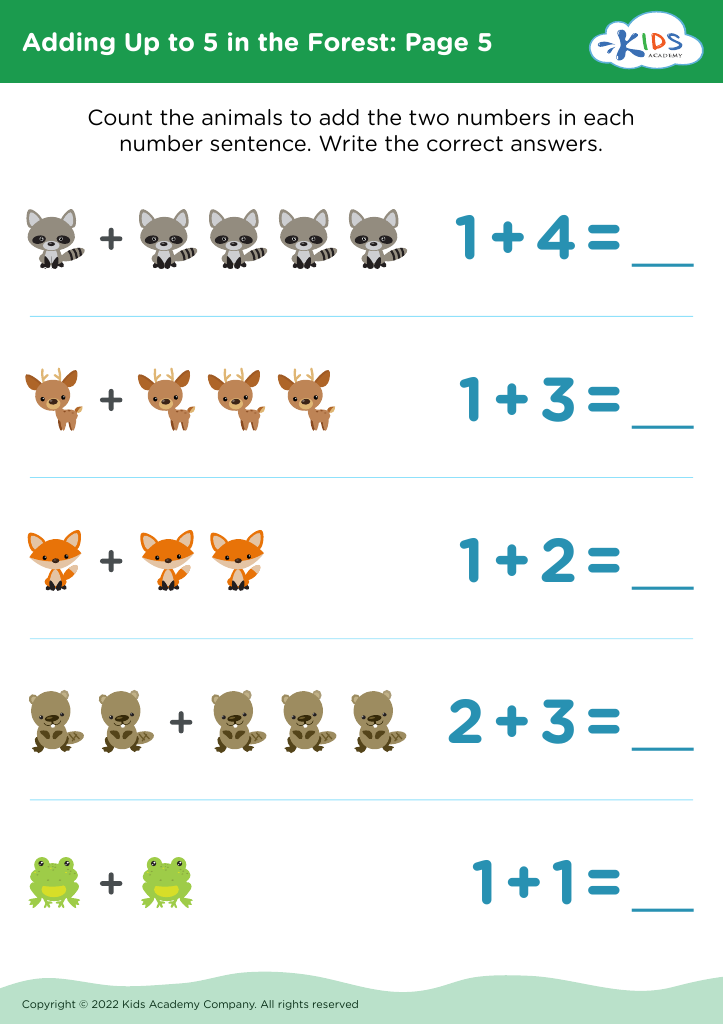
Adding Up to 5 in the Forest: Page 5
Worksheet
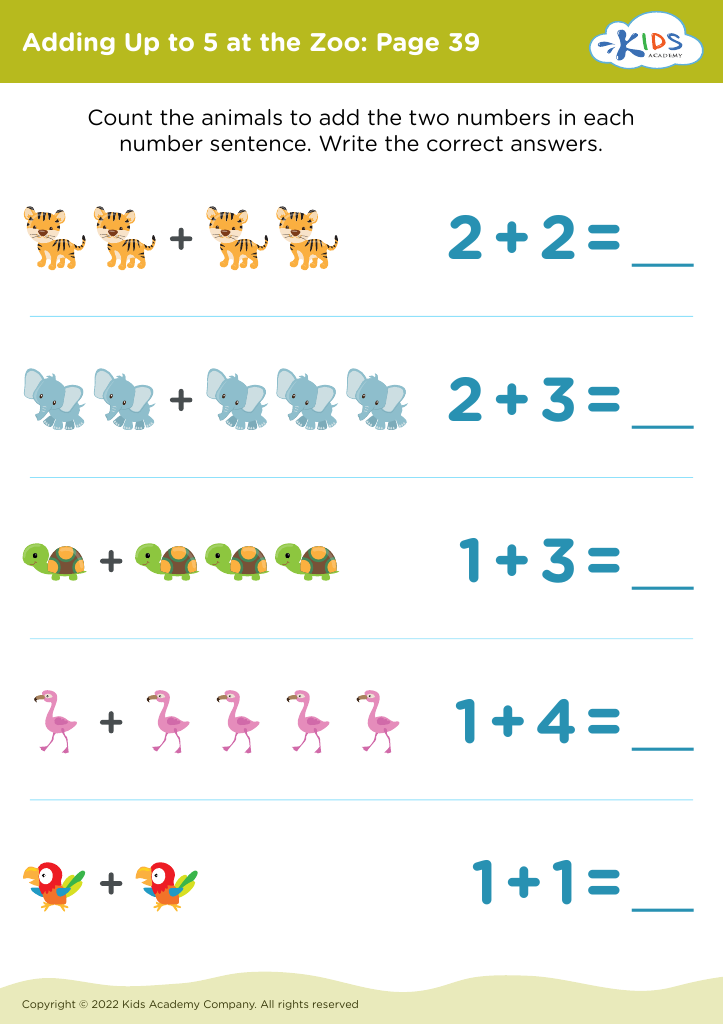
Adding Up to 5 at the Zoo: Page 39
Worksheet
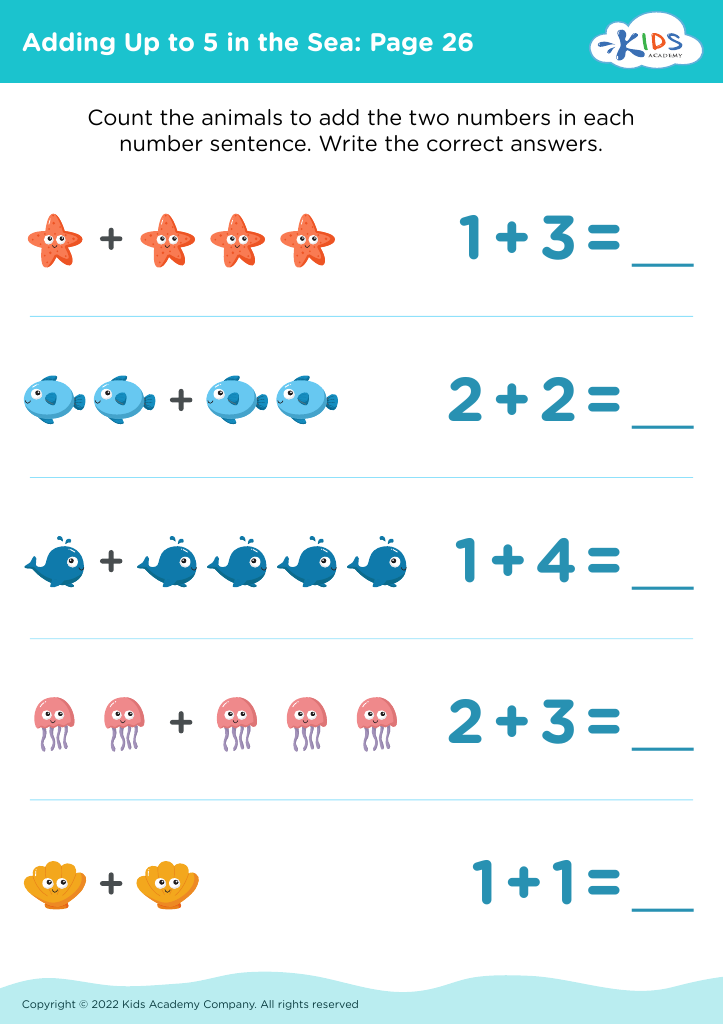
Adding Up to 5 in the Sea: Page 26
Worksheet
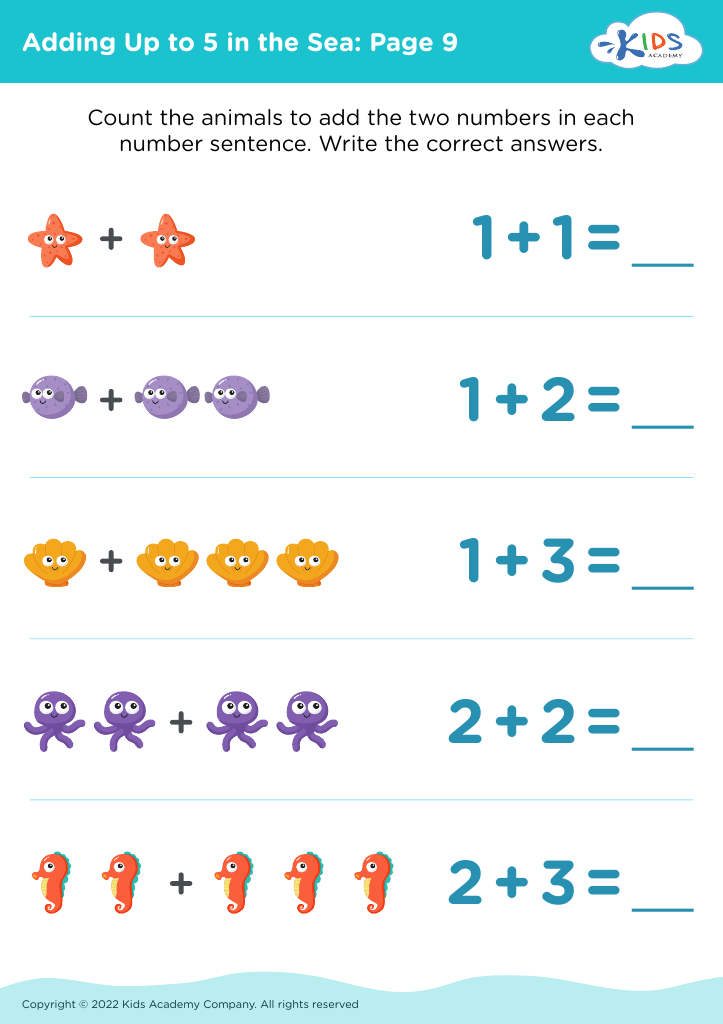
Adding Up to 5 in the Sea: Page 9

Adding Up to 5 in the Sea: Page 9

Adding Up to 5 in the Sea: Page 9
Worksheet


Basic arithmetic addition is a fundamental skill that forms the foundation for a child's mathematical understanding and critical thinking. For children aged 5-6, learning addition not only helps them grasp essential math concepts but also fosters cognitive development. At this age, children are highly receptive and able to absorb new information, making it an ideal time for introducing addition through engaging activities and games.

Understanding addition enhances problem-solving abilities and promotes logical reasoning. As children learn to combine numbers, they start to see patterns, relationships, and the connectivity of mathematical concepts in everyday situations—skills that are invaluable in later academic pursuits.

Furthermore, mastering basic addition boosts children's confidence. When they can add simple numbers successfully, they gain a sense of accomplishment that encourages them to tackle more complex mathematical challenges in the future. Parents and teachers should engage their children in fun, hands-on activities, such as using toys, snacks, or colorful worksheets, to make learning enjoyable.

Ultimately, focusing on basic arithmetic addition sets a strong mathematical foundation that not only benefits children in their current learning but also equips them with essential skills for lifelong success in academics and everyday decision-making.