Fine motor skills (writing) Addition Worksheets for Ages 5-6 - Page 2
32 filtered results
-
From - To
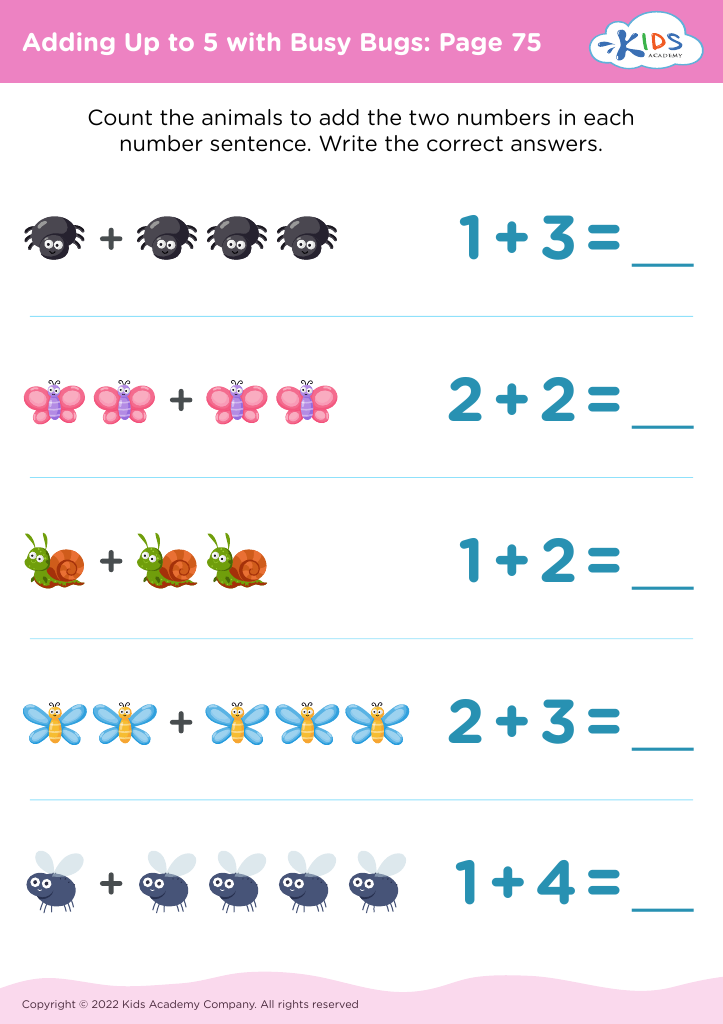
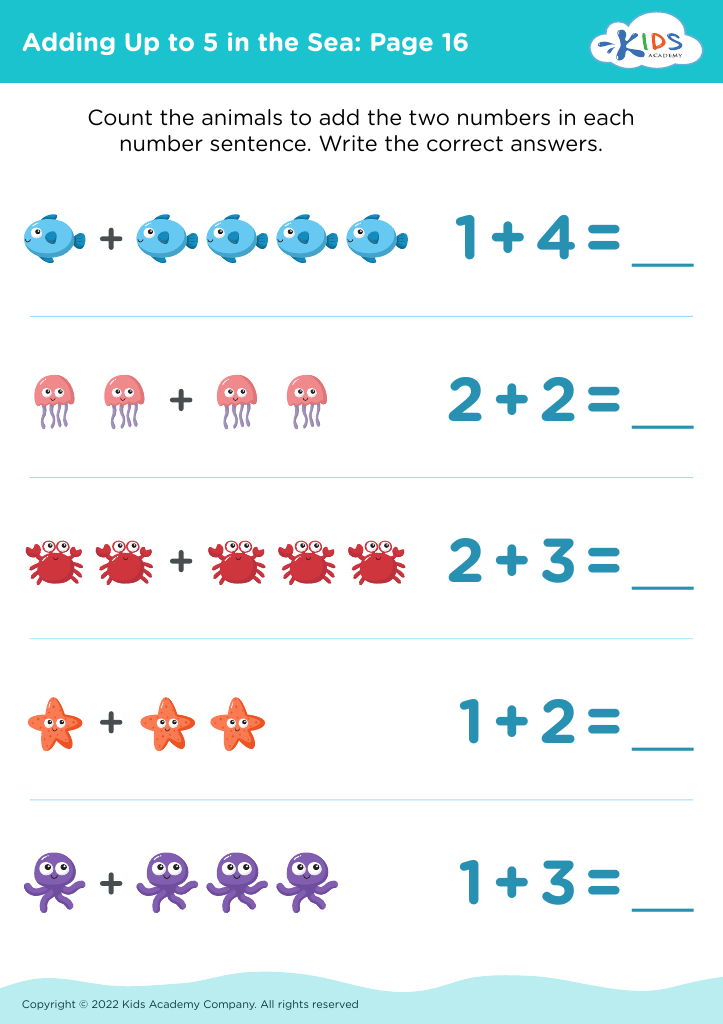
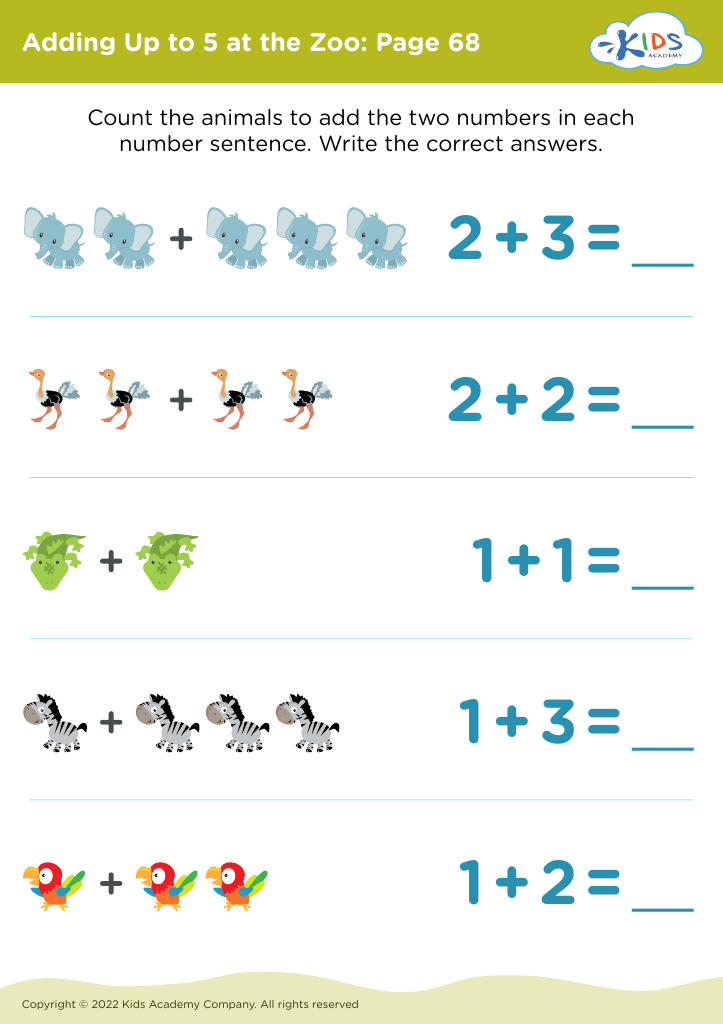
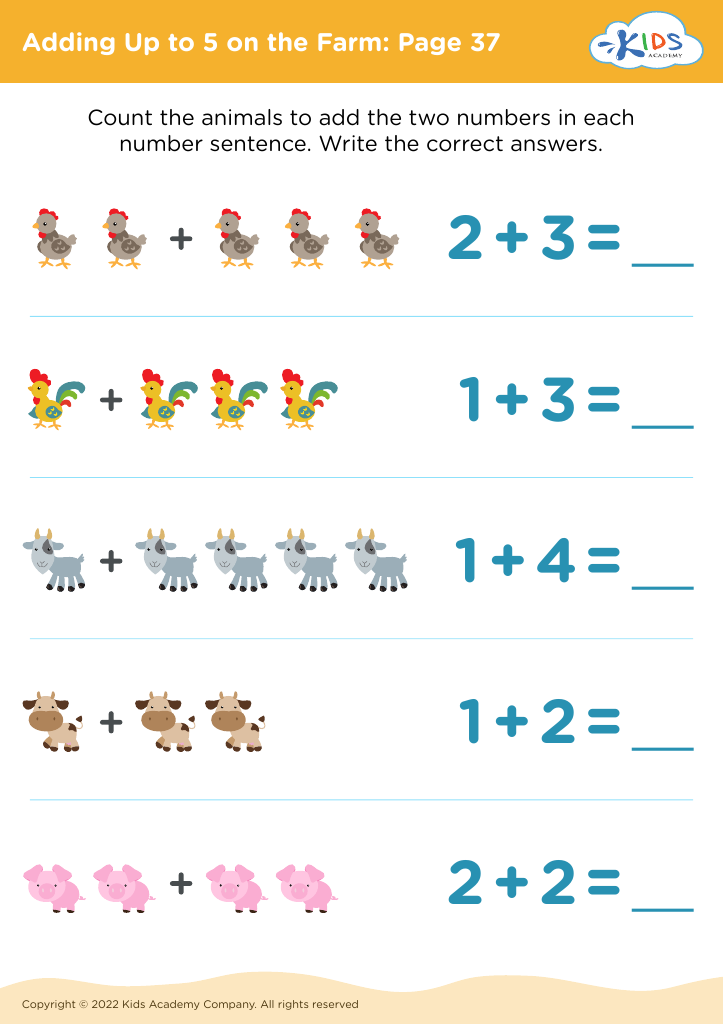
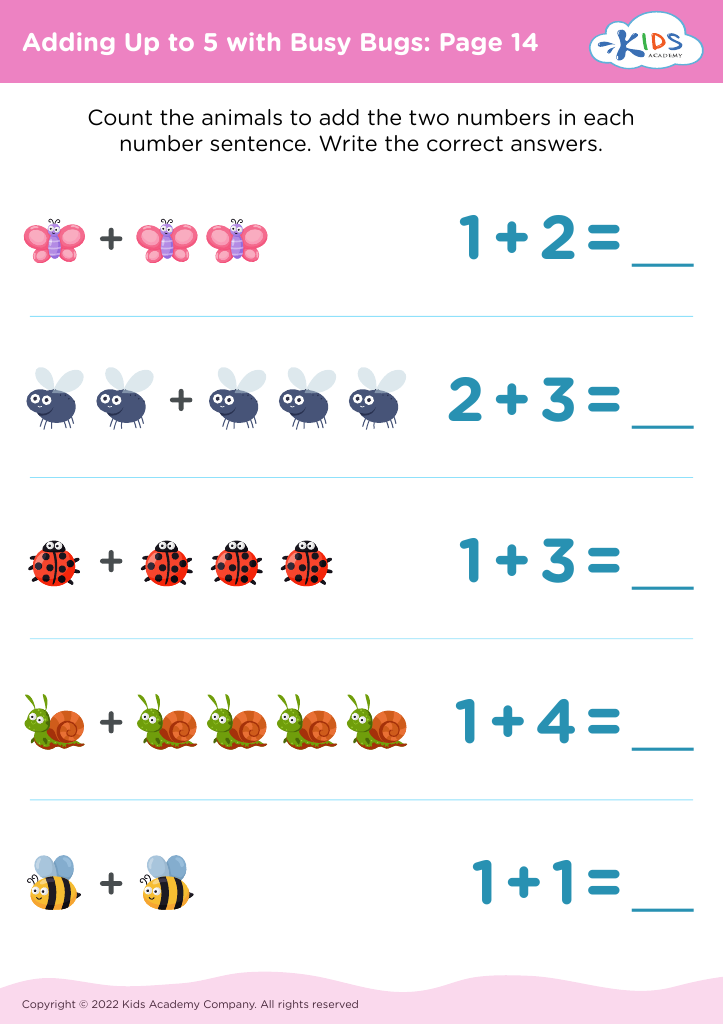
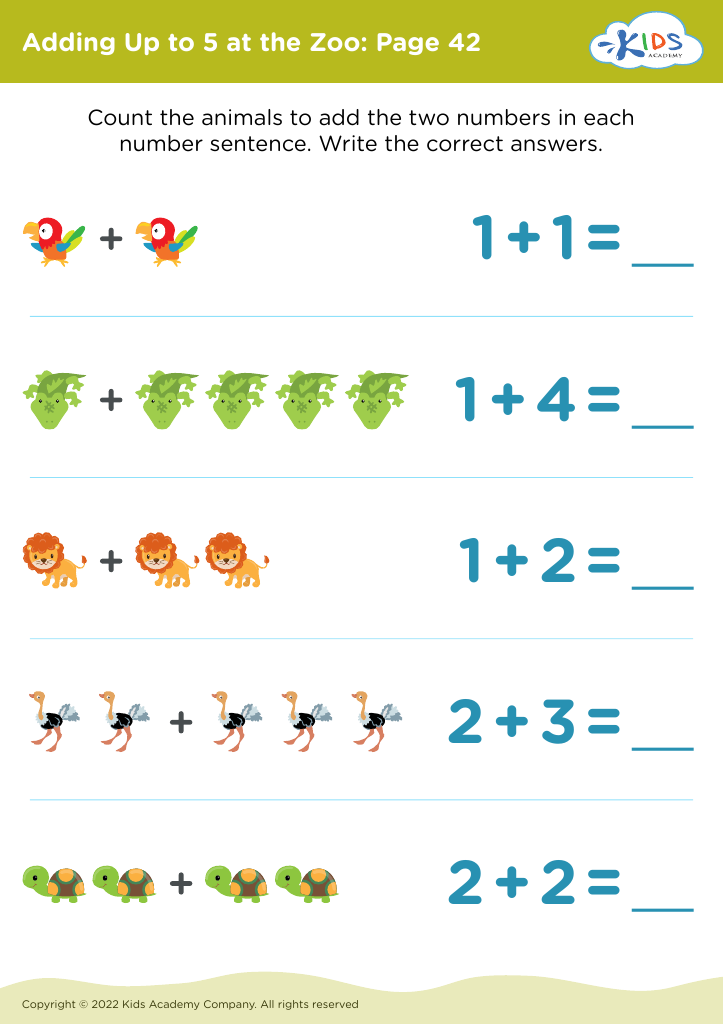
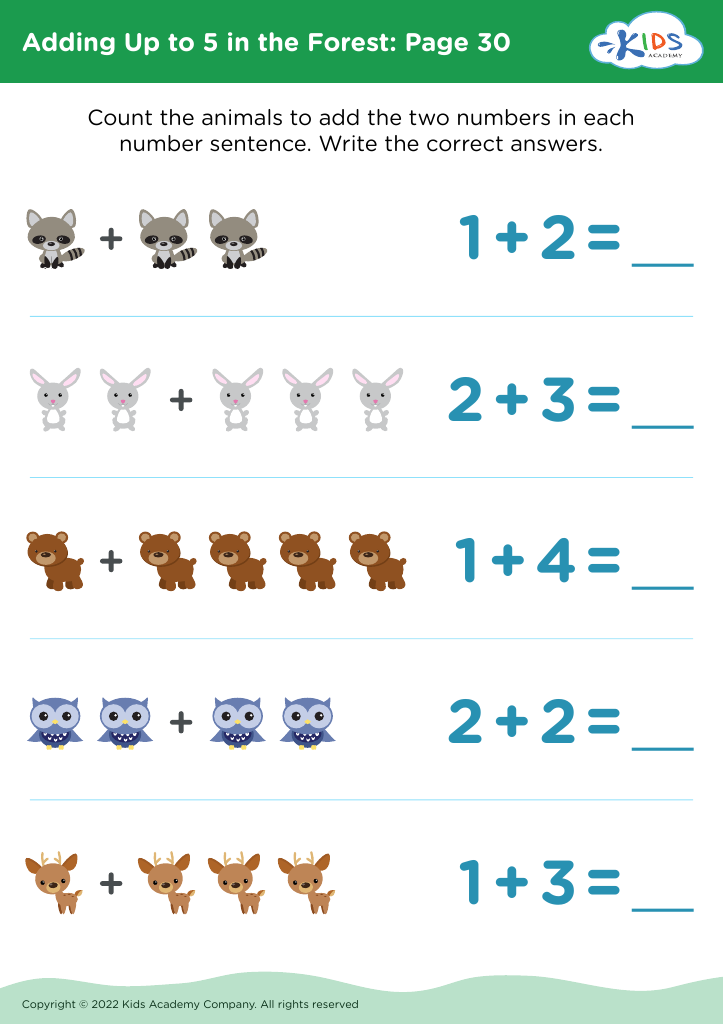
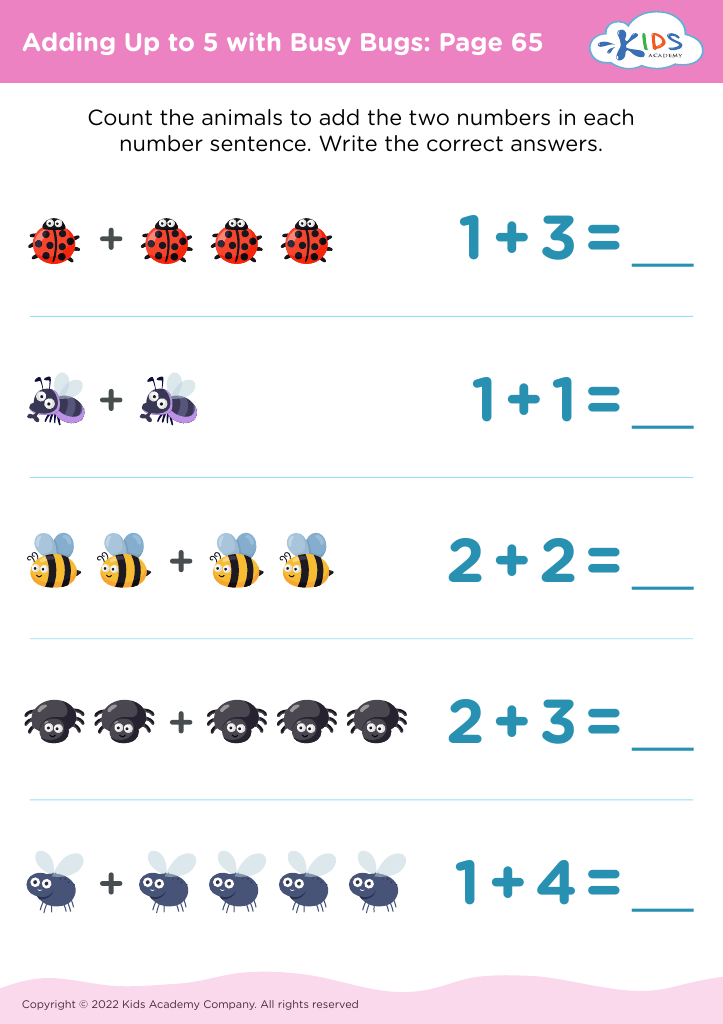








Fine motor skills, especially writing, are crucial for children aged 5-6 as they form the foundation for a variety of essential life skills. During this developmental stage, children begin to fine-tune their hand-eye coordination and dexterity, which are vital for both academic and everyday tasks. Proficient writing skills enable children to express themselves more effectively, boosting their confidence and creativity.
Parents and teachers should care about the development of these skills because they impact a child's educational journey and overall well-being. Children who struggle with fine motor skills may experience frustration in the classroom, affecting their desire to engage in learning activities. Writing also plays a significant role in literacy, as it helps reinforce spelling, grammar, and composition skills.
Additionally, fine motor skills extend beyond writing; they aid in tasks like using scissors, buttoning clothes, and self-feeding. By supporting the development of fine motor skills, parents and educators can foster independence and self-efficacy in children, laying the groundwork for a positive learning experience. Engaging in activities like drawing, tracing, and playing with building blocks can enhance these skills, ultimately contributing to a child's success both in school and beyond.








