Filters

35 filtered results

Clear all filters
Favorites
With answer key
Interactive

35 filtered results

Difficulty Level

Grade


Subject

    Check out this FREE Trial Lesson on Addition for age 5-6!

    Making 16

    Favorites
    With answer key
    Interactive
    • 5-6
    • Fine Motor Skills
    • Addition
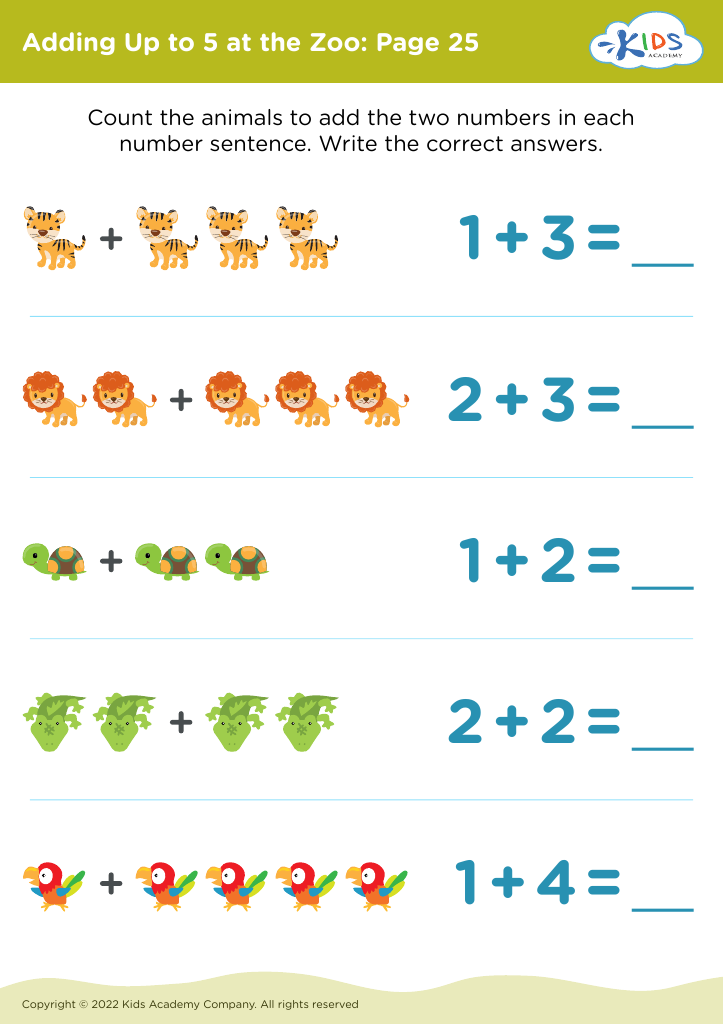
    Adding Up to 5 at the Zoo: Page 25
    Adding Up to 5 at the Zoo: Page 25
    Adding Up to 5 at the Zoo: Page 25
    Worksheet
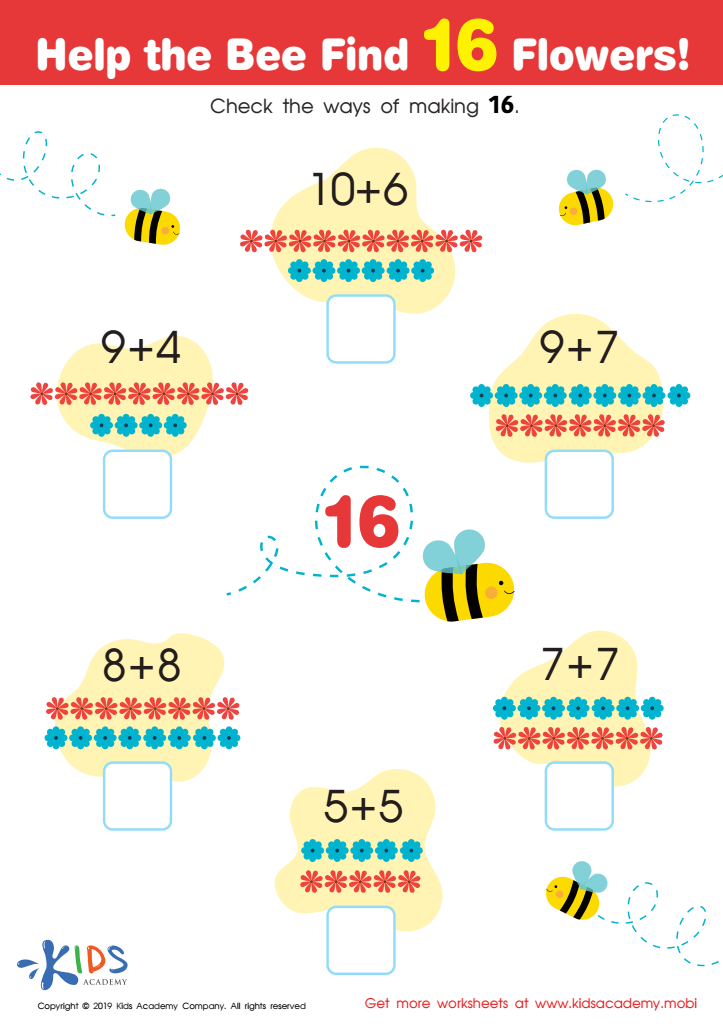
    Help the Bee Find 16 Flowers Worksheet
    Help the Bee Find 16 Flowers Worksheet

    Help the Bee Find 16 Flowers Worksheet

    Ask your students to count as high as they can. Show them that different numbers can equal the same figure with examples like 2+2=4 and 3+1=4. Ask for more examples, then help the bees find 16 flowers by checking the ways of making 16.
    Help the Bee Find 16 Flowers Worksheet
    Worksheet
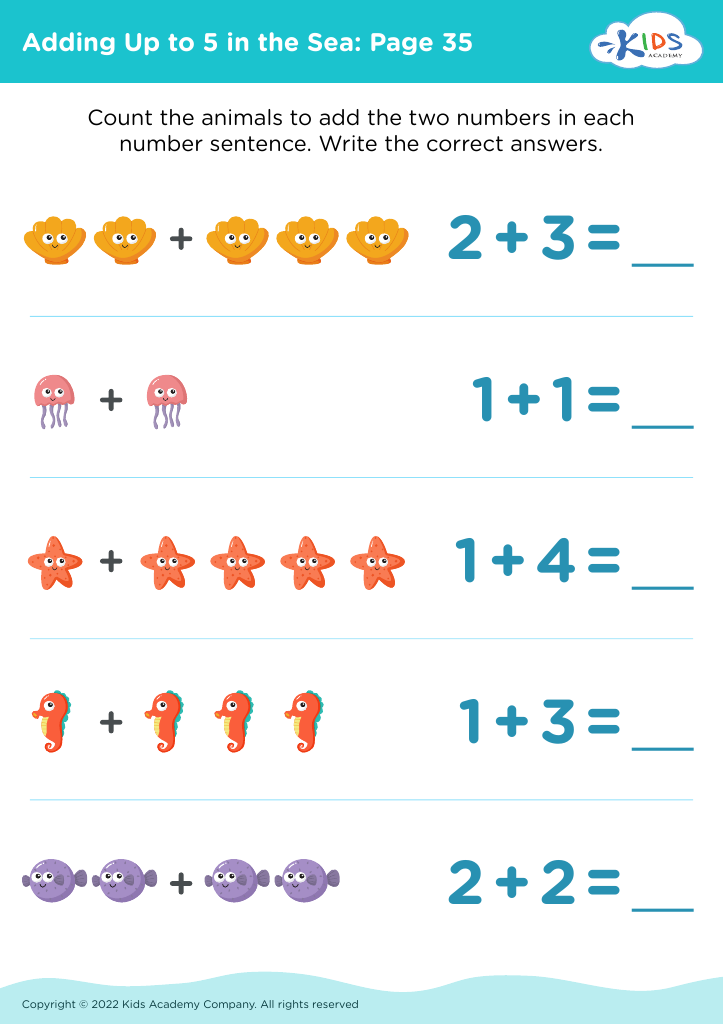
    Adding Up to 5 in the Sea: Page 35
    Adding Up to 5 in the Sea: Page 35
    Adding Up to 5 in the Sea: Page 35
    Worksheet
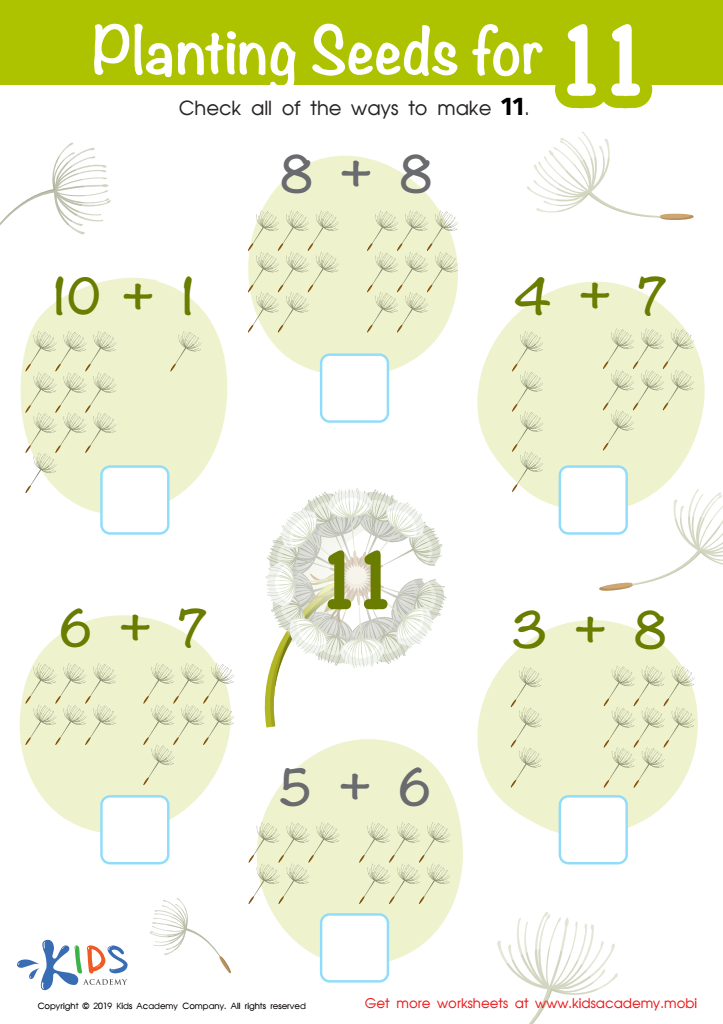
    Planting Seeds for 11 Worksheet
    Planting Seeds for 11 Worksheet

    Planting Seeds for 11 Worksheet

    Before starting, ask your students to count as high as they can. Explain that different numbers can add up to the same total. Give examples like 2+2 =4 and 3+1 =4. Ask if they can think of other examples. Then have them work through the equations in the printout and circle all that add up to 11.
    Planting Seeds for 11 Worksheet
    Worksheet
    Addition Robot Sorter Worksheet
    Addition Robot Sorter Worksheet
    Addition Robot Sorter Worksheet
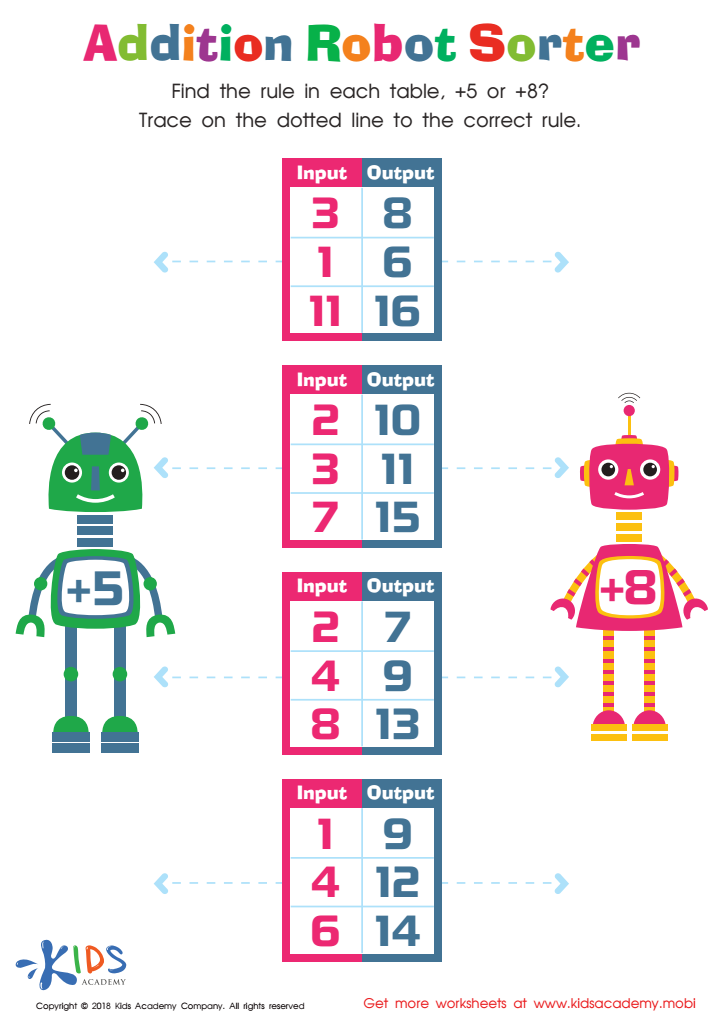
    This worksheet helps your child understand addition. Have them trace the dotted lines to the correct equations: +8 and +5. It's a great way to aid their mathematical comprehension and get them comfortable with adding equations.
    Addition Robot Sorter Worksheet
    Worksheet
    Adding Up to 5 in the Forest: Page 54
    Adding Up to 5 in the Forest: Page 54
    Adding Up to 5 in the Forest: Page 54
    Worksheet
    Adding Up to 5 on the Farm: Page 45
    Adding Up to 5 on the Farm: Page 45
    Adding Up to 5 on the Farm: Page 45
    Worksheet
    Adding in the Arctic Worksheet
    Adding in the Arctic Worksheet
    Adding in the Arctic Worksheet
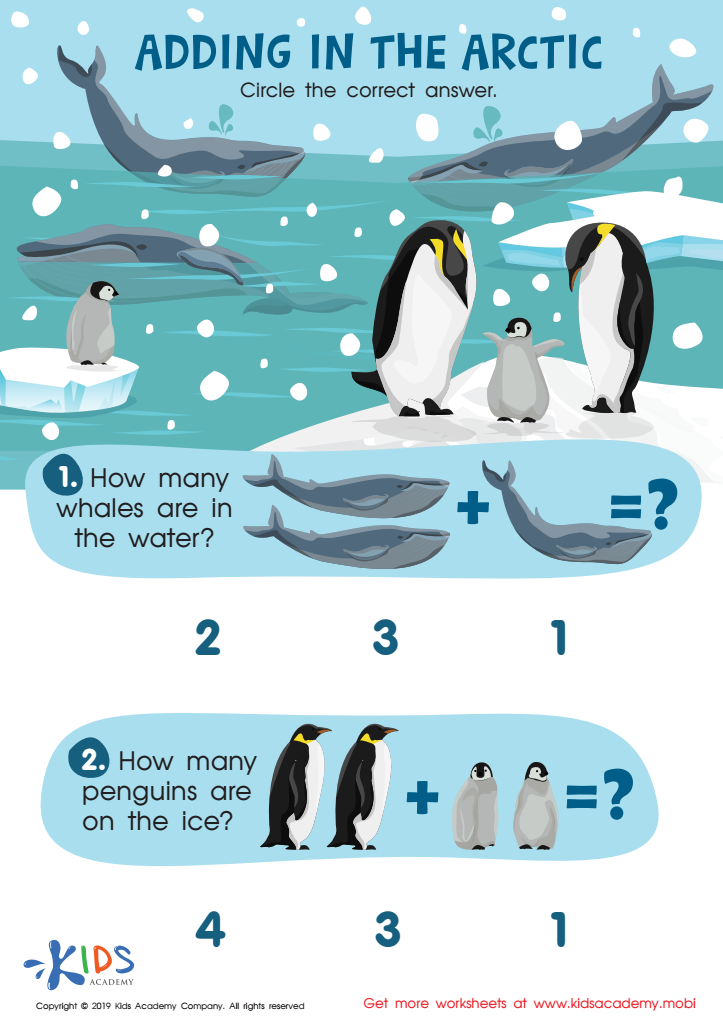
    Introduce your kids to the Arctic with this worksheet. Let them look at the pictures, teach them the name of the animals, and help them add up the correct number. Ask your kids to tell you some of the animals found there and what the weather is like. It's a fun and educational way to learn more about the Arctic.
    Adding in the Arctic Worksheet

    Worksheet
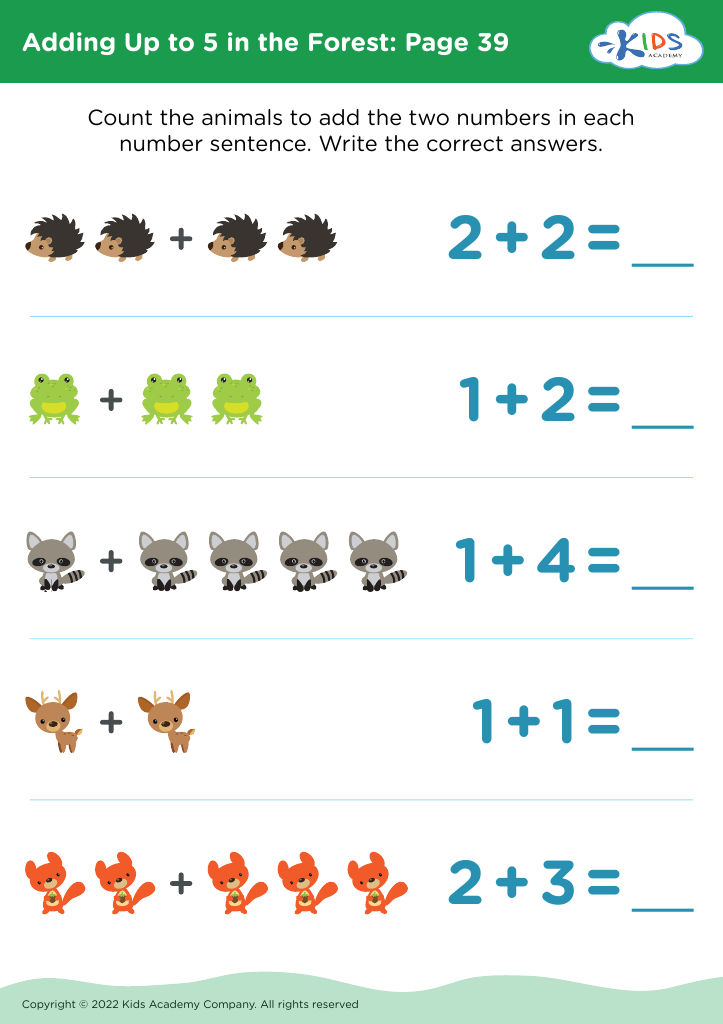
    Adding Up to 5 in the Forest: Page 39
    Adding Up to 5 in the Forest: Page 39
    Adding Up to 5 in the Forest: Page 39
    Worksheet
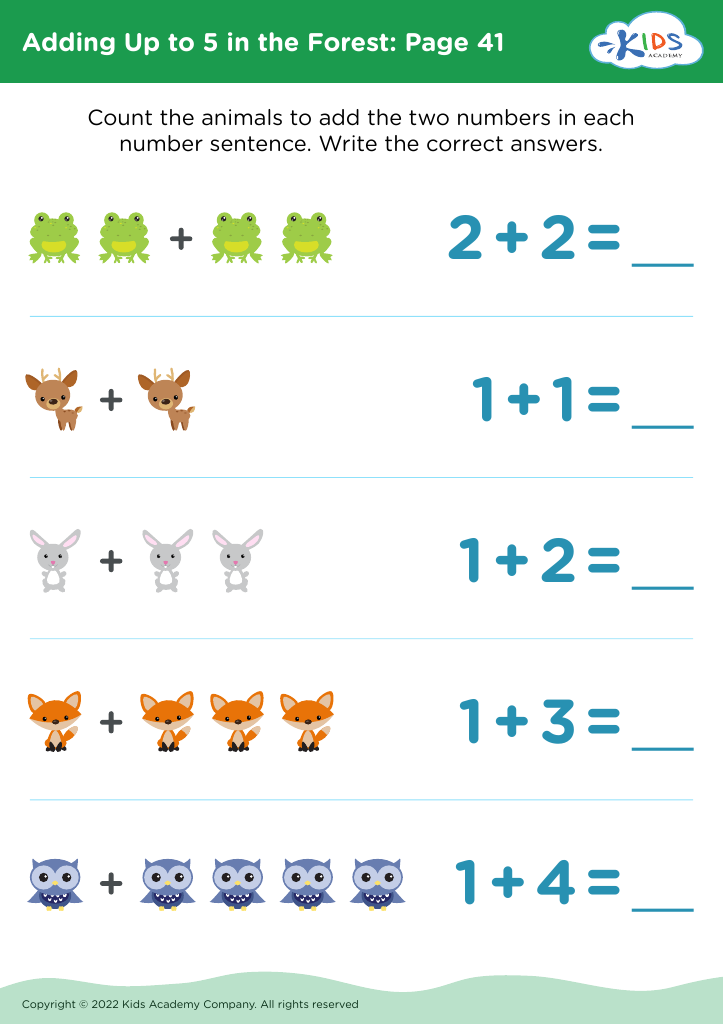
    Adding Up to 5 in the Forest: Page 41
    Adding Up to 5 in the Forest: Page 41
    Adding Up to 5 in the Forest: Page 41
    Worksheet
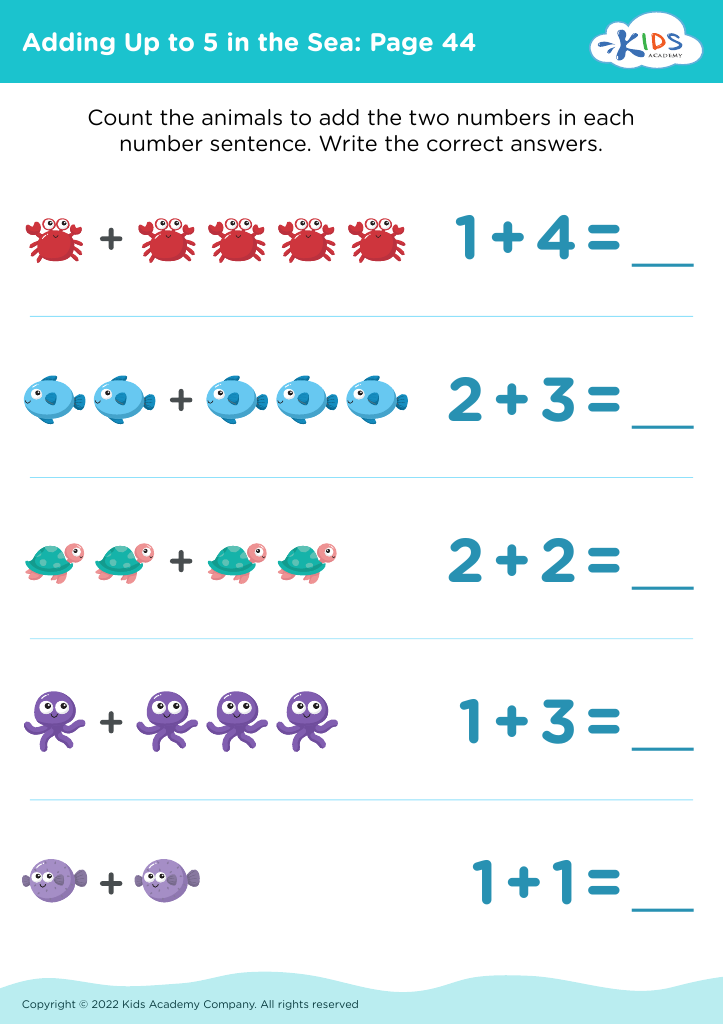
    Adding Up to 5 in the Sea: Page 44
    Adding Up to 5 in the Sea: Page 44
    Adding Up to 5 in the Sea: Page 44
    Worksheet


    Fine motor skills are essential for children aged 5-6 as they lay the groundwork for important tasks and cognitive development. During this critical period, children refine their hand and finger movements, which are vital for everyday activities like writing, buttoning clothing, and managing tools. Developing fine motor skills not only enhances a child’s ability to control their physical actions but also significantly boosts their confidence and independence.

    Parents and teachers should prioritize fine motor skill activities because these skills serve as building blocks for academic success. For example, proficient handwriting relies on these skills, influencing a child’s ability to communicate effectively in school. Engaging in activities such as drawing, cutting, or playing with clay also promotes creativity and problem-solving abilities, enriching their educational experiences.

    Furthermore, practicing fine motor skills can improve focus and attention span, essential qualities for a child's academic journey. Developmentally appropriate fine motor activities encourage social skills and cooperation through group interaction and shared tasks. By supporting the growth of fine motor skills, adults not only assist children in achieving crucial developmental milestones but also empower them to approach future learning challenges with confidence and ease. Investing time and effort in this area is vital for holistic child development.