Filters

387 filtered results

Clear all filters
Favorites
With answer key
Interactive

387 filtered results

Difficulty Level

Grade


Check out this FREE Trial Lesson on Addition for age 5-6!

D

Favorites
With answer key
Interactive
  • 5-6
  • Number Recognition
  • Addition
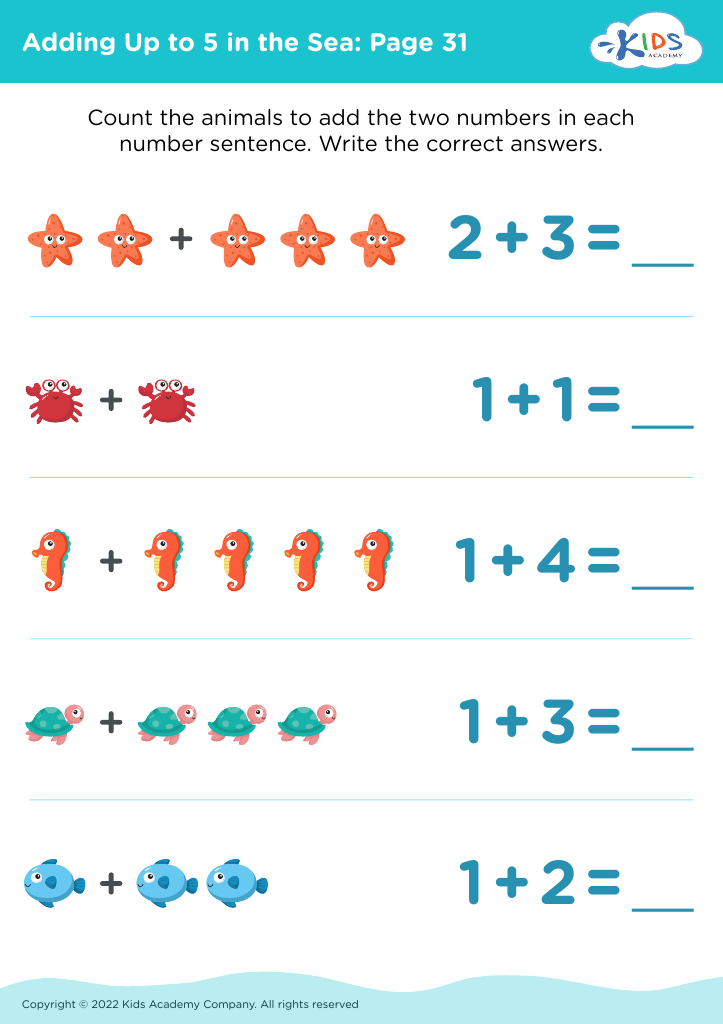
Adding Up to 5 in the Sea: Page 31
Worksheet
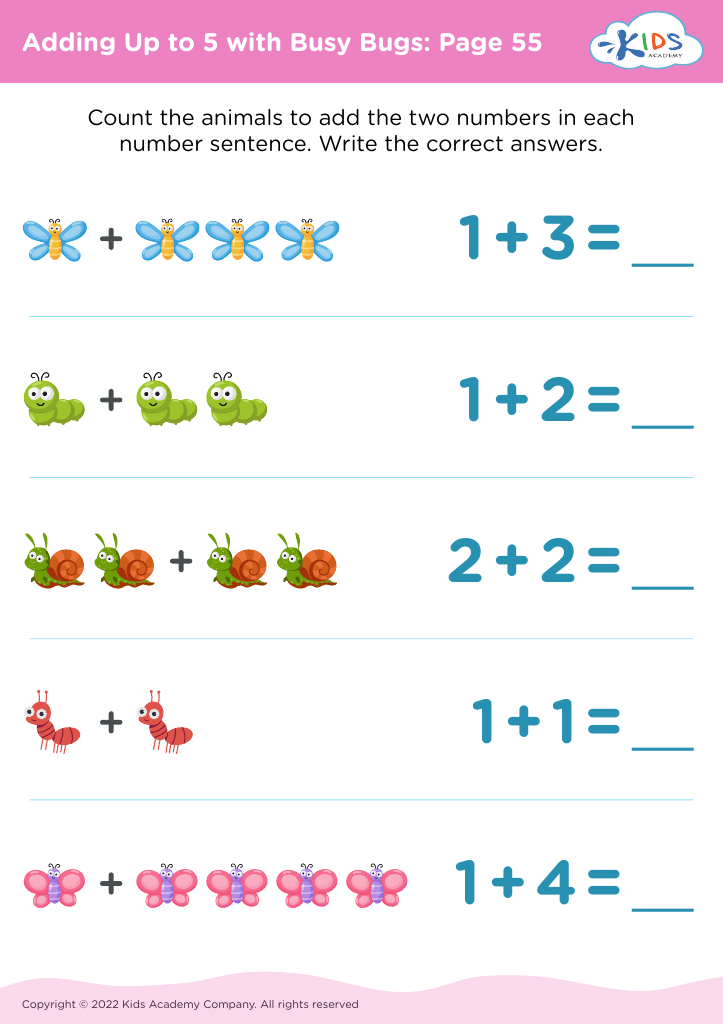
Adding Up to 5 with Busy Bugs: Page 55
Worksheet
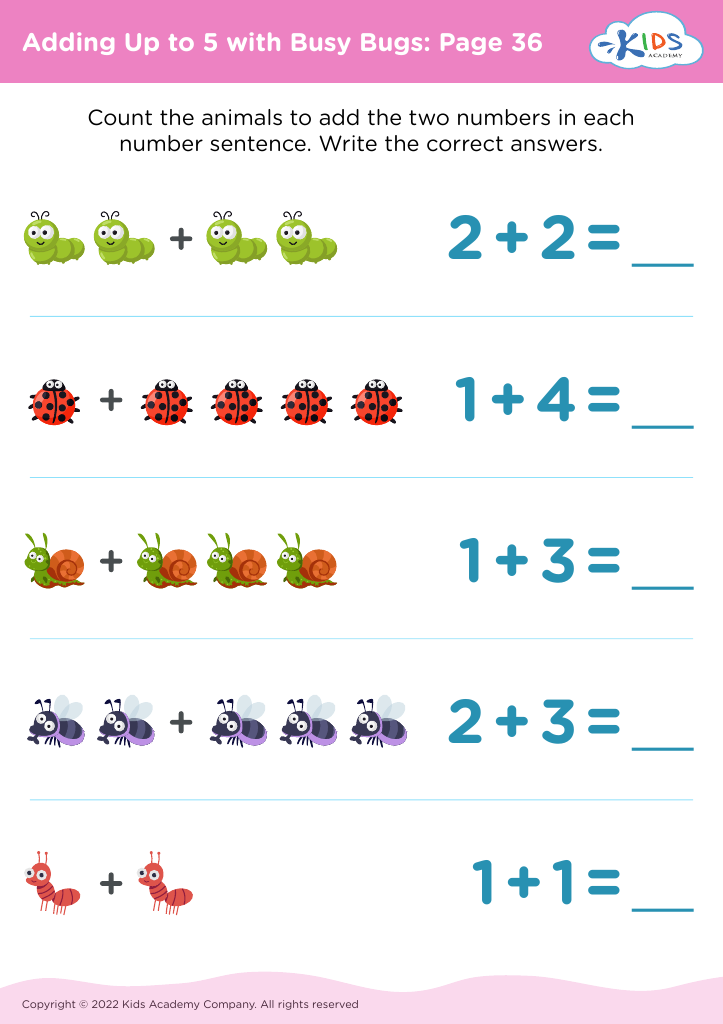
Adding Up to 5 with Busy Bugs: Page 36
Worksheet
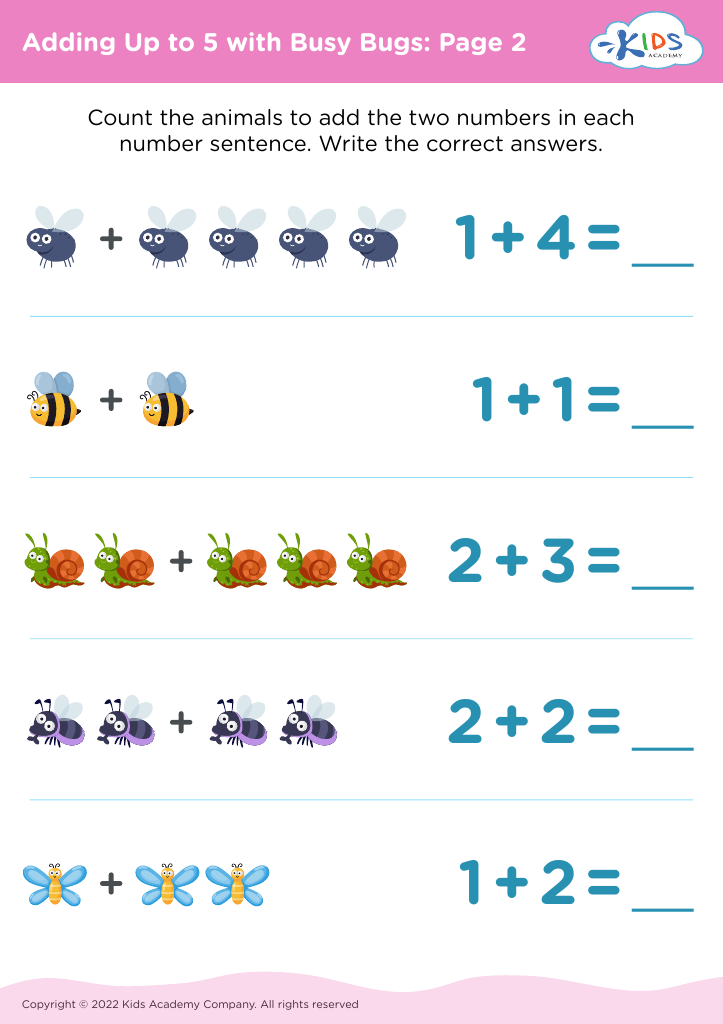
Adding Up to 5 with Busy Bugs: Page 2
Worksheet
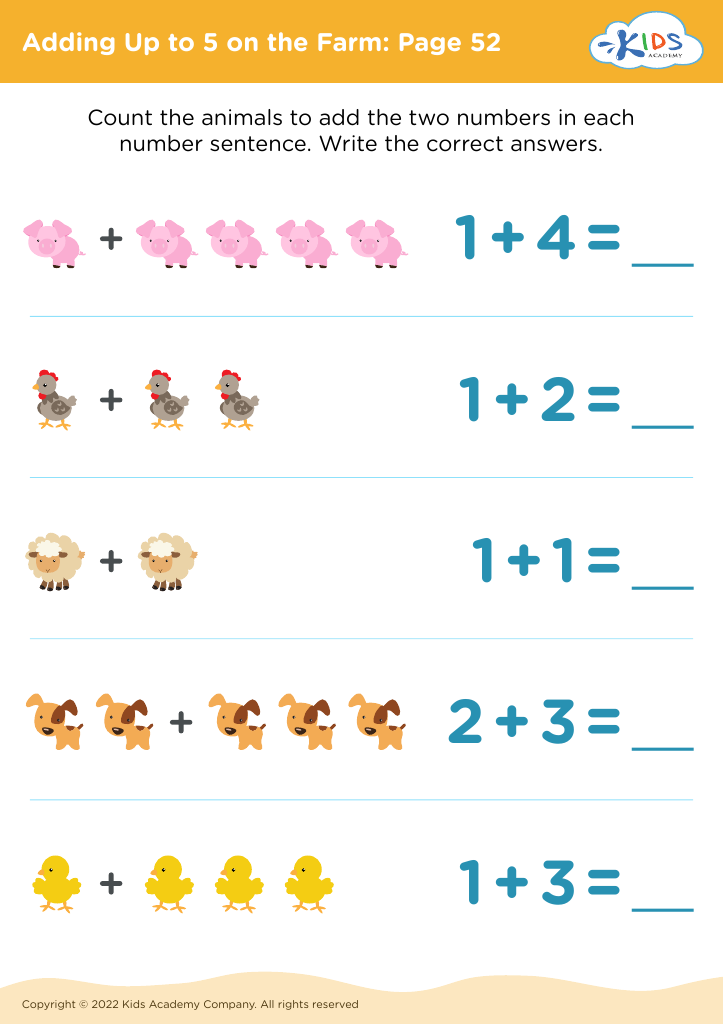
Adding Up to 5 on the Farm: Page 52
Worksheet
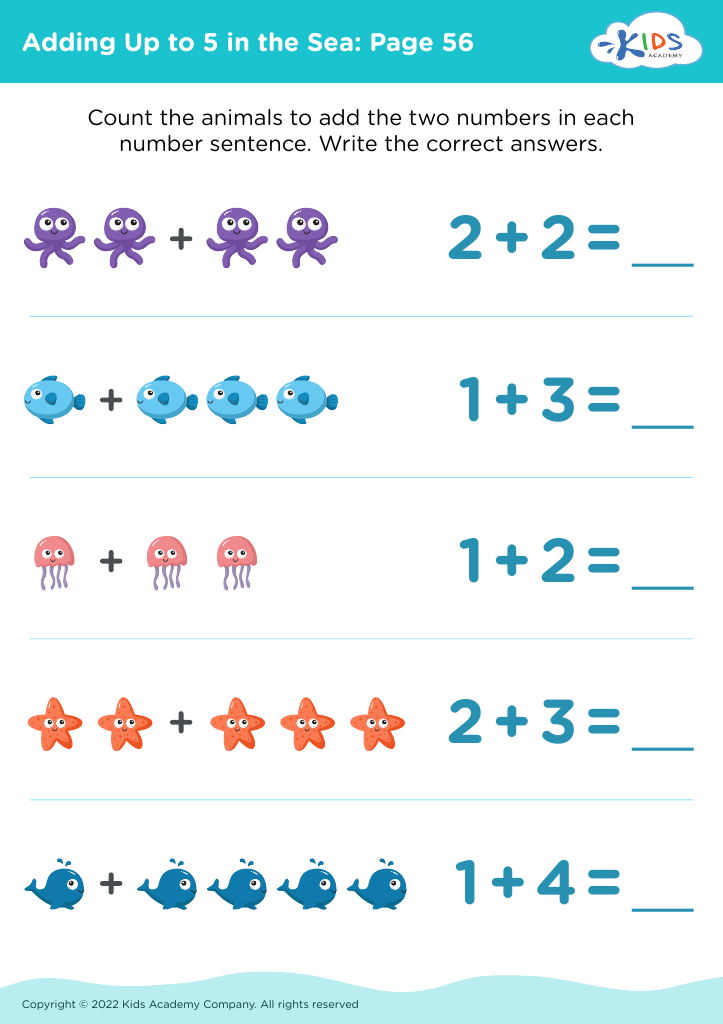
Adding Up to 5 in the Sea: Page 56
Worksheet
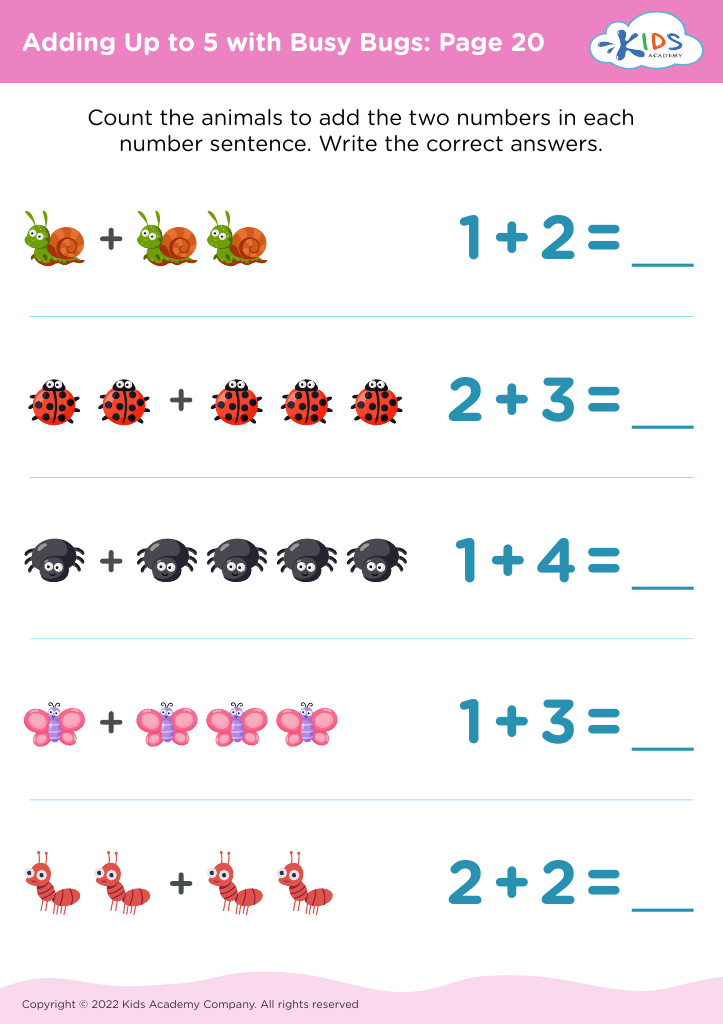
Adding Up to 5 with Busy Bugs: Page 20
Worksheet
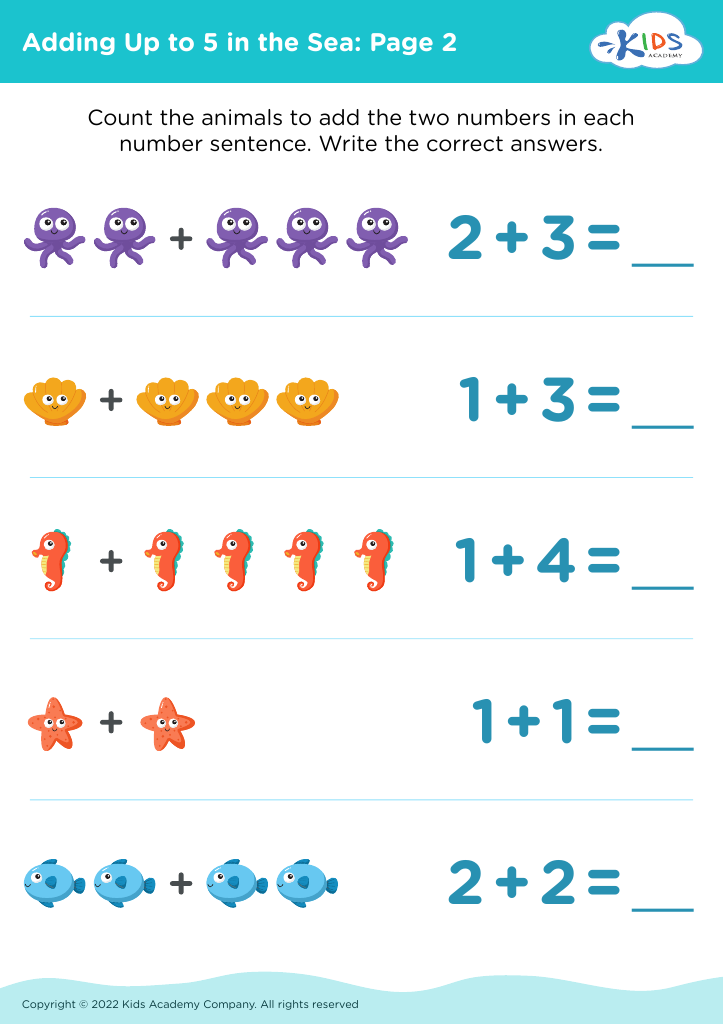
Adding Up to 5 in the Sea: Page 2

Adding Up to 5 in the Sea: Page 2

Adding Up to 5 in the Sea: Page 2
Worksheet
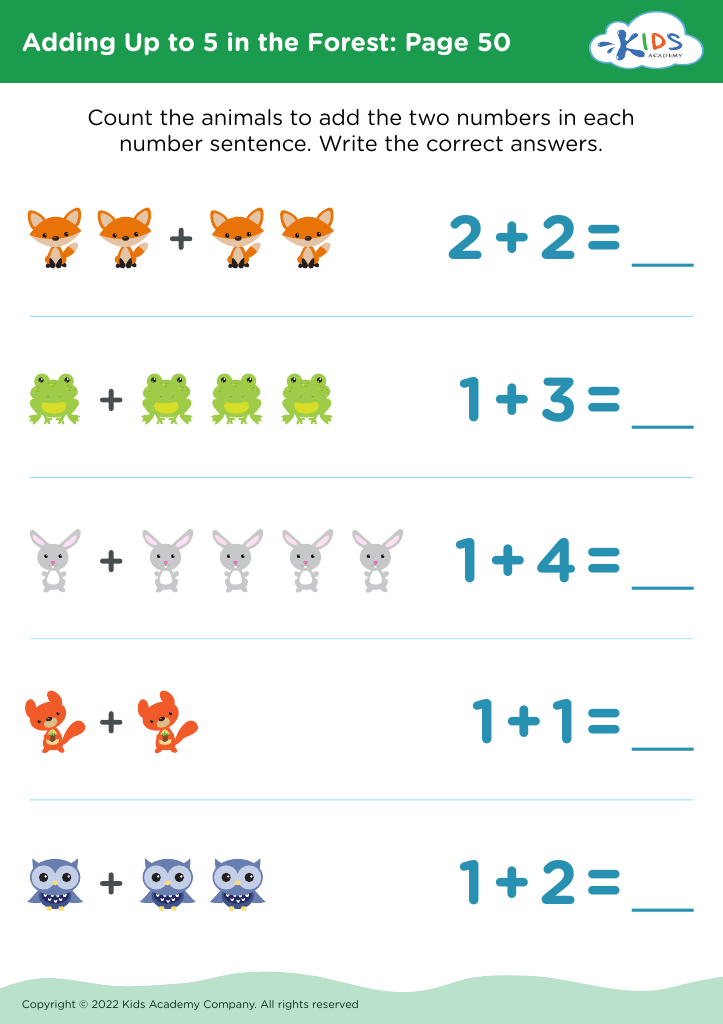
Adding Up to 5 in the Forest: Page 50
Worksheet
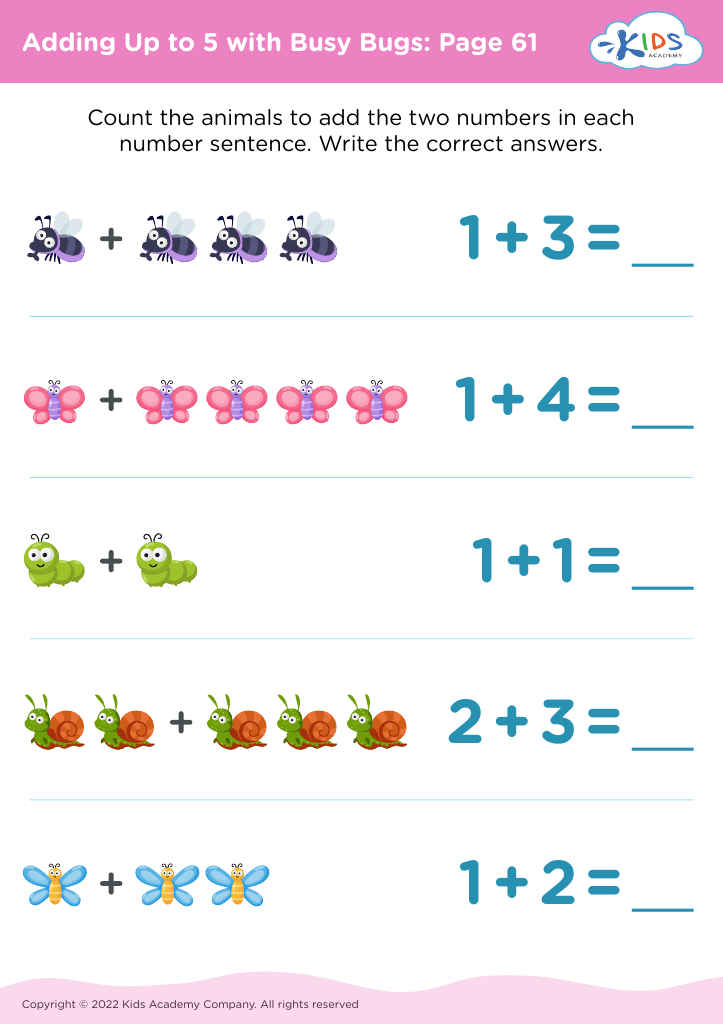
Adding Up to 5 with Busy Bugs: Page 61
Worksheet
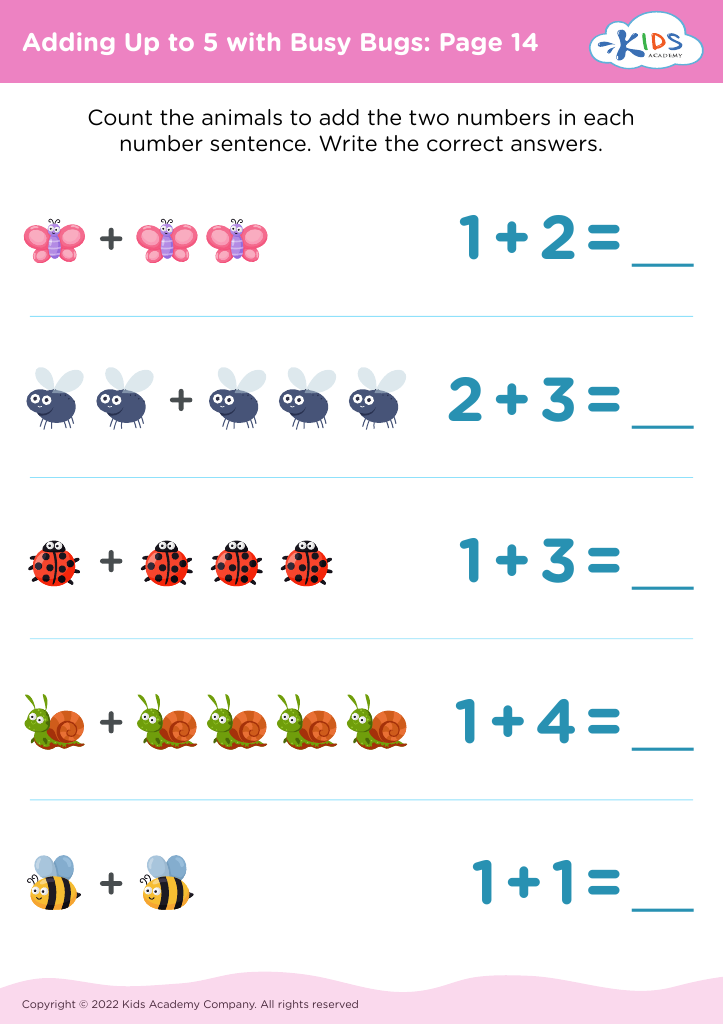
Adding Up to 5 with Busy Bugs: Page 14
Worksheet
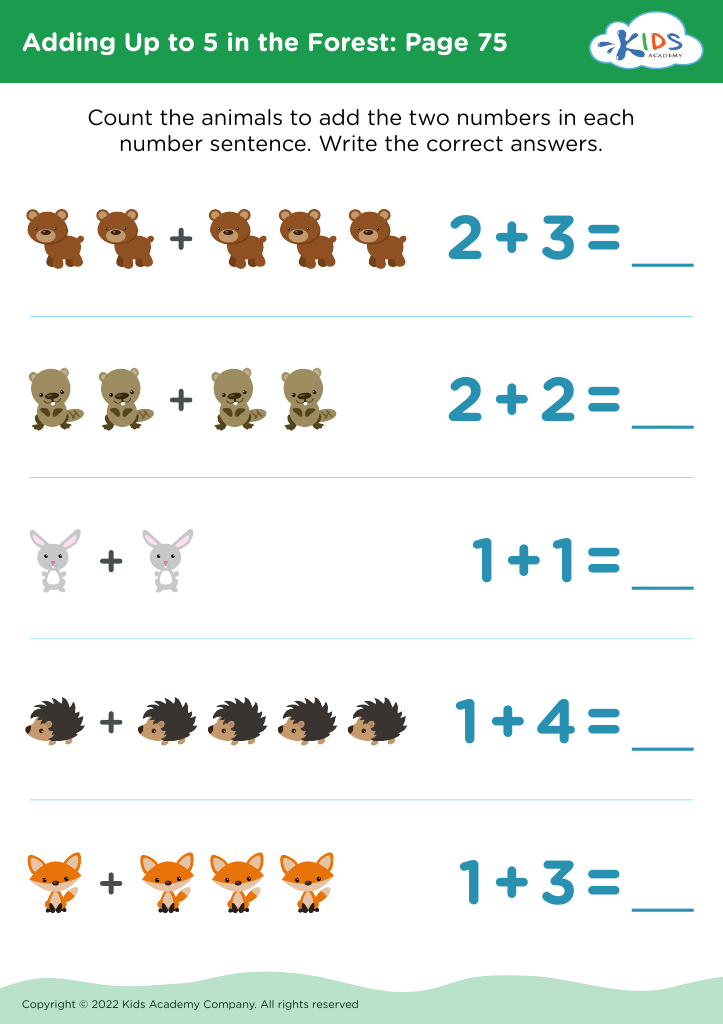
Adding Up to 5 in the Forest: Page 75
Worksheet
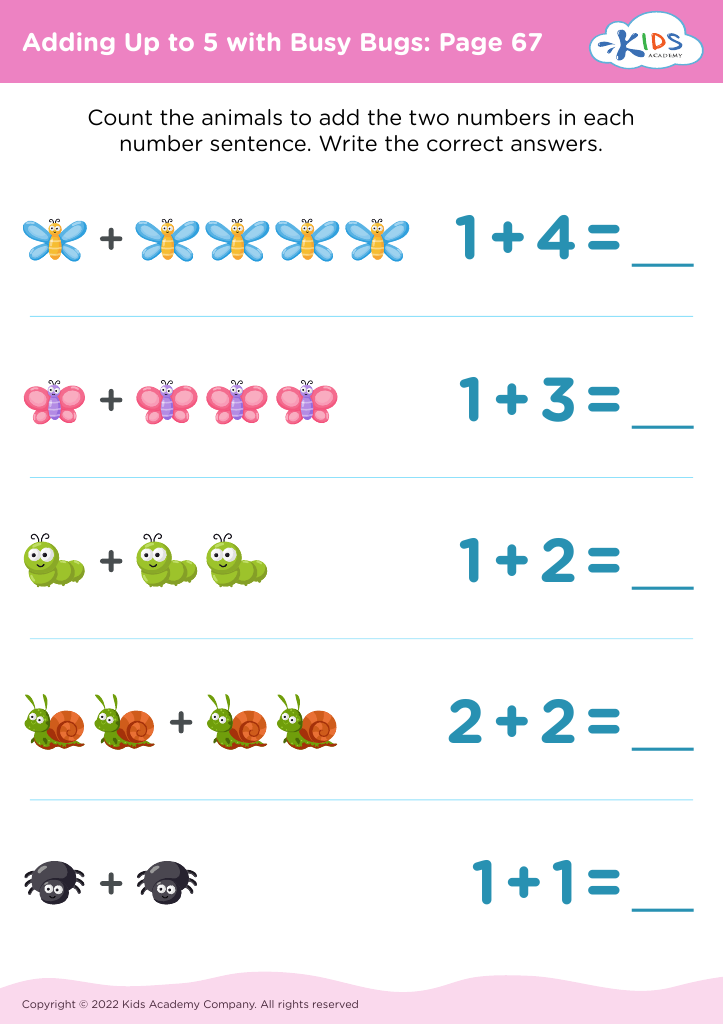
Adding Up to 5 with Busy Bugs: Page 67
Worksheet
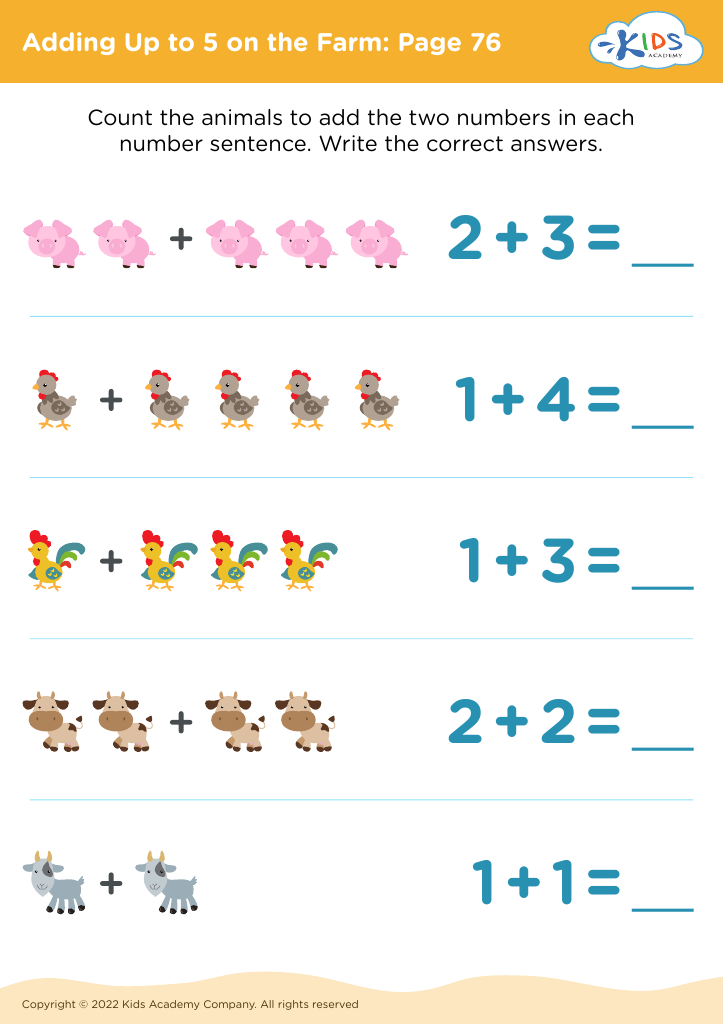
Adding Up to 5 on the Farm: Page 76
Worksheet
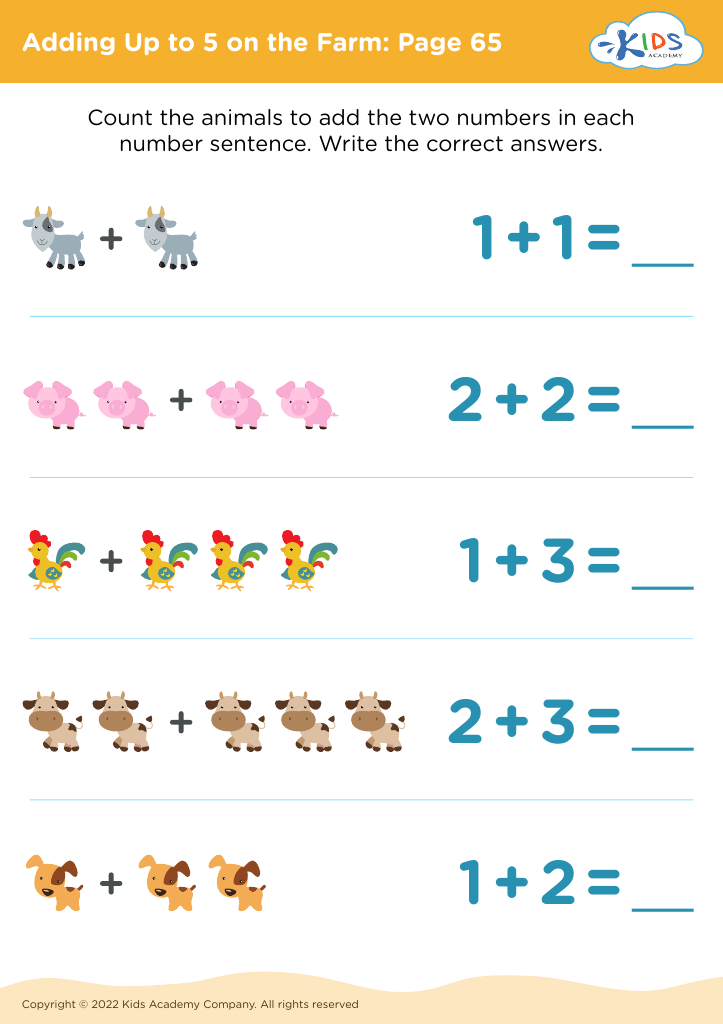
Adding Up to 5 on the Farm: Page 65
Worksheet
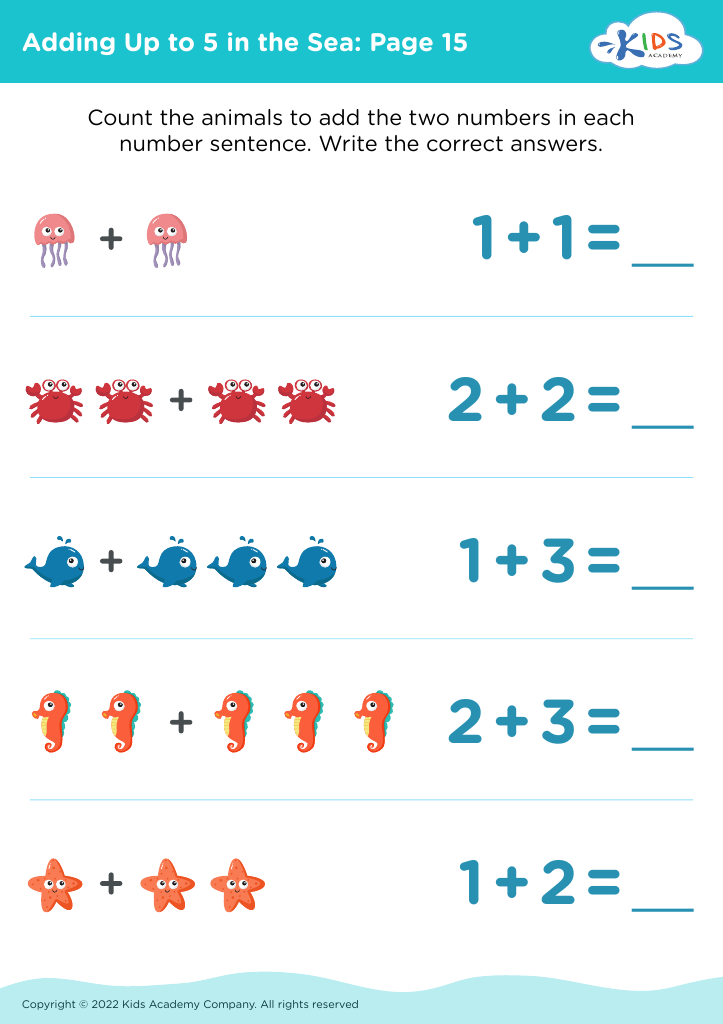
Adding Up to 5 in the Sea: Page 15
Worksheet
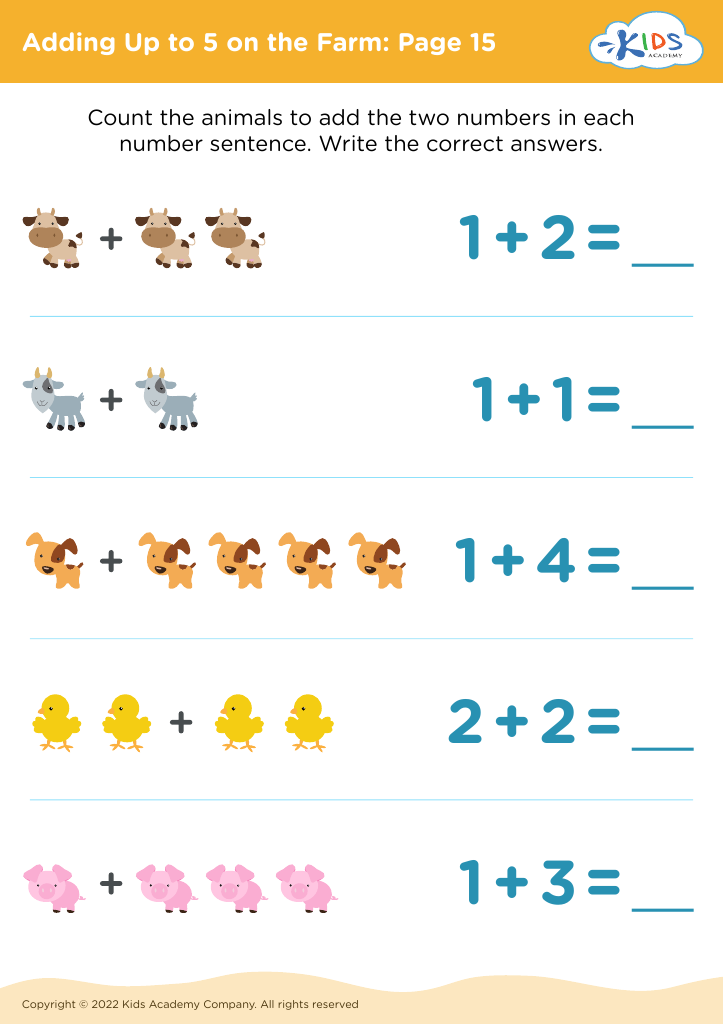
Adding Up to 5 on the Farm: Page 15
Worksheet
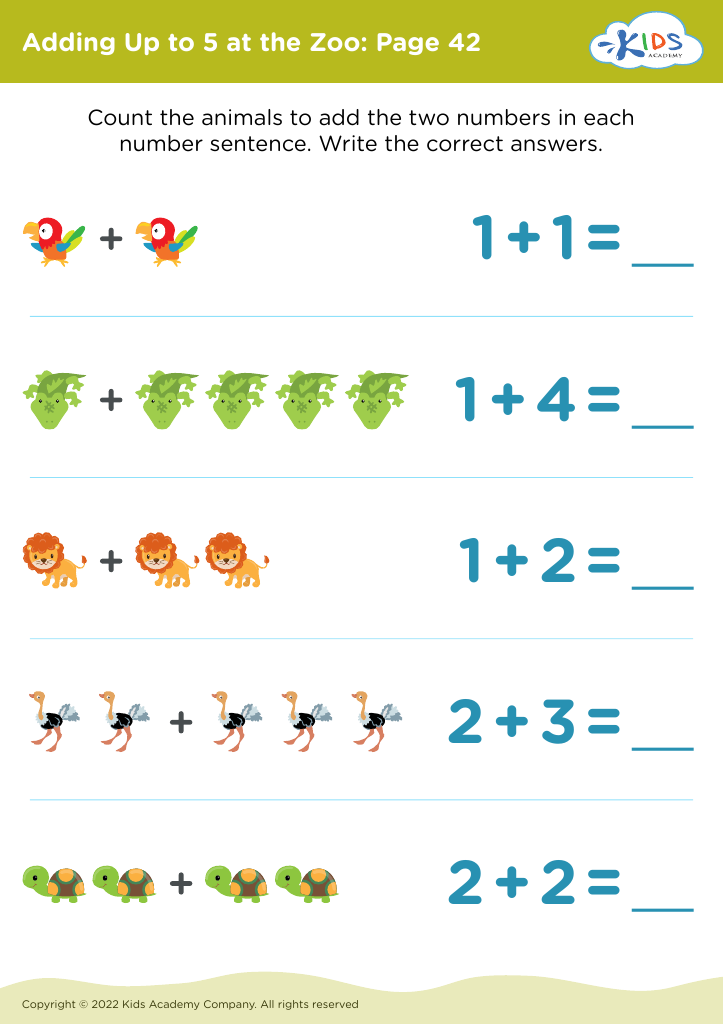
Adding Up to 5 at the Zoo: Page 42
Worksheet
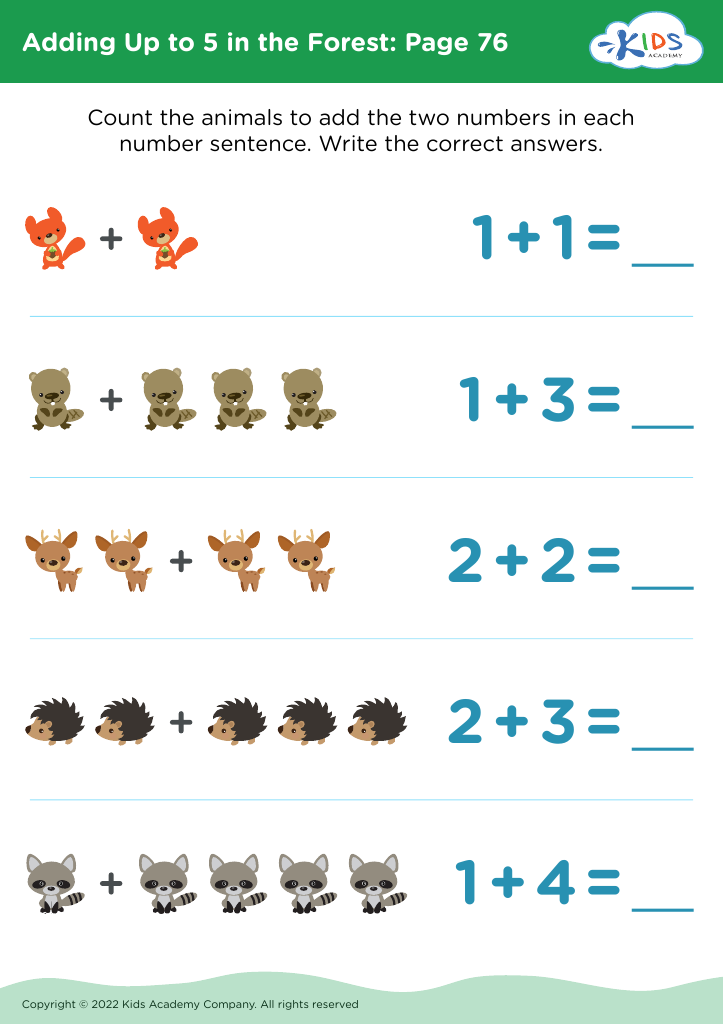
Adding Up to 5 in the Forest: Page 76
Worksheet
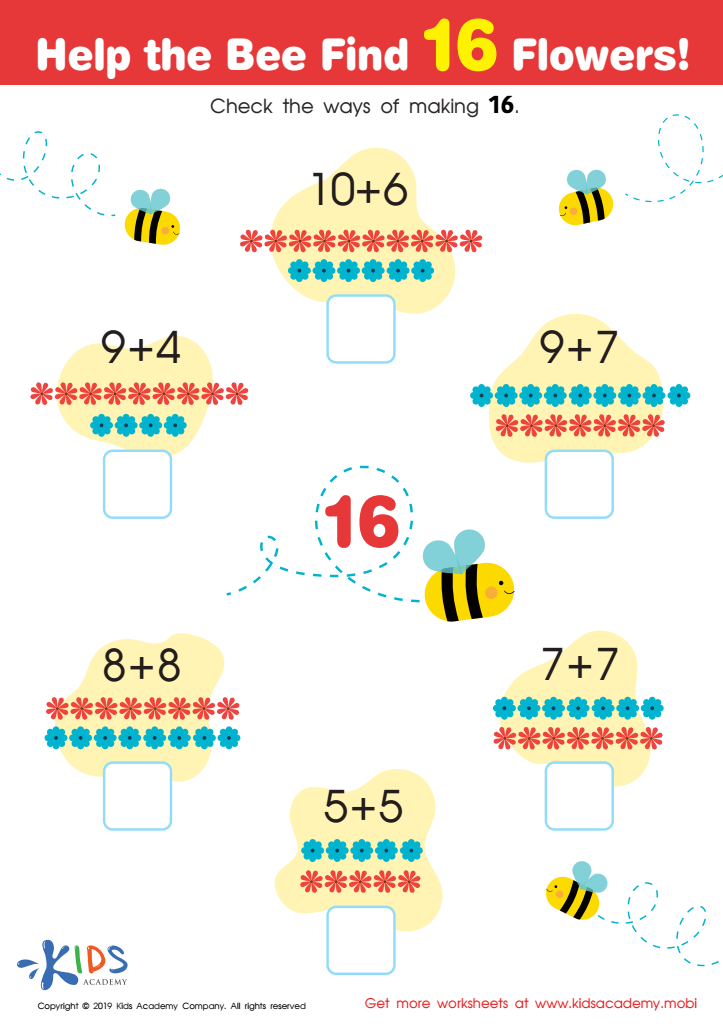
Help the Bee Find 16 Flowers Worksheet

Help the Bee Find 16 Flowers Worksheet

Ask your students to count as high as they can. Show them that different numbers can equal the same figure with examples like 2+2=4 and 3+1=4. Ask for more examples, then help the bees find 16 flowers by checking the ways of making 16.
Help the Bee Find 16 Flowers Worksheet
Worksheet
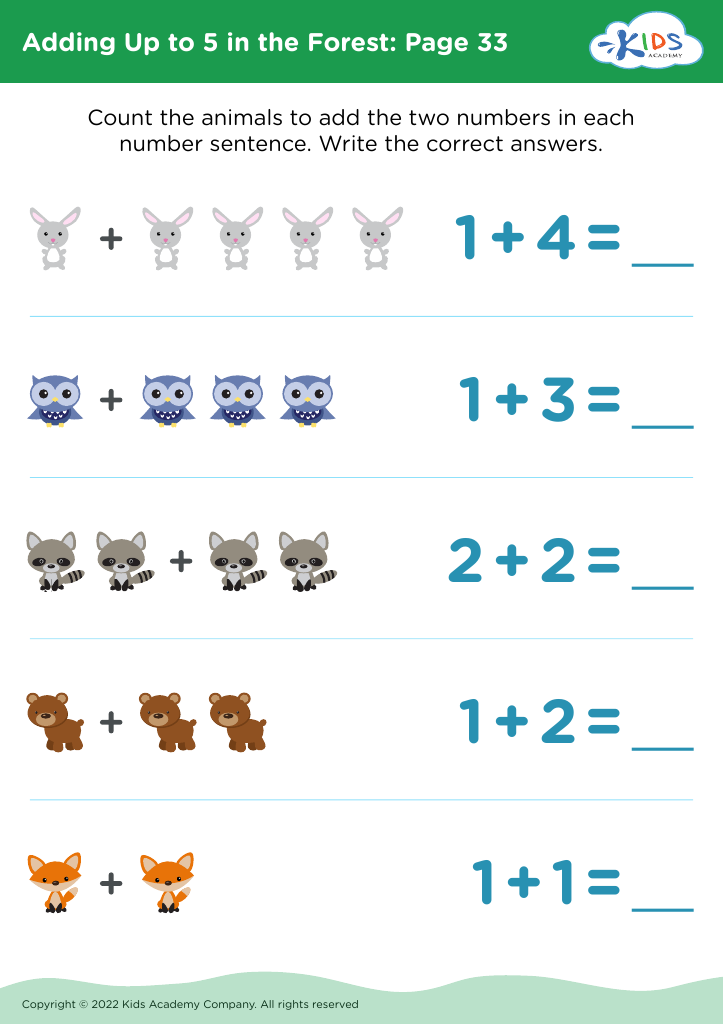
Adding Up to 5 in the Forest: Page 33
Worksheet
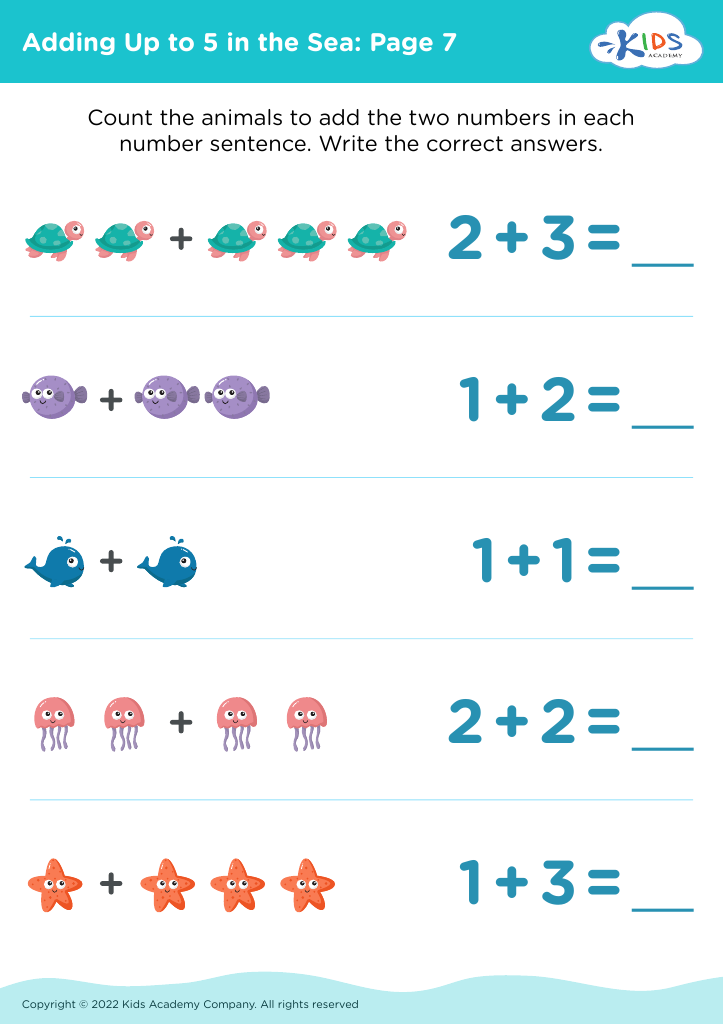
Adding Up to 5 in the Sea: Page 7

Adding Up to 5 in the Sea: Page 7

Adding Up to 5 in the Sea: Page 7
Worksheet
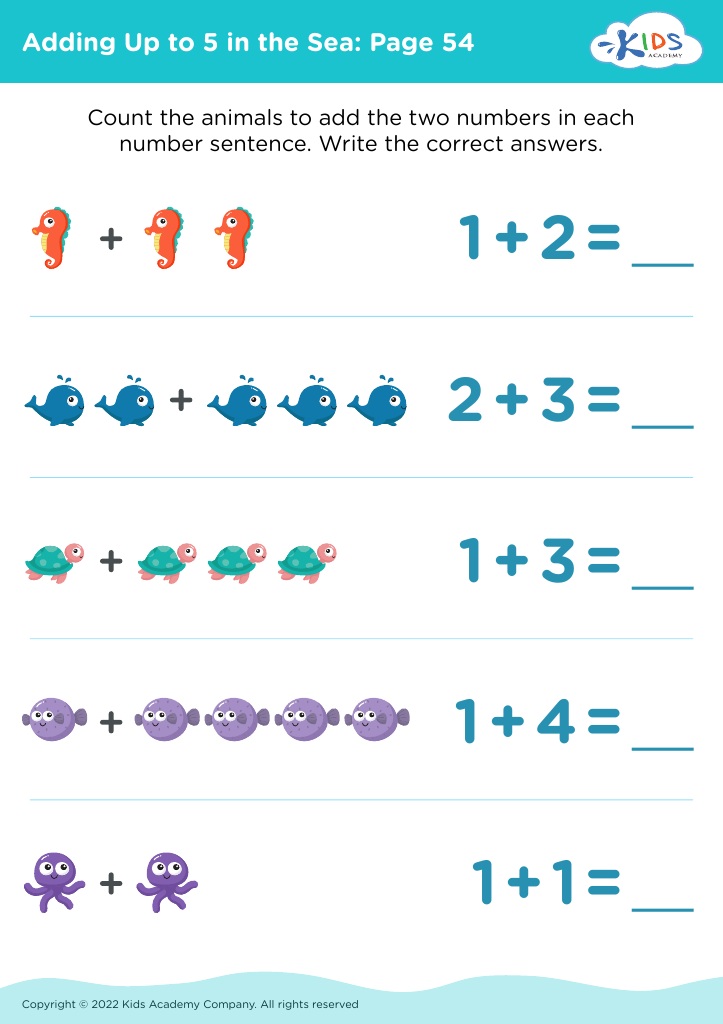
Adding Up to 5 in the Sea: Page 54
Worksheet
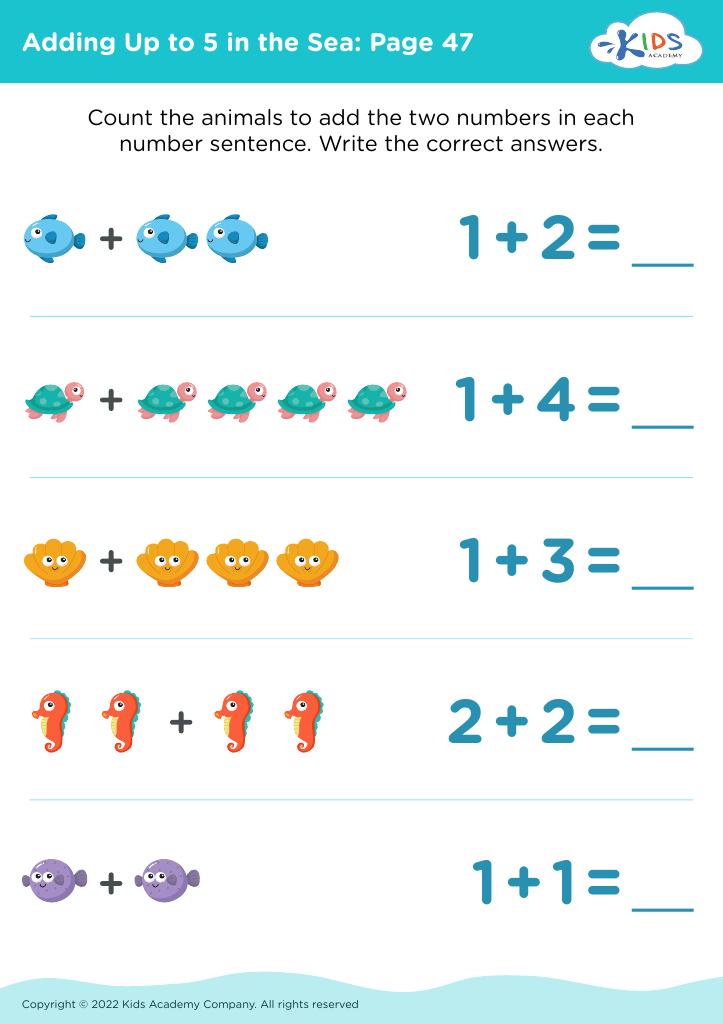
Adding Up to 5 in the Sea: Page 47
Worksheet


Number recognition and early addition skills are foundational aspects of mathematical learning, crucial for children aged 5-6. These competencies form the backbone of more complex math concepts they will encounter in the future, such as subtraction, multiplication, and division. By mastering number recognition, young learners develop the ability to identify and understand numbers, an essential prerequisite for performing any arithmetic operations.

Moreover, engaging with basic addition helps children build numerical fluency and confidence in their math abilities. When young students can effortlessly recognize and add numbers, it enhances their problem-solving skills and logical thinking. This early exposure to math sets a positive tone for future learning experiences, reducing anxiety and fostering a love for the subject.

Parents and teachers play a vital role in this stage. They can create supportive learning environments that encourage practice through fun and interactive activities. This might include using colorful manipulatives, games, or visual aids that make learning engaging and relatable. Such experiences ensure that children are not only prepared academically but also enjoy the process of learning.

Investing in number recognition and addition skills at ages 5-6 accelerates cognitive development, providing children with a strong mathematical foundation and a head-start in their educational journey.