Problem-solving practice Addition Worksheets for Ages 5-6
3 filtered results
-
From - To
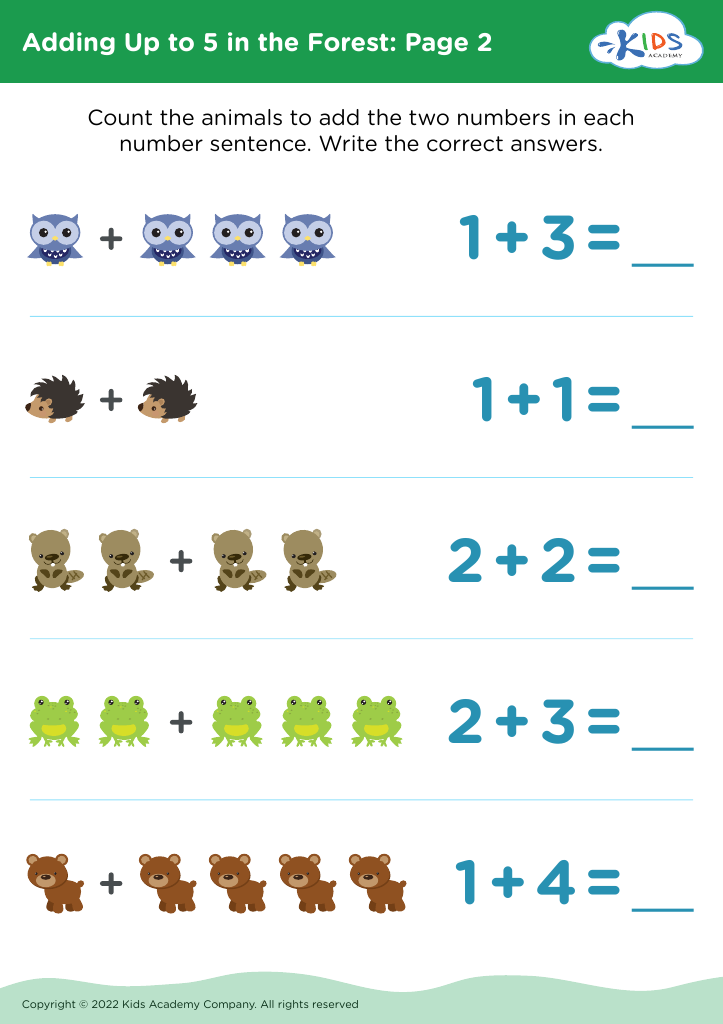
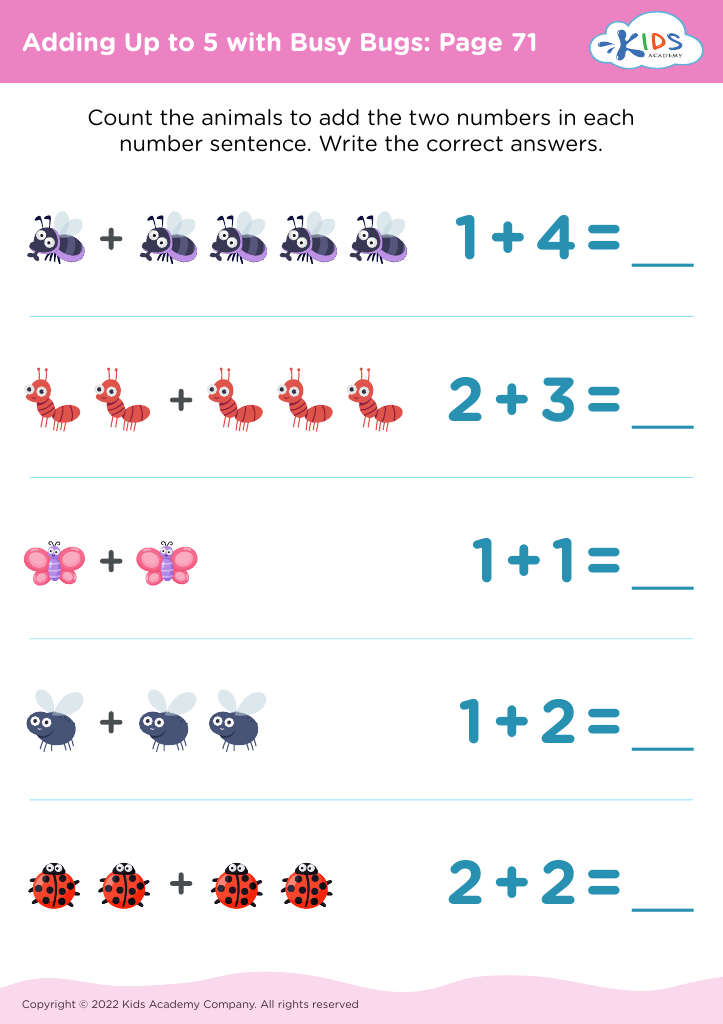
Unlock your child's numerical potential with our "Problem-solving Practice Addition Worksheets" designed specifically for ages 5-6! These engaging worksheets blend fun with foundational math skills, helping young learners master addition through creative problem-solving exercises. Each worksheet promotes critical thinking and enhances understanding of basic concepts in an interactive way, preparing children for future math challenges. Fun illustrations and relatable scenarios capture their interest, making learning enjoyable and effective. Perfect for home or classroom use, our worksheets are a valuable resource for educators and parents alike. Start your child's mathematical journey today and watch their confidence grow!
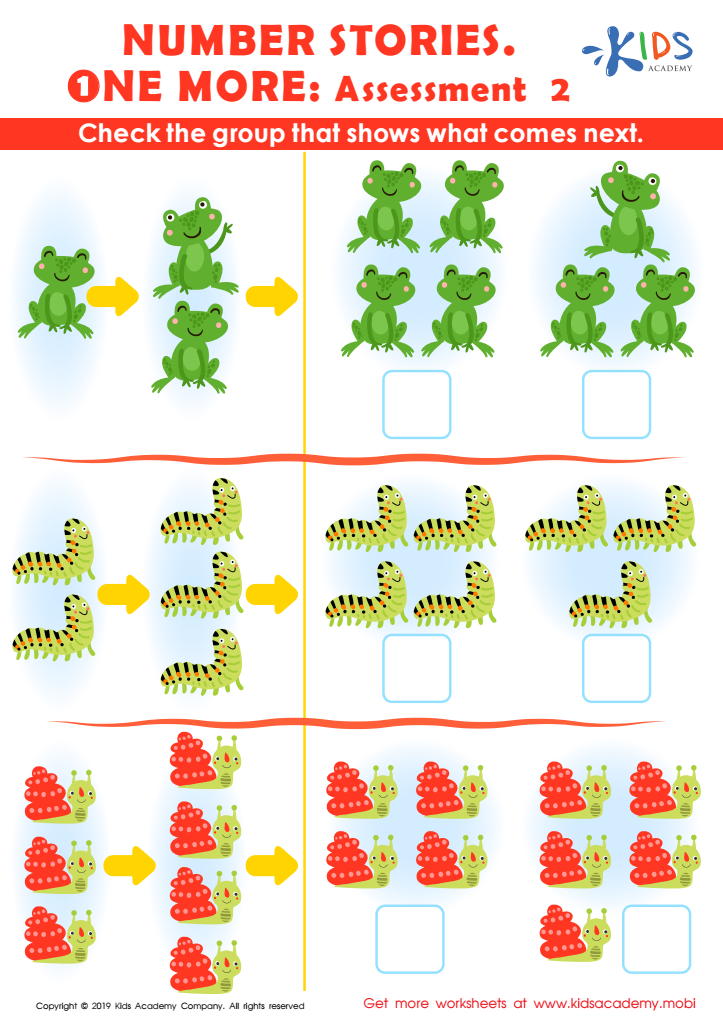
Number Stories One More – Assessment 2 Worksheet
 Assign to My Students








Problem-solving practice in addition for children aged 5-6 is crucial for their cognitive and emotional development. At this stage, children are not only learning to perform mathematical operations but also developing critical thinking skills. Engaging in addition problem-solving helps them understand the concept of quantities, number relationships, and mathematical reasoning.
When parents and teachers encourage problem-solving in addition, they foster a sense of curiosity and resilience in children. As kids tackle different math challenges, they learn how to approach problems systematically, think creatively, and explore multiple strategies for finding solutions. This not only boosts their confidence in mathematics but also strengthens their overall problem-solving abilities, which are applicable in everyday life situations.
Furthermore, these skills enhance young children’s logical reasoning and decision-making processes, laying a strong foundation for future academic success. By emphasizing the importance of problem-solving, parents and teachers can cultivate a positive attitude towards math, making learning enjoyable and relevant. Ultimately, this practice not only supports numeracy skills but also inspires lifelong learners who can tackle challenges with confidence and creativity.








