Money recognition Coins Worksheets for Ages 5-6
5 filtered results
-
From - To
Discover the best way to introduce your child to money with our "Money Recognition Coins Worksheets for Ages 5-6". Designed specifically for young learners, these worksheets make recognizing and understanding coins engaging and fun. Through activities and exercises, kids will learn to identify pennies, nickels, dimes, and quarters, while enhancing their counting and sorting skills. Perfect for classroom or home use, our worksheets provide a solid foundation in money recognition to help prepare your little ones for everyday life. Boost their financial literacy early on with our colorful and interactive worksheets tailored for ages 5-6!
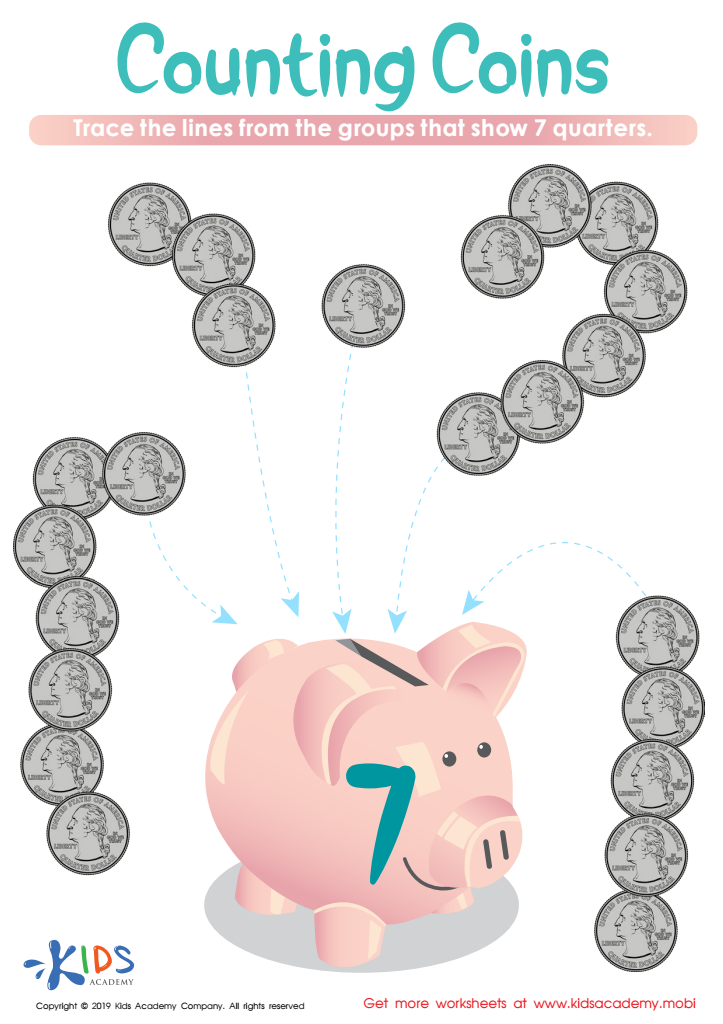
Counting Coins Worksheet
 Assign to My Students
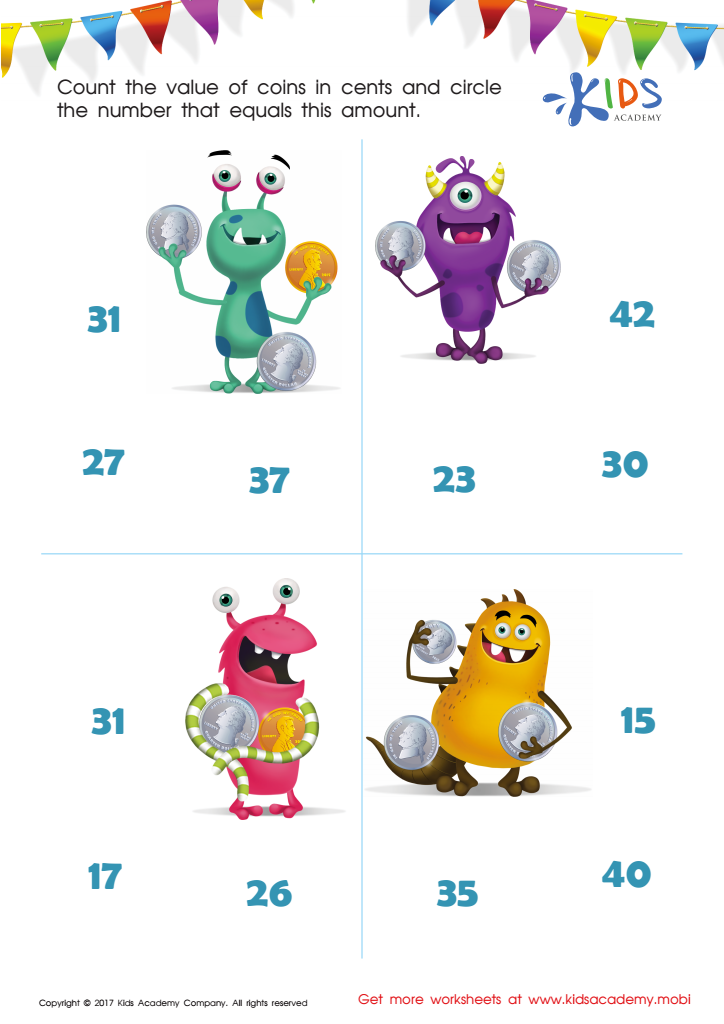
How Many Coins Money Worksheet
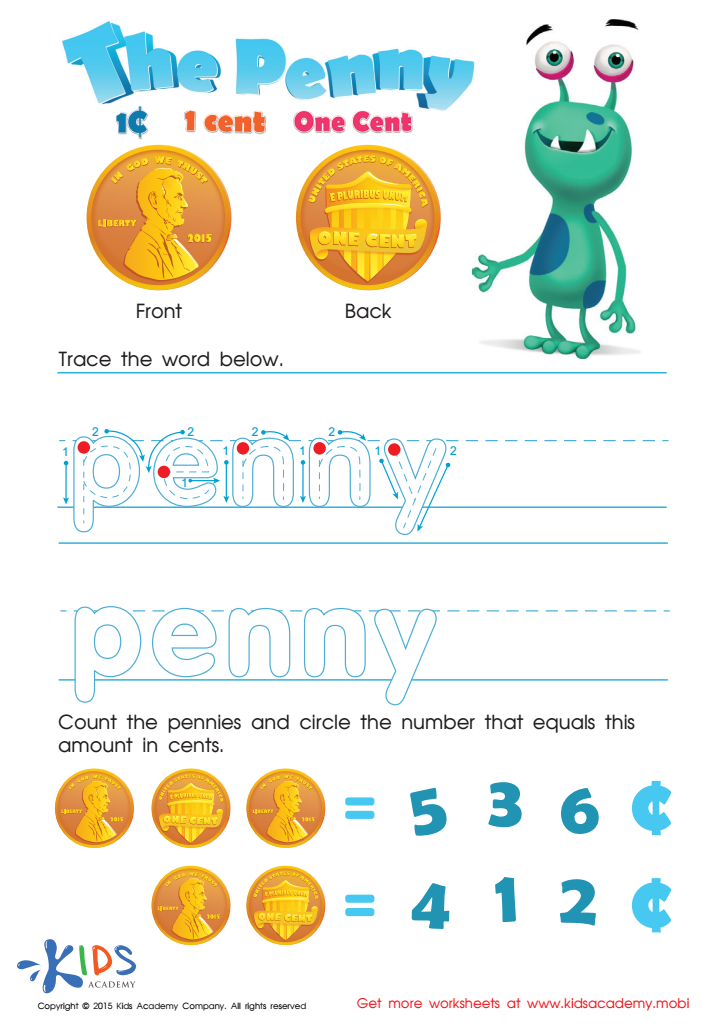
One Cent or the Penny Money Worksheet
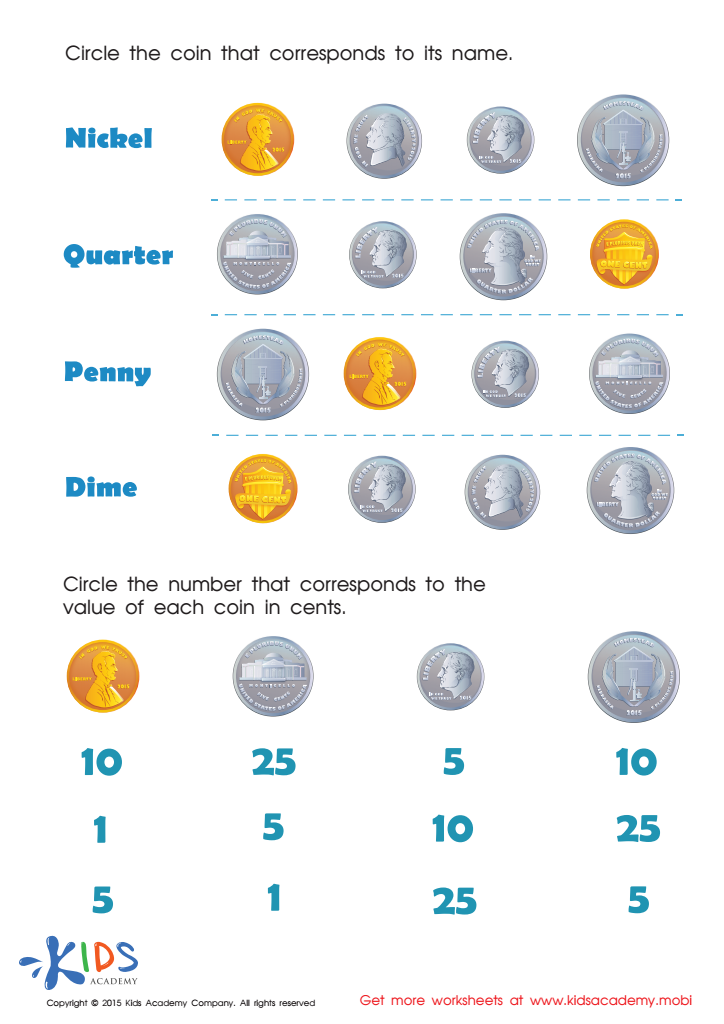
Coin Names and Values Money Worksheet
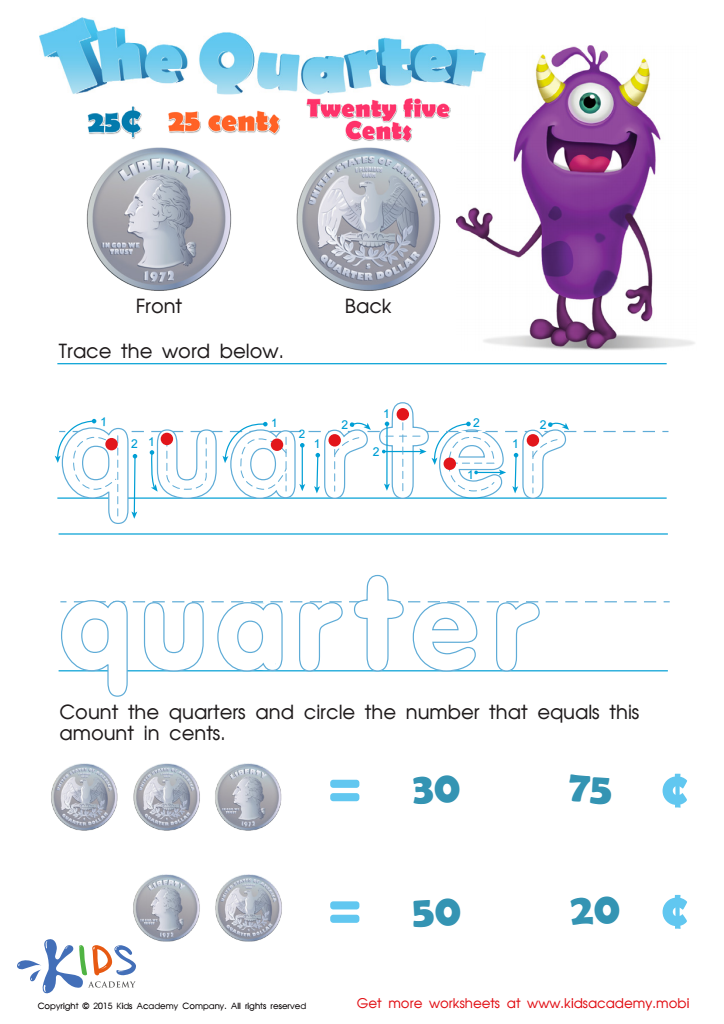
Twenty Five Cents or the Quarter Money Worksheet








Understanding money and coin recognition at an early age is crucial for children as it lays the foundation for their financial literacy. For children aged 5-6, learning to identify and understand the value of different coins goes beyond just preparing them for real-world transactions. It integrates practical math skills, such as counting, addition, and subtraction, into everyday life. Simplifying these basic financial concepts can enhance problem-solving skills and foster number sense.
Incorporating coin recognition into early learning helps children grasp the concept of value and enables them to differentiate between objects of varying importance. This knowledge is particularly significant in a digital world where the tangibility of money is often overlooked. Knowing how to count and manage physical coins can make abstract numbers more relatable and understandable for young minds.
For parents and teachers, introducing coin recognition can be done through fun, interactive activities like games, shopping role-play, or using visuals and stories. This can help children stay engaged and be more eager to learn. Early competency in money handling boosts confidence and inculcates a sense of responsibility and independence in young children as they grow. By investing in this foundational knowledge, we equip children with essential life skills that promote smart financial behaviors in the future.








