Addition skills Money Worksheets for Ages 5-6
3 filtered results
-
From - To
Explore our dynamic Addition Skills Money Worksheets designed for children ages 5-6. These engaging worksheets combine basic addition concepts with practical money counting skills, making math both fun and meaningful. Kids will learn to add coins and bills, enhancing their understanding of value and arithmetic simultaneously. Perfect for early learners, our colorful and interactive worksheets encourage hands-on practice and critical thinking. Ideal for both classroom and home use, these resources help establish a solid math foundation, boost confidence, and spark a love for learning. Empower your child to master essential skills in a fun and practical way!
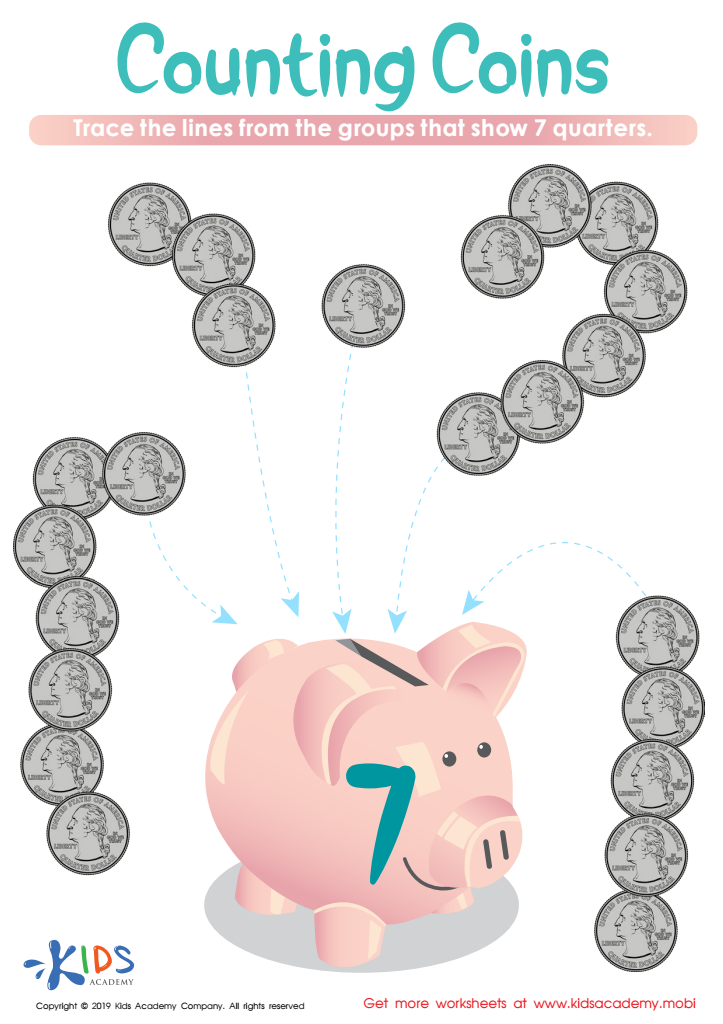
Counting Coins Worksheet
 Assign to My Students
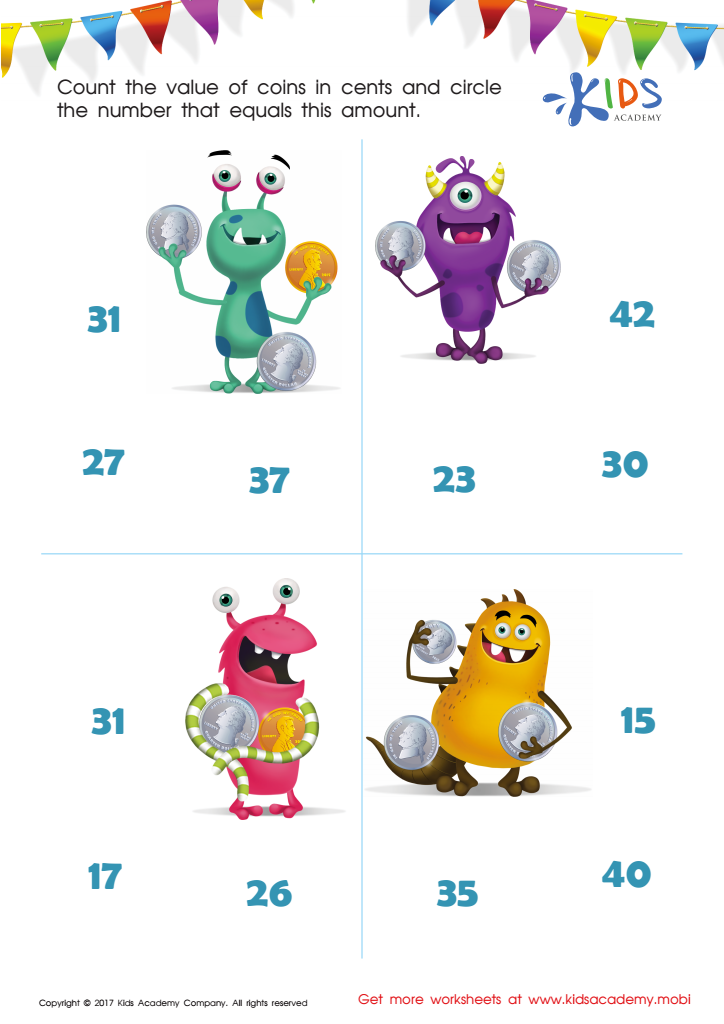
How Many Coins Money Worksheet
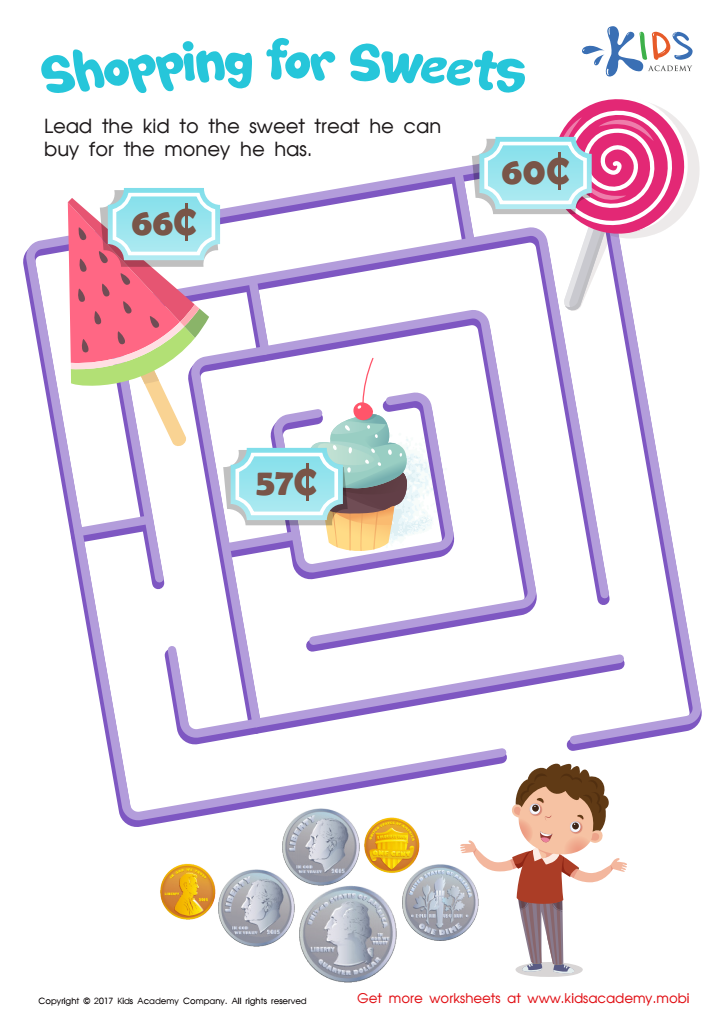
Shopping for Sweets Worksheet







Teaching addition skills and money concepts to children ages 5-6 is foundational to their mathematical development and practical life skills. At this age, children are beginning to grasp basic numerical understanding and can start to handle more abstract concepts like addition and value. Developing these skills early sets the stage for more advanced arithmetic and mathematical thinking.
Firstly, addition is a fundamental math skill that underpins many other topics in mathematics. Learning to add numbers organically introduces children to patterns and structures in math, which form the basis for future learning. Mastery of addition helps children confidently tackle other operations like subtraction, multiplication, and division.
Introducing money at this stage ties mathematics to real-life situations, making learning more meaningful and engaging. Understanding money teaches children the value of numbers and basic economic principles. It's an opportunity for them to learn about currency, the significance of transactions, and financial responsibility in a simplified manner.
Developing these skills early also boosts critical thinking and problem-solving abilities. It encourages logical reasoning, fosters a sense of independence, and imparts essential life skills. By making learning interactive and fun, parents and teachers can encourage a positive attitude toward mathematics and instill confidence in children that will support their academic journey.








