Counting skills Money Worksheets for Ages 5-6
5 filtered results
-
From - To
Boost your child's financial literacy with our Counting Skills Money Worksheets for Ages 5-6! Designed specifically for young learners, these activities make learning fun and engaging by introducing basic money concepts. Interactive worksheets help children recognize coin values, count accurately, and build essential math skills. Bright illustrations and hands-on exercises provide a dynamic learning experience, ensuring kids grasp the fundamentals of counting money while developing their problem-solving abilities. Perfect for classroom use or home practice, these worksheets make learning exciting and effective. Start building a solid math foundation today with our expertly-designed counting money resources!
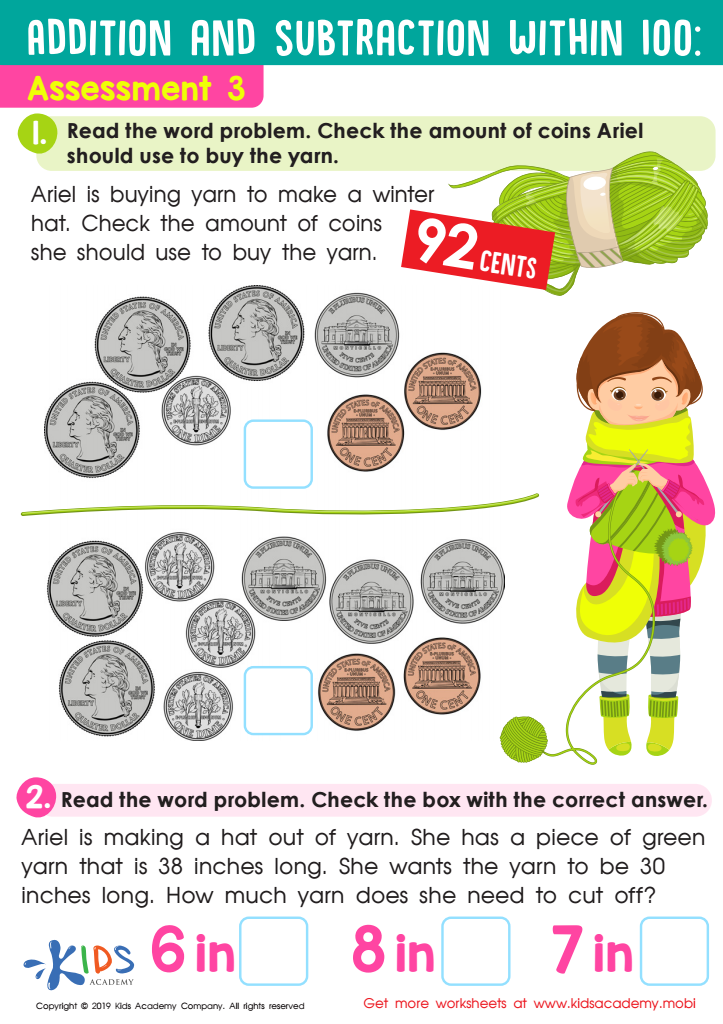
Assessment 3 Math Worksheet
 Assign to My Students
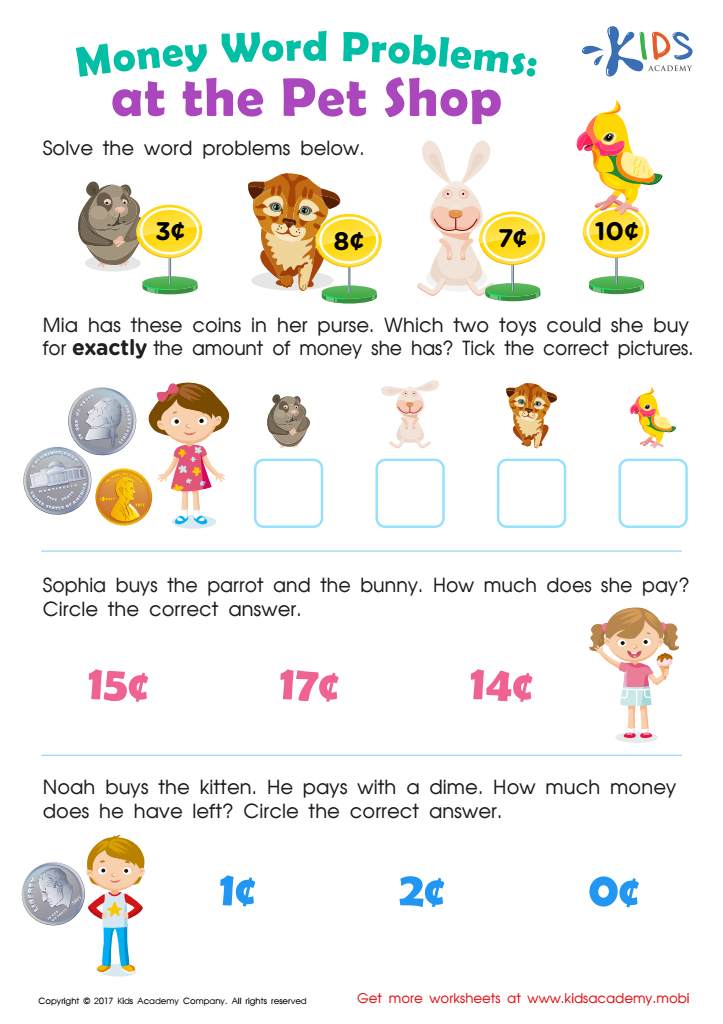
Pet Shop Worksheet
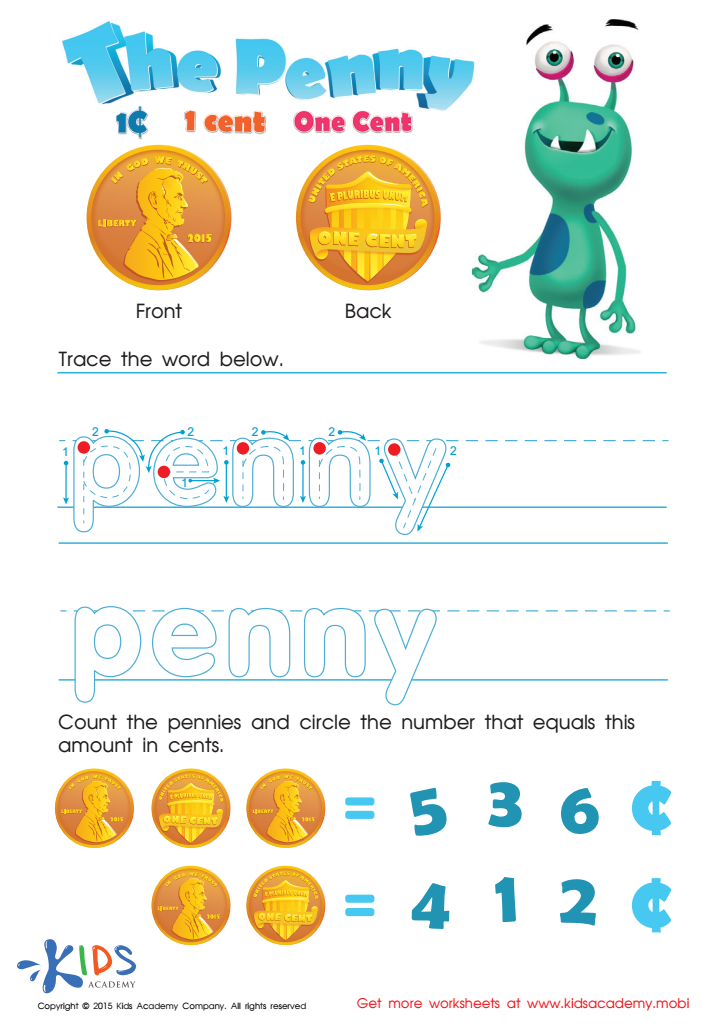
One Cent or the Penny Money Worksheet
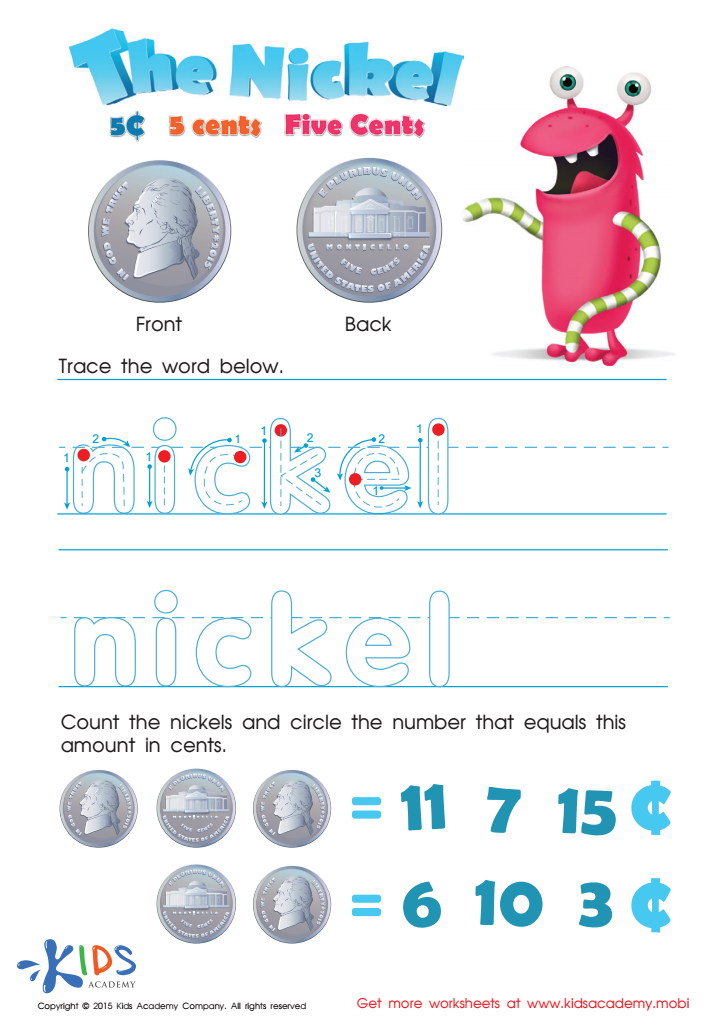
Five Cents or the Nickel Money Worksheet
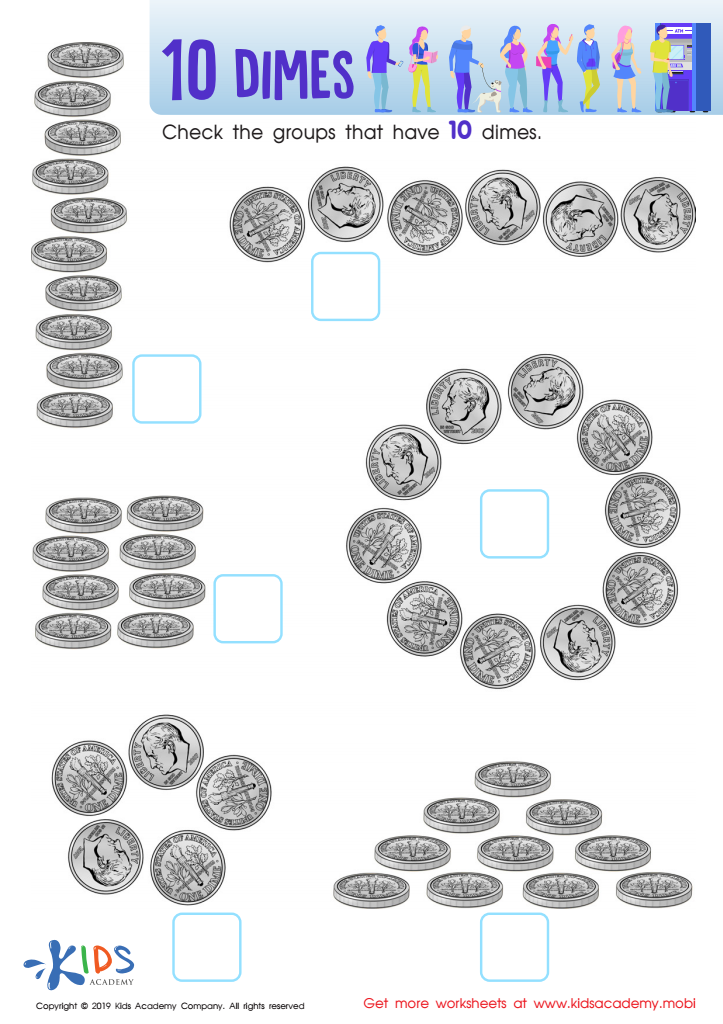
10 Dimes Worksheet








Counting skills and an understanding of money for children aged 5-6 are fundamental building blocks for future financial literacy and basic math competence. At this crucial developmental stage, learning to count and recognize money helps children grasp the concepts of value and exchange. This foundational knowledge aids in the development of critical thinking and problem-solving skills.
For parents and teachers, fostering these skills early offers several benefits. Firstly, it equips children with the ability to manage their own small allowances responsibly, inculcating a sense of financial discipline. Secondly, these skills are often integrally linked to academic success. Mastery of counting and money-handling can boost confidence in arithmetic, leading to better overall performance in math and related subjects.
Additionally, counting money introduces children to real-world applications of numbers, making abstract mathematical concepts more concrete and understandable. This contextual learning supports cognitive development and is more engaging for young minds. It also offers practical life skills, preparing kids for greater independence and smarter financial choices in the future.
By emphasizing counting and money skills at an early age, parents and teachers set the stage for lifelong financial competence and academic success, ensuring children grow up equipped to navigate an increasingly complex economic world.








