Basic geometry Geometry Worksheets for Ages 5-6
3 filtered results
-
From - To
Discover our engaging Basic Geometry Worksheets designed specifically for children aged 5-6. These worksheets introduce young learners to essential geometry concepts, such as shapes, spatial awareness, and understanding patterns. With vibrant visuals and fun exercises, kids will enjoy identifying and sorting different shapes, learning the basics of measurement, and developing critical thinking skills. Our worksheets promote interactive learning, allowing children to enhance their fine motor skills while exploring the fascinating world of geometry. Perfect for educators and parents alike, these resources are ideal for supporting early math education in a delightful and approachable way. Start your child's geometry journey today!
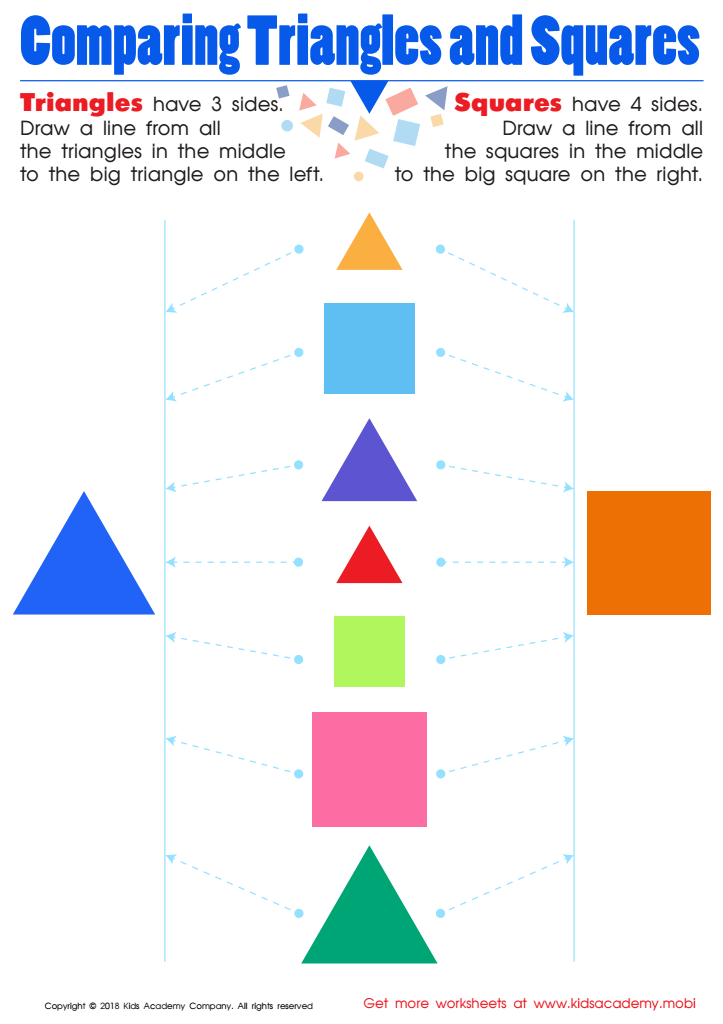
Comparing Triangles Squares Worksheet
 Assign to My Students











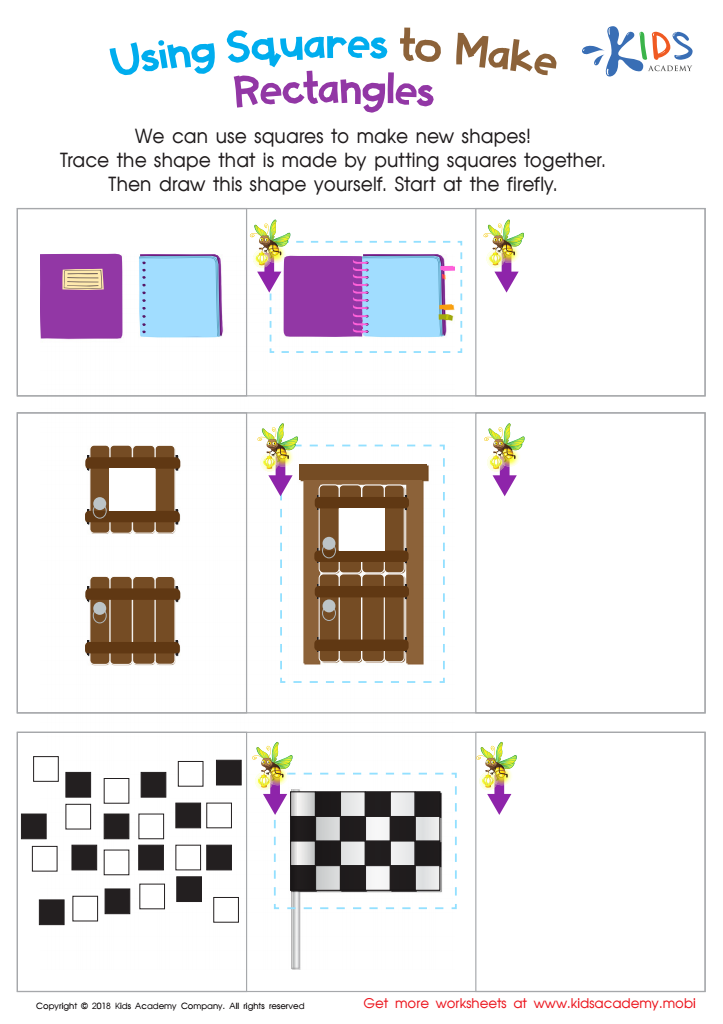
Using Squares to Make Rectangles Worksheet
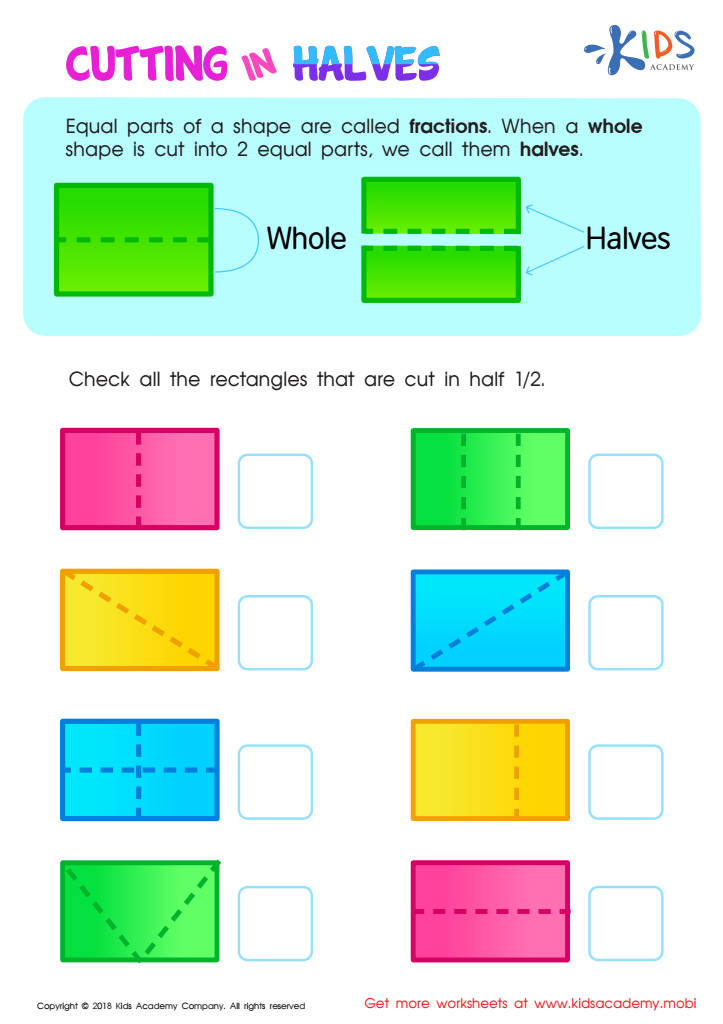
Cutting in Halves Worksheet








Parents and teachers should care about basic geometry for children aged 5-6 because it lays the foundation for a child’s understanding of the world around them. At this age, children are naturally curious and eager to explore shapes, sizes, and spatial relationships. Engaging them in basic geometry fosters critical thinking and problem-solving skills, which are essential for cognitive development.
Understanding geometric concepts helps children develop their spatial awareness, making it easier for them to navigate environments and comprehend maps or directions as they grow. It also enhances their ability to recognize patterns and symmetry, crucial skills in math and science education at later stages.
Furthermore, geometry encourages creativity. By exploring two-dimensional and three-dimensional shapes through hands-on activities like building or drawing, children express themselves artistically while reinforcing mathematical concepts. Discovering relationships among shapes helps build a strong mathematical vocabulary and confidence in their abilities.
Ultimately, early exposure to geometry not only prepares children for future academic success but also equips them with skills applicable in daily life. These skills contribute to logical reasoning essential for problem-solving across various disciplines in the future. Involving parents and teachers is crucial to nurture these foundational skills in a supportive environment.








