Comparing Fractions Geometry Worksheets for Ages 5-6
3 filtered results
-
From - To
Discover fun and engaging Comparing Fractions Geometry Worksheets designed specifically for children ages 5-6! Our interactive resources help young learners grasp the concept of fractions through colorful visuals and hands-on activities. Each worksheet encourages children to compare different fractions using a variety of shapes and figures, making learning about fractions both enjoyable and effective. Perfect for home or classroom use, these worksheets are aligned with early math standards, fostering critical thinking and problem-solving skills. Watch your child gain confidence as they master fractions in geometry and develop a solid foundation for future math success!
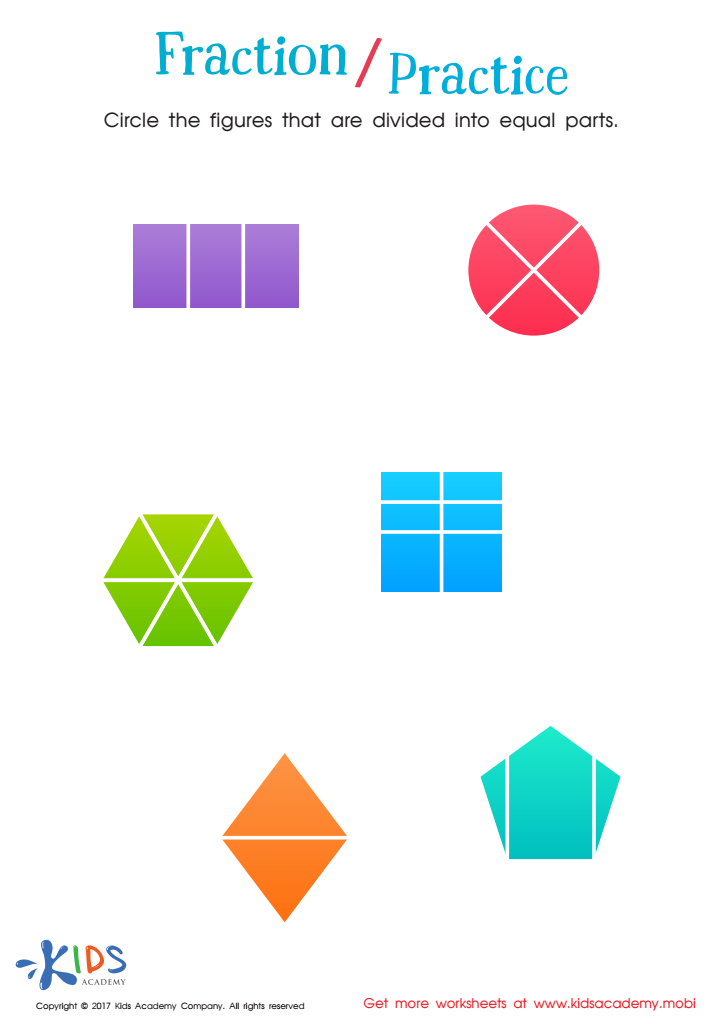
Fractions: Shapes Worksheet
 Assign to My Students











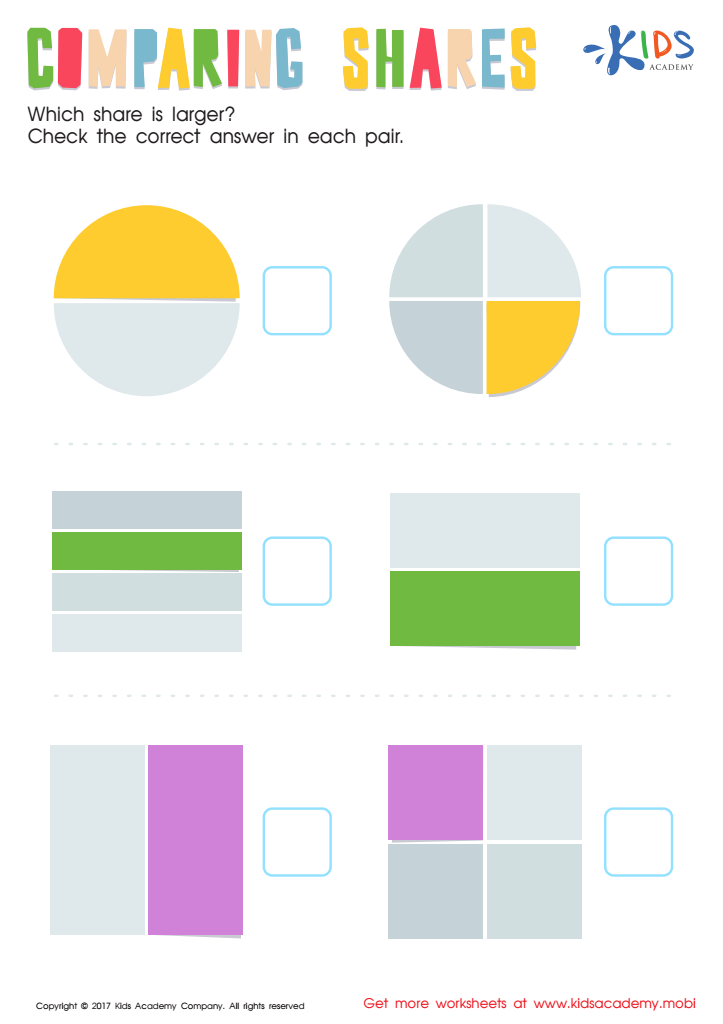
Comparing Shares Worksheet
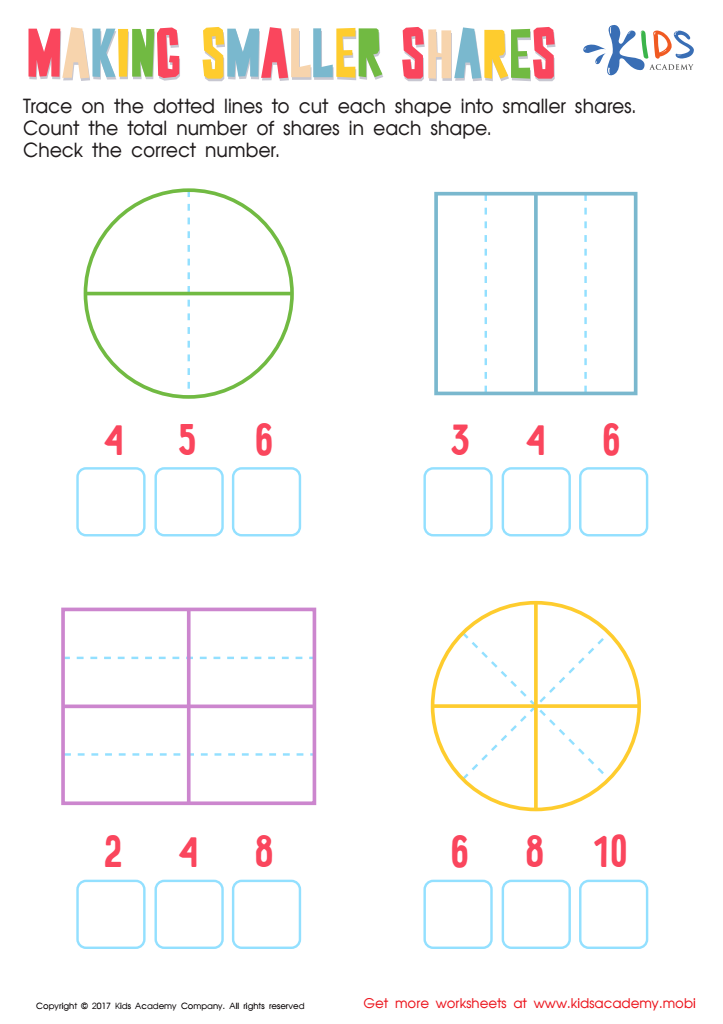
Making Smaller Shares Worksheet








For children aged 5-6, understanding fractions and geometric concepts is foundational for their future mathematical development. Comparing fractions introduces young learners to essential problem-solving skills, helping them understand parts of a whole, which is crucial as they encounter more complex math later. This understanding fosters numerical literacy and boosts confidence.
Geometry plays a key role in visualizing fractions, making it easier for children to grasp concepts through tangible examples such as sharing shapes, understanding halves, and quarters. Engaging with comparison activities, like identifying which of two slices of pizza is larger, connects math to everyday experiences, Luc helps children develop reasoning skills.
Additionally, comparing fractions helps enhance critical thinking—children learn to make judgments based on numerical relationships. Watching a student resolve how a shape can be divided gives them a sense of accomplishment and reinforces their ability to articulate reasoning.
For parents and teachers, nurturing this cognitive skill can lead to a deeper appreciation for math and geometry, ensuring a strong academic foundation and fostering an enduring interest in learning. By emphasizing fractions and geometric concepts, caregivers empower children with the tools required for success in staying ahead in today's mathematics curriculum.








