Recognizing shapes Geometry Worksheets for Ages 5-6
3 filtered results
-
From - To
Help your child unlock the world of shapes with our engaging "Recognizing Shapes Geometry Worksheets for Ages 5-6"! Tailored specifically for young learners, these printable worksheets make understanding shapes fun and interactive. Kids will enhance their geometry skills by identifying and differentiating between various shapes like circles, squares, and triangles. Our engaging activities, colorful illustrations, and step-by-step guides ensure a captivating learning experience. Perfect for classroom use or at-home practice, these worksheets provide a solid foundation in geometry, fostering critical thinking and visual recognition. Set your child on the path to mastering shapes effortlessly with our expertly crafted resources.
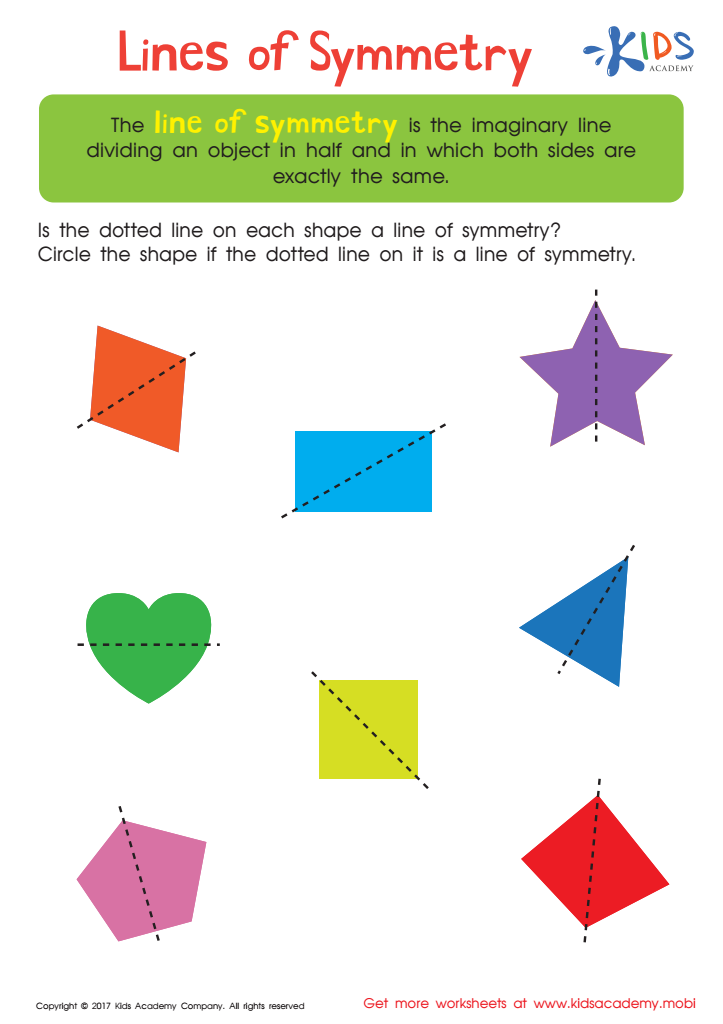
Lines of Symmetry Printable
 Assign to My Students











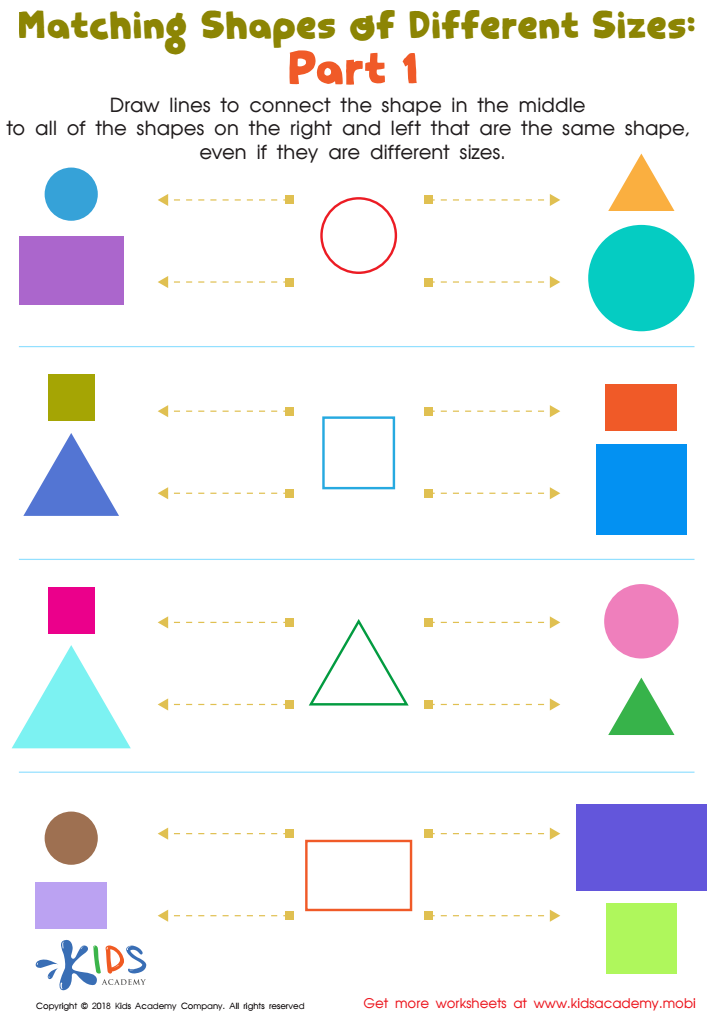
Geometry: part 1 Worksheet
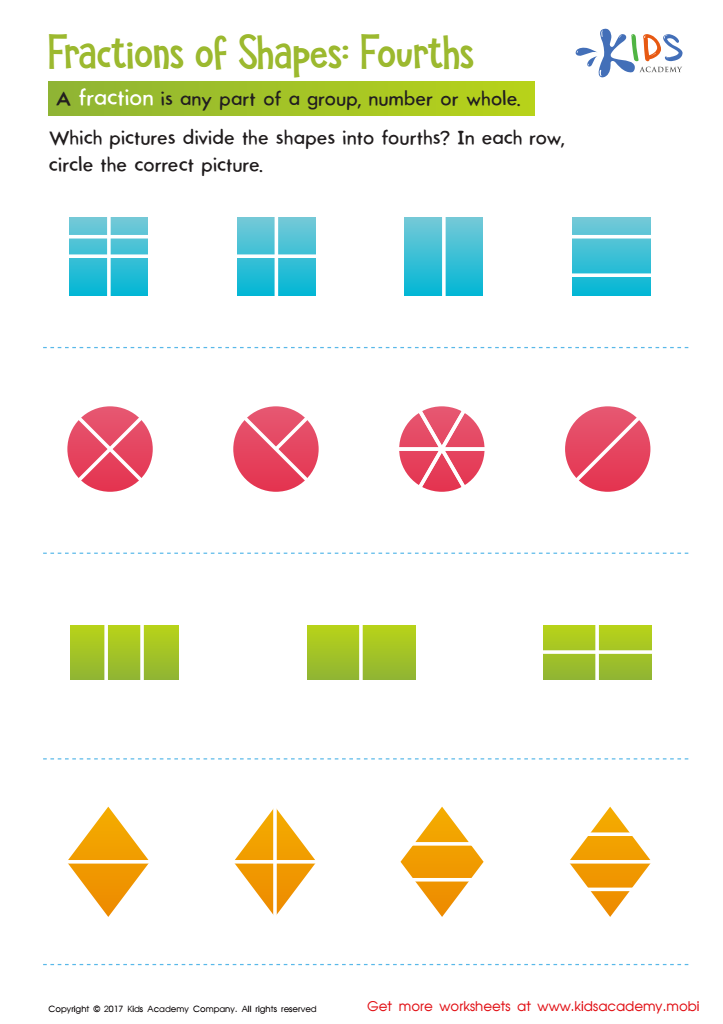
Fractions of Shapes Worksheet








Recognizing shapes and geometry is fundamental for children ages 5-6 due to its impact on cognitive development and real-world understanding. Early exposure to geometric concepts enhances visual-spatial reasoning, enabling children to better comprehend and organize visual information. Engaging with shapes sharpens observation and analytical skills, fostering problem-solving abilities critical for future academic success, especially in math and science.
Shapes form the building blocks for number sense and pattern recognition. When children identify and categorize shapes, they cultivate logic and critical thinking aptitudes. This groundwork supports more complex mathematical operations, such as understanding properties of objects, symmetry, and spatial relations, which are essential in advanced math. Recognizing shapes also aids literacy; children often learn letter formations by distinguishing fundamental shapes.
Beyond academics, proficiency with shapes aids daily functioning. Spatial awareness, developed through geometry, is crucial for navigating environments and understanding relationships between objects, such as fitting pieces in puzzles or organizing toys.
Furthermore, discussing shapes fosters language development. Children learn descriptive vocabulary (e.g., "square," "circle," "corners," "sides") as they articulate their observations and interact with teachers or parents. This promotes an enriching dialogic learning environment, encouraging both verbal and conceptual growth.
In summary, early geometry experiences shape a child's academic and practical life, building a robust foundation for ongoing learning and everyday problem-solving.








