Data interpretation Numbers Worksheets for Ages 5-6
5 filtered results
-
From - To
Unlock your child's mathematical potential with our engaging Data Interpretation Numbers Worksheets designed for ages 5-6! These thoughtfully crafted worksheets introduce young learners to the essentials of data interpretation through fun, interactive activities. Children will explore basic concepts such as sorting, counting, and understanding simple graphs and charts, all while developing critical thinking skills. Perfect for at-home learning or classroom use, these worksheets offer vibrant visual aids and age-appropriate challenges that make learning math enjoyable. Help your little ones build a solid foundation in data interpretation and enhance their confidence in numbers. Start their educational journey today!
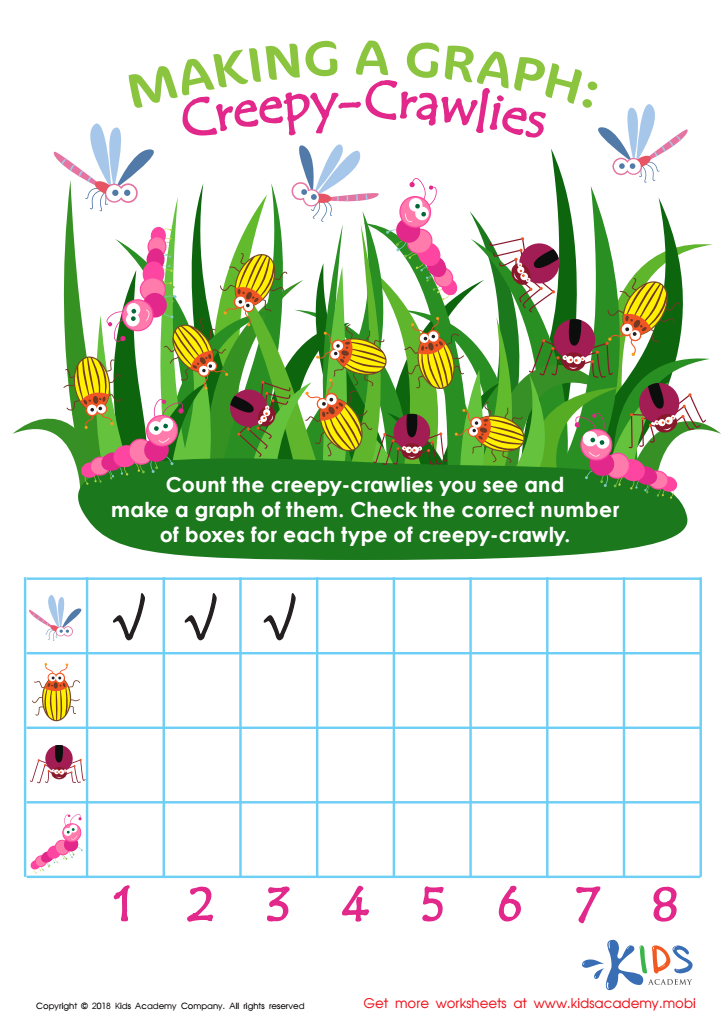
Making a Graph: Creepy Crawlies Worksheet
 Assign to My Students
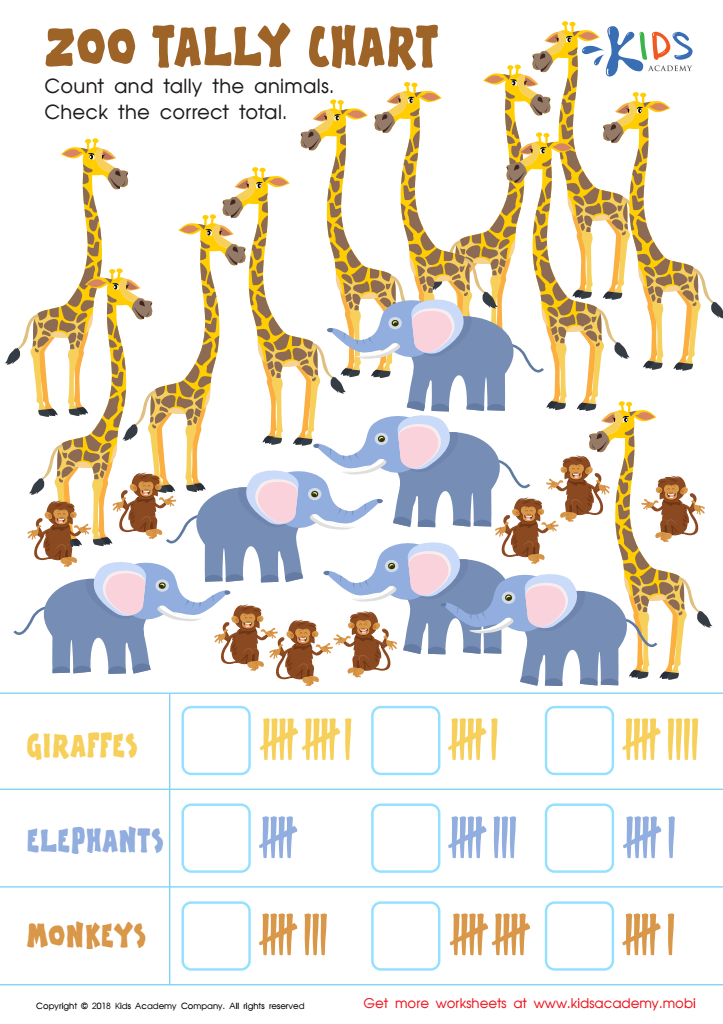
Zoo Tally Chart Worksheet
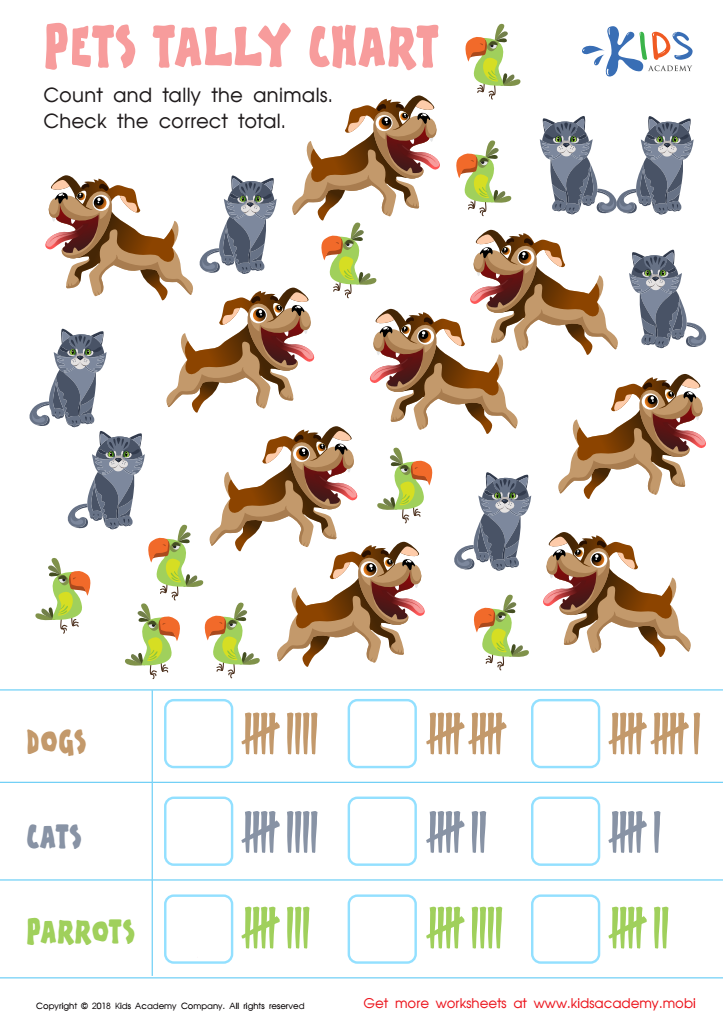
Pets Tally Chart Worksheet
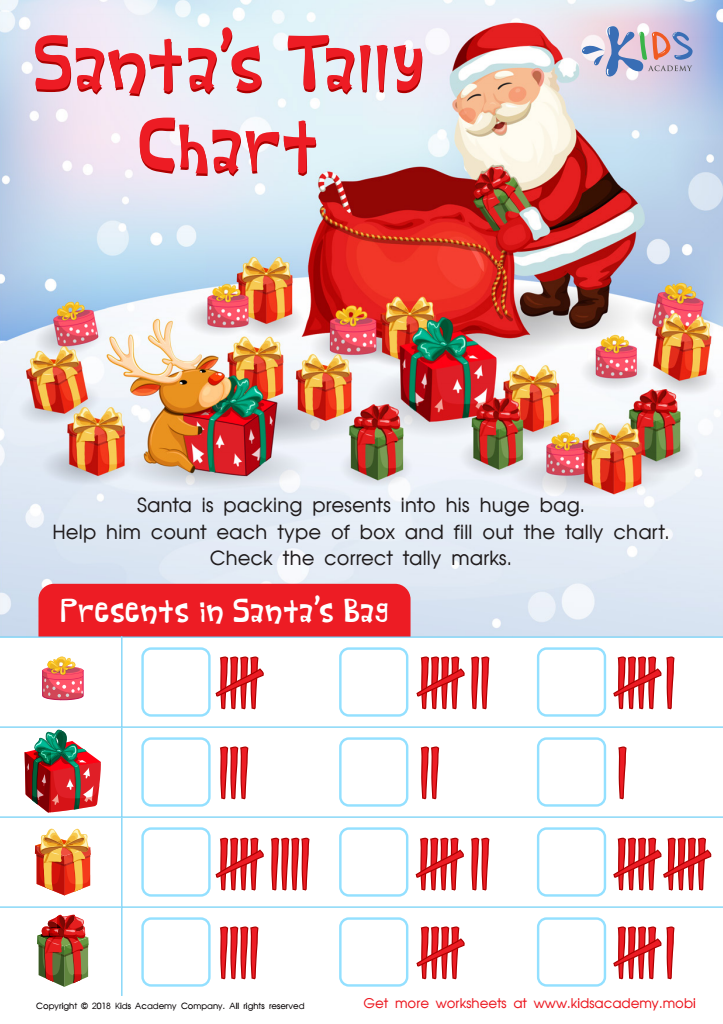
Santa Tally Chart Worksheet
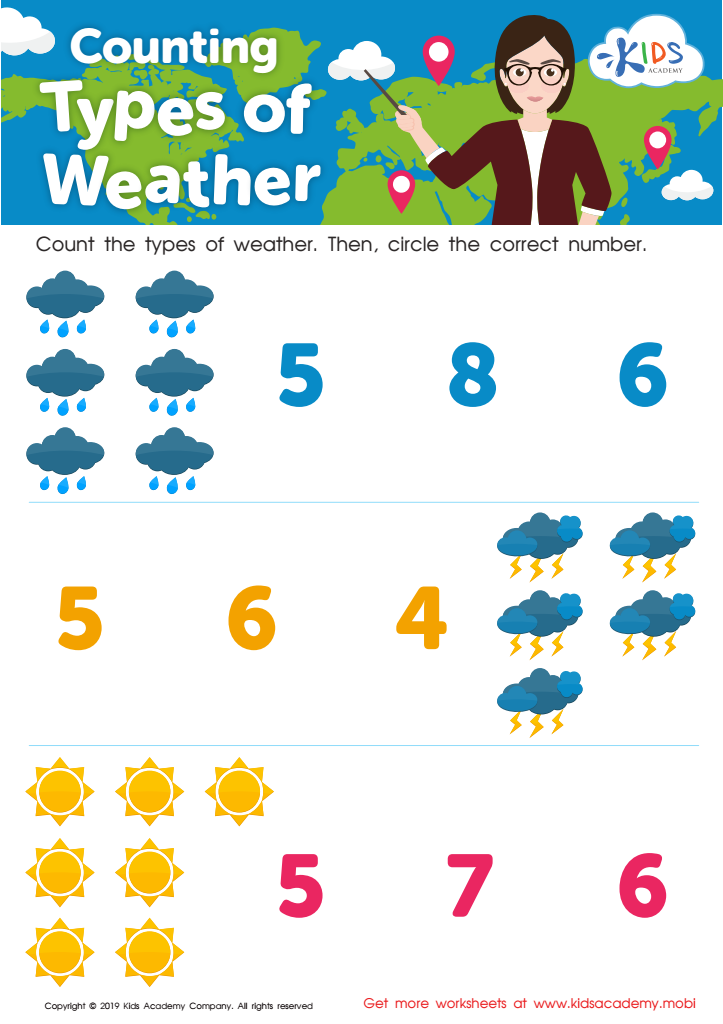
Counting Types of Weather Worksheet








Data interpretation is a critical skill for children aged 5-6, forming the foundation for mathematical understanding and everyday decision-making. At this early age, children are naturally curious about the world around them; introducing them to simple data concepts can harness that curiosity effectively. For parents and teachers, fostering this skill can lead to enhanced cognitive development as children learn to classify, sort, and make sense of quantities. This engagement helps them develop critical thinking and problem-solving abilities early on.
Moreover, young learners get the chance to engage in interactive activities, such as counting objects, sorting by color or size, and interpreting simple graphs or charts. These exercises not only help boost mathematical skills but also promote social skills through collaborative learning. For educators, incorporating data interpretation into real-world scenarios—like counting fruits during snack time—can enhance students' practical knowledge.
Furthermore, these skills prepare children for future academic success by building a strong foundation in mathematics, promoting confidence, and fostering a love for learning. When parents and teachers emphasize the importance of data interpretation, they equip children with essential life skills that will benefit them in school and beyond, setting the stage for lifelong learning and informed decision-making.








