Pattern recognition Numbers Worksheets for Ages 5-6
4 filtered results
-
From - To
Discover our engaging Pattern Recognition Numbers Worksheets designed specifically for children aged 5-6! These interactive resources help young learners develop essential math skills through fun and colorful activities. By identifying, completing, and creating patterns with numbers, kids enhance critical thinking and problem-solving abilities. Our worksheets are designed to boost numeracy and cognitive skills while keeping learning enjoyable. Perfect for home or classroom use, each worksheet promotes independent learning and reinforces classroom concepts. Let your child's creativity shine as they explore the world of numbers through patterns. Start their mathematical journey today with our exciting and educational worksheets!
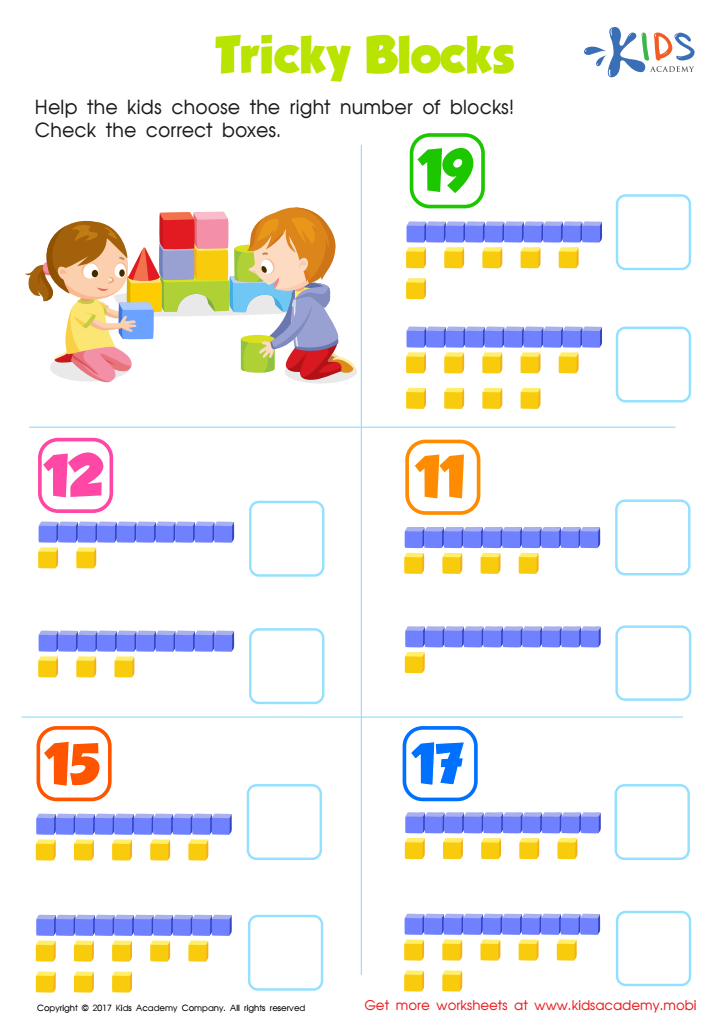
Tricky Blocks Worksheet
 Assign to My Students
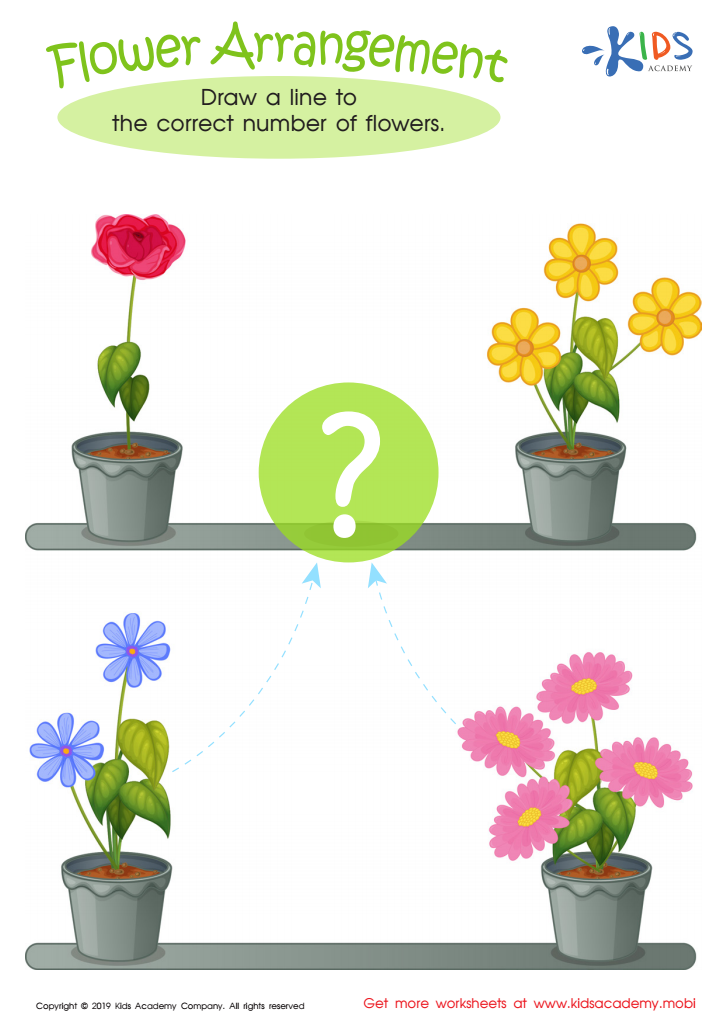
Flower Arrangement Worksheet
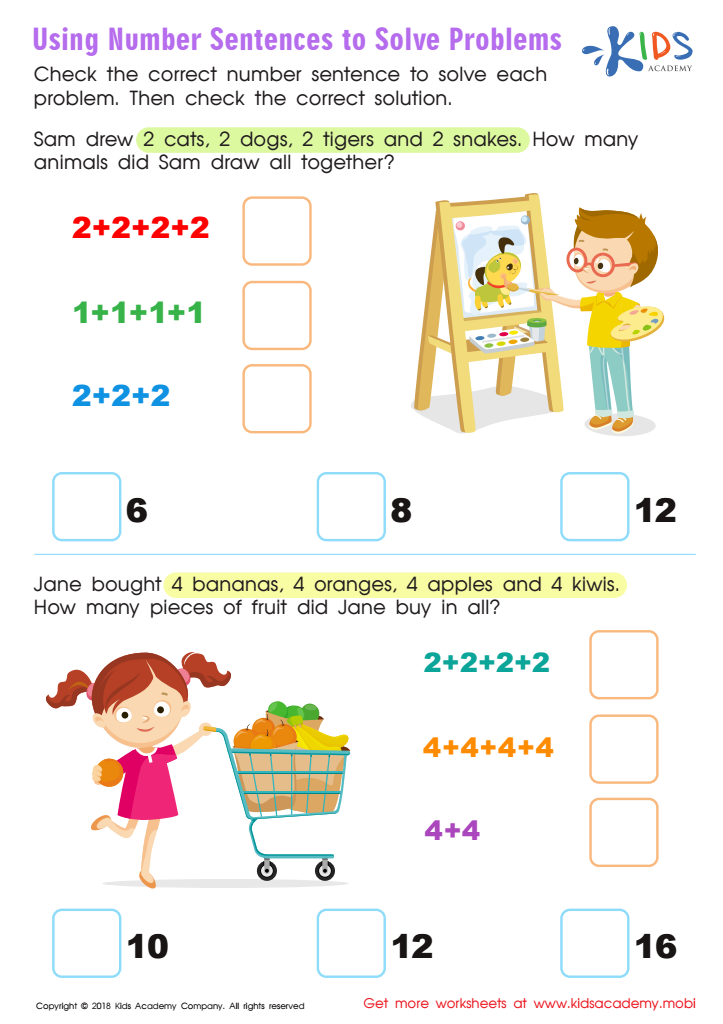
Using Number Sentences to Solve Problems Worksheet
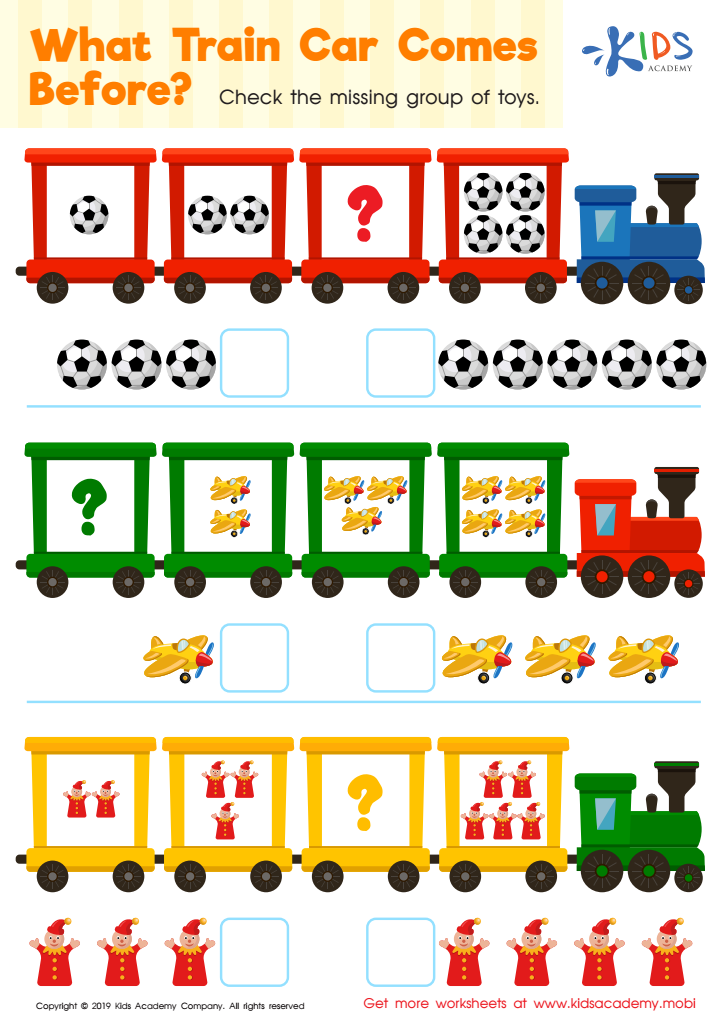
What Train Car Comes Before? Worksheet








Pattern recognition is a fundamental skill in early childhood development, particularly for children aged 5-6. Parents and teachers should care about this skill because it lays the groundwork for future mathematical understanding. Recognizing patterns allows children to see relationships and make predictions, enhancing their problem-solving abilities.
At this age, children naturally start to notice repetitions in colors, shapes, and numbers, which encourages them to identify similarities and differences. Engaging with patterns helps develop critical thinking and reasoning skills, fostering cognitive growth. Furthermore, pattern recognition is not limited to mathematics; it also promotes reading readiness, as children learn to recognize language structures and story sequences.
In addition, recognizing patterns enhances memorization and concentration skills, which are essential for academic success. Through simple activities such as singing songs, playing games, or arranging objects, teachers and parents can create enriching learning experiences. This early exposure can build a strong foundation for more advanced topics in mathematics and science later on.
Overall, focusing on pattern recognition not only supports specific learning objectives but also nurtures a child's curiosity and confidence, making it essential for parents and teachers to prioritize in early education.








