Spatial reasoning Numbers Worksheets for Ages 5-6
3 filtered results
-
From - To
Our Spatial Reasoning Numbers Worksheets for Ages 5-6 are designed to engage young minds in a fun and interactive way. These worksheets help children develop essential math skills, focusing on spatial reasoning, which is crucial for understanding numbers and mathematical concepts. Kids will explore shapes, patterns, and spatial relationships through a variety of exciting activities like puzzles and matching games. Ideal for kindergarten students, these worksheets not only enhance numerical abilities but also improve problem-solving skills and critical thinking. Make learning math enjoyable and effective with our expertly crafted resources. Perfect for classroom or at-home practice.
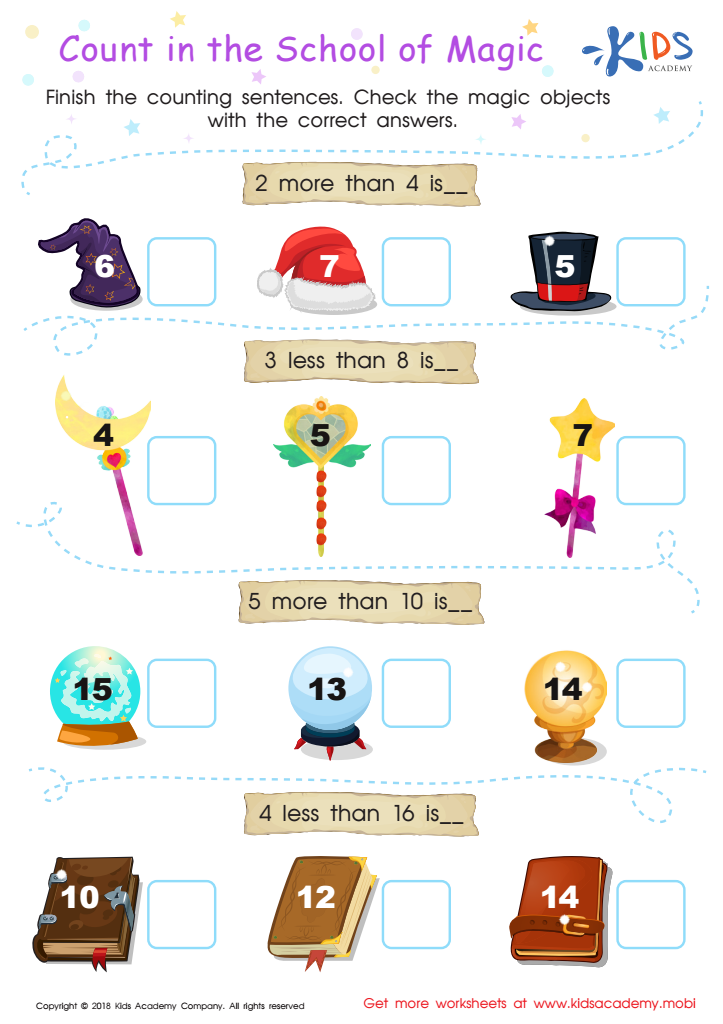
Count in the School of Magic Worksheet
 Assign to My Students
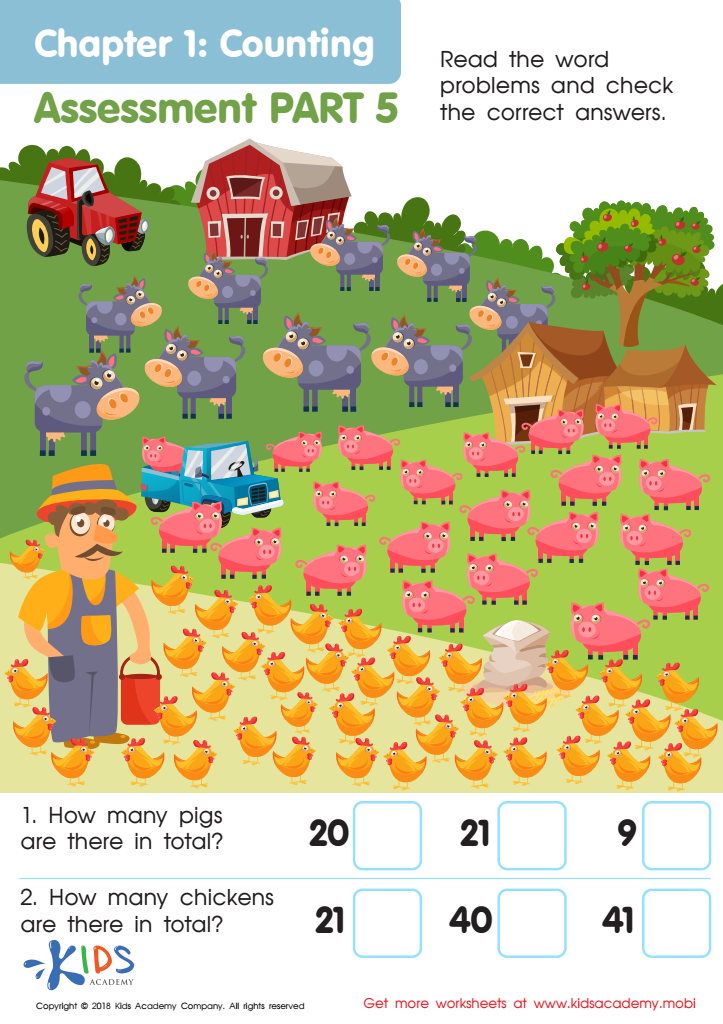
Counting: Assessment 5 Worksheet
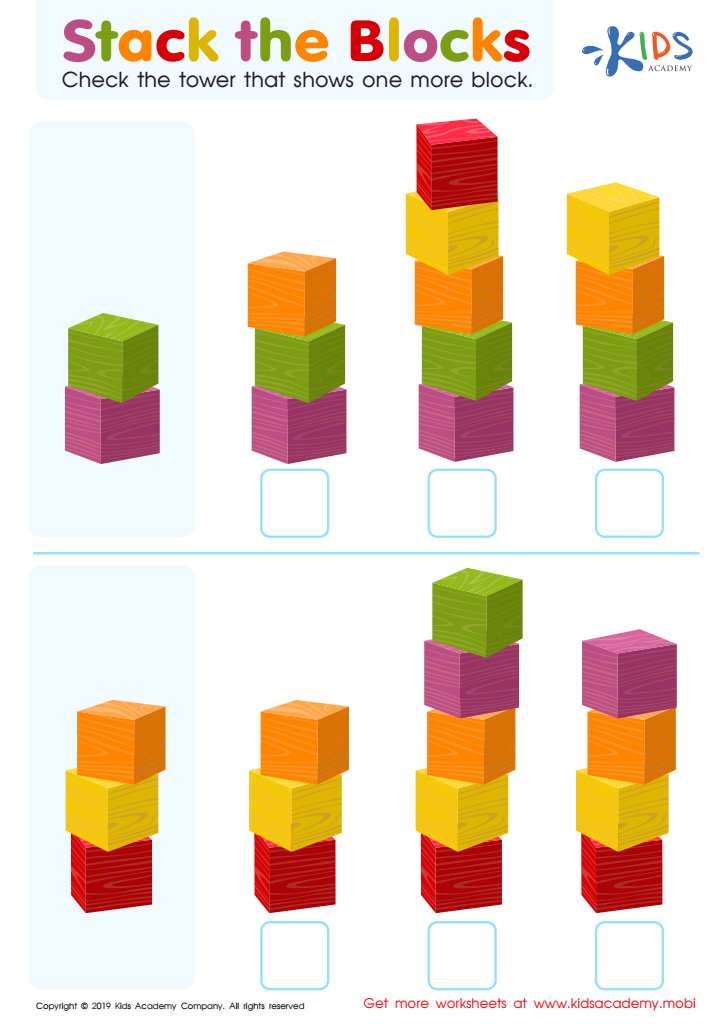
Stack the Blocks Worksheet








Spatial reasoning and numbers are critical components of early childhood development, particularly in the formative years of ages 5-6. Spatial reasoning involves the ability to visualize, manipulate, and understand objects and their relationships in space. It's not just about merely recognizing shapes; it's about comprehending how those shapes fit together.
When children at this age nurture these skills, it lays a strong foundation for future learning in science, technology, engineering, and mathematics (STEM). For example, spatial reasoning directly correlates with abilities in problem-solving and can help in grasping complex concepts later, such as geometry and algebra.
Early numeracy teaches children not only to count but to recognize numbers as symbols that hold value, compare quantities, and understand patterns. Mastery of these fundamental skills leads to better performance in math during later school years.
Encouraging play activities, using puzzles, building blocks, and interactive games can make these concepts fun and engaging. For parents and teachers, fostering an environment that nurtures these skills is key. This approach will not only leverage a child’s natural curiosity but also enhance their cognitive development, thereby setting them on a trajectory of lifelong academic and personal success.
By integrating spatial reasoning and numbers into everyday learning, parents and teachers are equipping children with essential tools to navigate and make sense of the world around them effectively.








