Understanding Quantities Numbers Worksheets for Ages 5-6
5 filtered results
-
From - To
Enhance your child's math skills with our "Understanding Quantities Numbers Worksheets for Ages 5-6." These fun and educational printables are designed to help young learners grasp the concept of quantities and numbers effectively. Each worksheet encourages kids to count, compare, and recognize numbers in a variety of engaging exercises, laying a strong foundation for future math success. Tailored for kindergarten-aged children, these worksheets bolster critical early math skills through hands-on practice. Help your preK-kindergartener develop a better understanding of numbers and quantities, prepping them for advanced math activities with these intuitive activities. Download now for endless learning fun!
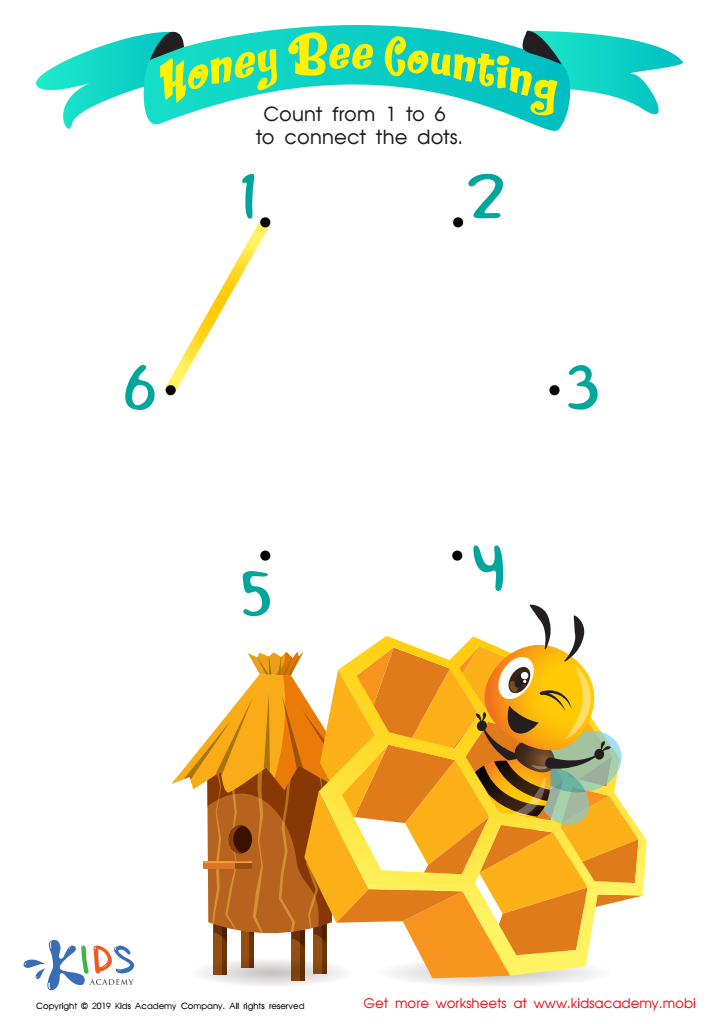
Honey Bee Counting Worksheet
 Assign to My Students
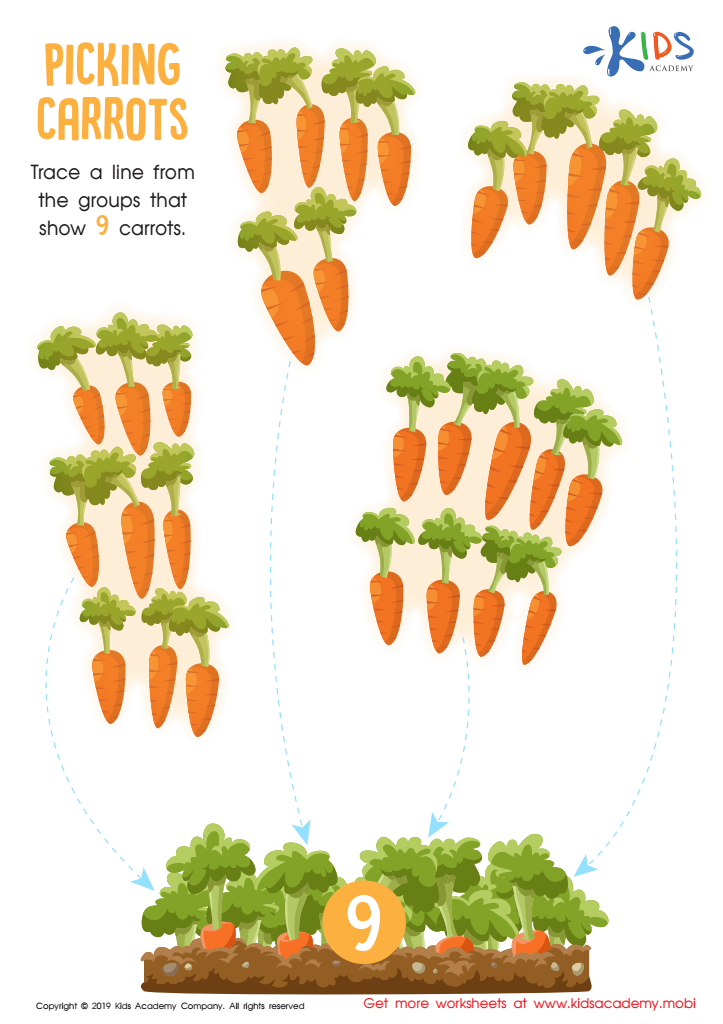
Picking Carrots Worksheet
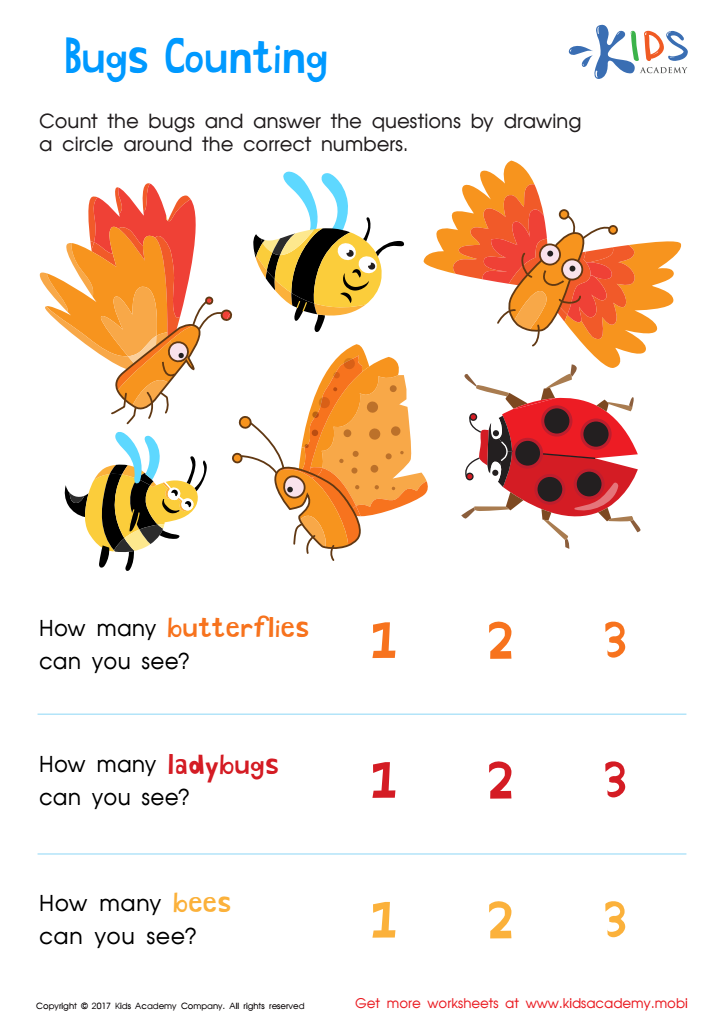
Bugs Counting Worksheet
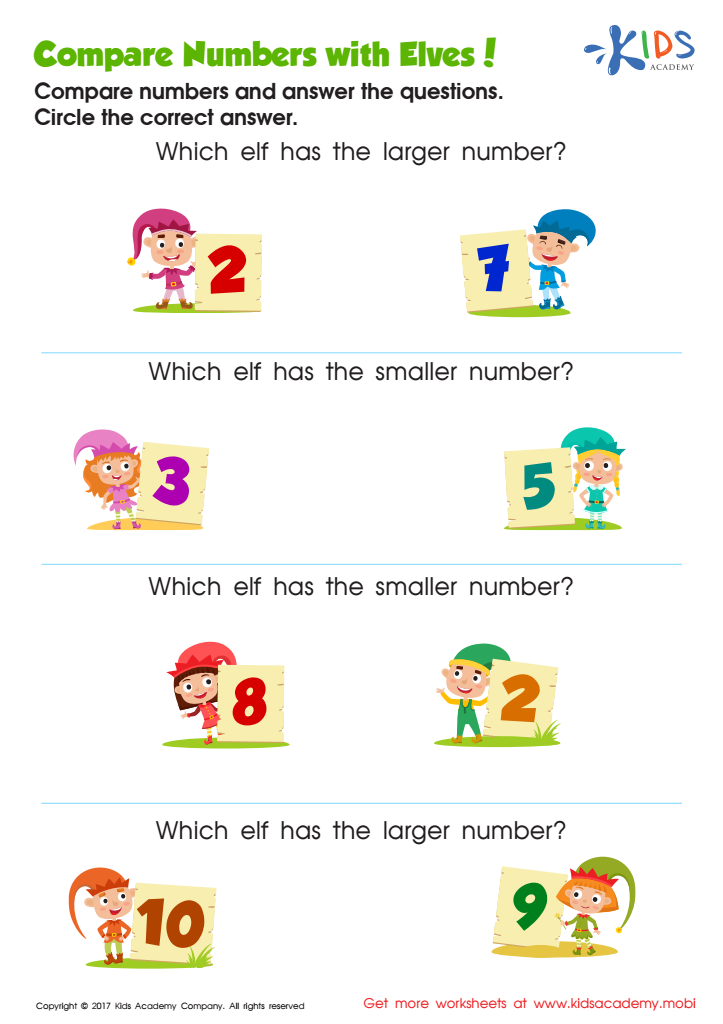
Comparing Numbers Worksheet for Kindergarten
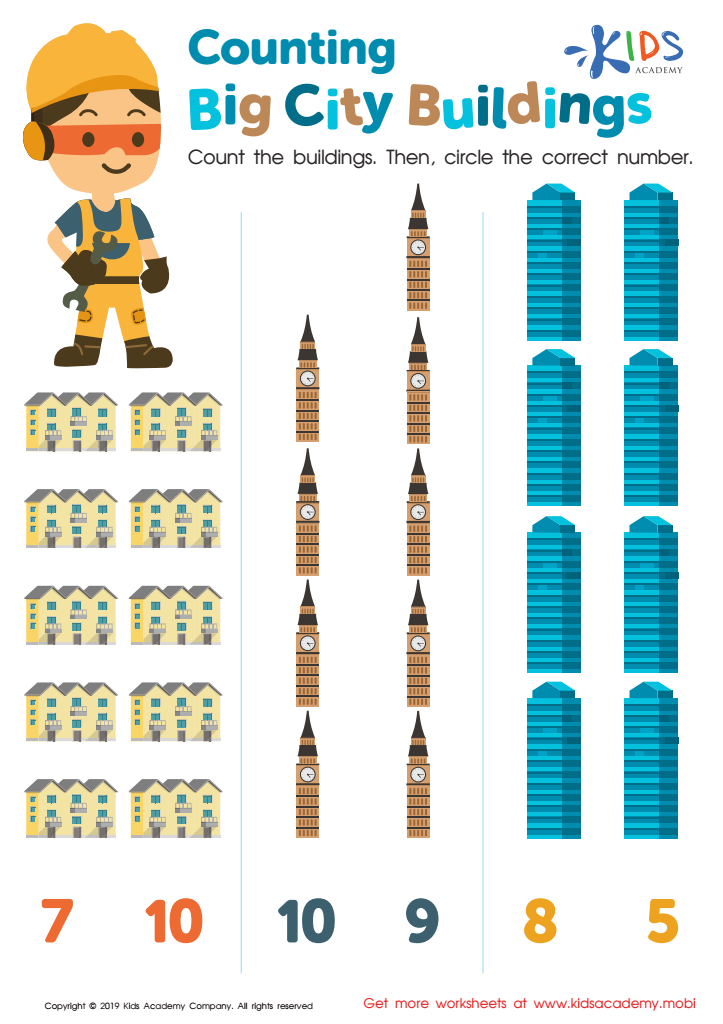
Counting Big City Buildings Worksheet








Understanding quantities and numbers for children aged 5-6 is fundamental for their early cognitive development and lays the groundwork for future academic success, especially in mathematics. At this age, children are at a critical stage where they transition from concrete to more abstract thinking. Grasping quantities helps children comprehend that numbers represent more than just symbols; they are values that can be compared, added, subtracted, and categorized.
When parents and teachers emphasize understanding quantities, they foster a child's ability to recognize patterns, an essential math skill. It also enhances problem-solving abilities, as students learn to make connections between different sets of objects and numerical values. These foundational skills are pivotal, not just for math, but also for daily activities such as telling time, understanding money, and even following recipes.
Moreover, fostering a positive attitude towards numbers at an early age can reduce math anxiety, making children more confident in their mathematical abilities as they encounter more complex topics. Early experiences with math through playful and practical activities encourage curiosity and enthusiasm for learning. By prioritizing an understanding of quantities and numbers, parents and teachers can support a child's holistic development, ensuring that foundational skills are in place for more advanced academic challenges ahead.








