Understanding Sequences Numbers Worksheets for Ages 5-6
5 filtered results
-
From - To
Welcome to our "Understanding Sequence Numbers Worksheets for Ages 5-6"! These engaging worksheets are designed to help young learners grasp the concept of number sequences, fostering essential math skills. By working through fun activities, children will develop their ability to recognize patterns, complete sequences, and improve their counting skills. Our worksheets promote critical thinking and problem-solving, making learning enjoyable and effective. With colorful illustrations and age-appropriate challenges, kids will be excited to explore sequences while building a strong foundation in mathematics. Discover how these resources can enhance your child's educational journey and ignite a passion for learning today!
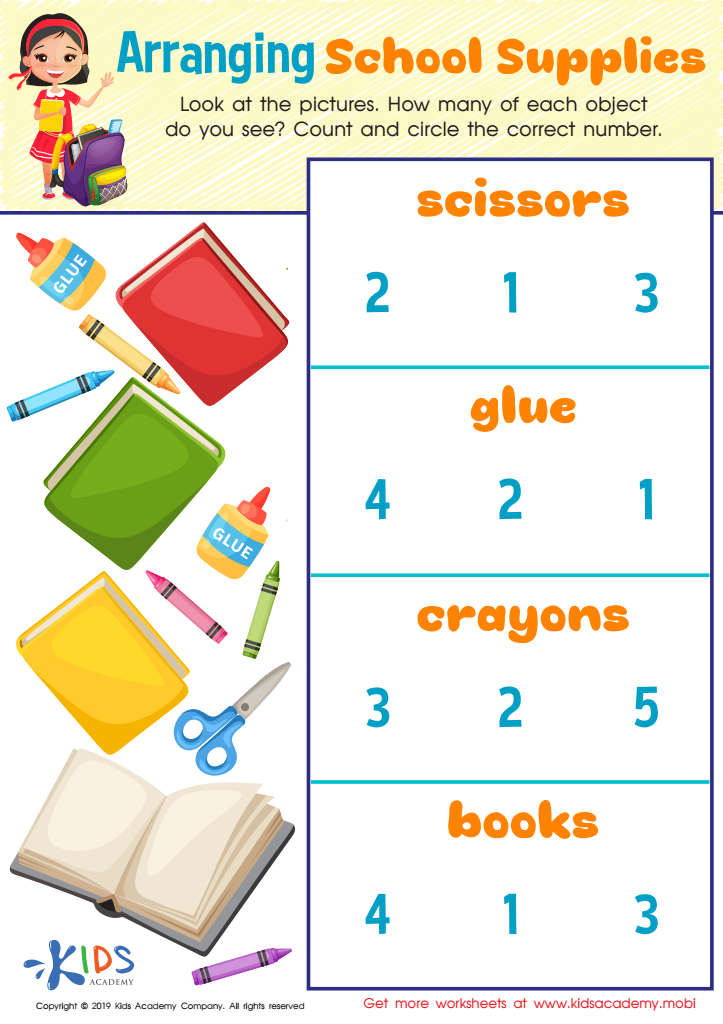
Arranging School Supplies Worksheet
 Assign to My Students
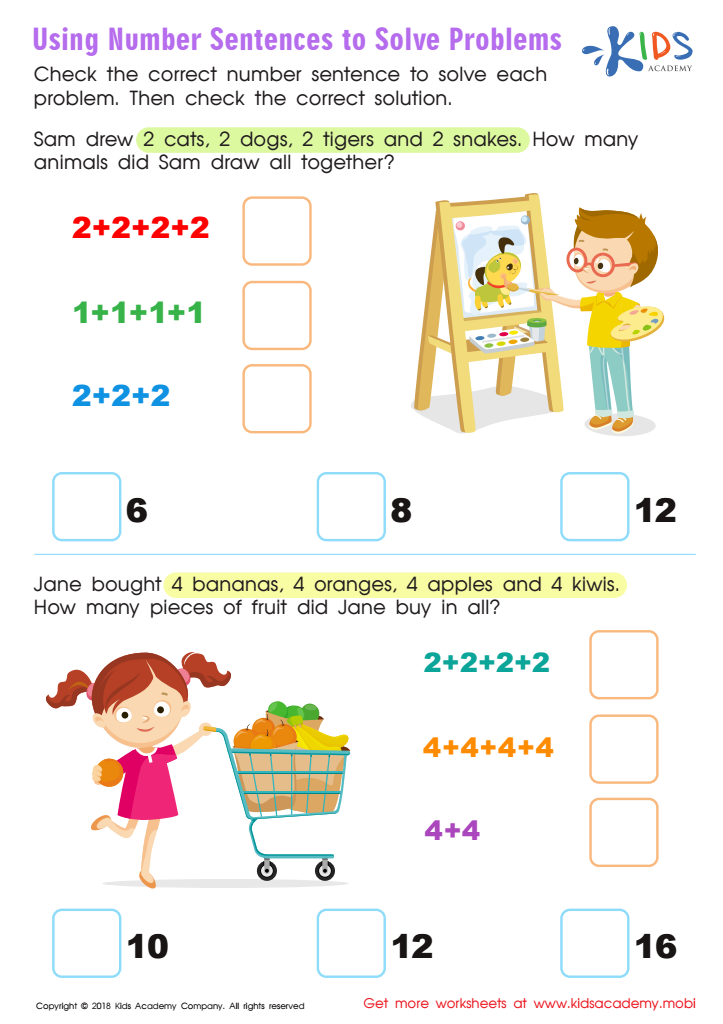
Using Number Sentences to Solve Problems Worksheet
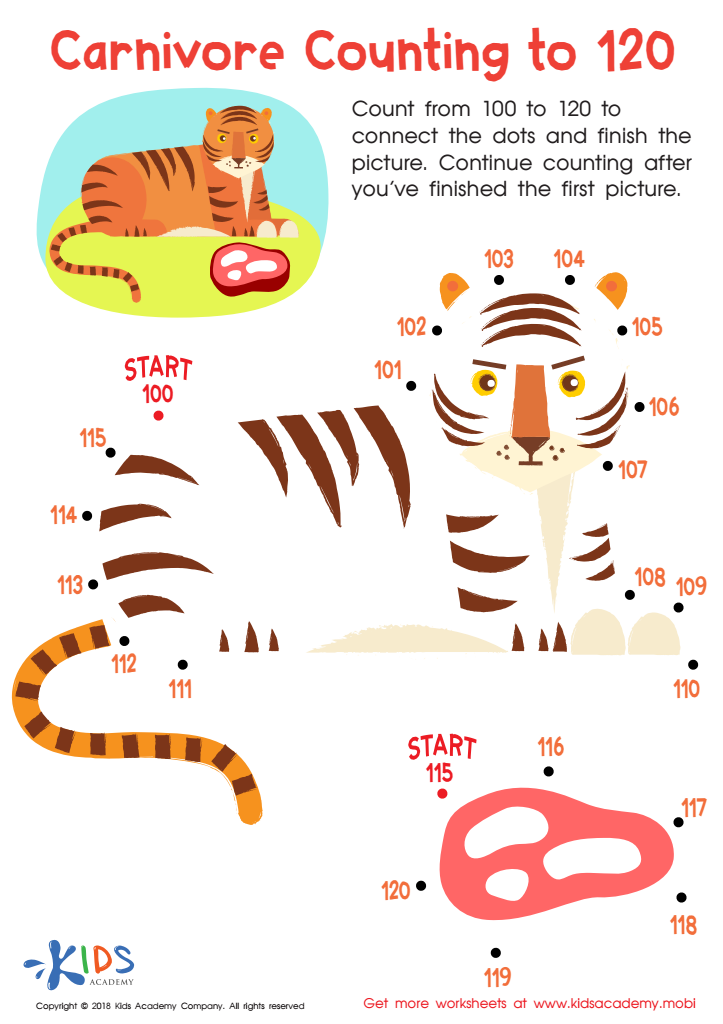
Carnivore Counting to 120 Worksheet
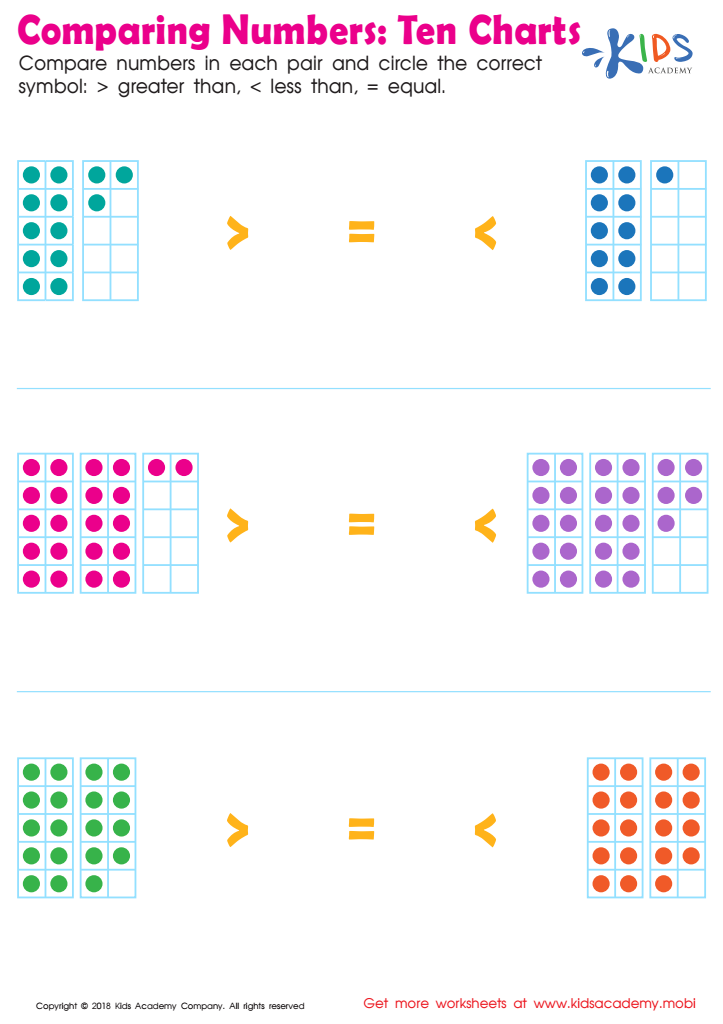
Ten Charts Worksheet
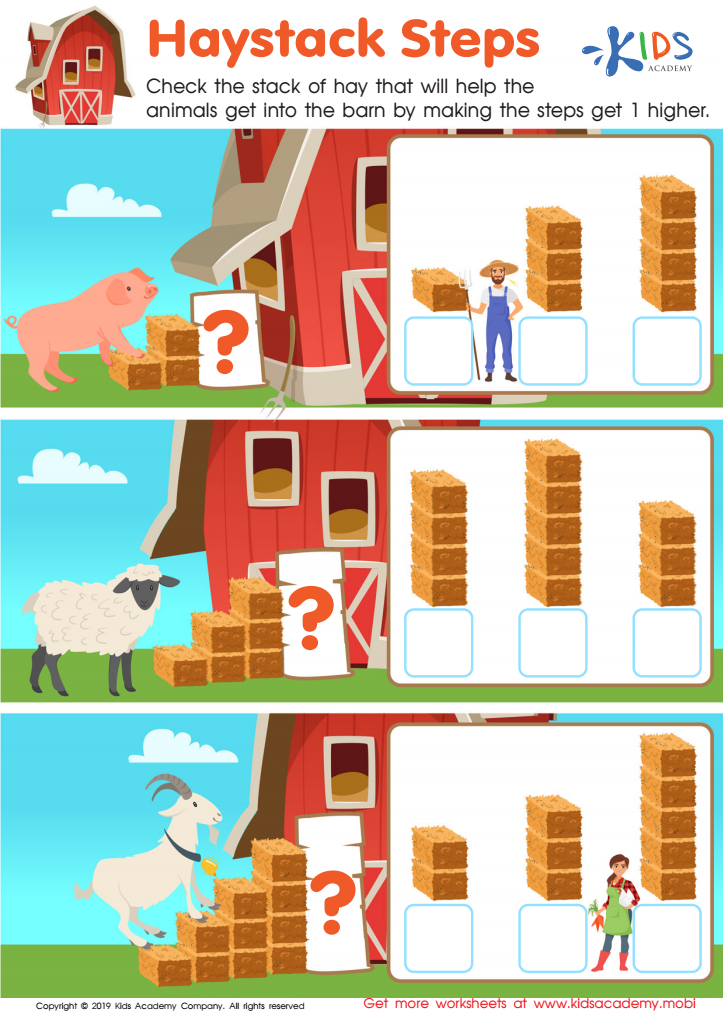
Haystack Steps Worksheet








Understanding sequence numbers is crucial for children aged 5-6, as it forms the foundation for their mathematical and cognitive development. At this age, children begin to explore patterns, order, and relationships between numbers. Recognizing sequences helps them in various ways, from counting forward and backward to understanding the concept of 'next' or 'first' in a series.
Parents and teachers should care about this concept because it enhances critical thinking and problem-solving skills. Engaging with sequences empowers children to predict outcomes, enabling them to identify and continue patterns in everyday situations, which fosters a deeper understanding of mathematics and its real-world applications. Additionally, mastering sequences contributes to proficiency in more advanced topics later on, such as addition, subtraction, and even complex patterns in science and literacy.
Moreover, fostering an early interest in numbers helps to boost a child's confidence, as they gain a sense of accomplishment from grasping these fundamental concepts. Thus, by prioritizing understanding sequence numbers, parents and teachers not only enhance mathematical skills but also support a child's overall cognitive growth, setting the stage for future learning successes.








