
Addition skills Math Worksheets for Ages 5-6
114 filtered results
Difficulty Level
Grade
Age
-
From - To
Subject
Activity
Standards
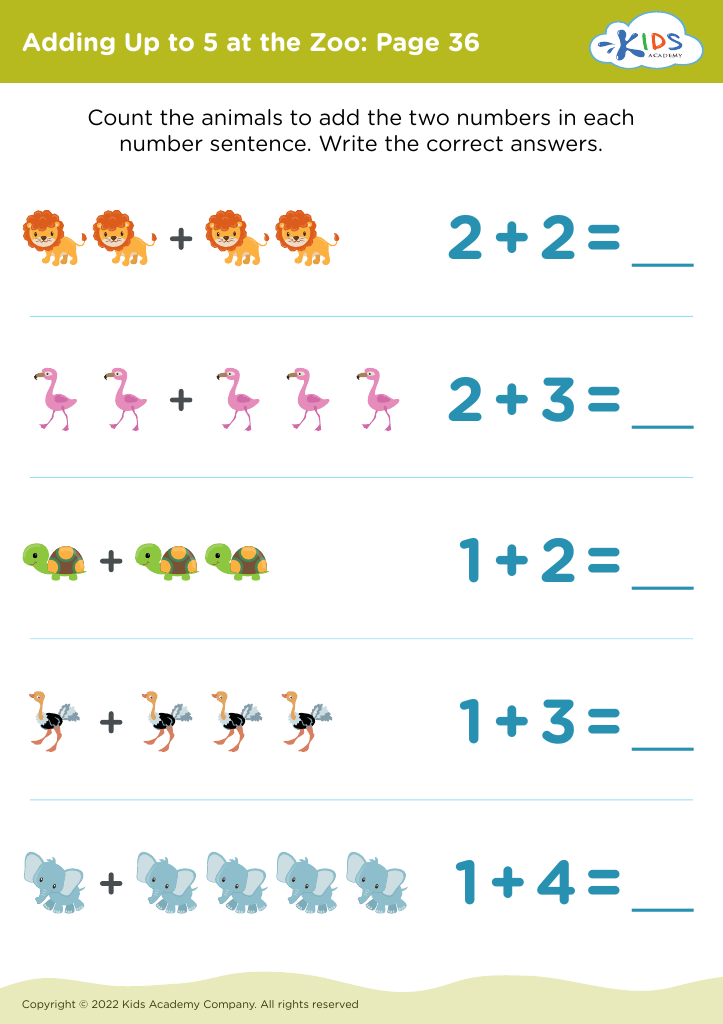
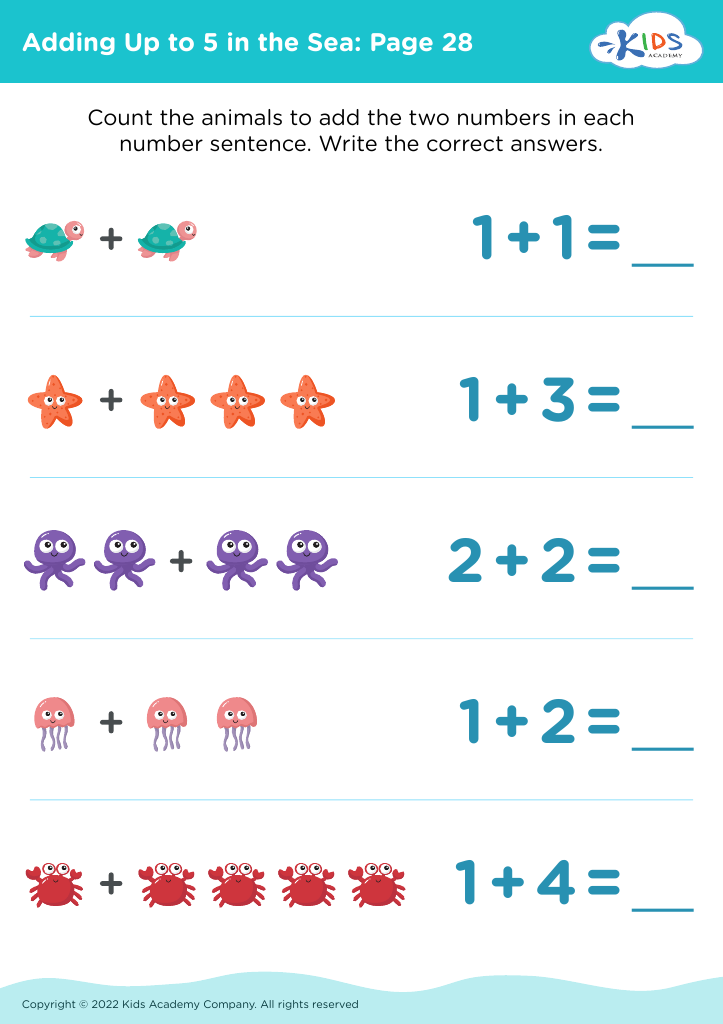
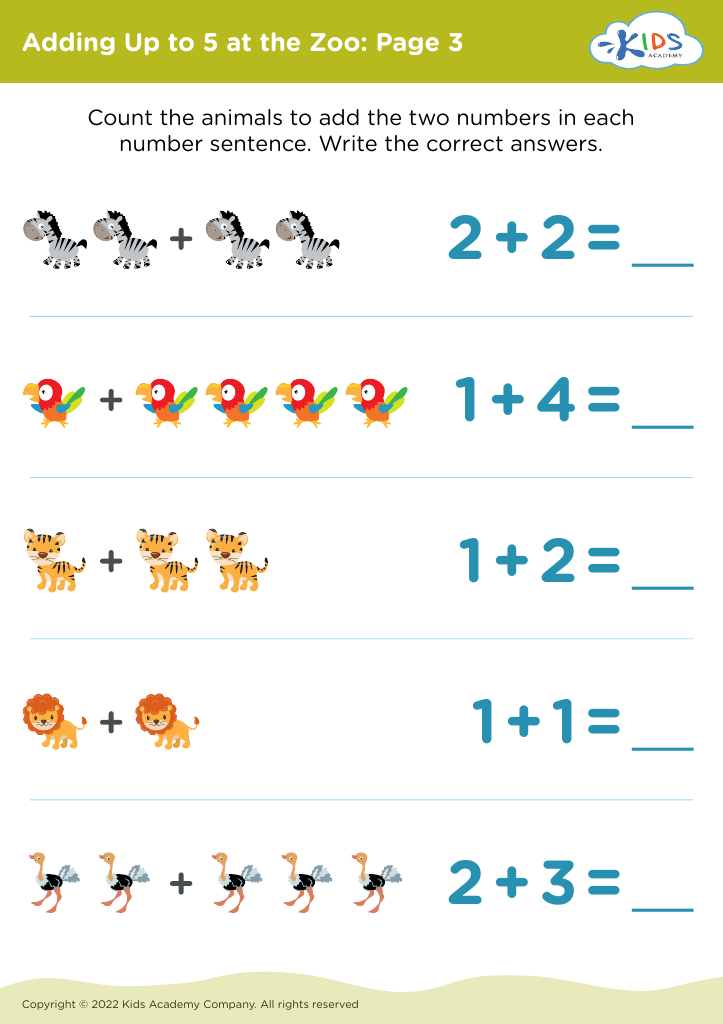
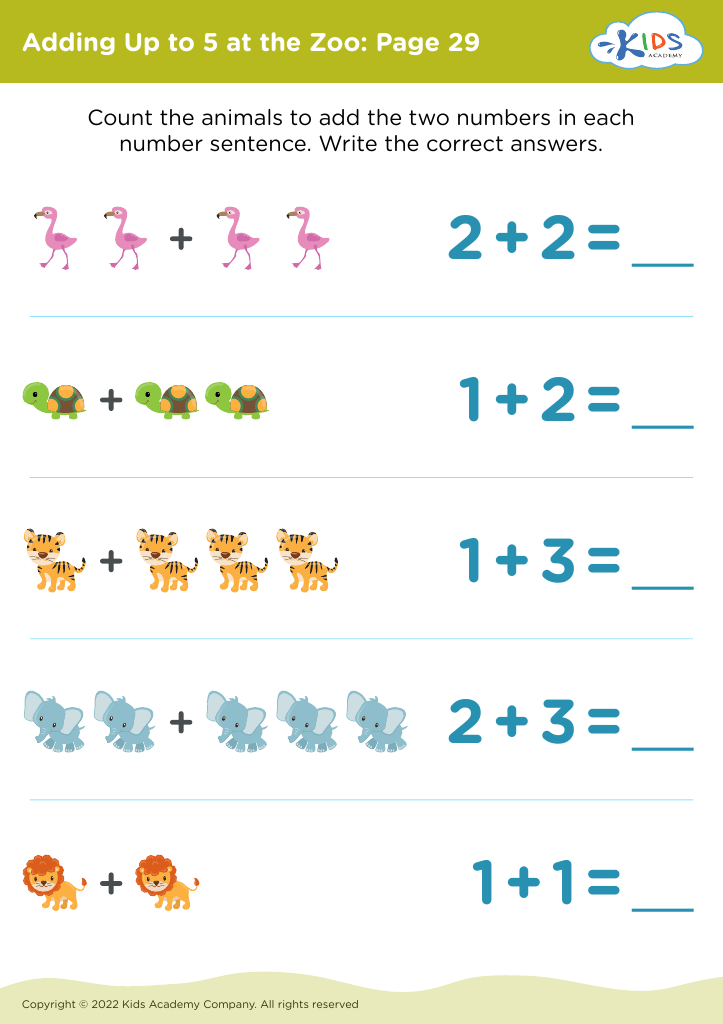
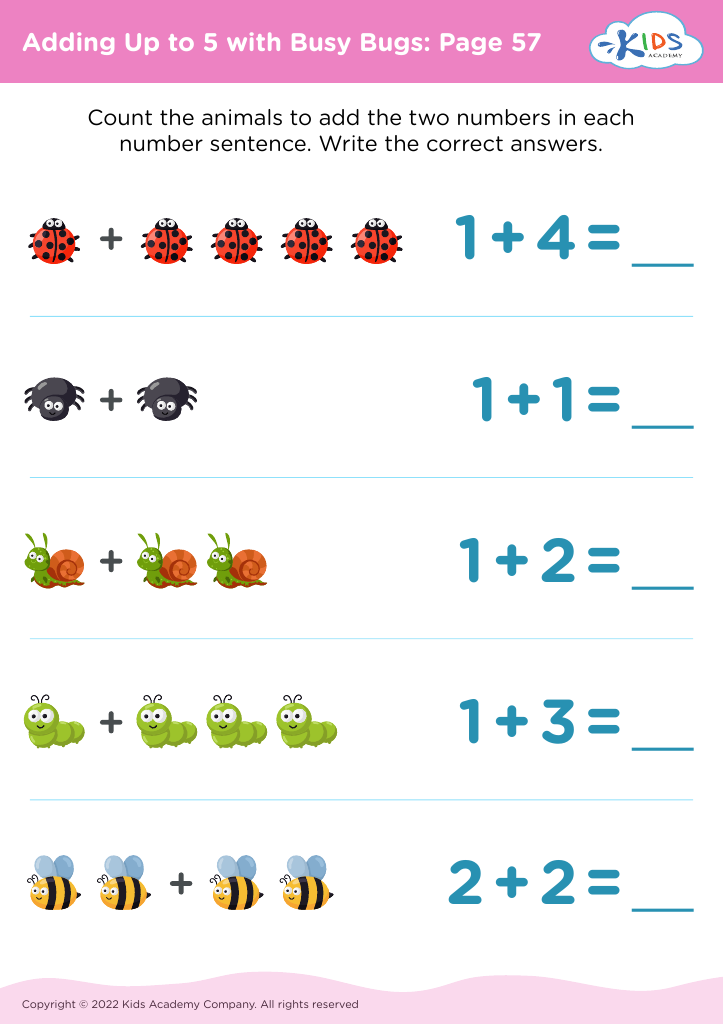
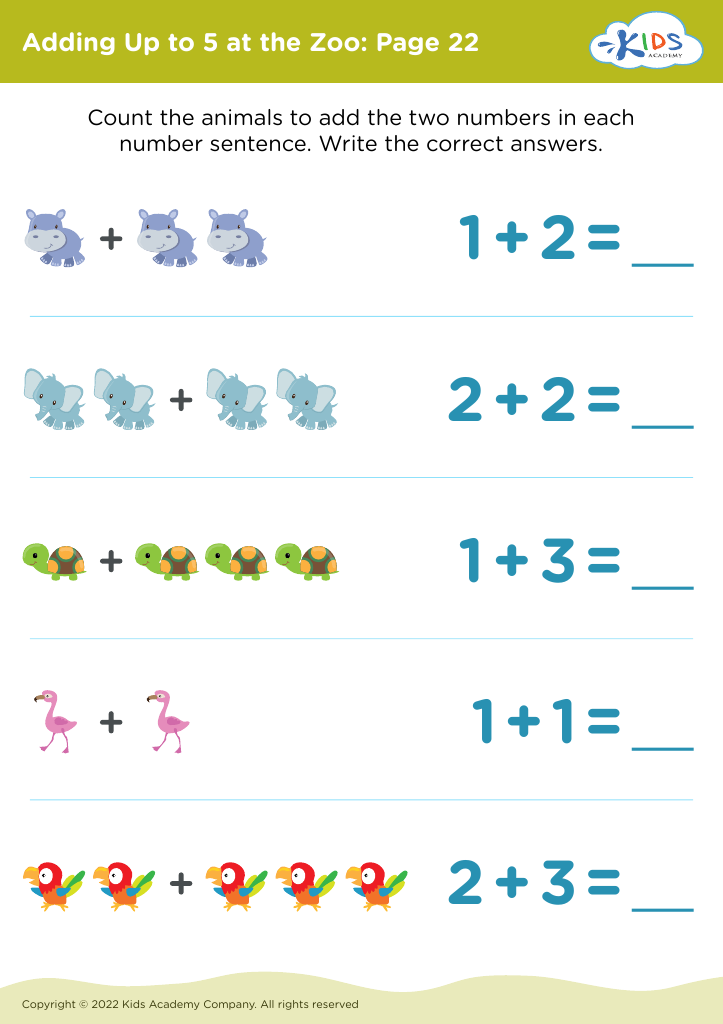
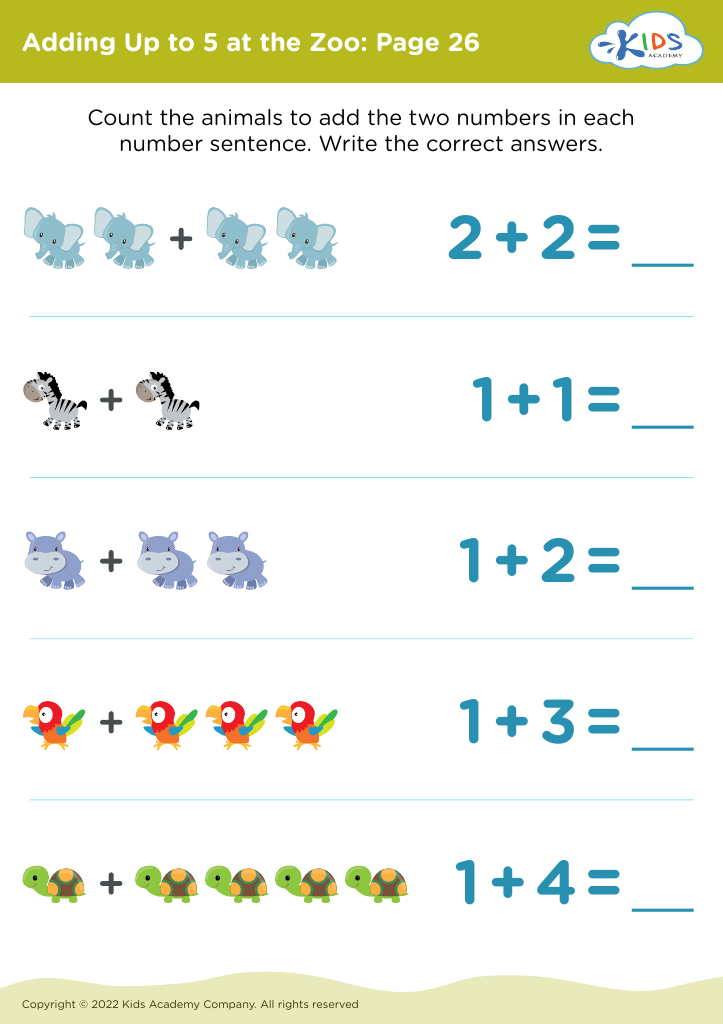
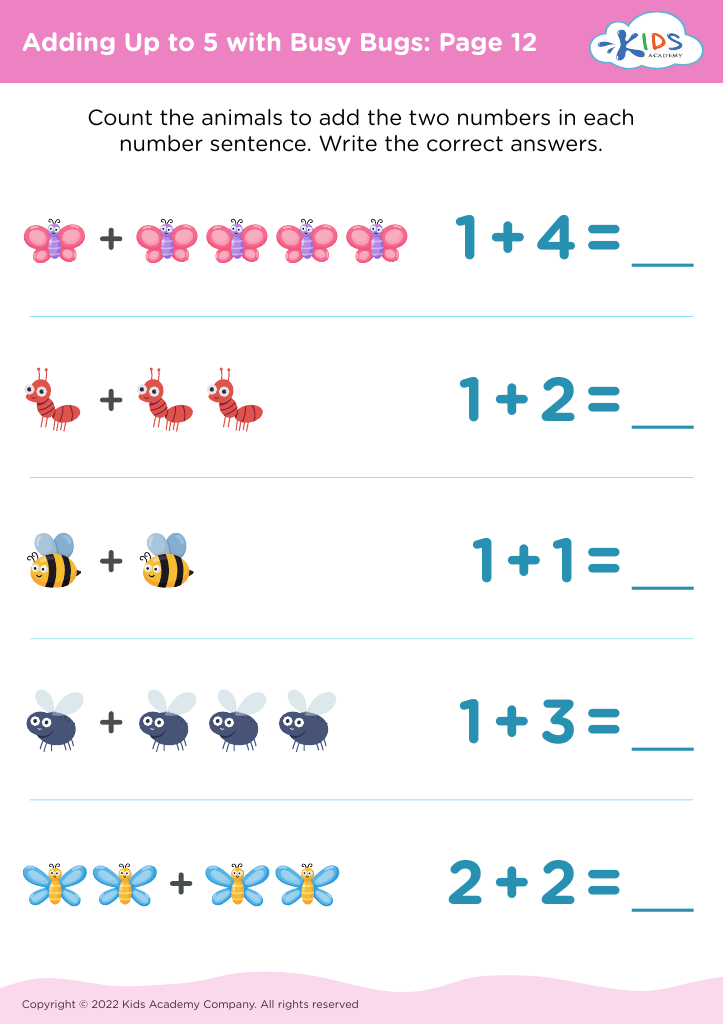
Unlock your child's mathematical potential with our engaging Addition Skills Math Worksheets designed specifically for ages 5-6! These worksheets feature fun, colorful activities that encourage early learners to grasp fundamental addition concepts. Your little ones will enjoy practicing simple addition problems through interactive exercises that promote counting, number recognition, and problem-solving skills. Perfect for homeschooling or classroom activities, these worksheets offer a hands-on approach to learning math. With our comprehensive collection, kids will build confidence in their abilities while developing essential skills that lay the foundation for future mathematical success. Start boosting your child's addition skills today!
Favorites
With answer key
Interactive
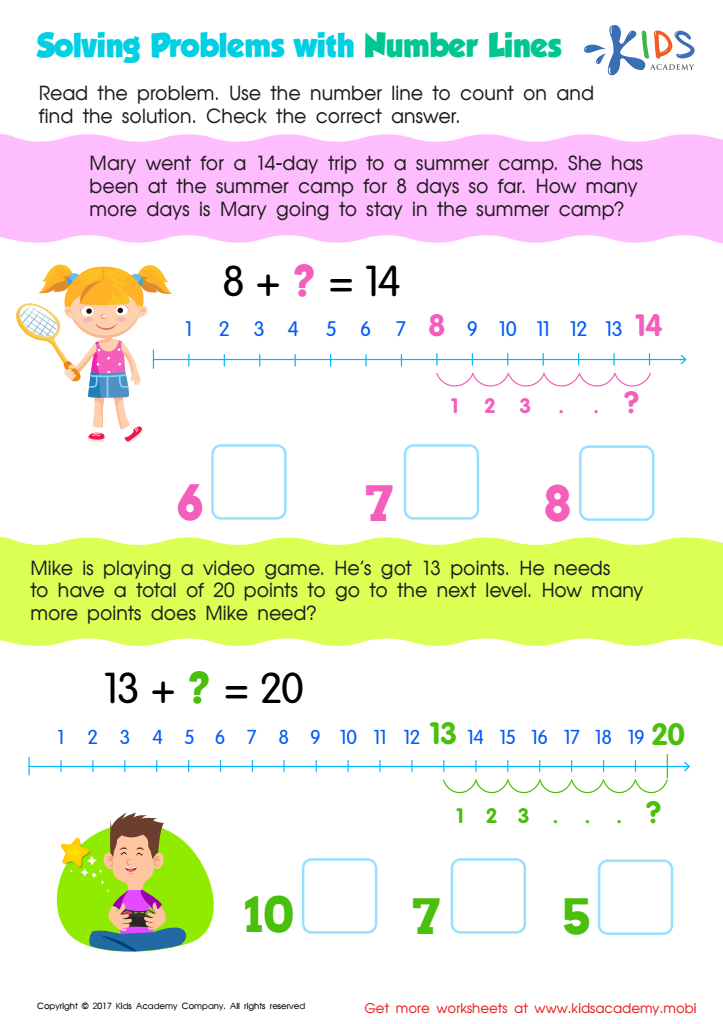
Solving Problems: Number Lines Worksheet
Number lines are fun and help build number sense and reasoning. This worksheet uses them to help students count on to find a solution to an equation. They'll have fun counting with familiar numbers and 10-bases, while also working on algebraic reasoning.
 Assign to My Students
Solving Problems: Number Lines Worksheet
Worksheet
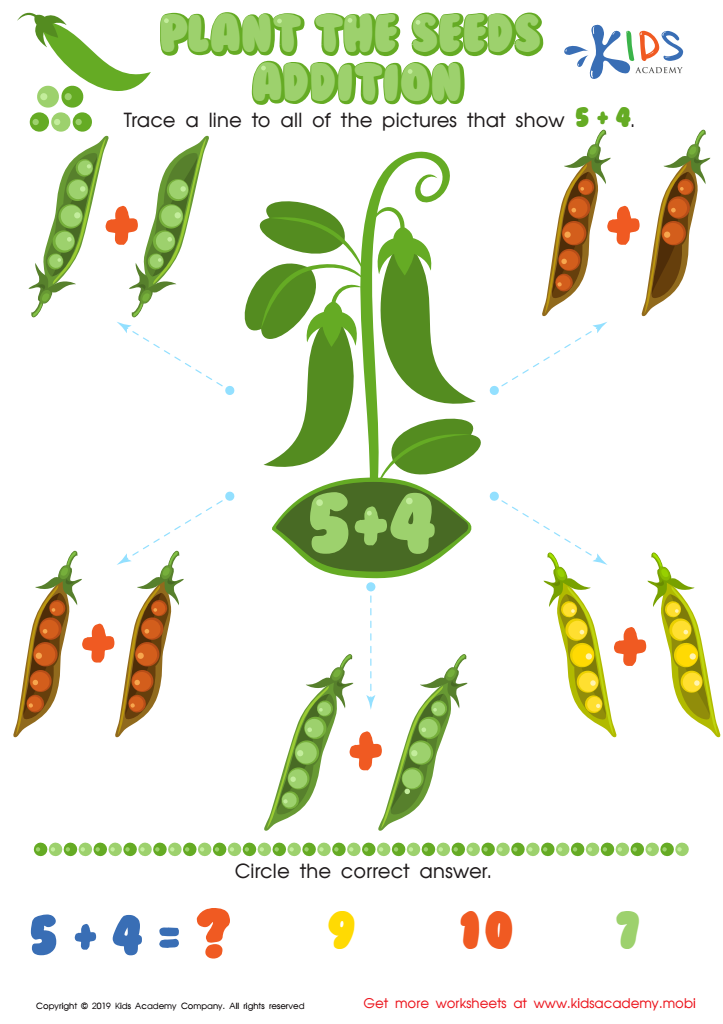
Plant the Seeds Addition Worksheet
This worksheet combines math and learning about plants. Ask kids to name their favorite plants and which ones they see the most. Have them trace a line to all pictures in the middle which show the equation 5+4. Enjoy the beauty of plants while introducing math skills!
Plant the Seeds Addition Worksheet
Worksheet
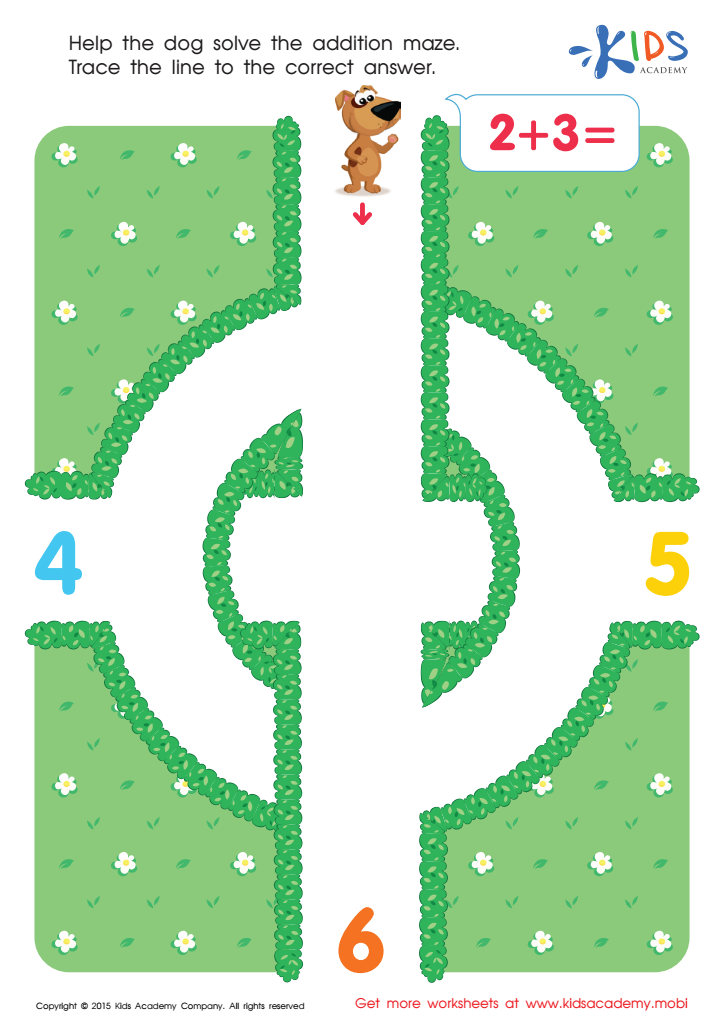
Two And Three Addition Worksheet
Give your children the task and let them find the path to the right answer while they make their way through the maze, and don't forget to let them trace the path.
Two And Three Addition Worksheet
Worksheet
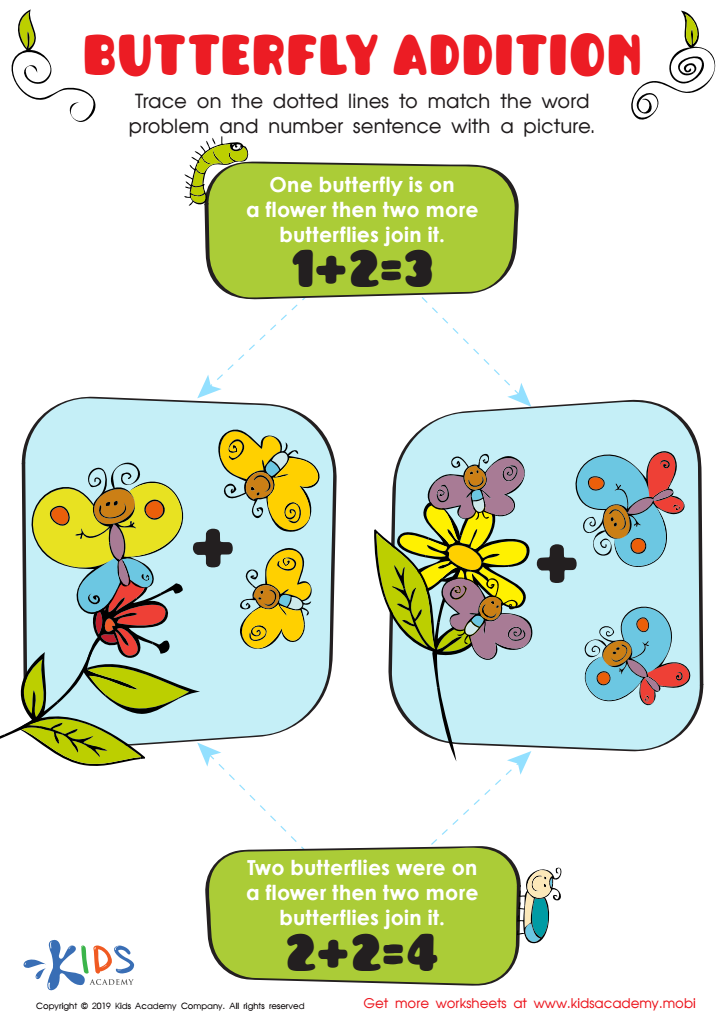
Butterfly Addition Worksheet
This tracing sheet is great for kids to work on math skills and have fun too. Read the word problems to them, then help them trace the dotted lines to match the problem and number sentence to a picture. Not only is it educational, it's beautiful too - your kids will love learning about butterflies!
Butterfly Addition Worksheet
Worksheet
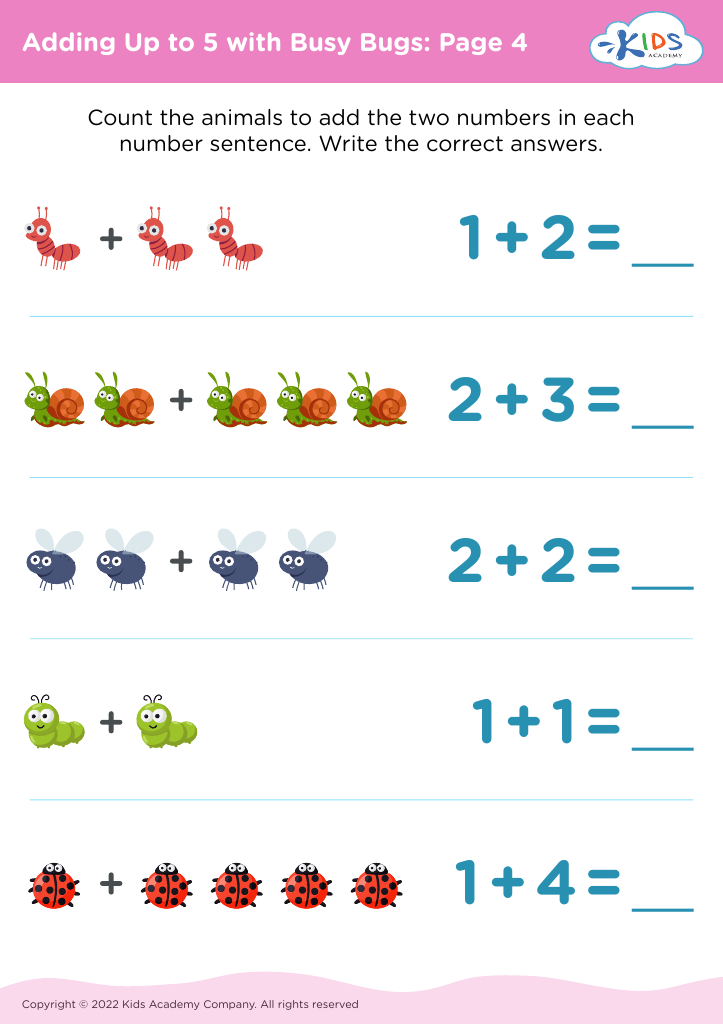
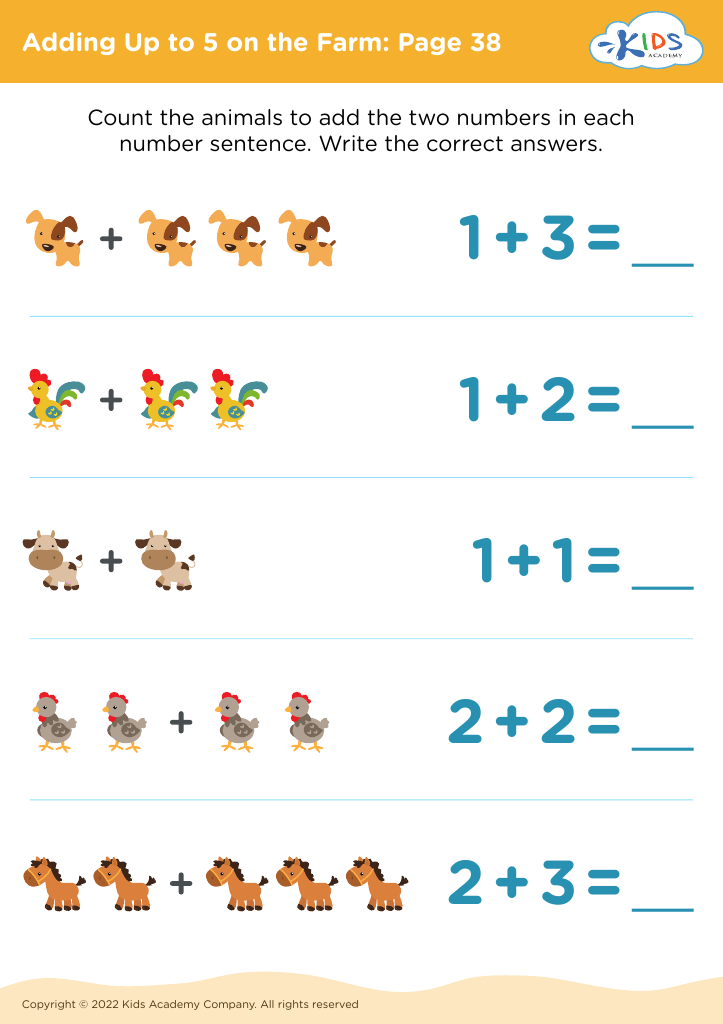
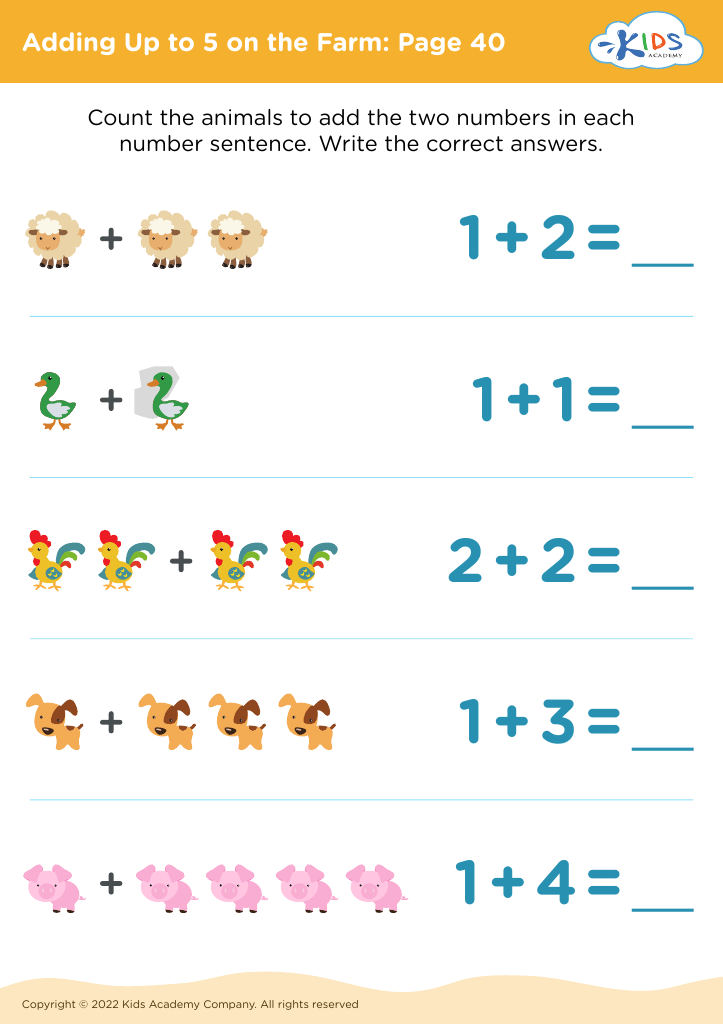
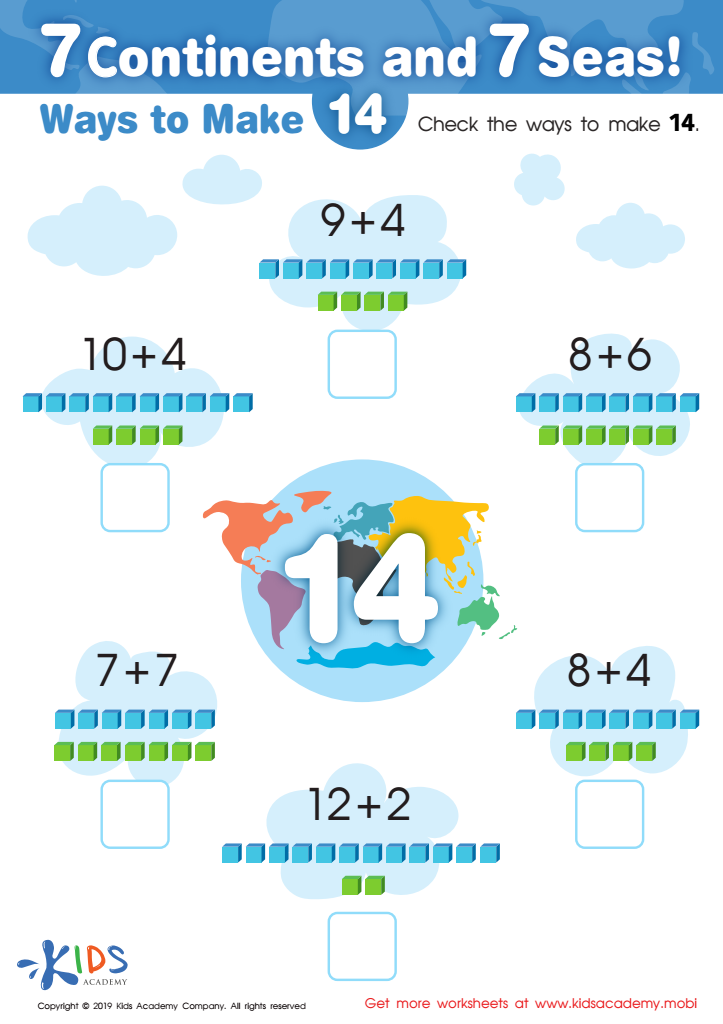
7 Continents and 7 Seas Worksheet
Remind kids of the continents and show them how different numbers can add up to the same figure. Give examples, like 2+2 =4, and 3+1 =4. Ask if they can provide other examples, then work through the simple additions in this worksheet with them. Ask them to circle all equations that make 14.
7 Continents and 7 Seas Worksheet
Worksheet
Join Kids Academy for Free
Who is primarily going to use this learning content?








Addition skills are foundational for young learners, especially for children aged 5-6. At this stage, kids are developing critical cognitive skills and building a framework for more complex mathematical concepts. Understanding addition helps them grasp essential number sense, enabling them to recognize relationships between numbers and build confidence in their problem-solving abilities.
Furthermore, addition is a daily life skill. Whether counting toys, sharing snacks, or making purchases, kids engage with basic math concepts routinely. By nurturing addition skills, parents and teachers set the stage for a positive attitude towards math that can reduce anxiety as learning progresses.
Moreover, mastering addition lays the groundwork for other mathematical operations. Concepts like subtraction, multiplication, and division rely heavily on a strong understanding of addition. Early proficiency ensures smooth transitions into these more complex areas.
Involvement from parents and teachers fosters an enhanced learning environment. Engaging in simple math activities, games, and real-world scenarios supports practice outside of formal education. When parents and teachers collaborate in teaching addition, they can celebrate small successes together, reinforcing a child’s motivation and love for learning. Ultimately, nurturing addition skills not only promotes academic success but also empowers children for future challenges in mathematics and beyond.








