Analytical thinking Math Worksheets for Ages 5-6
5 filtered results
-
From - To
Boost your child's problem-solving skills with our "Analytical Thinking Math Worksheets for Ages 5-6" from Kids Academy. These engaging worksheets are designed to develop logical reasoning and critical thinking in young learners through fun and interactive math challenges. Perfect for kindergartner and first graders, these activities enhance students' ability to recognize patterns, understand sequences, and solve puzzles. Foster a love for math and analytical thinking early on by integrating our expertly crafted worksheets into your child’s learning routine. Help them build a strong foundation in math while enjoying an enriching and rewarding educational experience.

The 5 Sense Scientist Worksheet
 Assign to My Students
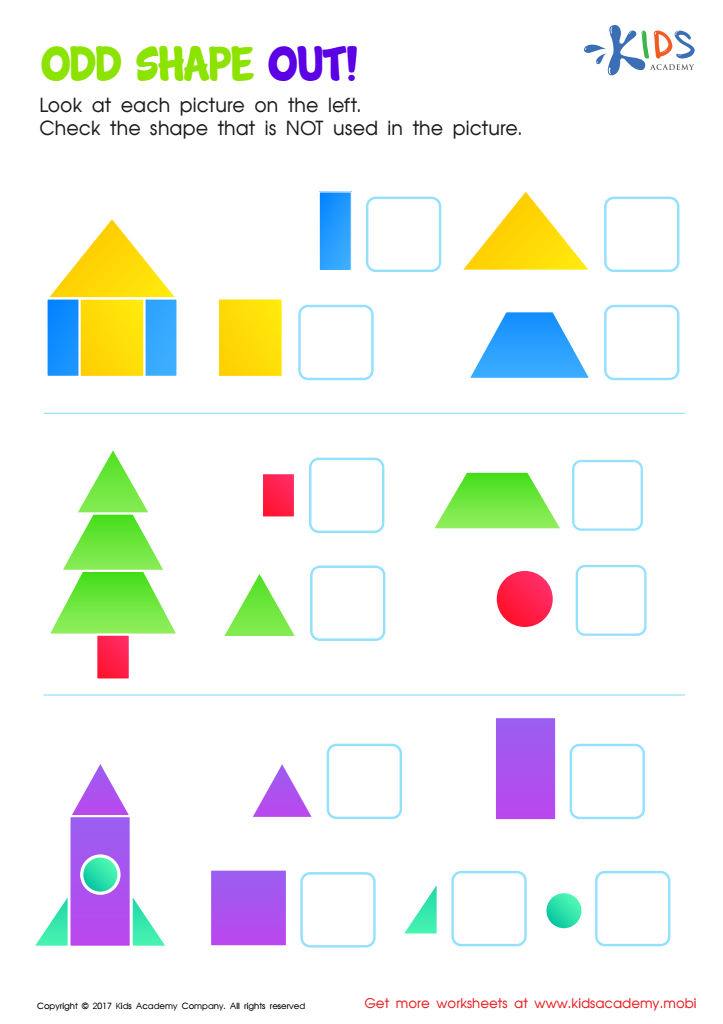
Odd Shape Out Worksheet for Grade 1

Logic Game Sorting Worksheet

After School Time Printable
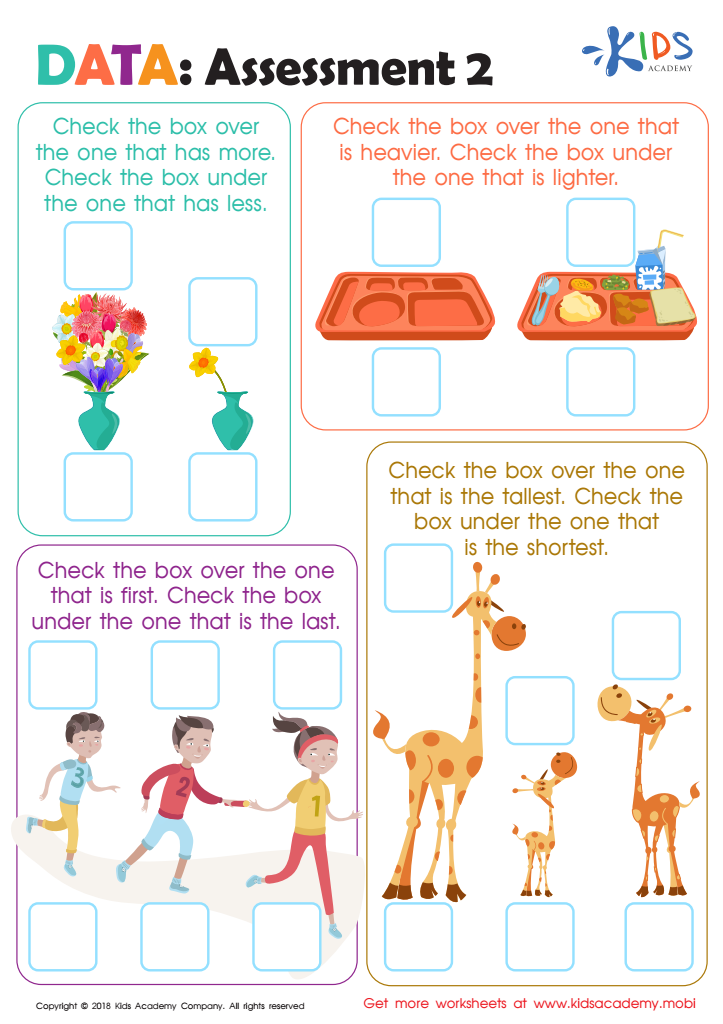
Data: Assessment 2 Worksheet








Analytical thinking in mathematics is crucial for children aged 5-6 as it lays a strong foundation for later academic and real-life problem-solving skills. At this age, children are naturally curious and their cognitive abilities are rapidly developing. Introducing analytical thinking helps them understand patterns, relationships, and logical sequences, which are fundamental concepts in math and other subjects.
When young children engage in analytical thinking, they learn to approach problems systematically and think critically. This not only aids in solving math problems but also enhances their general cognitive abilities, such as reasoning, memory, and attention to detail. For example, recognizing patterns in a sequence of numbers or shapes teaches them to make predictions and understand the concept of cause and effect.
Furthermore, fostering these skills early on can boost a child's confidence in their abilities to tackle challenges. This positive experience with early math can encourage a lifelong interest in learning and persistent qualitative improvement. Early engagement with analytical thinking also aligns with educational standards and prepares children for more advanced concepts they'll encounter in higher grades.
In summary, nurturing analytical thinking in math for ages 5-6 provides invaluable benefits. It supports cognitive development, enhances problem-solving skills, and sets the stage for future academic progress and critical thinking capabilities.








