Associative learning Math Worksheets for Ages 5-6
3 filtered results
-
From - To
Unlock the potential of young minds with our Associative Learning Math Worksheets designed for ages 5-6. These engaging activities enhance cognitive development by connecting new concepts with familiar ones, ensuring solid understanding and retention. Focusing on fun and interactive problem-solving, our worksheets align with early learning standards to boost math proficiency in a playful manner. Perfect for both classroom and at-home practice, they foster critical thinking, pattern recognition, and logical reasoning. Give your child a head start in mathematics with our expertly crafted learning tools that make math enjoyable and accessible for early learners.
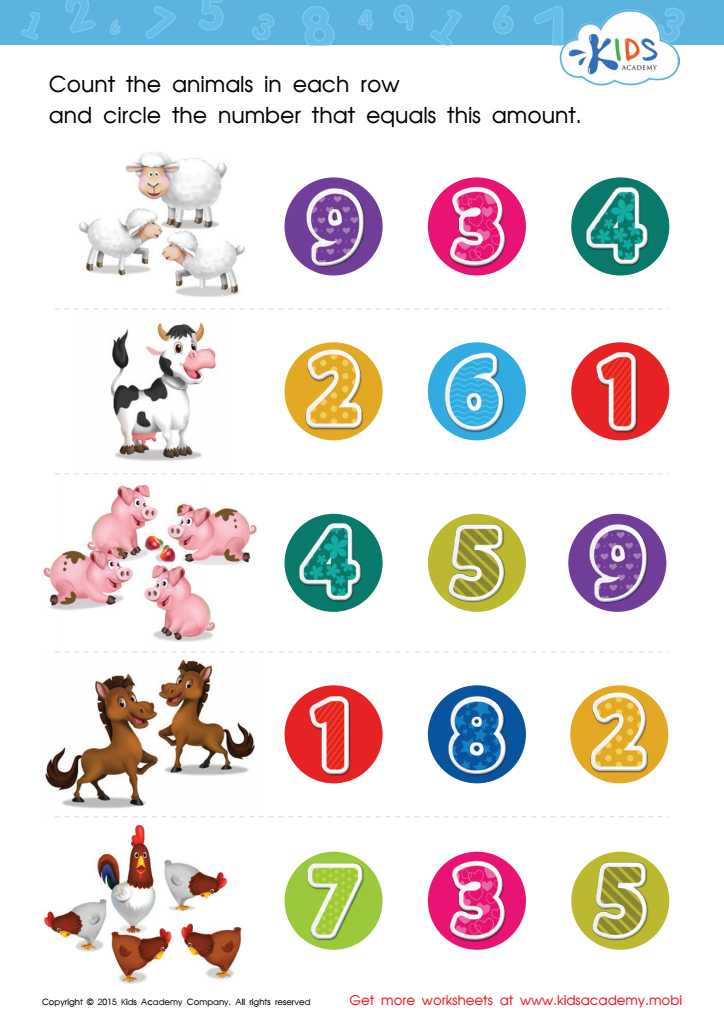
Count and Match 1 – 5 Math Worksheet
 Assign to My Students
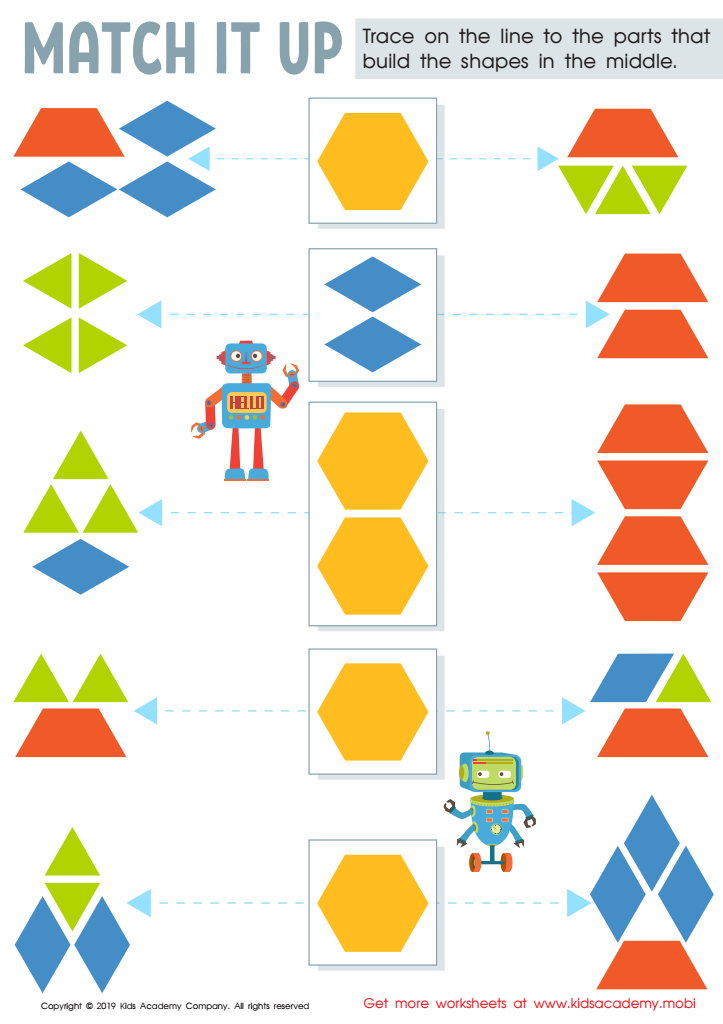
Match It up Worksheet
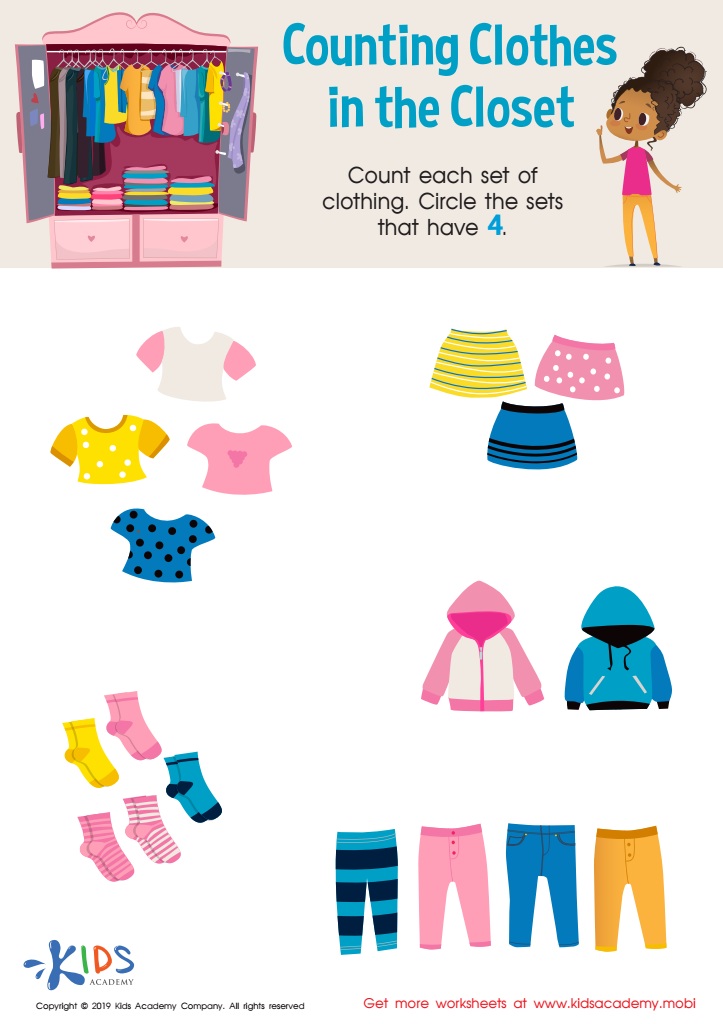
Counting Clothes Worksheet







.jpg)
Associative learning in math for children aged 5-6 is crucial for several reasons that can impact their overall cognitive development and future academic success. At this age, children's brains are exceptionally receptive, forming new connections quickly. Associative learning, which involves making connections between different concepts and experiences, helps young learners grasp math fundamentals in a meaningful way.
For example, when a child learns to count objects, they are not just memorizing numbers but associating those numbers with quantities, enhancing their comprehension of the concept. This fundamental understanding sets the groundwork for more complex mathematical skills.
Incorporating associative learning also promotes problem-solving abilities and critical thinking. Children learn to relate new information to what they already know, making it easier for them to tackle unfamiliar problems. They start recognizing patterns, which is elemental in mathematics.
Engaging children in props like counting blocks, interactive games, and real-life scenarios helps solidify these connections. Parents and teachers who emphasize associative learning can foster a positive attitude toward math, reducing anxiety around the subject and developing a growth mindset early on.
By investing in associative learning strategies, caregivers can ensure that children are not memorizing in isolation but building a solid, interrelated knowledge base that promotes long-term mathematical comprehension and a love for learning.








