Comparing object weights Math Worksheets for Ages 5-6
3 filtered results
-
From - To
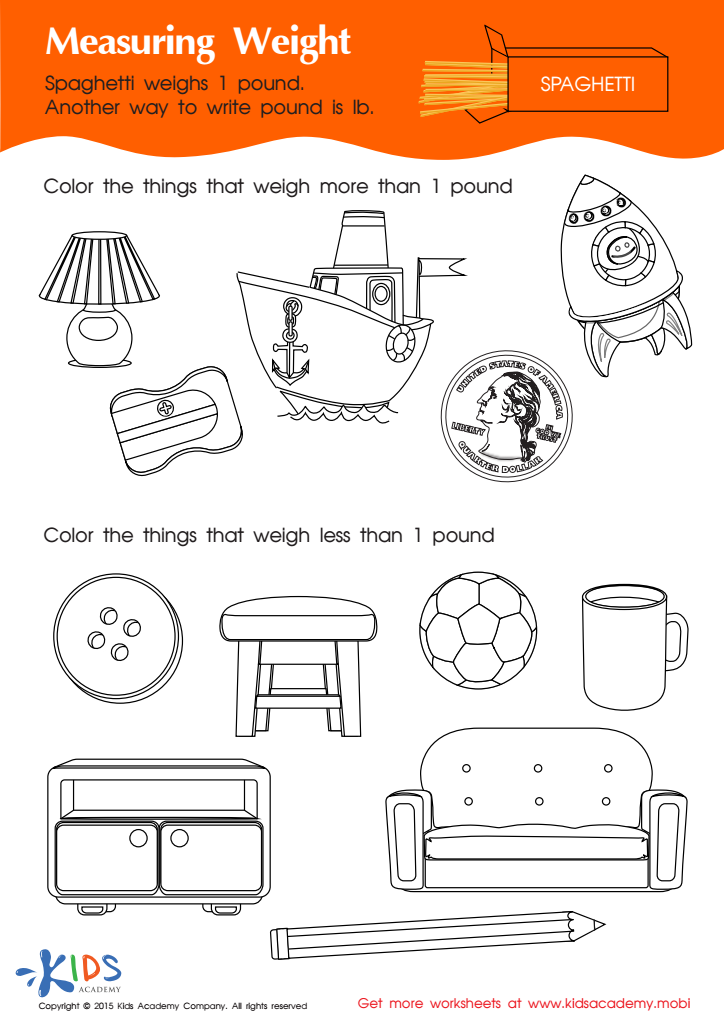
Discover our engaging "Comparing Object Weights Math Worksheets" designed specifically for children aged 5-6! These worksheets provide a fun and interactive way for young learners to explore the concept of weight comparison. Through colorful illustrations and captivating activities, kids will learn to identify heavier and lighter objects, enhancing their critical thinking and problem-solving skills. Ideal for classroom use or at-home practice, these worksheets encourage hands-on learning and promote early math proficiency. Download these easy-to-follow printables to help your child build a solid foundation in mathematics while enjoying essential learning experiences. Start your weight comparison journey today!
 Assign to My Students
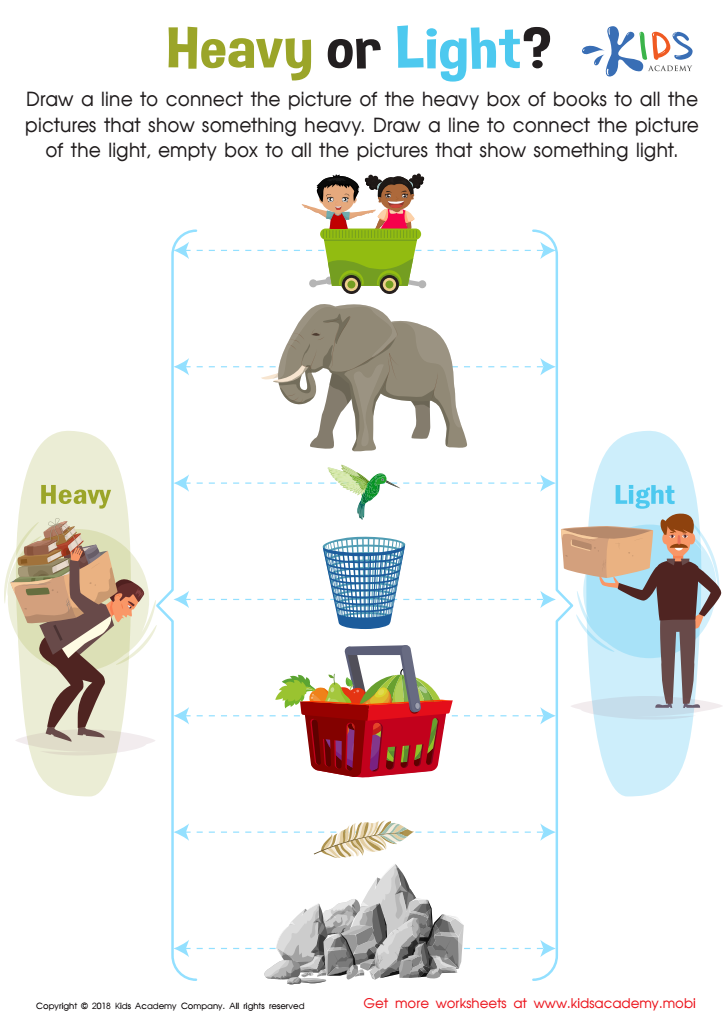
Heavy or Light? Worksheet
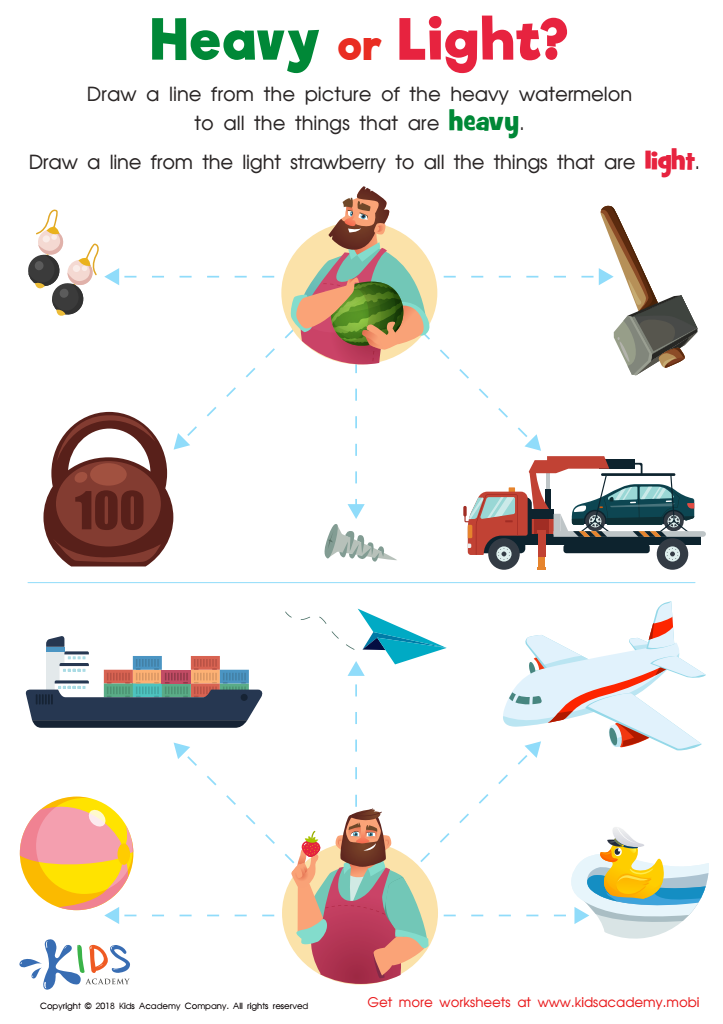
Heavy or Light? Worksheet








Comparing object weights is an essential concept in early math education for children aged 5-6, and it's important for both parents and teachers to engage with this topic. At this age, children are naturally curious about their environment and eager to understand how the world works. Learning to compare weights introduces fundamental mathematical concepts such as measurement and estimation, fostering critical thinking skills.
Understanding weight comparison helps children develop a number of essential life skills. For example, when they learn to distinguish between light and heavy objects, they enhance their reasoning abilities and fine-tune their observational skills. This knowledge extends beyond the classroom into real-life situations, such as shopping where they make decisions about carrying items.
Moreover, weight comparison serves as an introductory lesson in physics and lays the groundwork for future sciences. It encourages hands-on activities and promotes collaborative learning, essential in social development. Teachers and parents can incorporate fun games and practical applications, making learning engaging and relevant. Overall, regular practice in comparing weights nurtures a child's confidence in math and equips them with problem-solving skills they can utilize throughout their education and life.








