Filters

7 filtered results

Clear all filters
Favorites
With answer key
Interactive

7 filtered results

Difficulty Level

Grade


Boost your child's analytical abilities with our "Enhancing Observation Skills Math Worksheets" designed for ages 5-6. These engaging, skill-building activities focus on honing observation skills vital for early math success. With colorful visuals and exciting puzzles, children will practice number recognition, patterns, and counting in a fun, interactive way. Each worksheet aims to develop meticulous attention to detail, enhancing cognitive and problem-solving abilities. Crafted by educational experts, our worksheets ensure an enjoyable learning experience while laying a strong foundation for future math endeavors. Ignite your 5 to 6-year-old’s curiosity and watch their confidence grow with every completed activity!

Check out this FREE Trial Lesson on Math for age 5-6!

Lesson 1- Partitioning Shapes

Favorites
With answer key
Interactive
  • 5-6
  • Enhancing observation skills
  • Math
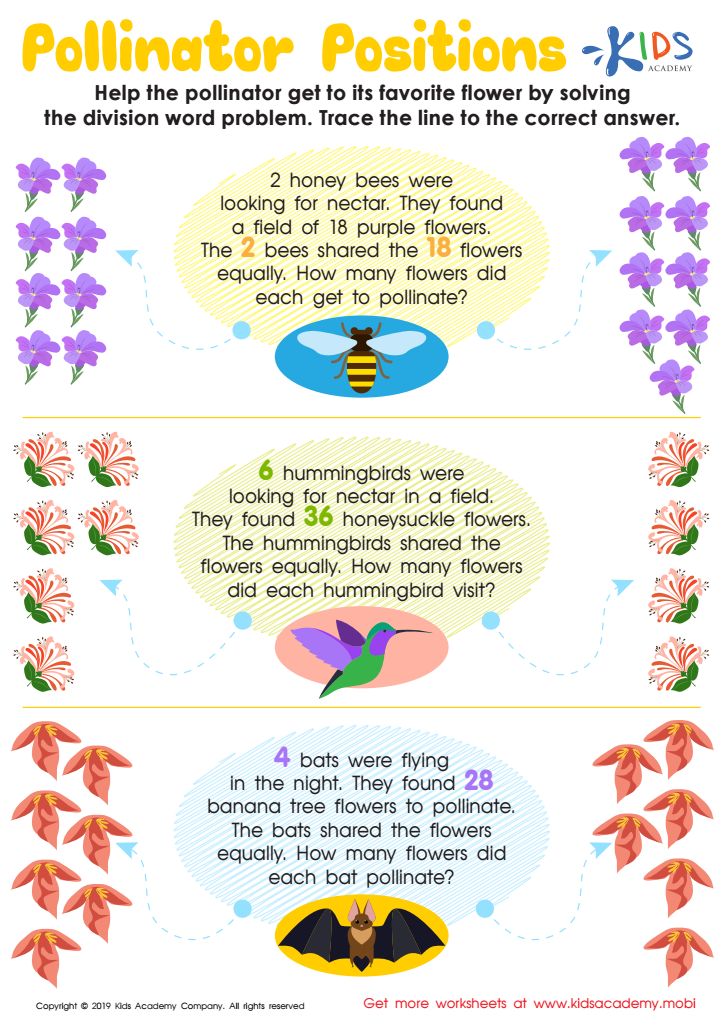
Pollinator Positions Worksheet

Pollinator Positions Worksheet

Kids will love learning about pollinators and how vital they are. Help their favorite friends get to the right flowers with this fun PDF. Children can solve the problems without even knowing they're doing division; just read the word problems and use the highlighted numbers. Finish by tracing the lines to the correct quotient!
Pollinator Positions Worksheet
Worksheet
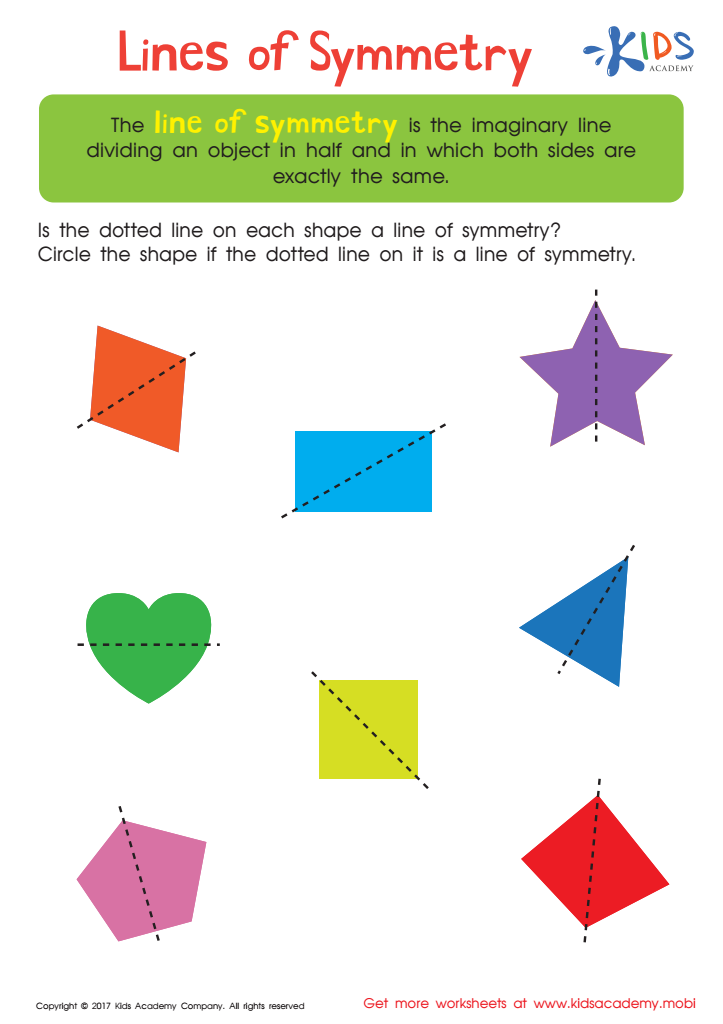
Lines of symmetry worksheet

Lines of Symmetry Printable

Symmetry is a key math concept that kids must learn to develop their geometry skills. This fun worksheet helps build this skill, by encouraging kids to recognize symmetrical shapes and find equal parts.
Lines of Symmetry Printable
Worksheet
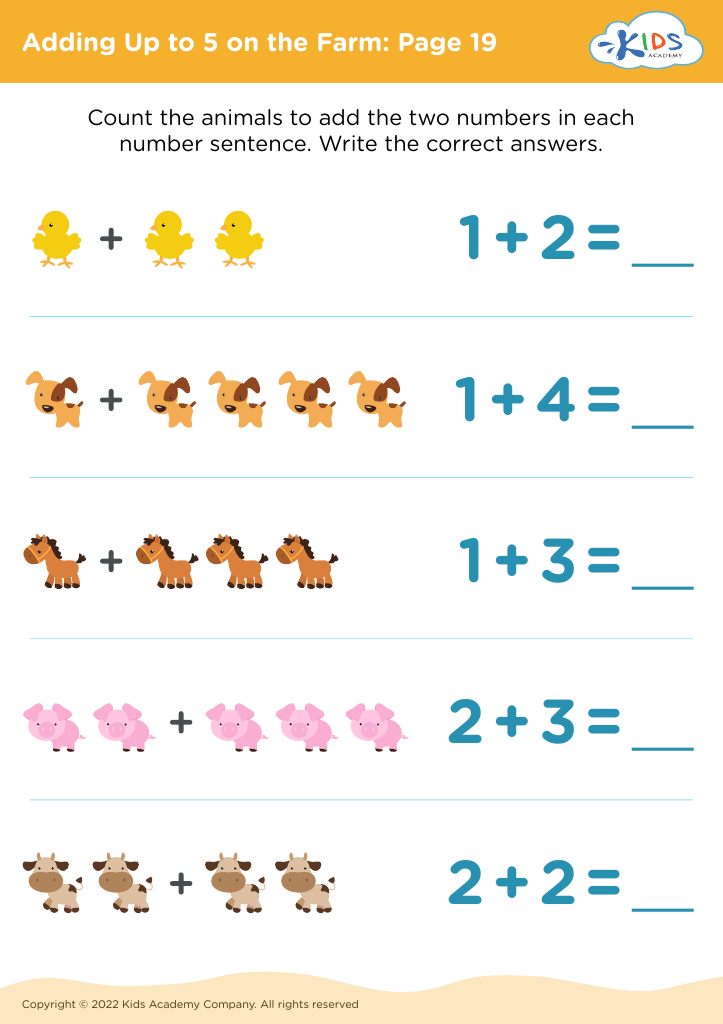
Adding Up to 5 on the Farm: Page 19
Worksheet
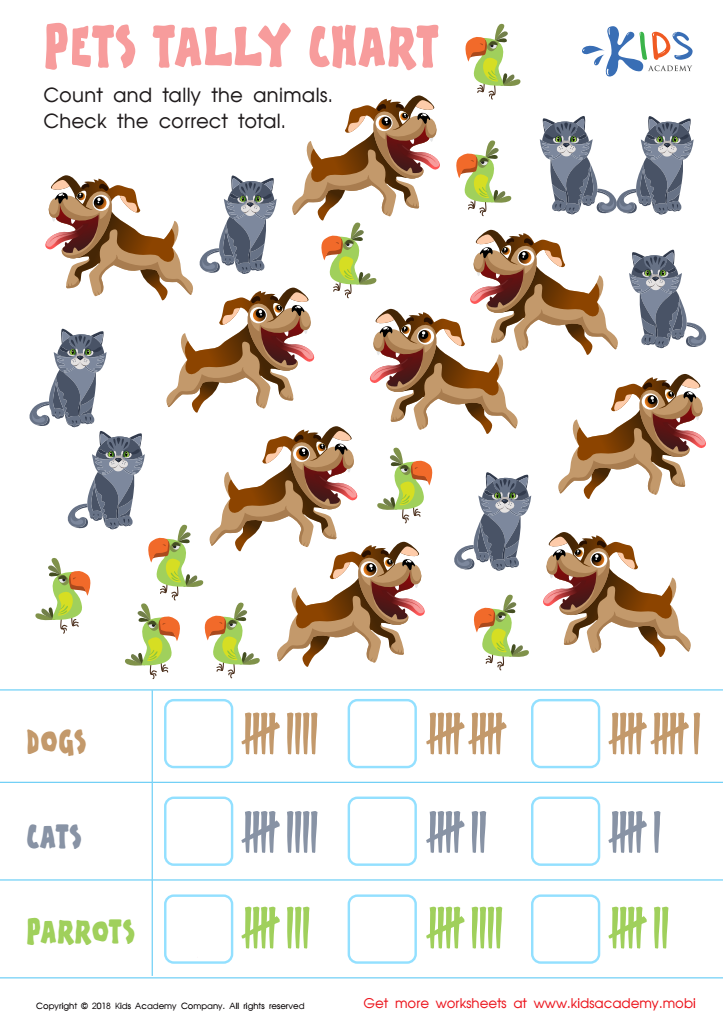
Pets Tally Chart Worksheet

Pets Tally Chart Worksheet

Let your little mathematician count and tally the animals with this fun PDF worksheet. They'll assign value to each pet type and select the correct answer. It's a great way to practice number reasoning and learn how tallying helps keep math organized and efficient when solving equations.
Pets Tally Chart Worksheet
Worksheet
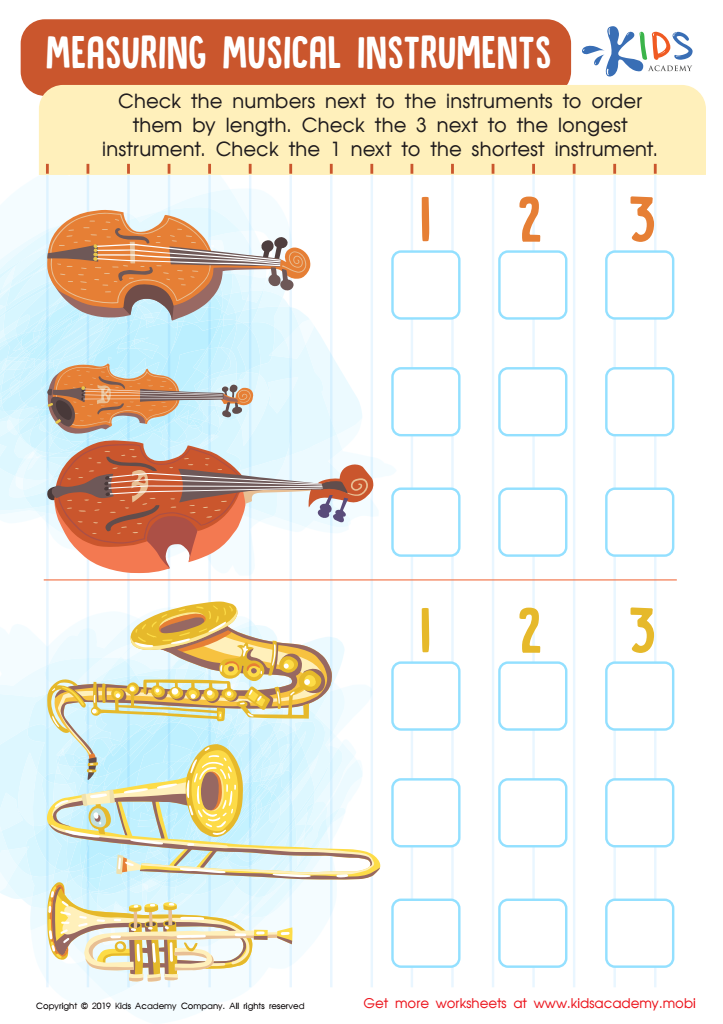
Measuring Musical Instruments Worksheet

Measuring Musical Instruments Worksheet

Learning measurements can be tricky, but this worksheet makes it easy. Ask your child to identify the instruments in the pictures. Then, order them by length using the numbers. 3 is the longest, 1 is the shortest. Simple exercises like this will help them understand the different metric systems.
Measuring Musical Instruments Worksheet
Worksheet
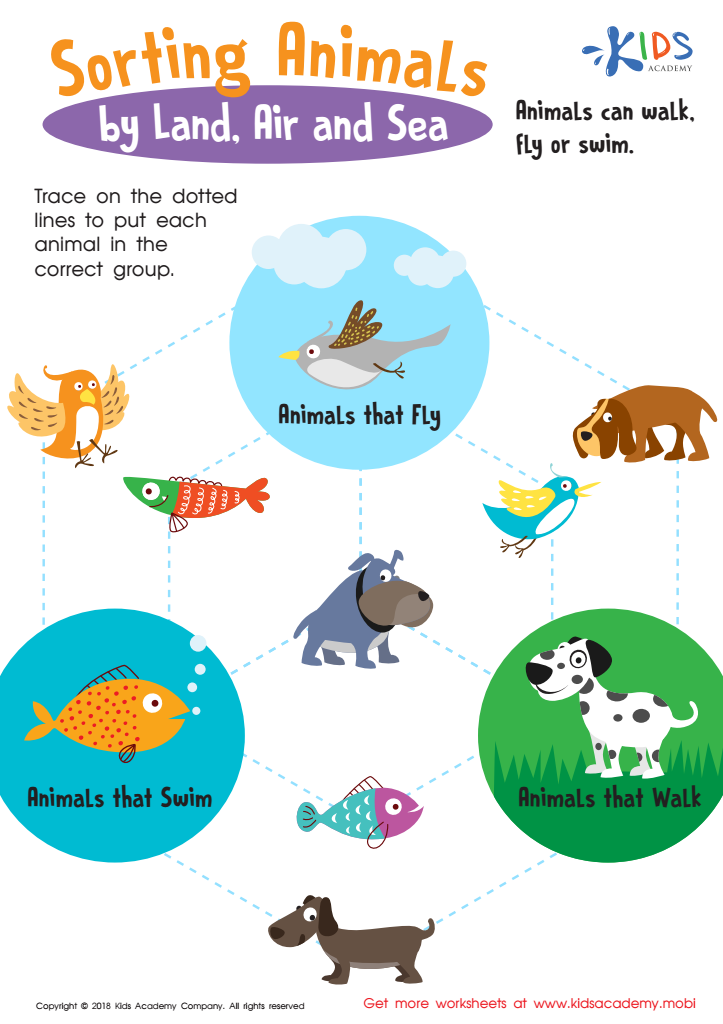
Sorting Animals by Land, Air and Sea Worksheet

Sorting Animals by Land, Air and Sea Worksheet

Kids will use critical thinking and fine motor skills with this worksheet! They'll analyze animal traits and draw lines to sort them into groups of those that fly, swim, or walk. It's a fun way to hone skills and have a great time!
Sorting Animals by Land, Air and Sea Worksheet
Worksheet
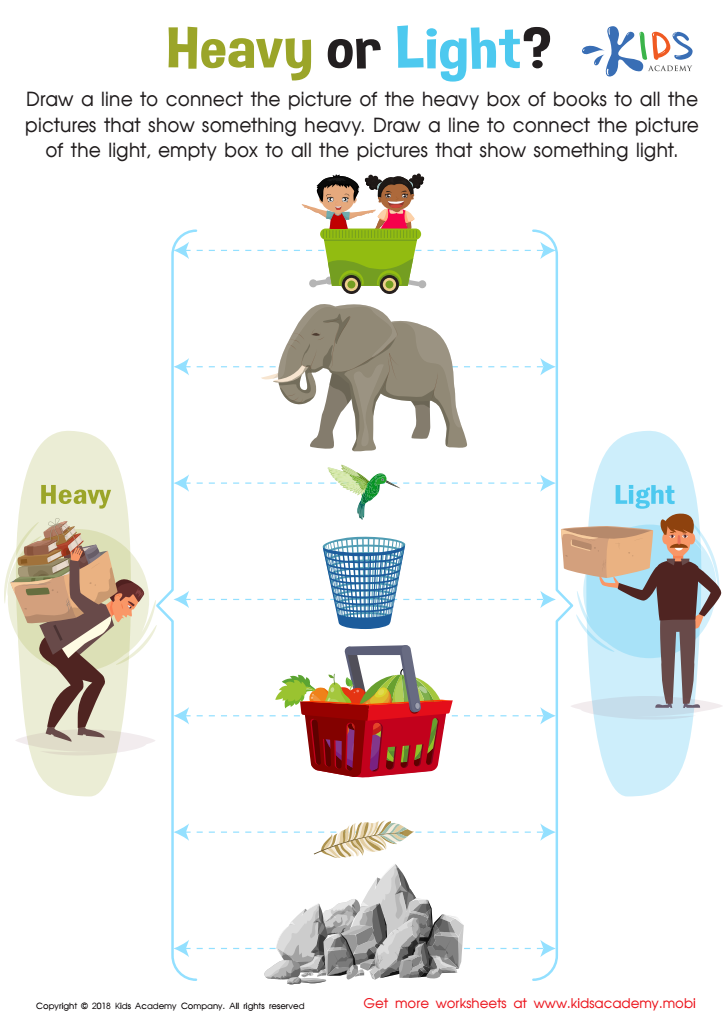
Heavy or Light? Worksheet


Heavy or Light? Worksheet

Kids can struggle to understand weight comparison, as size and mass matter. This free PDF helps develop fine-motor and hand-eye skills as kids trace lines to match pictures. The familiar pictures create concrete representations, ideal for learning more complex concepts.
Heavy or Light? Worksheet
Worksheet


Enhancing observation skills in math for children aged 5-6 is crucial for their foundational development and long-term success in learning. At this age, kids are naturally curious and observers of their world, which lays the groundwork for important cognitive skills. Nurturing these observation skills can help students recognize patterns, notice differences, and understand relationships between numbers and objects, all of which are fundamental aspects of early math learning.

Observational skills in math also foster critical thinking and problem-solving abilities. By carefully observing their environment, children learn to gather information, categorize objects, and make predictions. These skills are essential for tasks like counting, identifying shapes, and understanding basic arithmetic concepts. For example, noticing how a group of objects is arranged helps children develop a sense of quantity and order, which are key elements in mastering number sense.

Moreover, strong observation skills enhance a child's ability to pay attention to details, concentrate, and follow instructions—abilities that are invaluable not only in math but across all subjects. Parents and teachers should prioritize these skills to ensure children are not merely passive learners but active participants in their learning process, thereby setting a strong foundation for future academic success and everyday problem solving.