
Logical reasoning skills Math Worksheets for Ages 5-6
3 filtered results
Difficulty Level
Grade
Age
-
From - To
Subject
Activity
Standards
Unlock your child's potential with our engaging Logical Reasoning Skills Math Worksheets tailored for ages 5-6! Designed to strengthen critical thinking and problem-solving abilities, these worksheets offer fun challenges that promote cognitive development. Through puzzles, pattern recognition, and classification activities, children will enhance their logical reasoning skills while building a solid foundation in mathematics. Easily accessible and printable, our worksheets are perfect for at-home learning or classroom activities. Help your little learners thrive as they explore numbers and shapes in interactive ways! Foster a love for learning with these essential tools that make math engaging and enjoyable for young minds.
Favorites
With answer key
Interactive
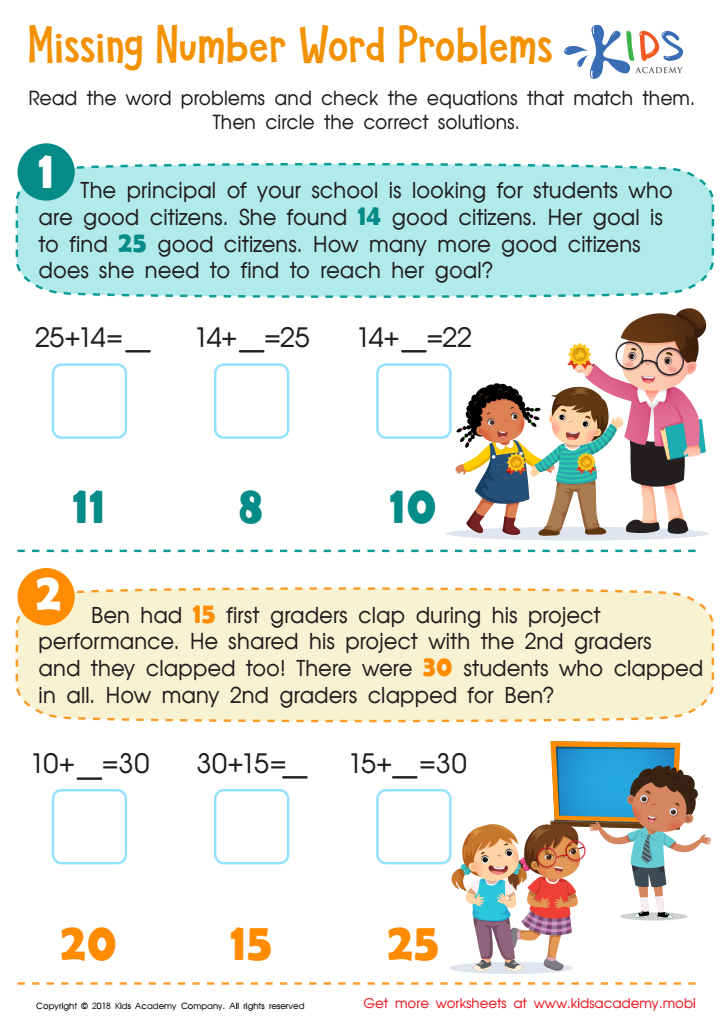
Missing Number Word Problems Worksheet
Read the word problems in this worksheet to your students. Help them understand the meaning, then translate the text into equations. Check the equations for accuracy, circle the correct solutions, and support your child as they learn to solve word problems.
 Assign to My Students
Missing Number Word Problems Worksheet
Worksheet
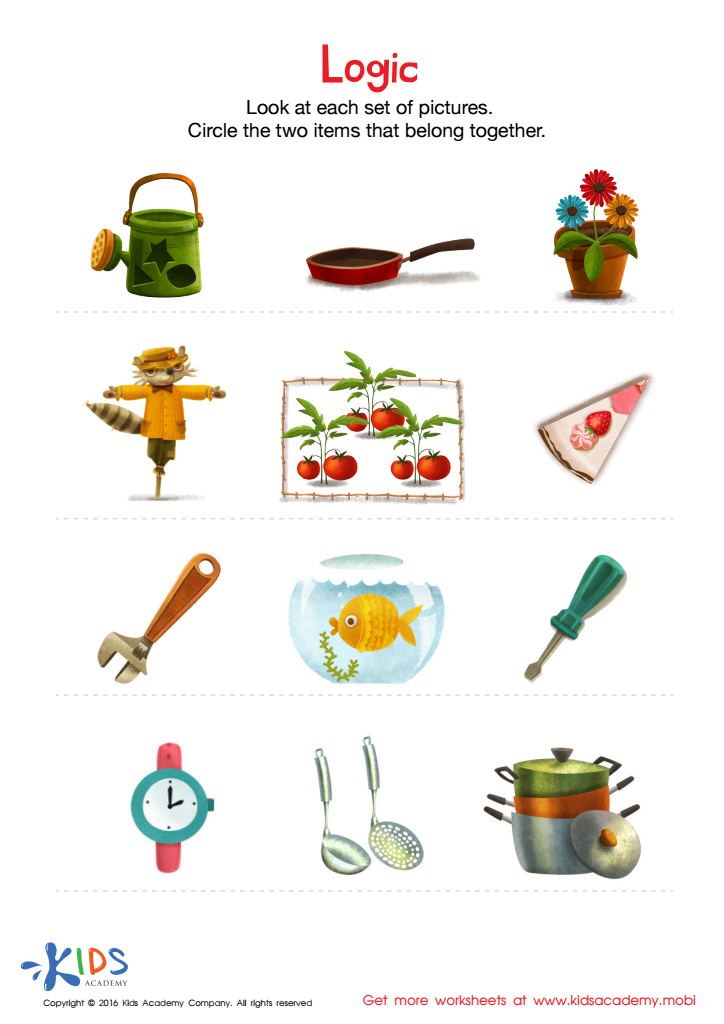
Logic Game Sorting Worksheet
Start your child's logic and reasoning development early with this fun matching worksheet! Through cute images and simple conversations, your little one can learn problem-solving, categorization, and matching skills. Plus, it's a great way for children to explore how items are used in real life. Try it and watch them boost skills with ease and fun!
Logic Game Sorting Worksheet
Worksheet
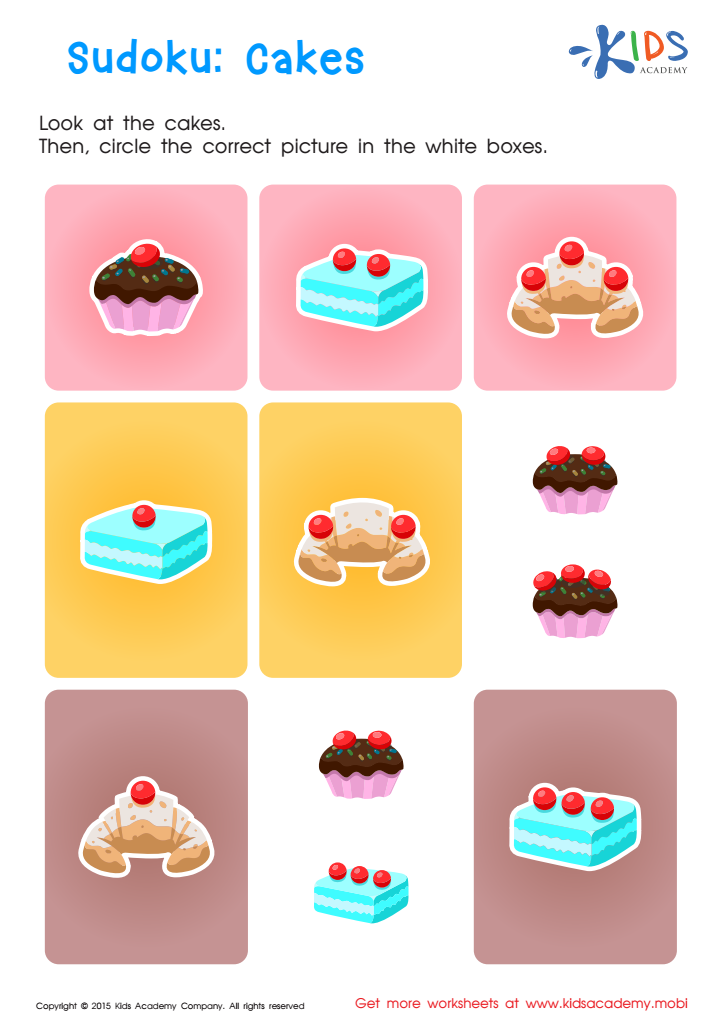
Sudoku Worksheet
Playing sudoku helps kids develop pattern and logic recognition, key skills for problem solving. Get your free printable PDF worksheet and begin the fun!
Kids can have fun and build problem-solving skills with this exciting sudoku PDF worksheet! Adults love solving sudoku puzzles, so get your free printable PDF and start your child early with this vibrant and challenging puzzle. They'll learn to recognize patterns and form logical reasoning, essential for future problem solving. Try it out today!
Sudoku Worksheet
Worksheet
Join Kids Academy for Free
Who is primarily going to use this learning content?








Logical reasoning skills in math for ages 5-6 are essential as they lay the foundation for critical thinking and problem-solving abilities. During these formative years, children are naturally curious and eager to explore patterns and relationships. By fostering logical reasoning, parents and teachers can help them develop the ability to analyze information, make connections, and draw conclusions.
Teaching logic through math also enhances children's confidence in their abilities, encouraging them to tackle challenges without fear of failure. For instance, activities that involve sorting shapes, counting objects, or understanding basic addition and subtraction cultivate not just math understanding but also boost cognitive development.
Moreover, logical reasoning skills are transferable and benefit various aspects of learning and everyday life. Children who can think critically are better equipped to understand complex concepts as they progress in their education. These foundational skills also promote a love for learning, inviting children to engage deeply with future academic topics.
By prioritizing logical reasoning in math for young learners, parents and teachers provide invaluable tools for success in school and beyond, ensuring children develop a strong, adaptable mindset for lifelong learning. Ultimately, encouraging these skills sets the stage for academic achievement and personal growth.








