Mathematical thinking Math Worksheets for Ages 5-6
5 filtered results
-
From - To
Unlock your child's potential with our engaging "Mathematical Thinking Math Worksheets" designed specifically for ages 5-6. These worksheets are tailored to enhance critical thinking and problem-solving skills while making learning fun. Each activity is interactive and aligns with early math concepts, including counting, shapes, sorting, and simple operations. With colorful illustrations and creative exercises, children will be motivated to explore numbers and patterns. Ideal for reinforcing classroom learning or home study, our worksheets encourage kids to think strategically as they tackle age-appropriate challenges. Start your child's mathematical journey today and watch them develop a strong foundation for future success!
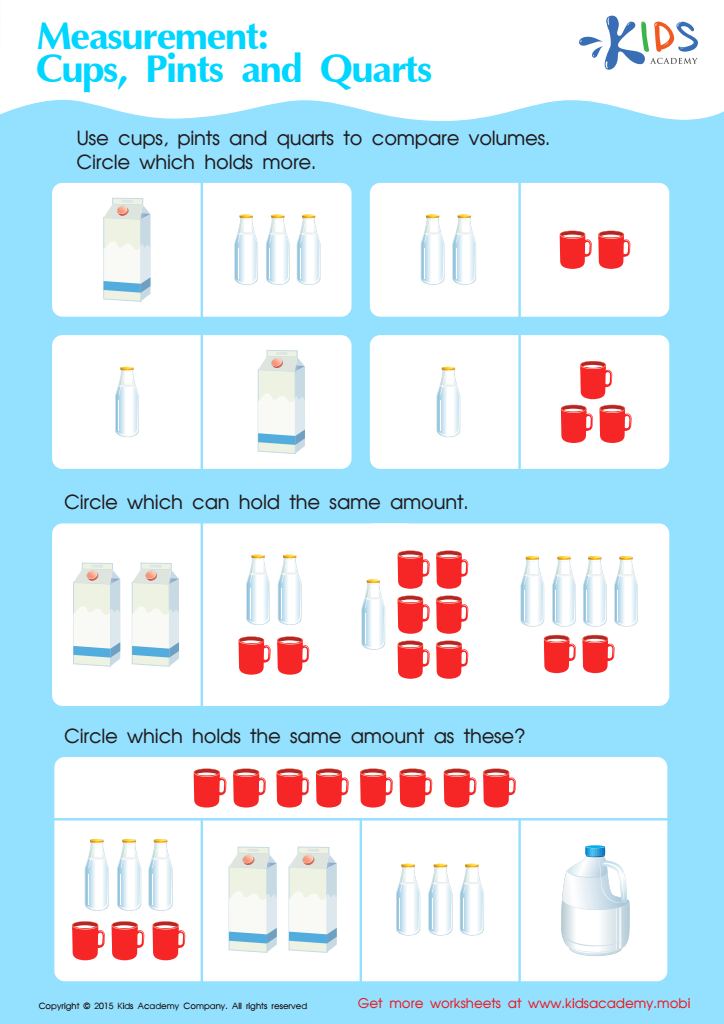
Measurement: Compare Volumes Worksheet
 Assign to My Students
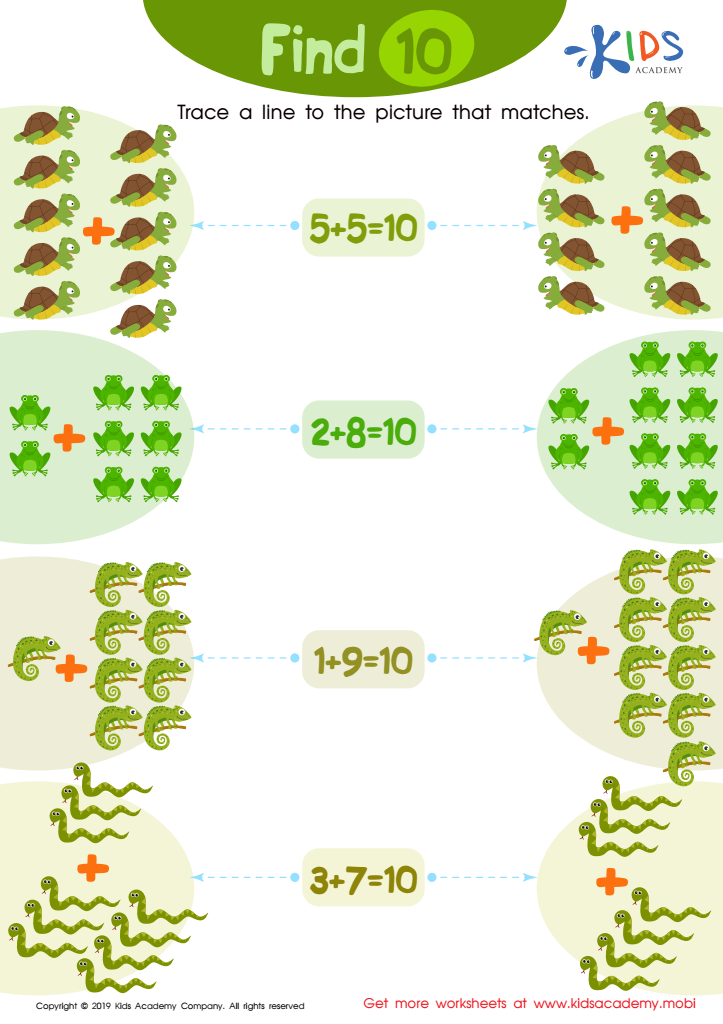
Find 10 Worksheet
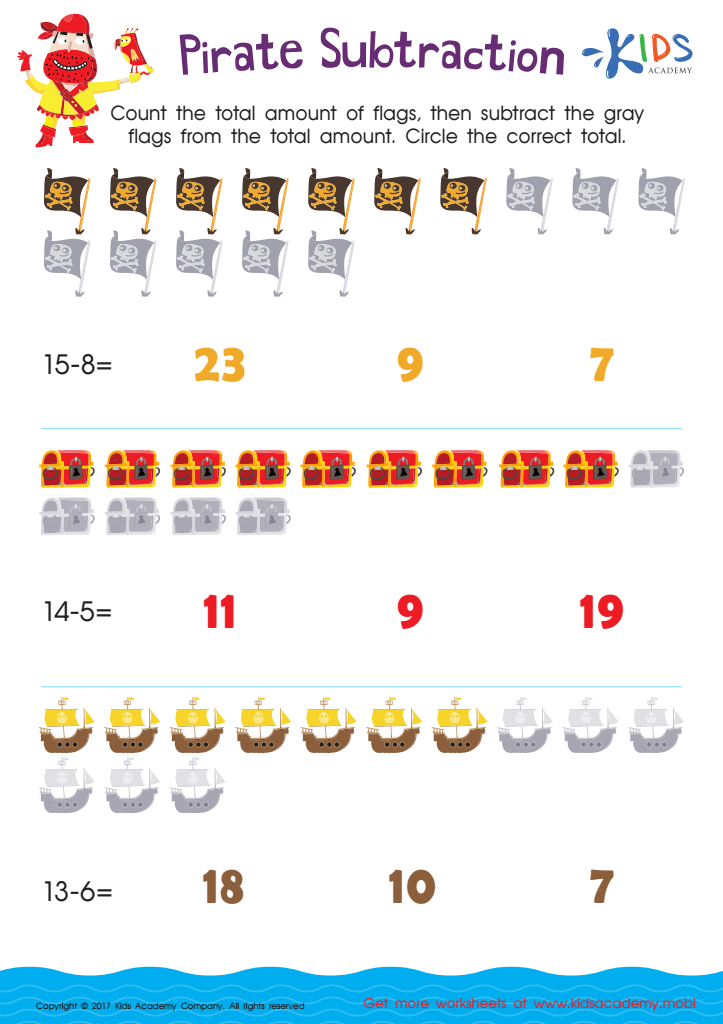
Pirate Subtraction Substraction Worksheet
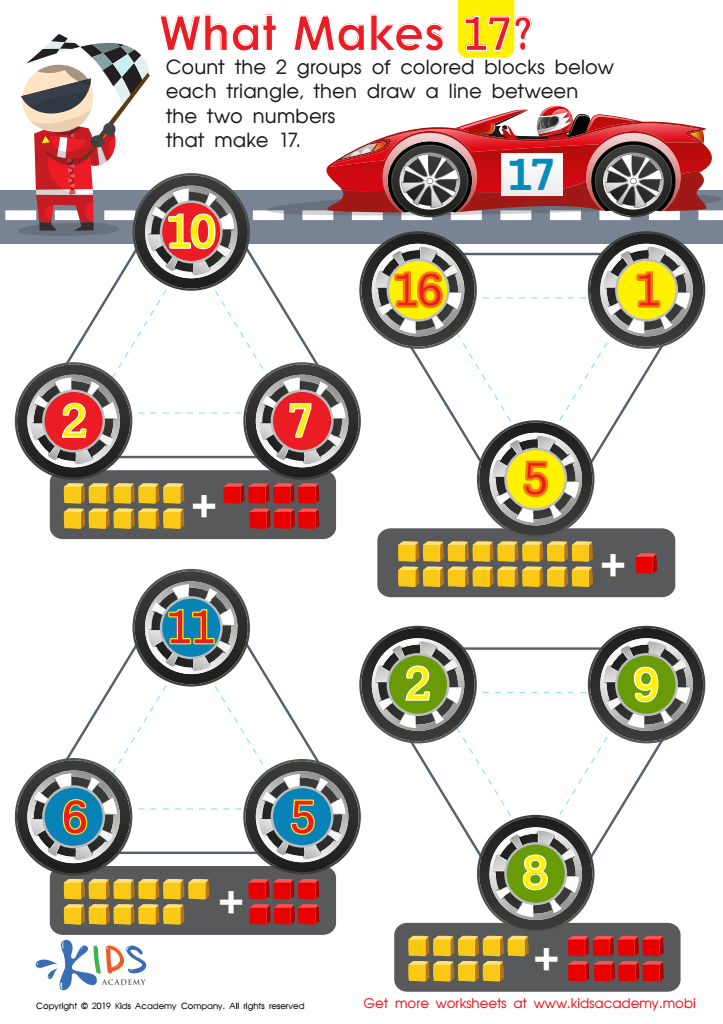
What Makes 17 Worksheet







Mathematical thinking for children aged 5-6 is fundamental for their cognitive development and future learning. At this early age, children begin to grasp essential concepts such as numbers, patterns, and spatial awareness, laying the groundwork for more complex mathematical understanding. Engaging in mathematical thinking nurtures critical problem-solving skills, encouraging children to think logically and systematically.
Parents and teachers should prioritize this development because early math skills are closely tied to academic success across subjects. Research shows that a strong foundation in math correlates with proficiency in reading and overall school performance. Furthermore, fostering a positive attitude toward math during these formative years can reduce anxiety about the subject in later grades, promoting resilience and perseverance.
Additionally, involving children in fun, hands-on mathematical activities can enhance their social and emotional skills, including cooperation and communication. Learning through play makes concepts engaging and helps children relate math to real-life situations. Ultimately, emphasizing mathematical thinking not only equips children with necessary skills but also instills confidence and a lifelong love for learning, ensuring they are prepared for future educational challenges. By supporting this development, parents and teachers play a crucial role in shaping learners who are curious, capable, and confident in their mathematical abilities.








