Mental arithmetic Math Worksheets for Ages 5-6
6 filtered results
-
From - To
Empower young minds with our Mental Arithmetic Math Worksheets, tailored for ages 5-6. Expertly designed to enhance early learning skills, these engaging and colorful worksheets focus on basic arithmetic operations, number recognition, and fundamental problem solving. Perfect for both classroom and home use, they offer a fun yet challenging experience that promotes critical thinking and boosts confidence in math. Encourage your child’s development with activities that help build a solid mathematical foundation. Fun illustrations and straightforward instructions make learning a delightful adventure. Discover the difference mental arithmetic practice can make at Kids Academy!
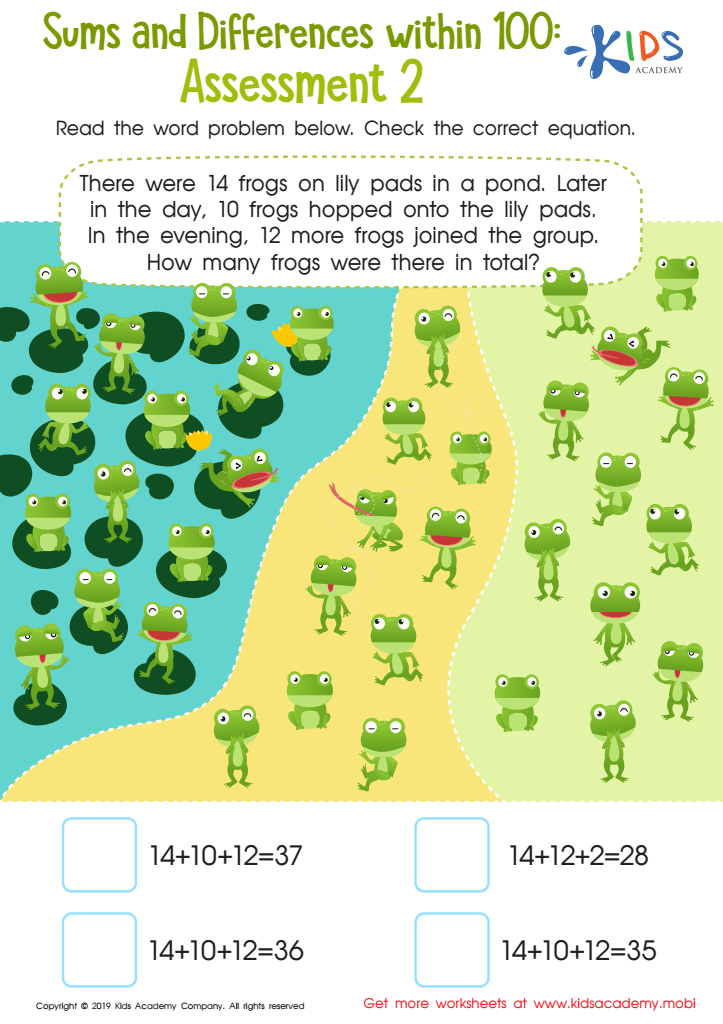
Sums and Differences Within 1 - Assessment 2 Worksheet
 Assign to My Students
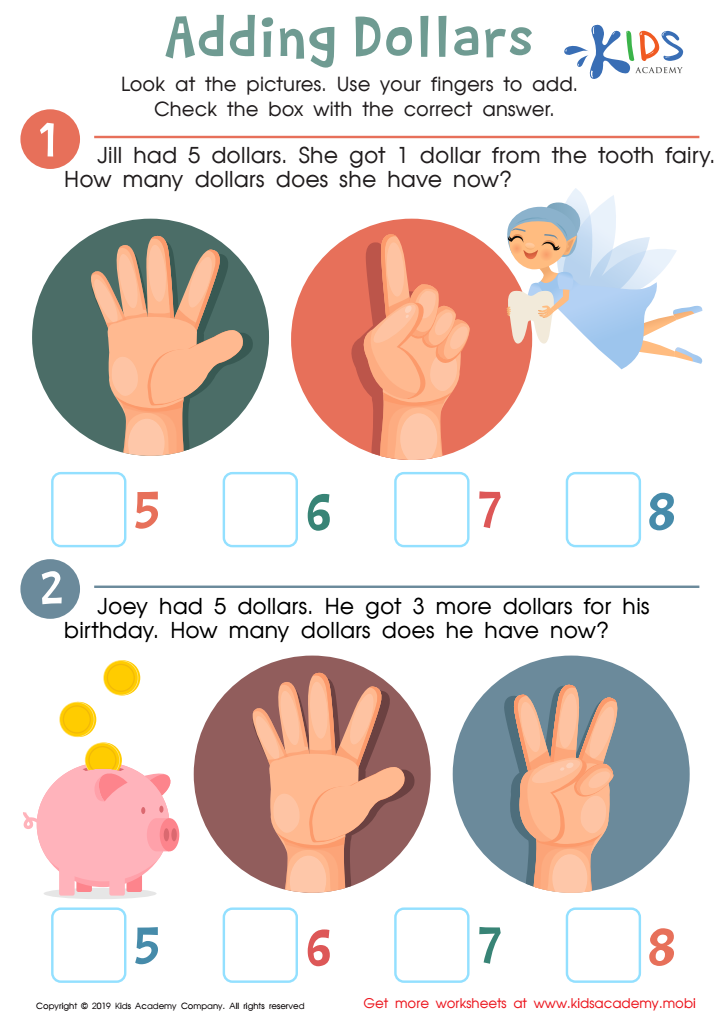
Tooth Fairy Addition Worksheet
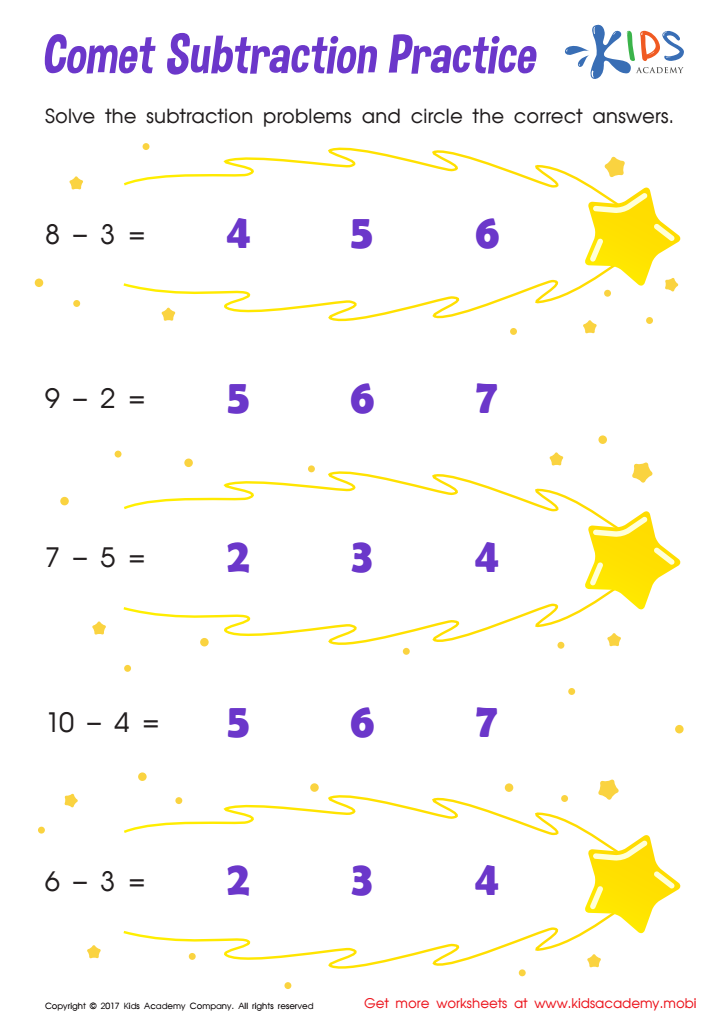
Comet Subtraction Practice Substraction Worksheet
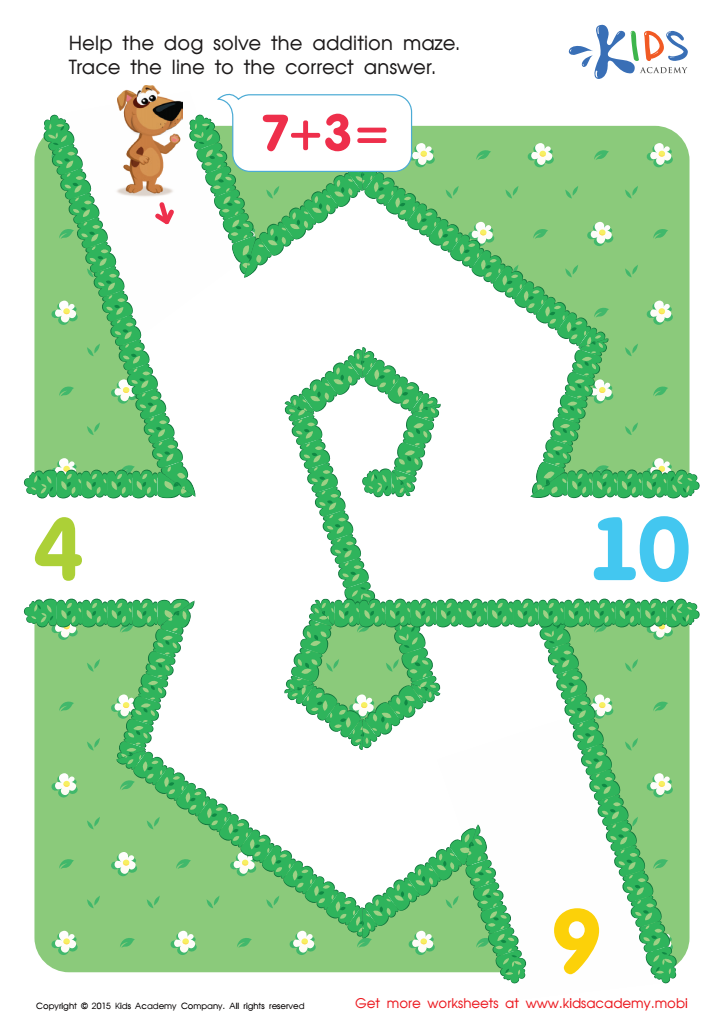
Seven Plus Three Worksheet
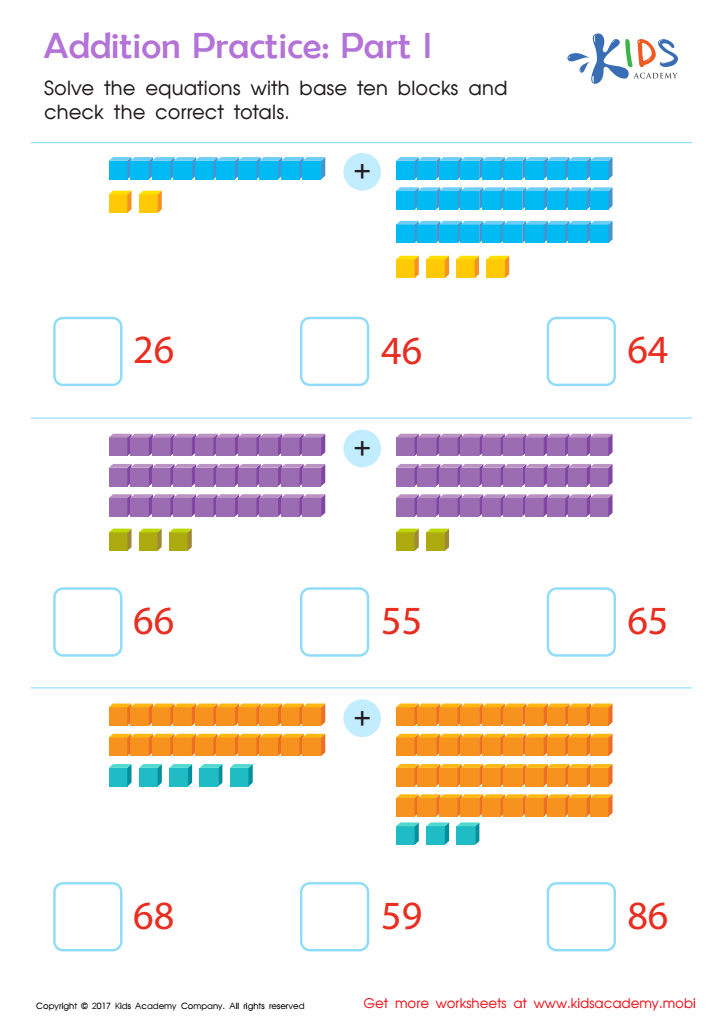
Addition Practice Sheet: Part 1
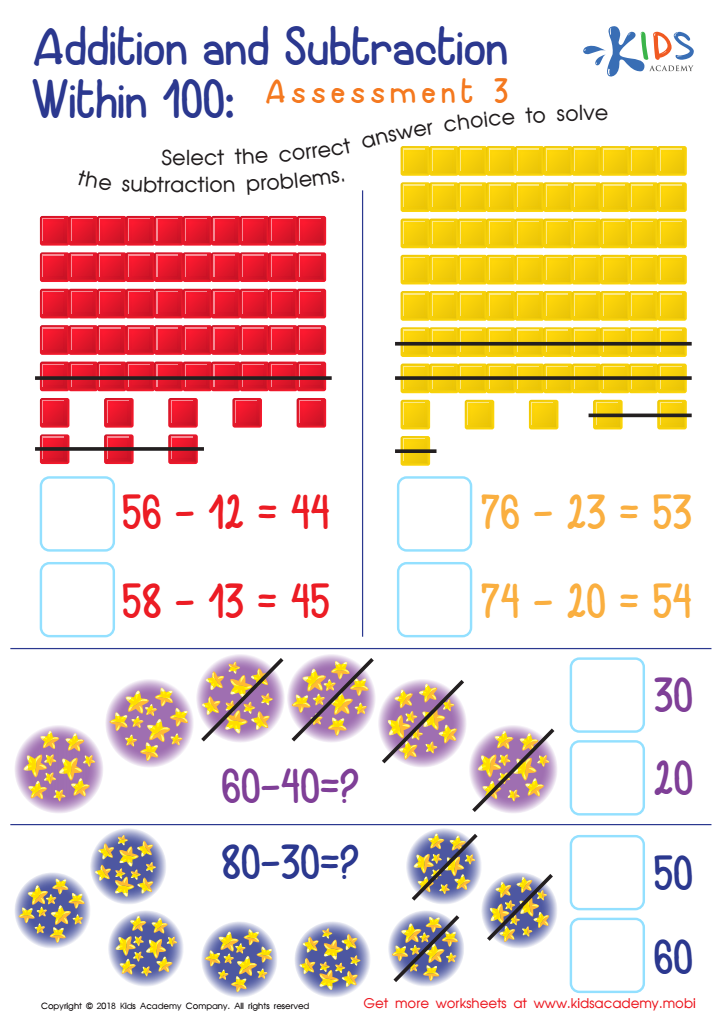
Addition and Subtraction Within 1: Assessment 3 Worksheet





.jpg)


Mental arithmetic is a crucial skill for children aged 5-6 as it forms the foundation for their future mathematical understanding and overall cognitive development. During these early years, children's brains are exceptionally receptive to learning new concepts, making it the perfect time to introduce mental math.
Firstly, practicing mental arithmetic enhances problem-solving abilities and critical thinking skills. Children learn to analyze and break down problems, enabling them to approach challenges in creative and effective ways. These skills are not limited to mathematics; they are valuable across all areas of learning and daily life.
Secondly, mental arithmetic boosts memory and concentration. When children practice calculations without the aid of physical tools, they strengthen their working memory. This not only helps in math but also in retaining information in other subjects.
Thirdly, fostering a positive relationship with math at an early age builds confidence. As children successfully solve problems, they feel a sense of accomplishment, which encourages a growth mindset. Confidence in math translates to a willingness to tackle complex problems in the future.
Lastly, making mental arithmetic fun and engaging stimulates a love for learning. Games, puzzles, and lively activities around numbers can turn math into a joyful experience, nurturing lifelong enthusiasm for the subject.
Considering these benefits, parents and teachers should give considerable importance to mental arithmetic in the early years to support children’s overall development and academic success.








