Mental math practice Math Worksheets for Ages 5-6
9 filtered results
-
From - To
Unlock your child’s potential with our Mental Math Practice Worksheets for Ages 5-6. These engaging exercises are designed to develop critical-thinking and quick decision-making skills, laying a strong foundation for future math challenges. Our expertly crafted worksheets cover a variety of topics, from basic addition and subtraction to number recognition and sequencing. Perfect for classroom or at-home learning, each printable worksheet aims to sharpen mental agility and boost confidence through fun, interactive activities. Tailored to keep young minds engaged, our resources make math enjoyable and accessible, ensuring your child’s early educational journey is both successful and inspiring!
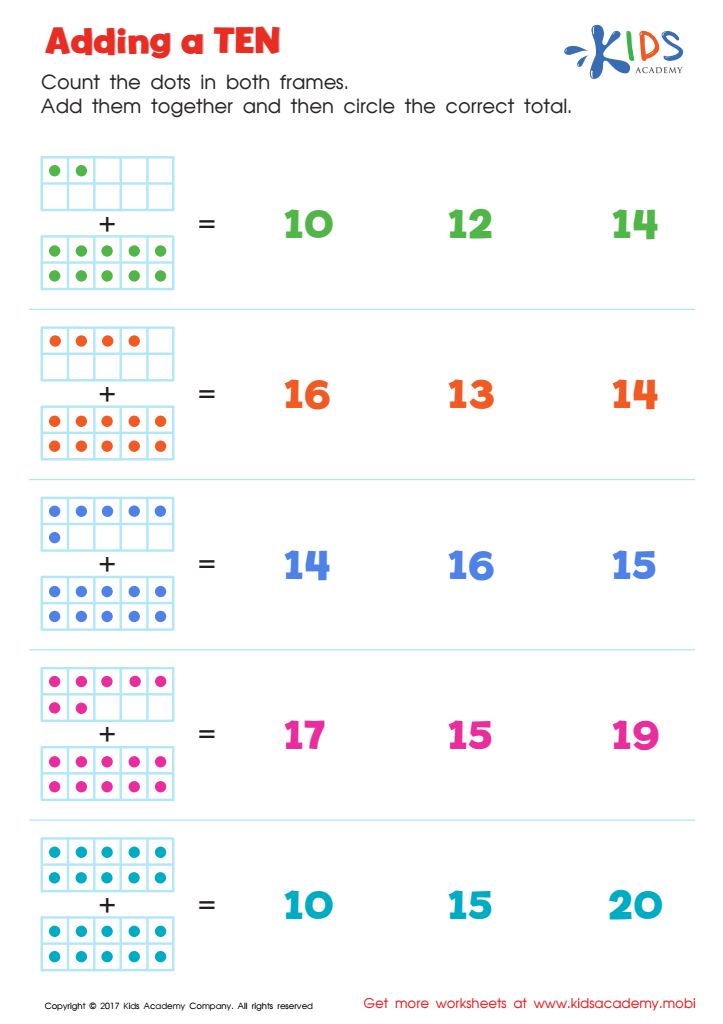
Adding a Ten Worksheet
 Assign to My Students
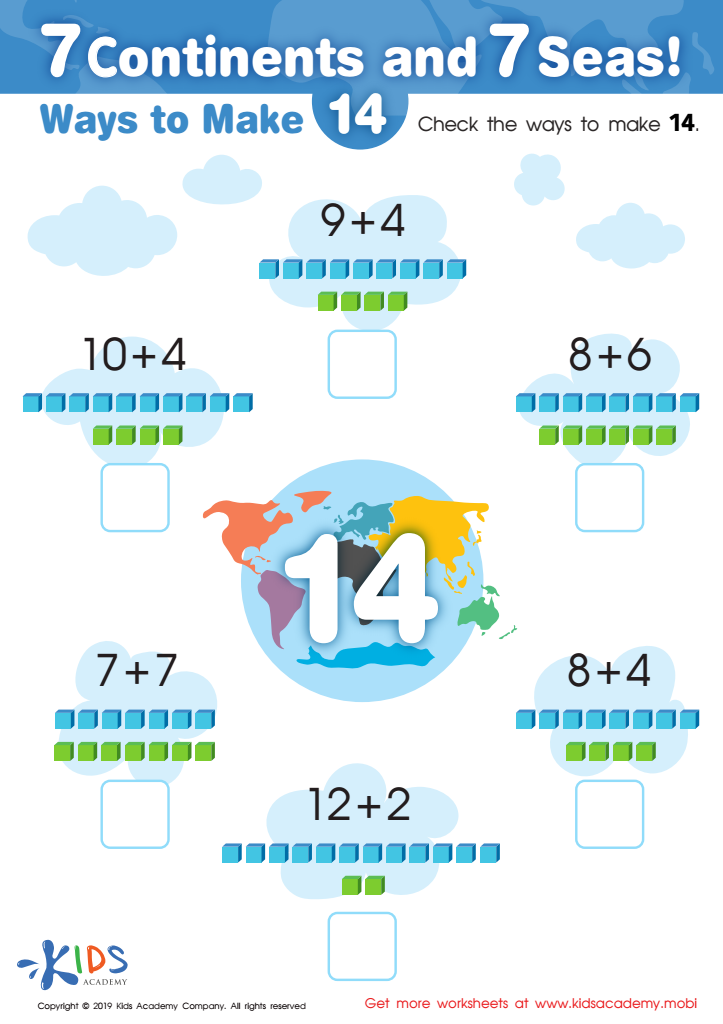
7 Continents and 7 Seas Worksheet
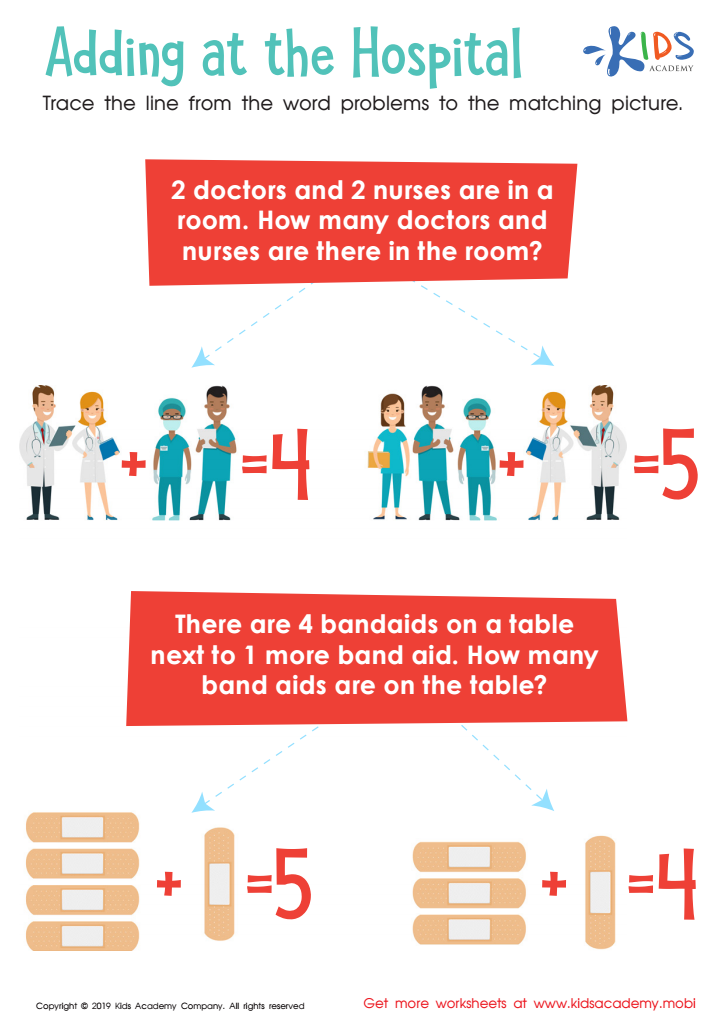
Adding at the Hospital Worksheet
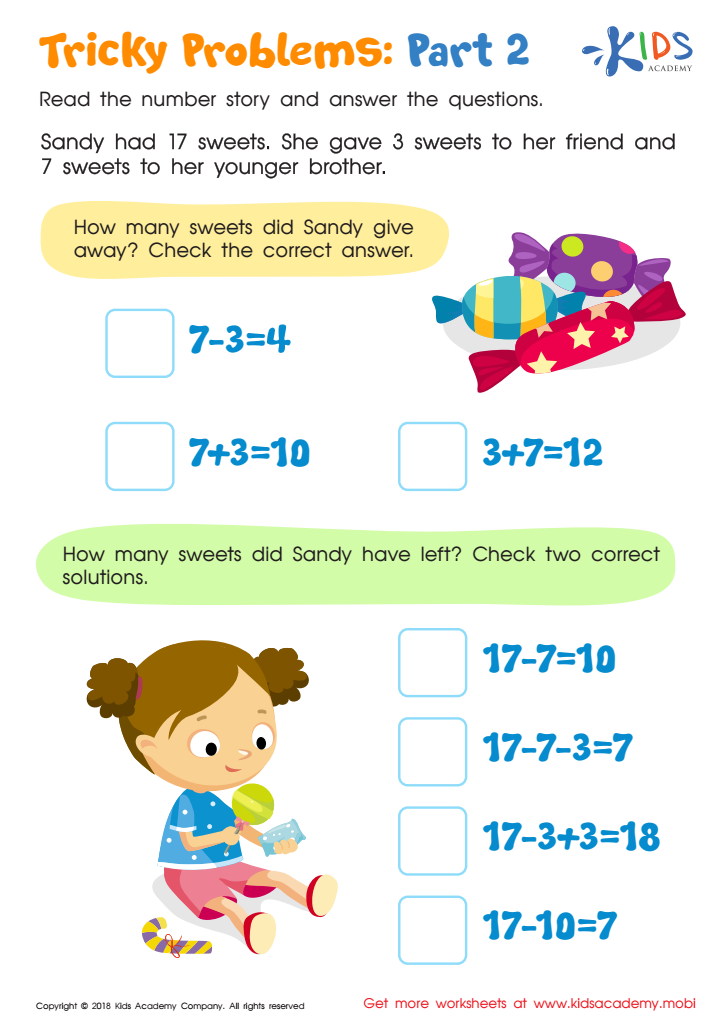
Tricky Problems Worksheet: Part 2
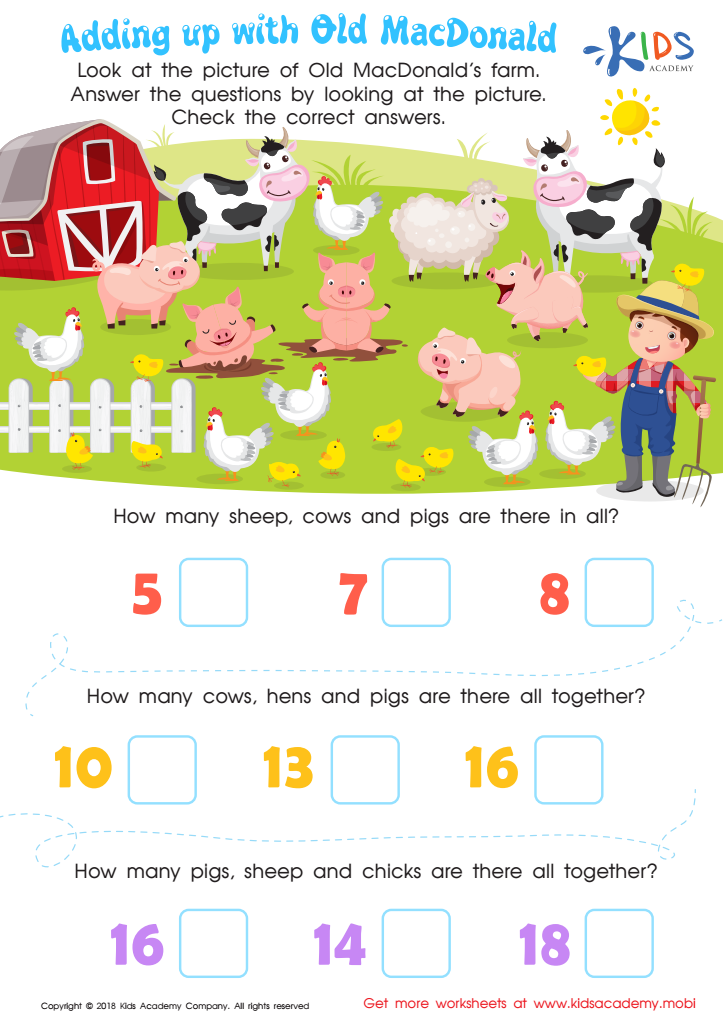
Adding Up with Old MacDonald Worksheet
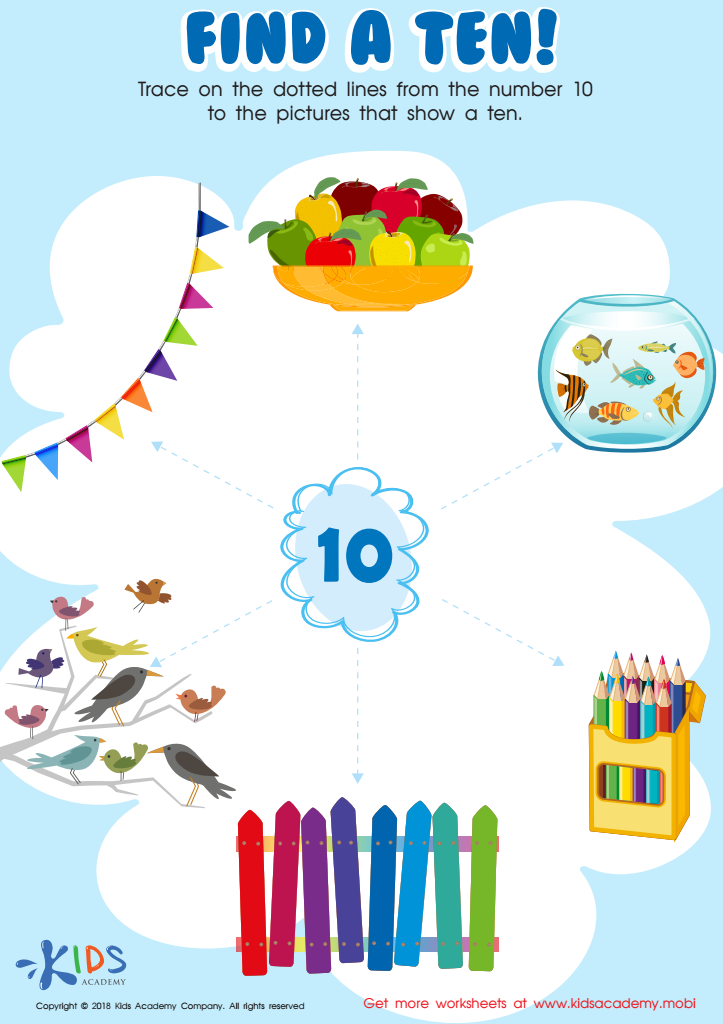
Kindergarten Math Worksheet: Find a Ten
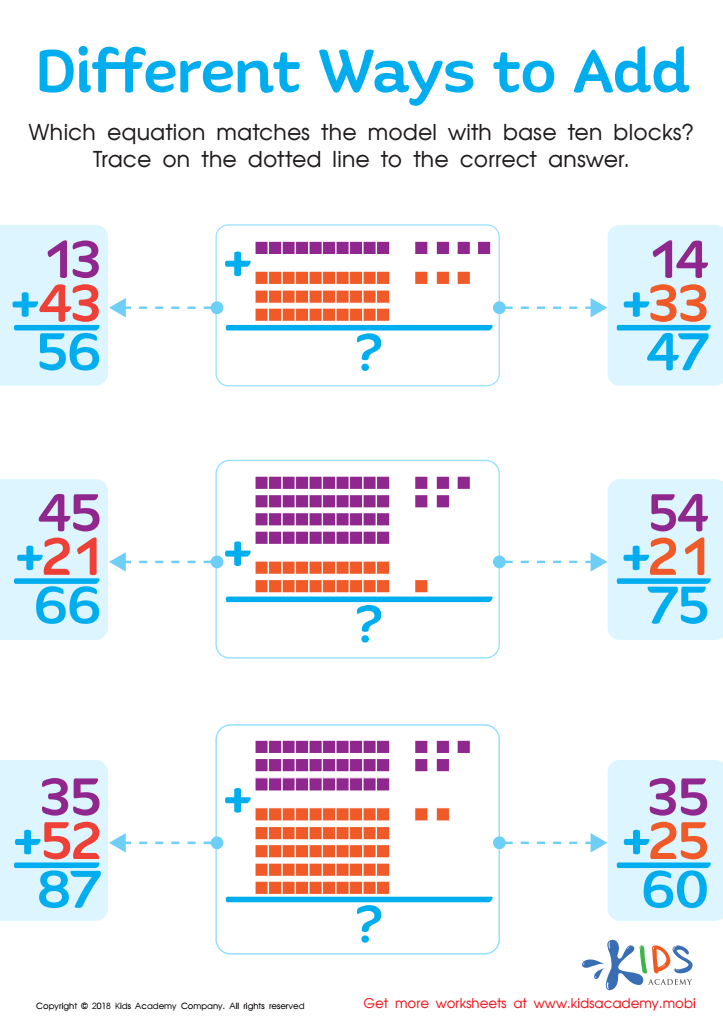
Different Ways to Add Worksheet
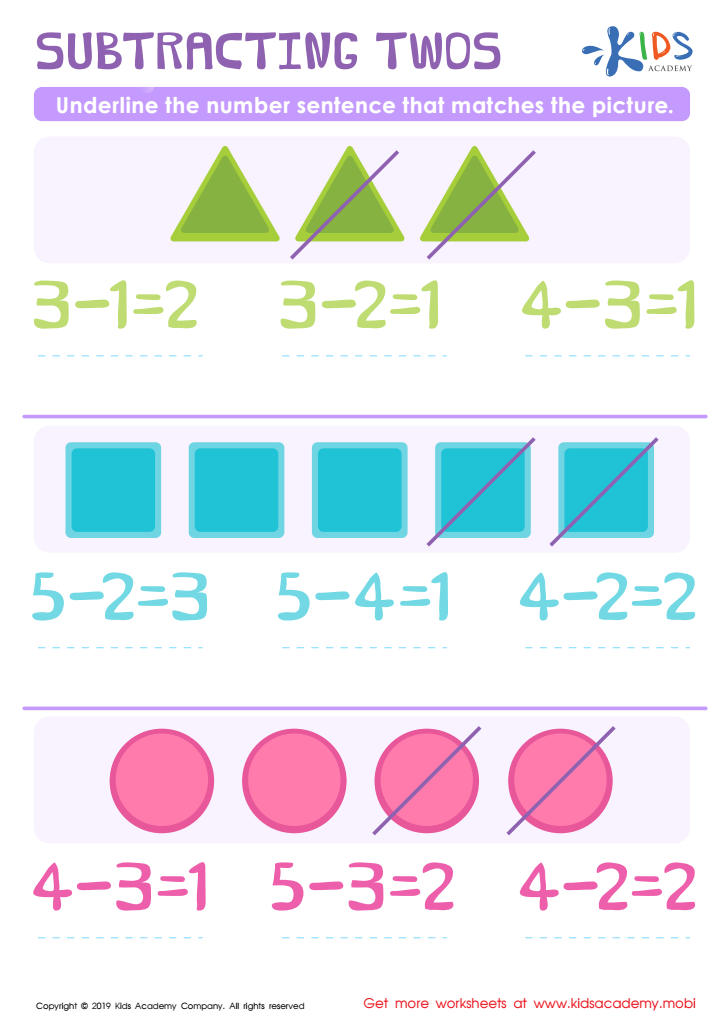
Subtracting Twos Worksheet








Parents and teachers should prioritize mental math practice for children aged 5-6 because it lays the foundation for essential cognitive skills and mathematical proficiency. Early engagement in mental math enhances problem-solving abilities by encouraging children to think critically and approach problems with multiple strategies. By doing so, it boosts their confidence and nurtures a positive attitude towards mathematics.
Mental math hones memory, concentration, and quick-thinking abilities. For young children, who are in a crucial stage of brain development, these practices improve their working memory, facilitating not only math-related tasks but also other academic pursuits. Mental calculations also support the development of number sense – an intuitive understanding of numbers and their relationships – which is fundamental for grasping more complex mathematical concepts later on.
Furthermore, engaging in mental math encourages perseverance and logical reasoning. Children learn to pick out patterns, estimate, and make educated guesses, skills that are transferable across various disciplines and everyday problem-solving scenarios.
Overall, incorporating mental math practice into the early years encourages a growth mindset, where children perceive challenges as opportunities to learn and grow. This solid mathematical grounding at a young age can promote lifelong academic success and a genuine appreciation for the subject.








