Number comparison skills Math Worksheets for Ages 5-6
3 filtered results
-
From - To
Our "Number Comparison Skills Math Worksheets for Ages 5-6" offer engaging activities designed to help young learners develop crucial mathematical skills. These worksheets introduce concepts like greater than, less than, and equal to through fun, interactive exercises that captivate kindergarteners and first graders. Each sheet encourages children to practice comparing numbers, enhancing their understanding and confidence in early math concepts. Perfect for classroom or at-home learning, our expertly crafted worksheets ensure a solid foundation for your child's future math success. Download now to give your little learner a head start in mastering number comparison!
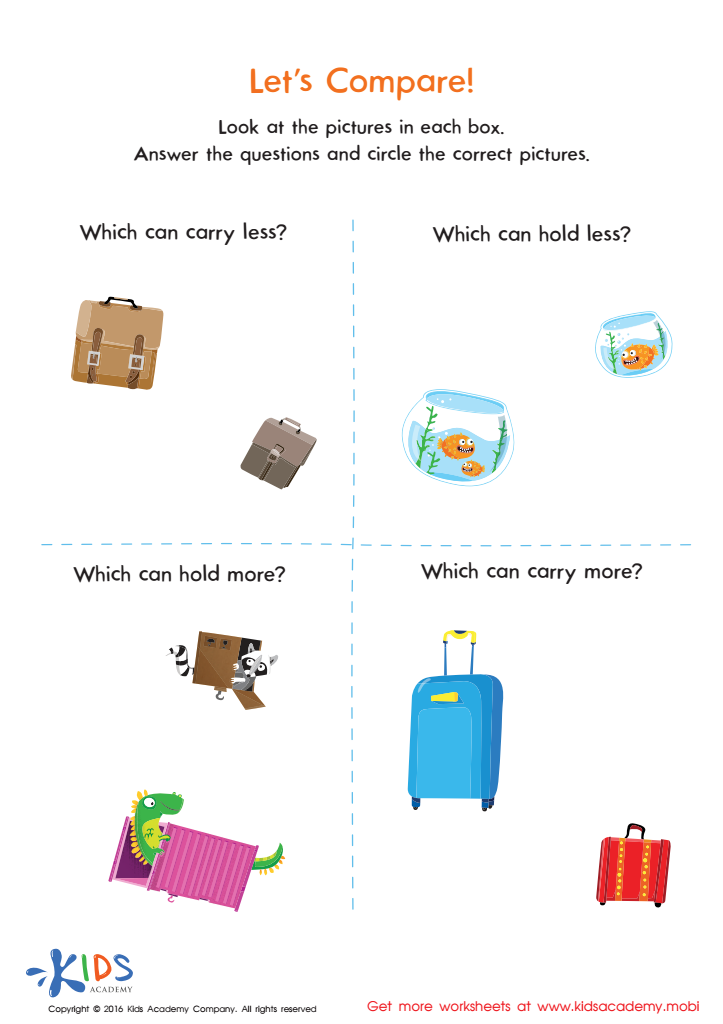
Let's Compare Worksheet: Big or Small
 Assign to My Students
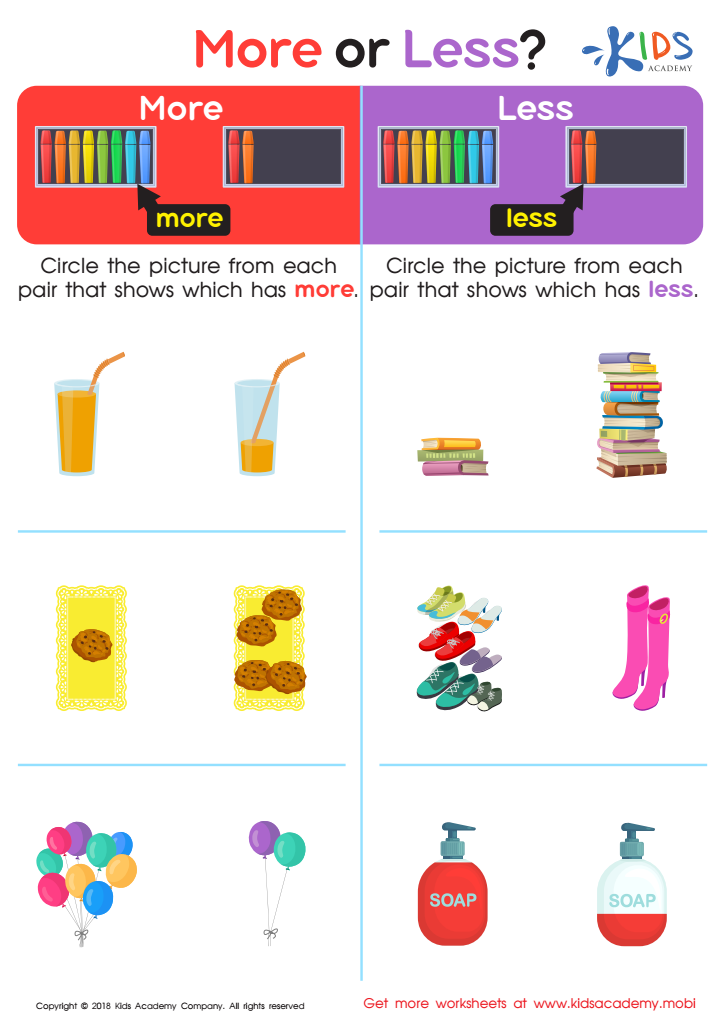
More or Less? Worksheet
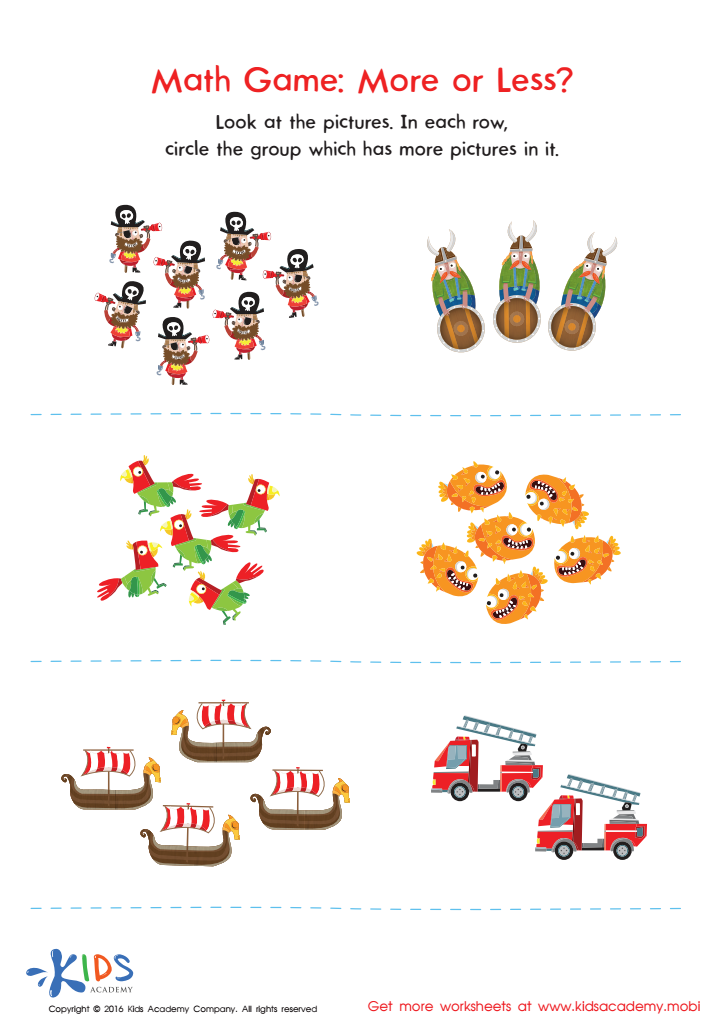
More or Less Worksheet


.jpg)




Number comparison skills are critical for young children aged 5-6, forming a cornerstone of their early mathematical development. These skills involve evaluating the relative size or value of numbers, which helps your child grasp basic math concepts such as "more than," "less than," and "equal to." This understanding lays the foundation for addition, subtraction, multiplication, and division as they progress in their education.
For parents and teachers, fostering number comparison skills can unlock numerous cognitive benefits. When children compare numbers, they engage in logical reasoning and critical thinking, essential skills for problem-solving across various subjects. Moreover, proficiency in these skills contributes directly to academic success, build confidence, and instill a growth mindset in young learners.
Early exposure to comparing numbers also has practical implications. It aids children in everyday tasks, like understanding time, managing money, and measuring ingredients while baking. Visualization aids, like number lines or counters, can be useful tools, making abstract concepts more tangible.
Involve children in simple and enjoyable activities like sorting objects by size or quantity, or playing board games that require counting and comparison. By creating a fun and supportive environment, parents and teachers can significantly enhance these crucial skills, paving the way for a lifetime of mathematical confidence and capability.








