Recognizing numbers Math Worksheets for Ages 5-6
3 filtered results
-
From - To
Discover our engaging "Recognizing Numbers Math Worksheets" designed specifically for children aged 5-6. These worksheets provide a fun and interactive way for young learners to master number recognition and build foundational math skills. Featuring colorful illustrations and a variety of exercises, kids will practice identifying, tracing, and writing numbers while enjoying the learning process. Our worksheets cater to different learning styles and ensure that each child can grasp the essentials of numeracy at their own pace. Perfect for both classroom use and home practice, these resources support early math development and foster a love for numbers in young learners. Start exploring today!
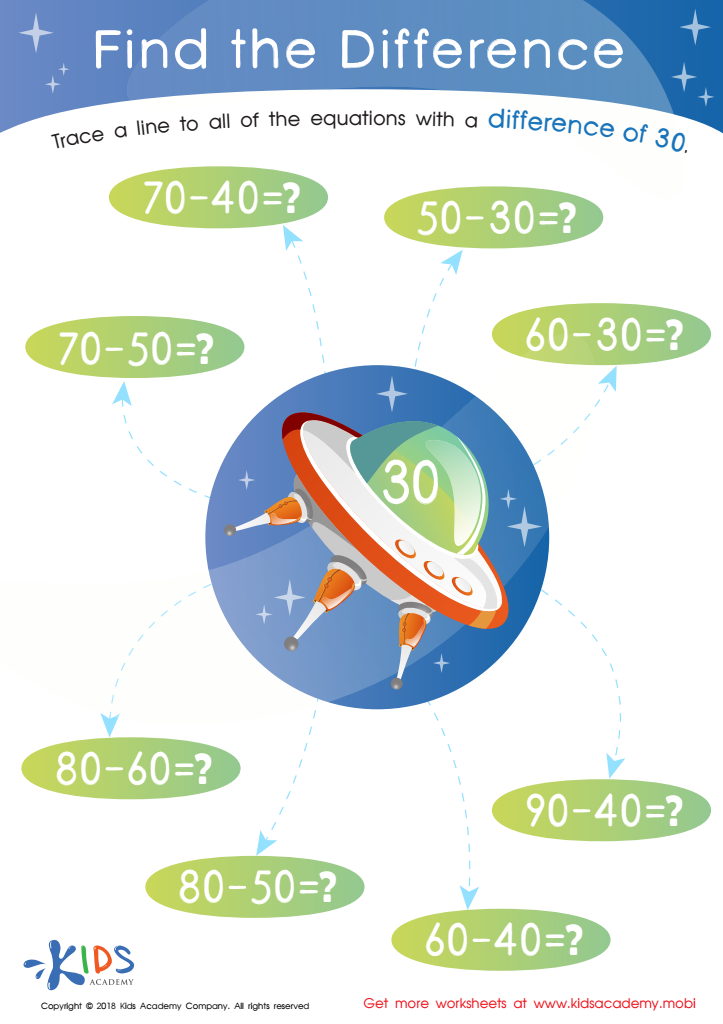
Find The Difference Worksheet
 Assign to My Students
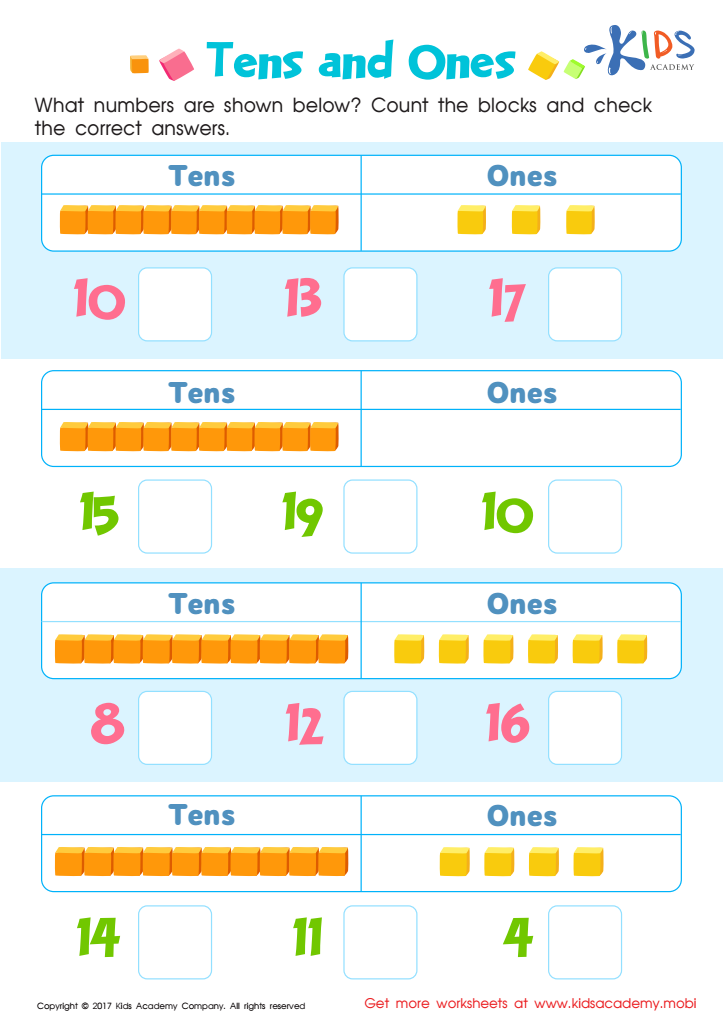
Tens and Ones Worksheet
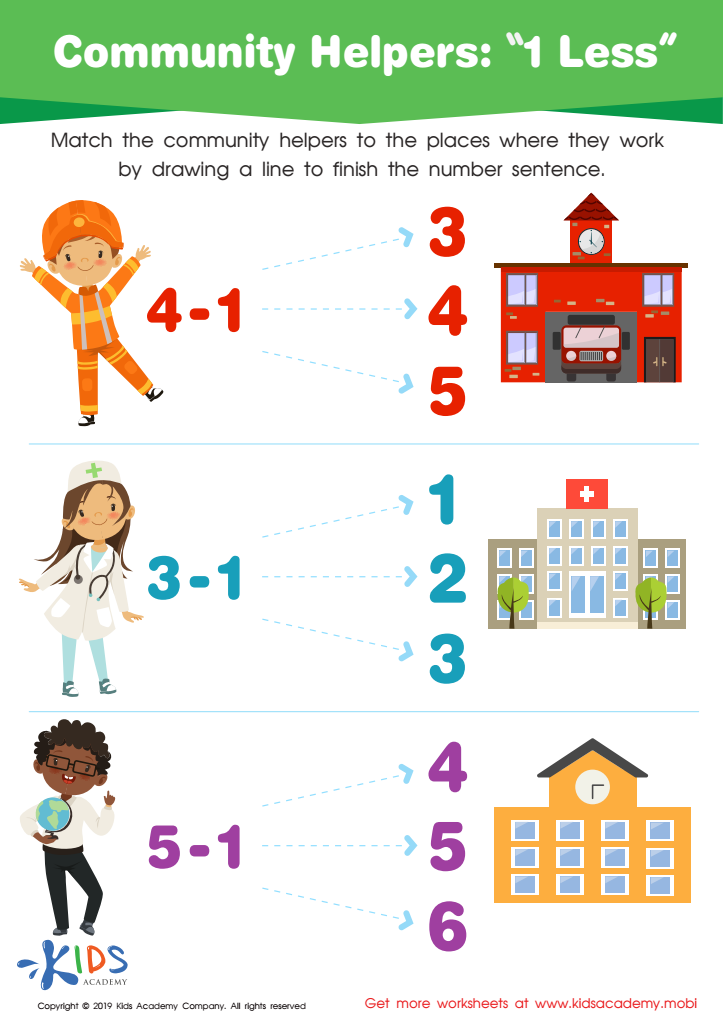
Community Helpers: 1 less Worksheet








Recognizing numbers is a foundational skill critical for children ages 5-6, and it forms the basis for all future math learning. At this age, children are typically transitioning from preschool to more structured learning environments, where numerical understanding becomes essential. Parents and teachers should care about this skill due to its importance in everyday scenarios; recognizing numbers helps young learners with tasks like counting objects, understanding age, and recognizing prices, which fosters independence.
Furthermore, developing number recognition enhances problem-solving skills and cognitive development. By familiarizing children with numbers, educators and caregivers are laying the groundwork for more advanced mathematical concepts, such as addition, subtraction, and ultimately, critical thinking tasks later in school. In addition, mastering number recognition can boost children’s confidence as they navigate math-related activities, promoting a positive attitude towards learning.
Building a strong numerical foundation creates an opportunity for meaningful parent-child engagement through games and practices. By working on number recognition at home and in the classroom, adults can support children's interest in math, encouraging a lifelong appreciation for the subject. Ultimately, acknowledging the significance of this skill assists in preparing children academically and socially for their future educational journeys.








