Recognizing Patterns Math Worksheets for Ages 5-6
5 filtered results
-
From - To
Discover our engaging Recognizing Patterns math worksheets designed for kids aged 5-6! These worksheets provide fun, interactive activities that help young learners identify, create, and extend patterns using shapes, colors, and numbers. By employing colorful visuals and age-appropriate challenges, our resources encourage critical thinking and cognitive development. Perfect for home or classroom use, these worksheets not only promote essential math skills but also boost creativity and problem-solving abilities. Make learning enjoyable with our printable worksheets, and watch as your child masters pattern recognition while building a solid foundation for future math success! Explore our collection today and foster a love for learning!
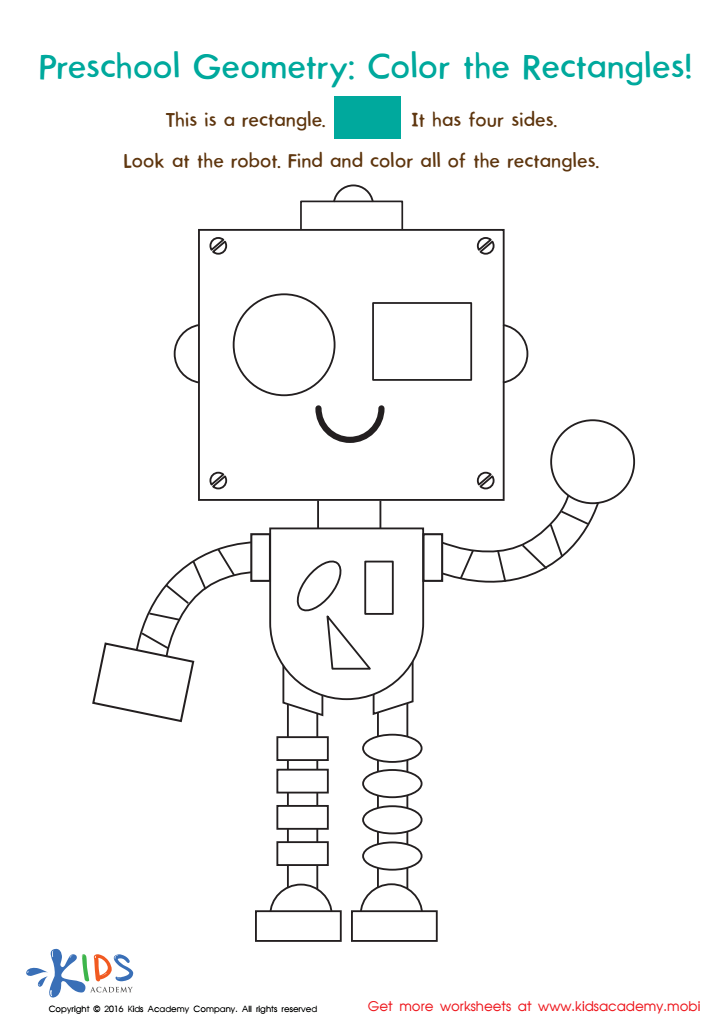
Geometry Worksheet
 Assign to My Students
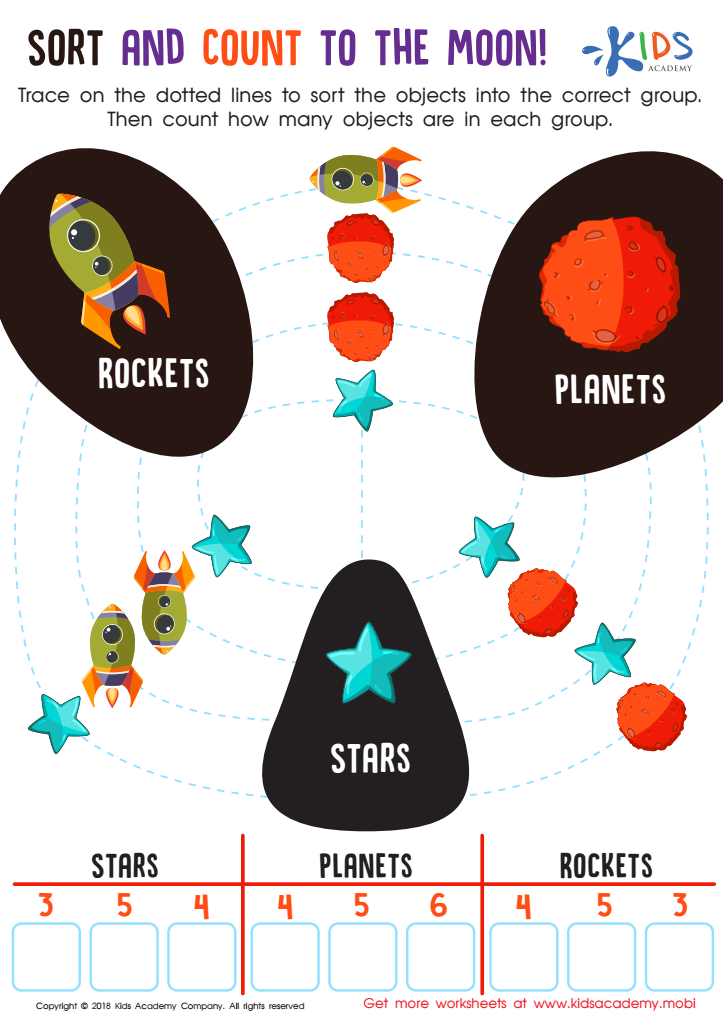
Sort and Count to the Moon Worksheet
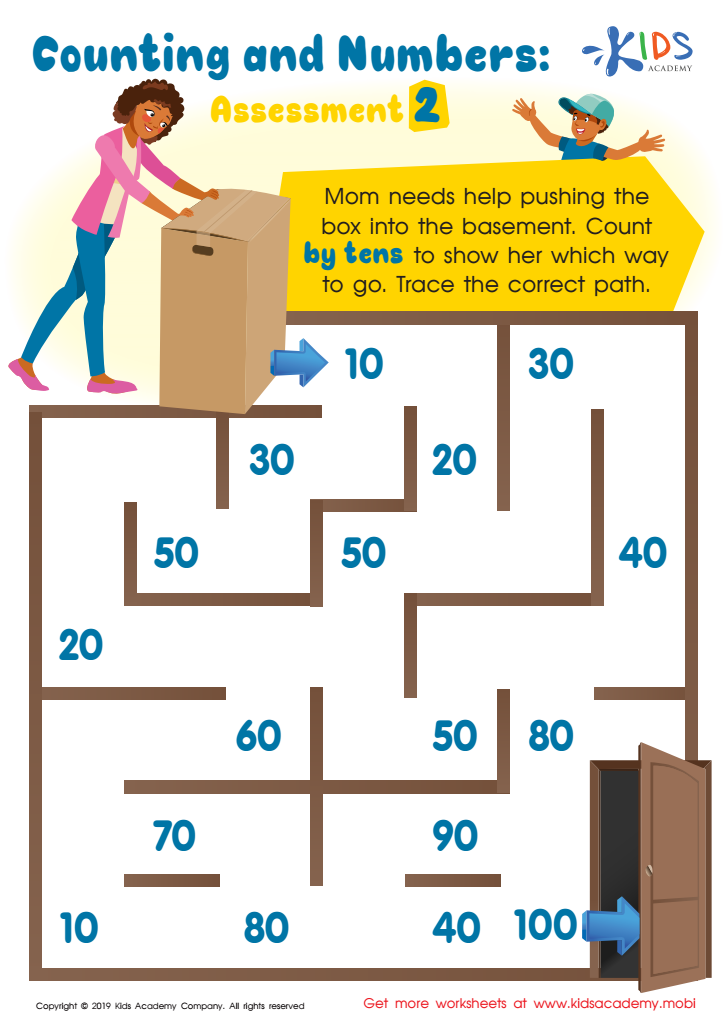
Counting and Numbers: Assessment 2 Worksheet
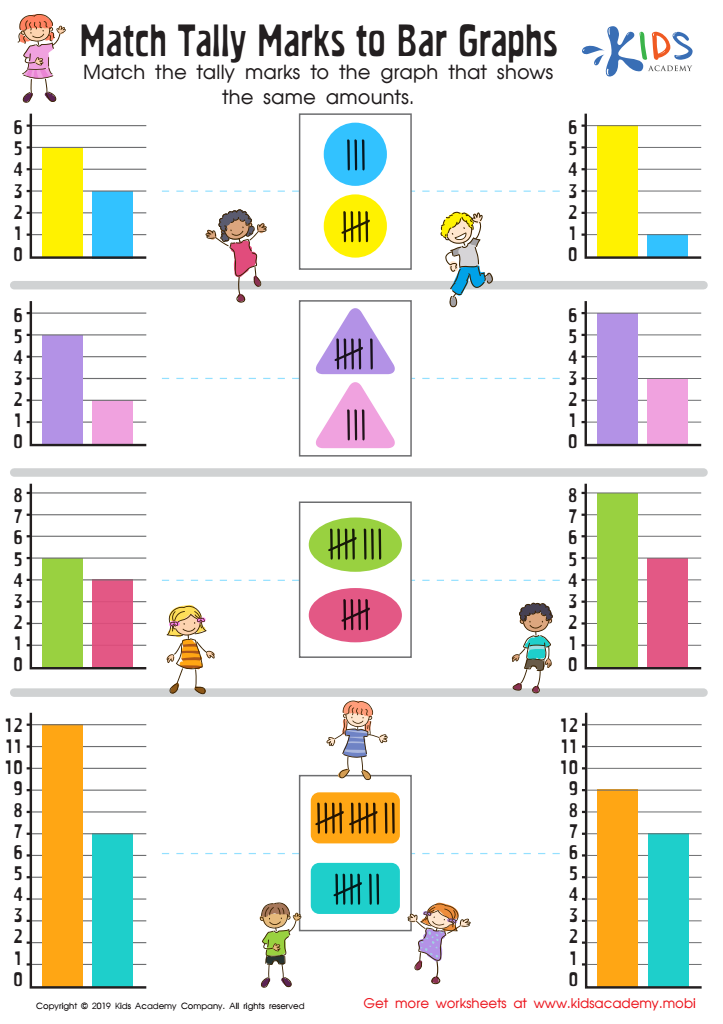
Match Tally Marks to Bar Graphs Worksheet
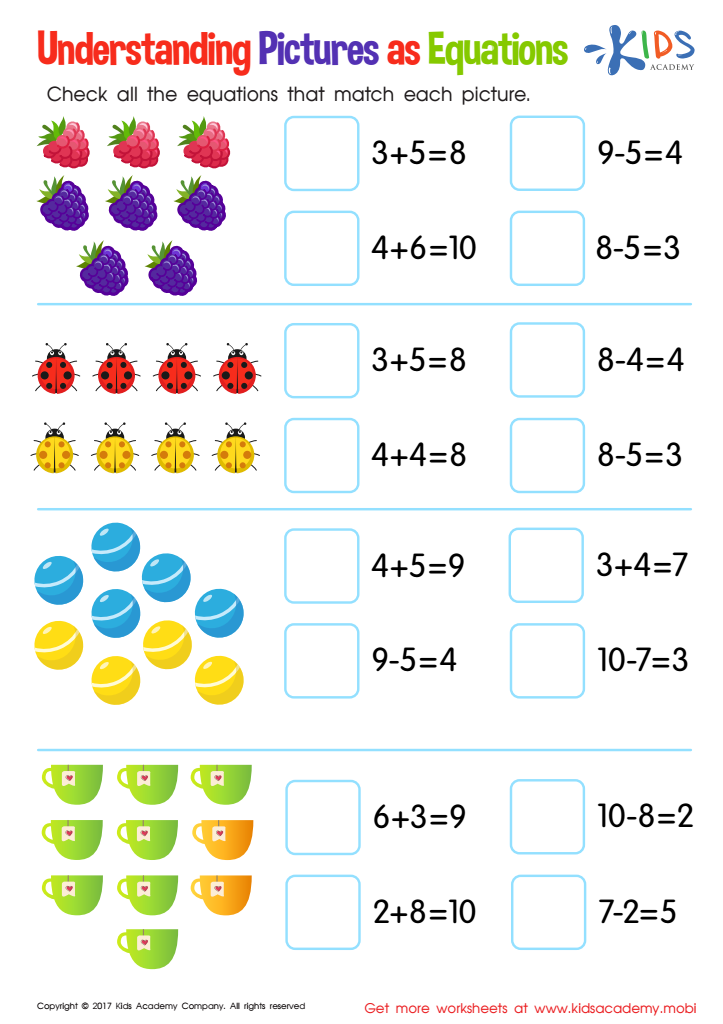
Understanding Pictures as Equations Worksheet







Recognizing patterns in mathematics is a foundational skill for young learners, especially for ages 5-6. This age is crucial for cognitive development, and engaging children in pattern recognition helps build essential logical thinking and problem-solving skills. By identifying and creating patterns—whether through colors, shapes, numbers, or sounds—children enhance their ability to predict outcomes, which lays the groundwork for more advanced mathematical concepts such as addition and subtraction.
Moreover, pattern recognition promotes critical thinking and encourages children's innate curiosity about the world around them. It helps them develop observation skills and reinforces their understanding of sequences, an important aspect in various subjects, not just mathematics. Recognizing patterns also aids in improving memory and concentration, as children learn to focus on details and see connections between ideas.
For parents and teachers, fostering this skill can lead to a more enriched learning environment. Recognizing patterns can easily be integrated into playful activities, making learning enjoyable and relatable. Furthermore, strong foundational skills in pattern recognition lead to greater success in later math classes, supporting long-term academic achievement. Investing time and attention in this area ensures children are well-prepared for future learning and problem-solving opportunities.








