Time reading skills Math Worksheets for Ages 5-6
9 filtered results
-
From - To
Our "Time Reading Skills Math Worksheets for Ages 5-6" are designed to help young learners grasp the basics of reading clocks and understanding time concepts. These engaging worksheets feature colorful illustrations and a variety of exercises to make learning to tell time fun and interactive. Perfect for both classroom and at-home practice, our worksheets build essential skills like recognizing hour and minute hands, reading analog clocks, and understanding morning, afternoon, and evening times. Boost your child's confidence and proficiency in time-reading with these expertly crafted educational resources. Perfect for early learners embarking on their math journey!
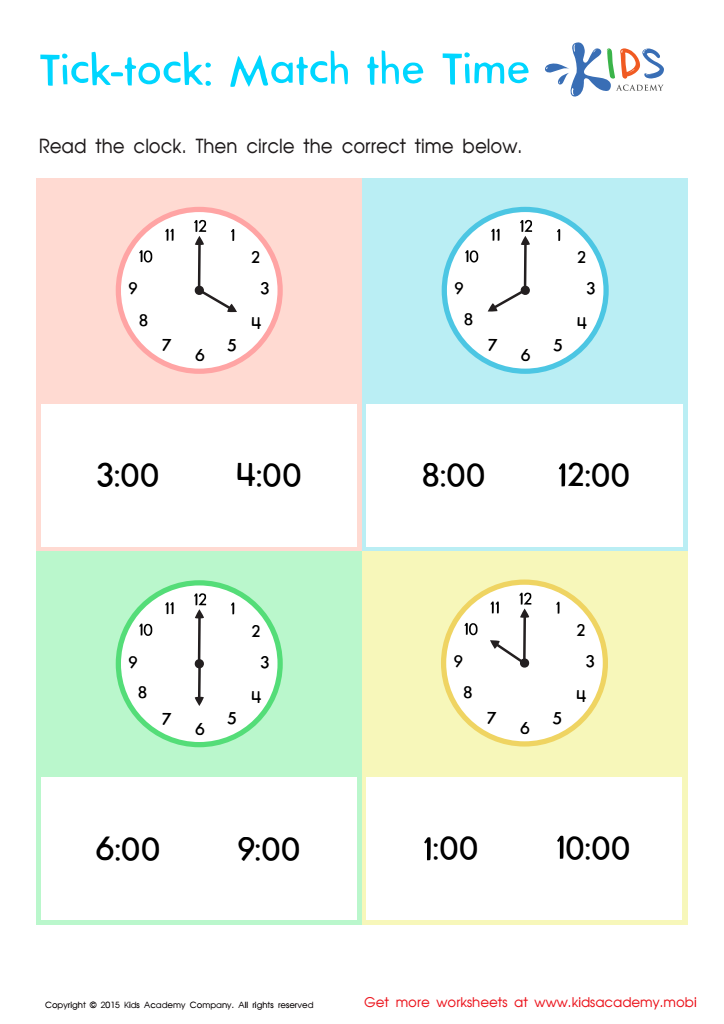
Telling The Time Worksheet: Part 4
 Assign to My Students
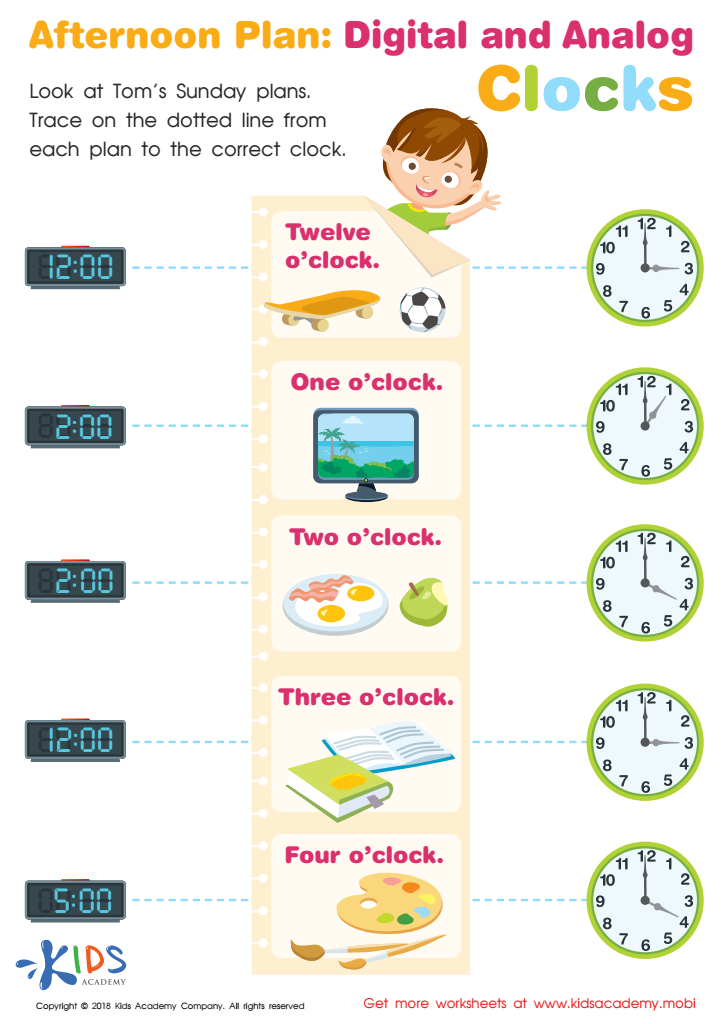
Afternoon Plan: Digital and Analog Clocks Worksheet
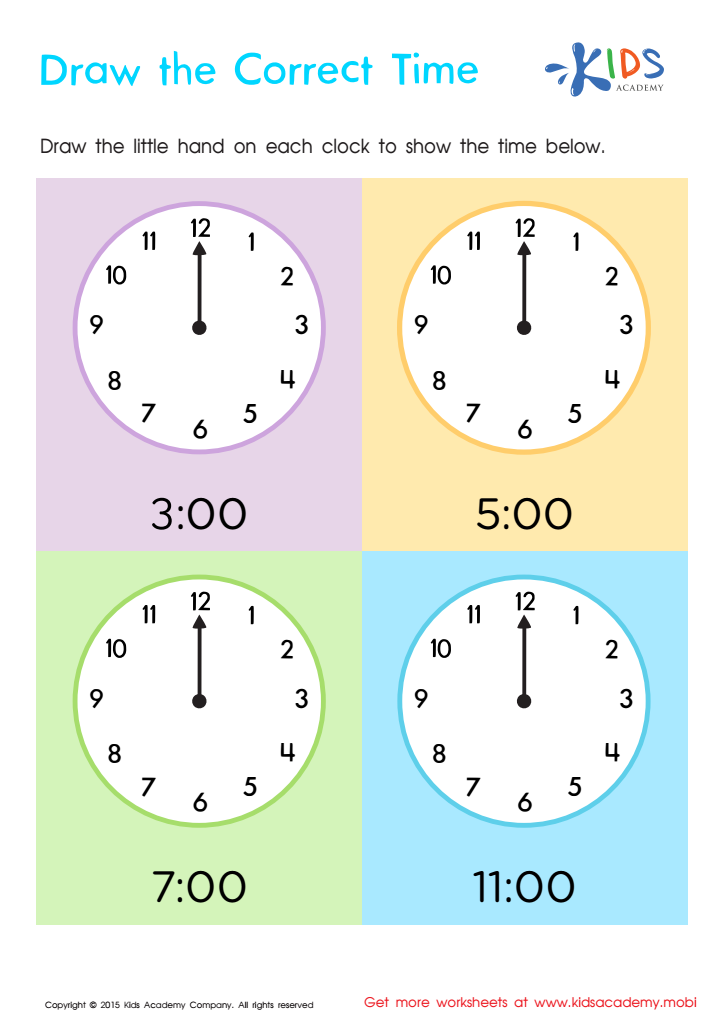
Telling The Time Worksheet: Part 1
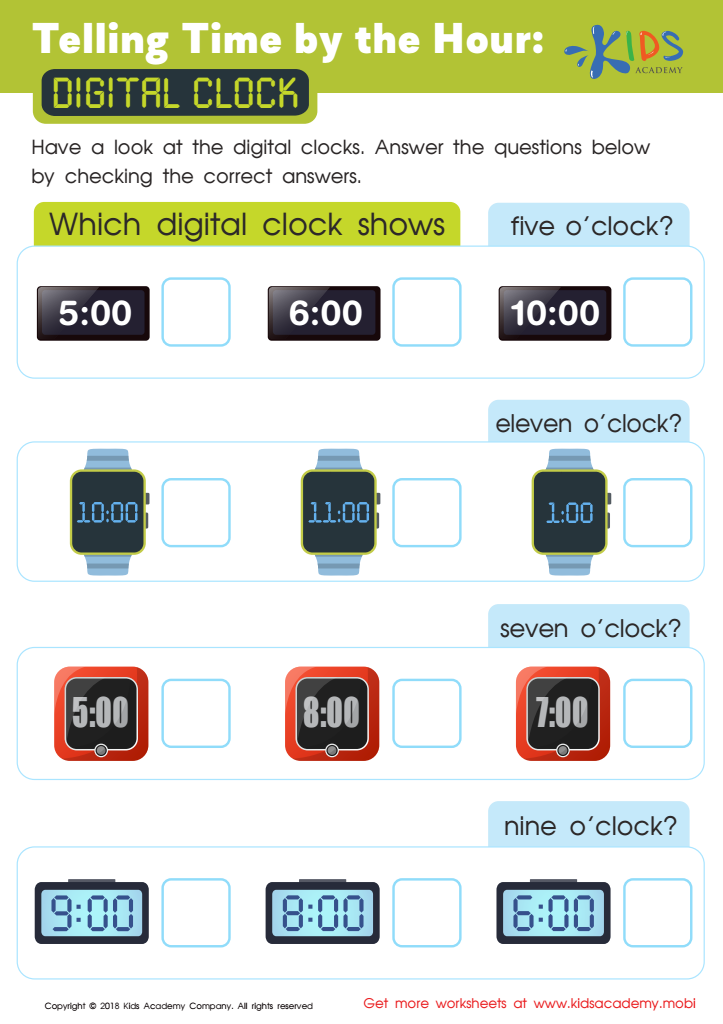
Telling Time by the Hour: Digital Clock Worksheet
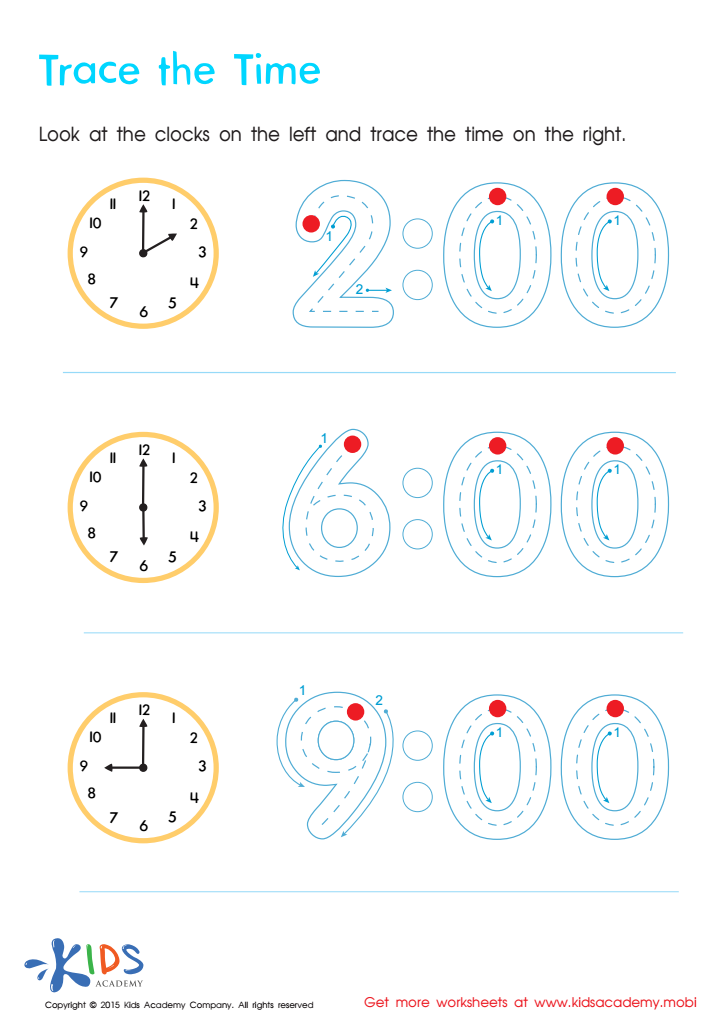
Telling The Time Worksheet: Part 2
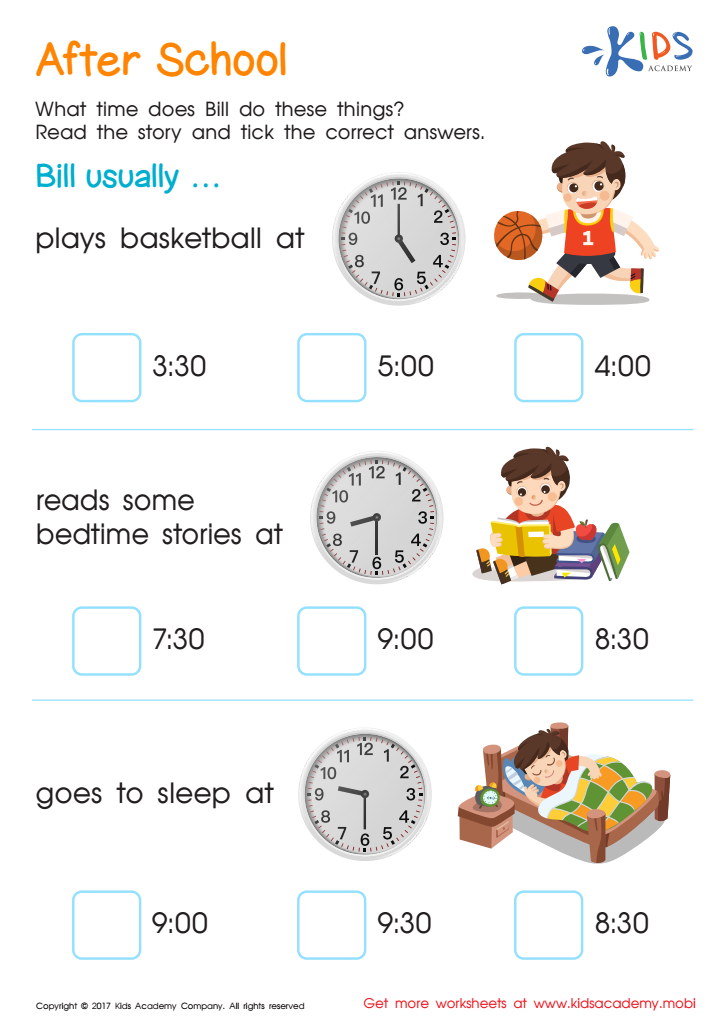
After School Time Printable
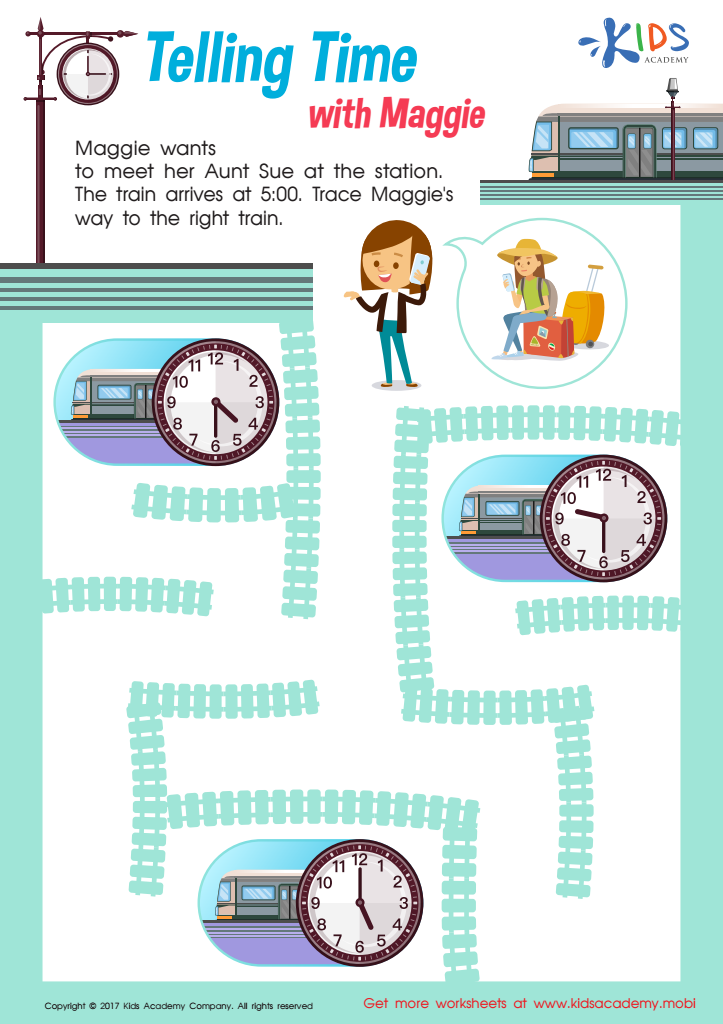
Telling Time With Maggie Time Worksheet
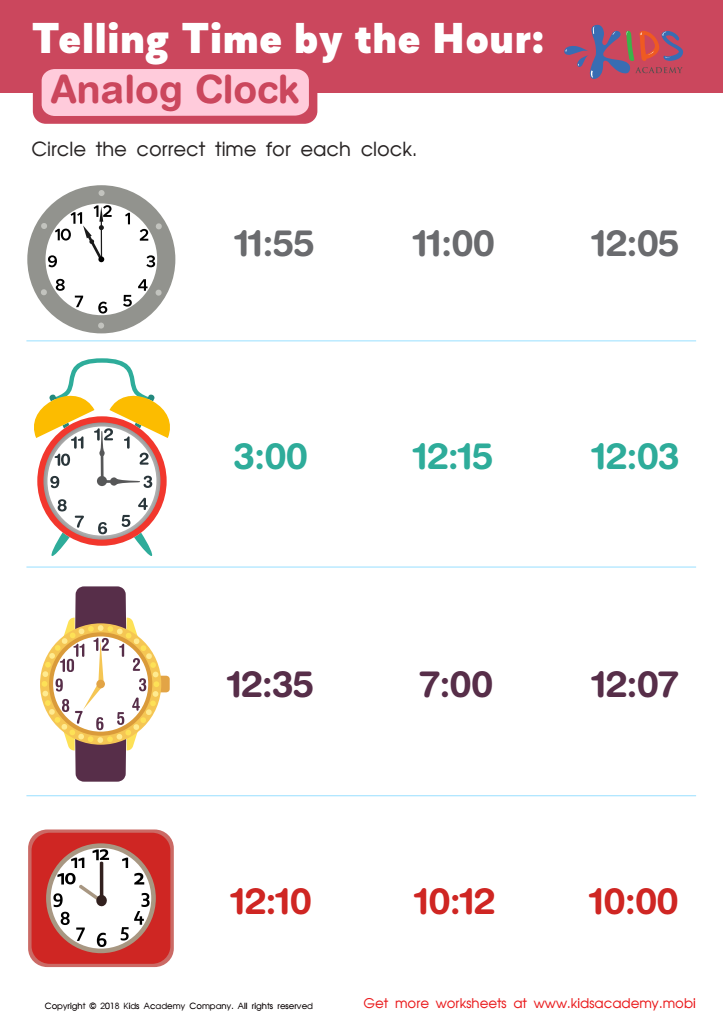
Telling Time by the Hour: Analog Clock Worksheet
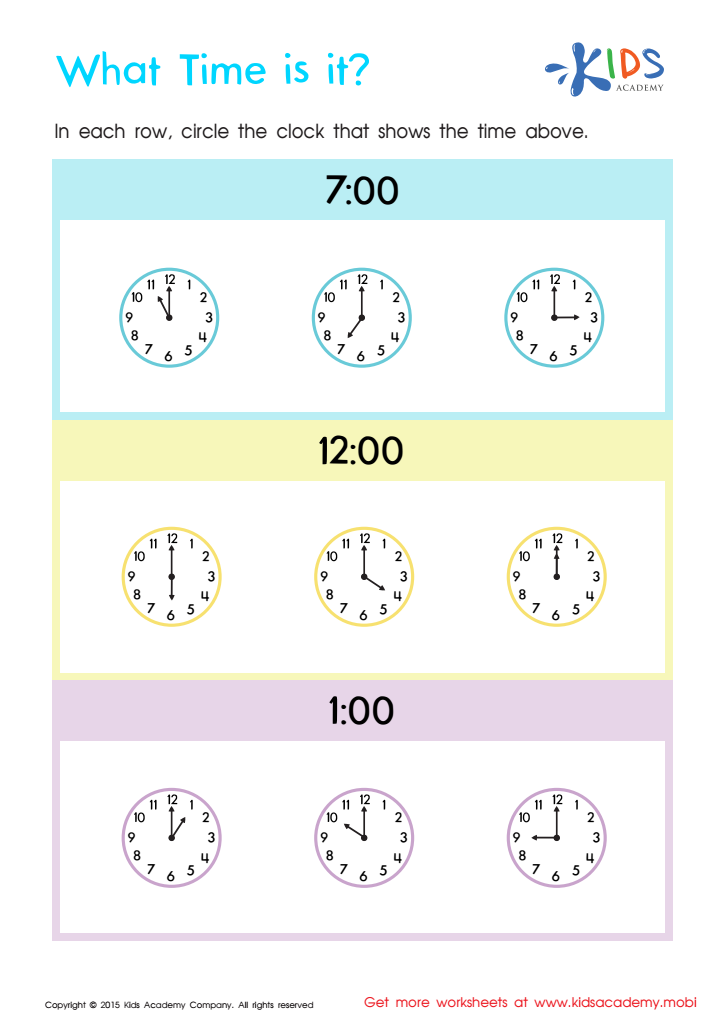
Telling The Time Worksheet: Part 3








Developing reading and math skills in children ages 5-6 is crucial for laying a solid educational foundation that supports future learning and overall academic success. For reading, children at this age are at a critical stage in their linguistic development. Their ability to recognize letters, connect them with sounds, and understand simple words forms the basis of their reading fluency. This early proficiency promotes better comprehension, enhances their vocabulary, and fosters a love for learning. Teachers and parents should prioritize reading practice because it equips children with essential language skills and encourages imagination and cognitive growth.
Similarly, early math skills are equally important. At ages 5-6, children start to grasp basic numerical concepts, such as counting, understanding quantities, and simple addition and subtraction. Mastery in these areas promotes logical thinking and problem-solving abilities, which are vital across all subjects. Basic math skills build confidence and lay the groundwork for more complex mathematical operations they will encounter later in their education.
Investing time in developing reading and math skills in young children creates a robust, multifaceted academic foundation. Teachers and parents play a vital role in nurturing these skills through engaging activities, encouraging practice, and providing a supportive learning environment. Early attentiveness to these foundational skills prepares children for academic challenges, promoting lifelong learning and success.








