Understanding currency Math Worksheets for Ages 5-6
4 filtered results
-
From - To
Introduce young learners to the basics of money with our "Understanding Currency Math Worksheets" designed for ages 5-6. Tailored to enhance early math skills, these printable worksheets make grasping currency concepts fun and engaging. Kids will practice identifying coins and bills, understanding their values, and performing simple transactions. Interactive activities foster practical knowledge and confidence in handling money. Our expertly crafted resources align with educational standards, ensuring a strong foundational math competency. Perfect for classroom use or homeschooling, these worksheets are an excellent way to prepare children for real-world financial literacy. Start your child’s journey to monetary mastery today!
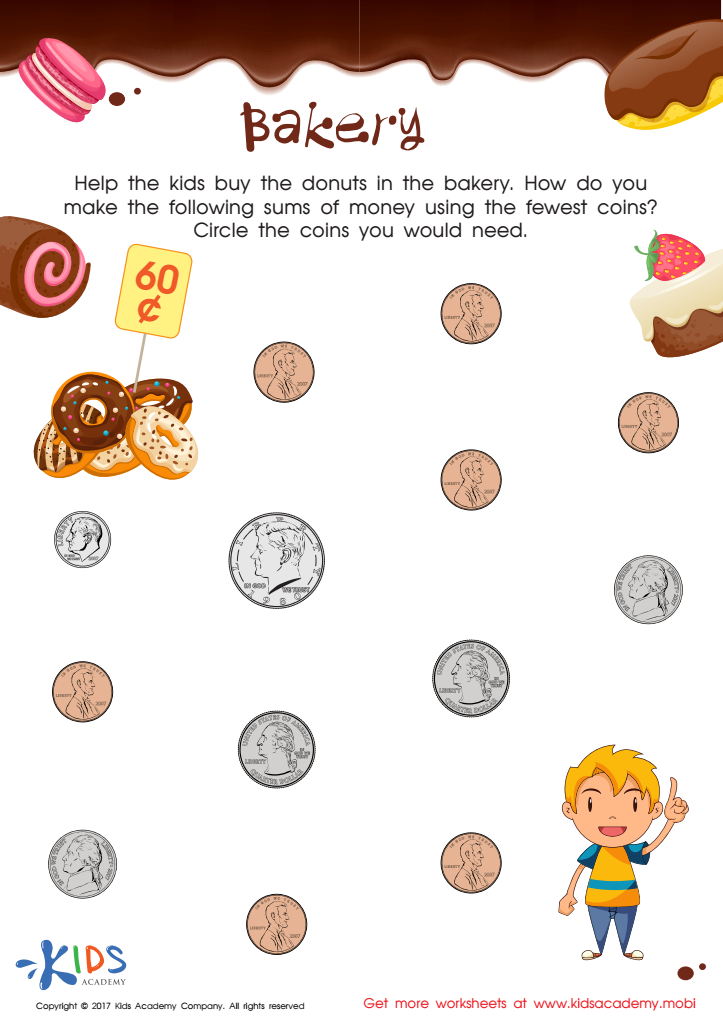
Counting Coins Worksheet
 Assign to My Students
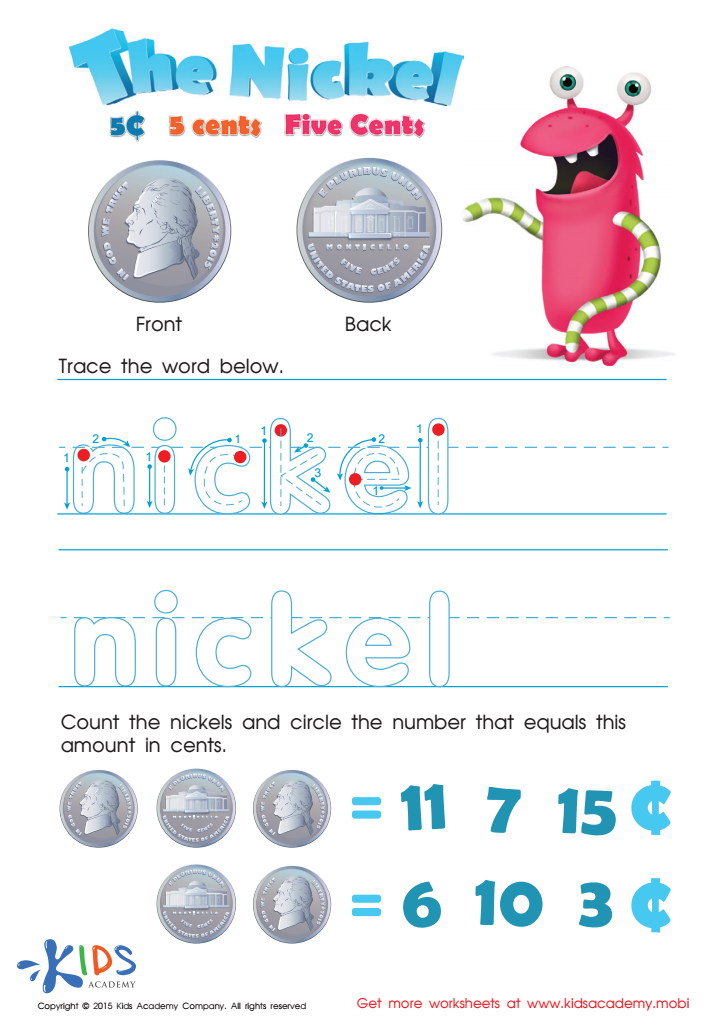
Five Cents or the Nickel Money Worksheet
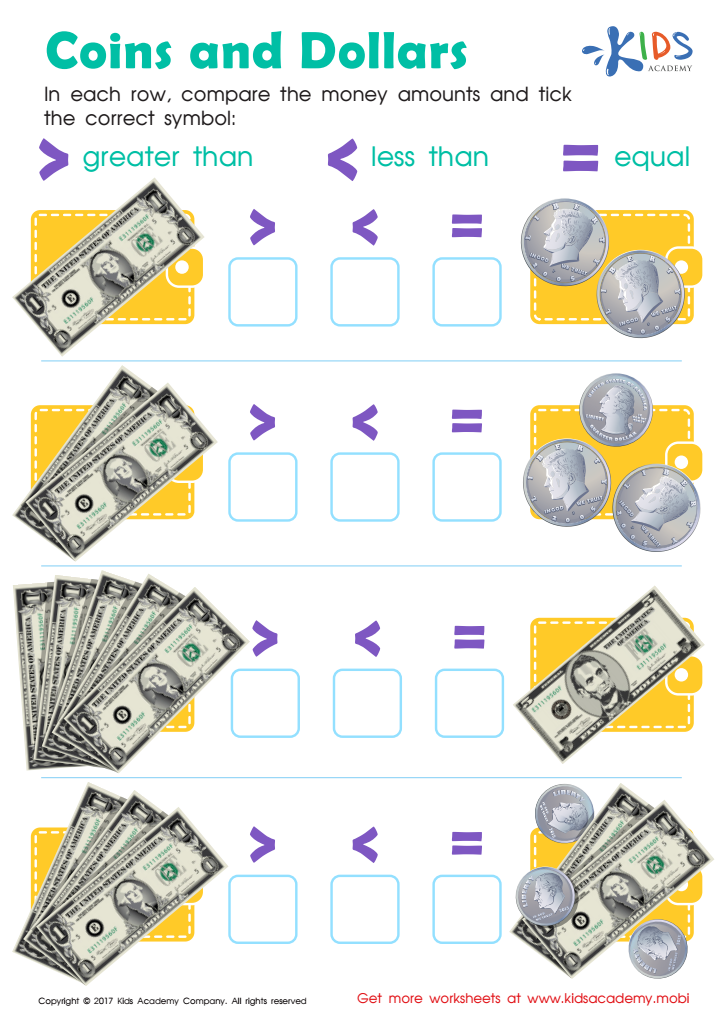
Money: Coins Dollars Printable
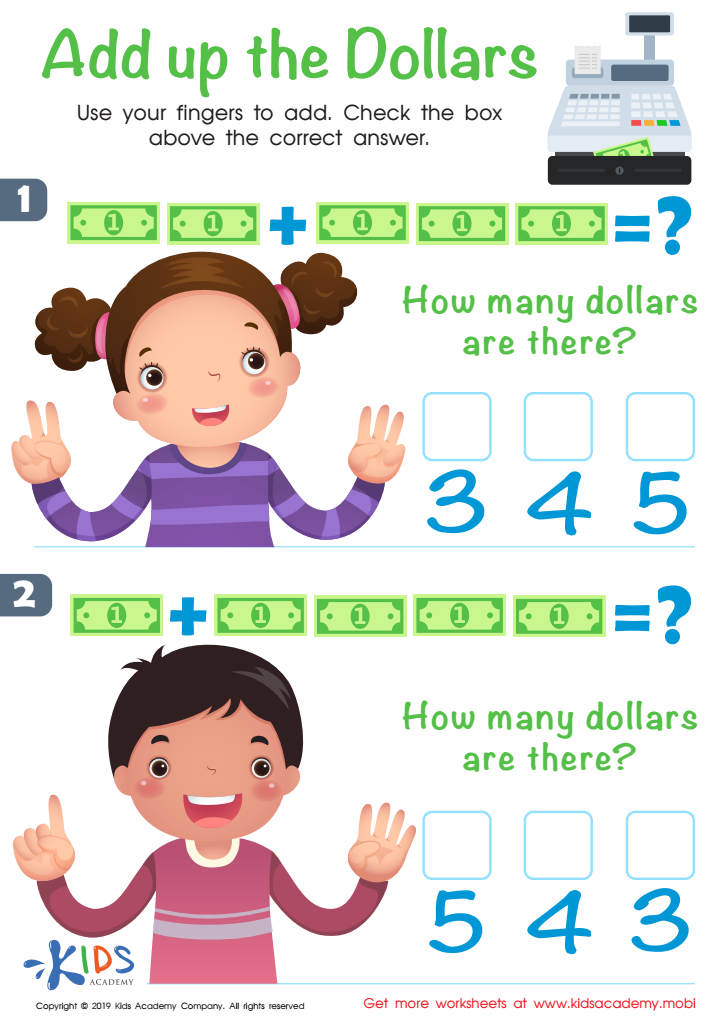
Add up the Dollars Worksheet







Understanding currency math at ages 5-6 is crucial for developing foundational life skills in young children. Early exposure to currency not only familiarizes kids with the concept of money but also enhances their numerical comprehension and problem-solving abilities. Currency math involves recognizing and differentiating between various coins and bills, understanding their values, and carrying out simple transactions, which are skills they will use throughout their lives.
Parents and teachers should care about teaching currency math because it builds a child's confidence in handling money responsibly. It also fosters an early understanding of financial literacy, helping them become more adept at managing allowances or savings. These skills can set the groundwork for more complex financial understanding in the future.
Moreover, currency math encourages practical applications of addition, subtraction, and even basic multiplication and division. It integrates well across various learning activities, making math lessons more interactive and relevant. Engaging children in real-world applications helps to retain their interest and turns abstract concepts into tangible experiences.
Introducing currency math at an early age makes the transition to more advanced financial concepts smoother, ensuring that children are better prepared for economic challenges as they grow. Therefore, investing time in teaching currency math is an investment in a child's future financial stability and confidence.








