Understanding directions Math Worksheets for Ages 5-6
4 filtered results
-
From - To
Our "Understanding Directions Math Worksheets for Ages 5-6" are designed to boost children's spatial awareness and critical thinking skills. These engaging and colorful worksheets help young learners grasp essential concepts such as left, right, up, down, and cardinal directions. By navigating through fun activities and puzzles, children develop a strong foundation in following instructions, enhancing their math readiness. Ideal for classroom or home use, these printables make learning an enjoyable adventure that supports early math skill development and fosters independence. Equip your child with the tools they need to confidently master directional math concepts today!
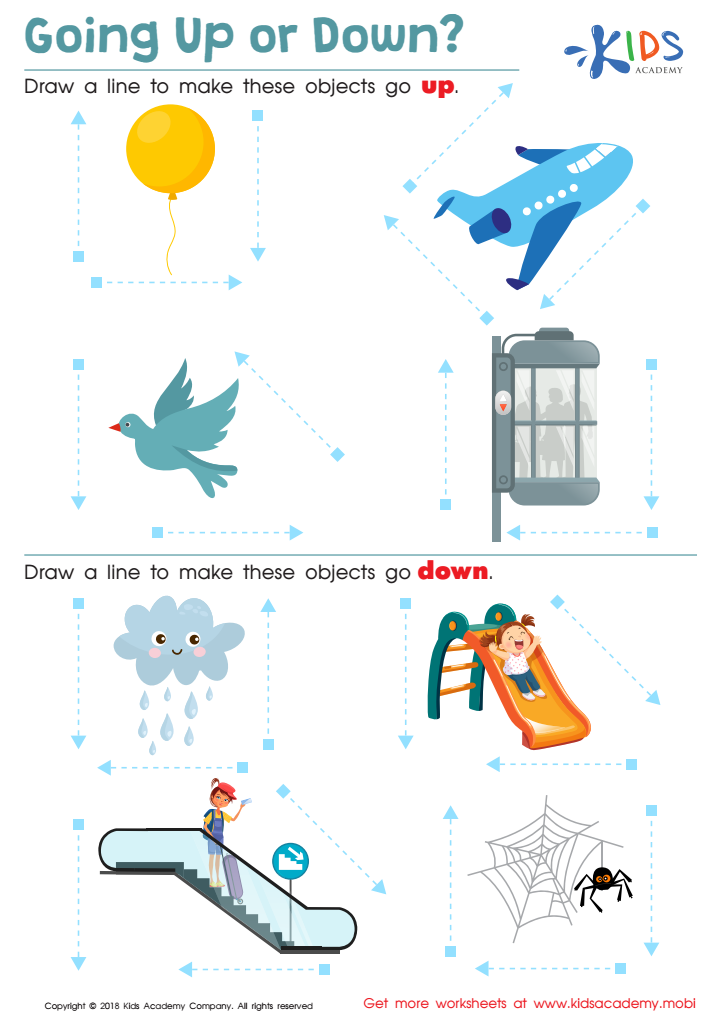
Going up or Down? Worksheet
 Assign to My Students
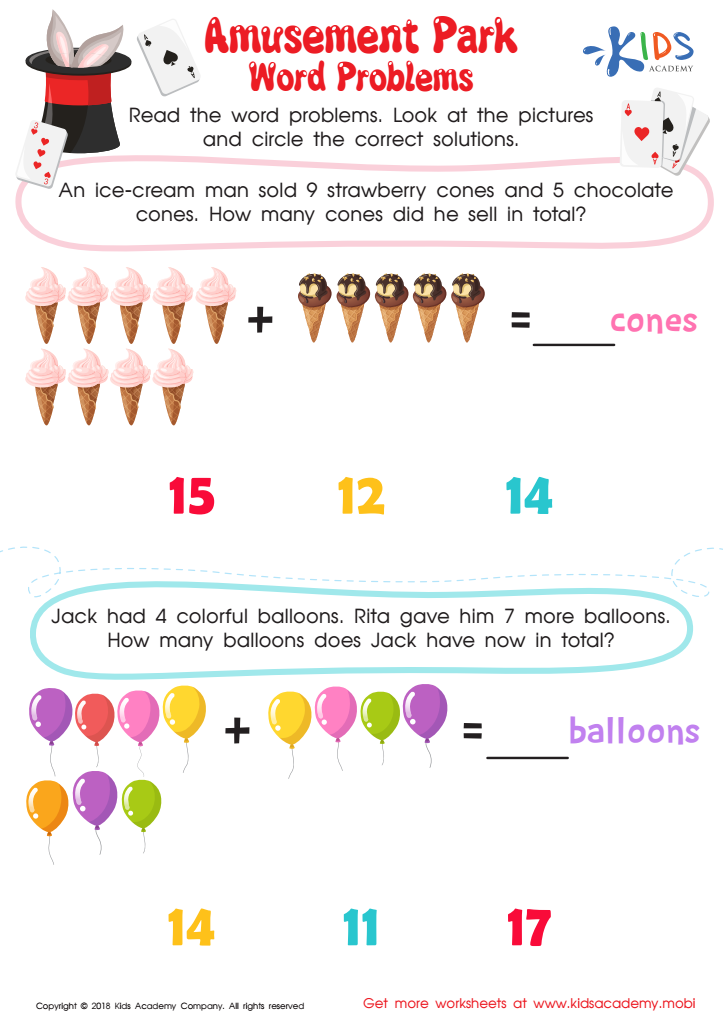
Amusement Park Word Problems Worksheet
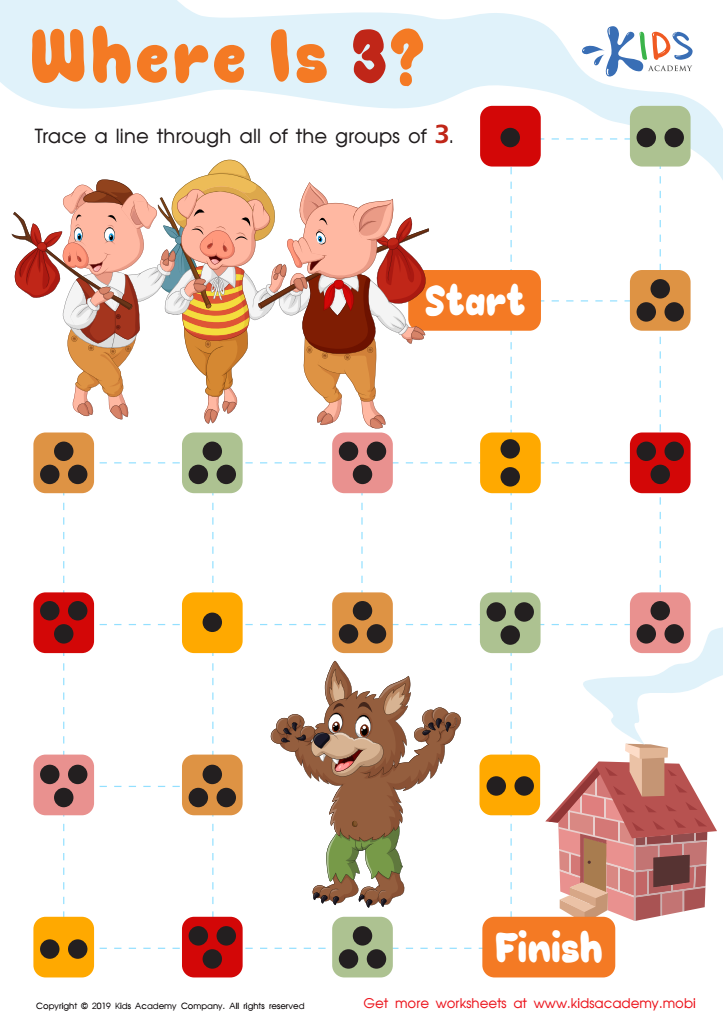
Where Is 3? Worksheet
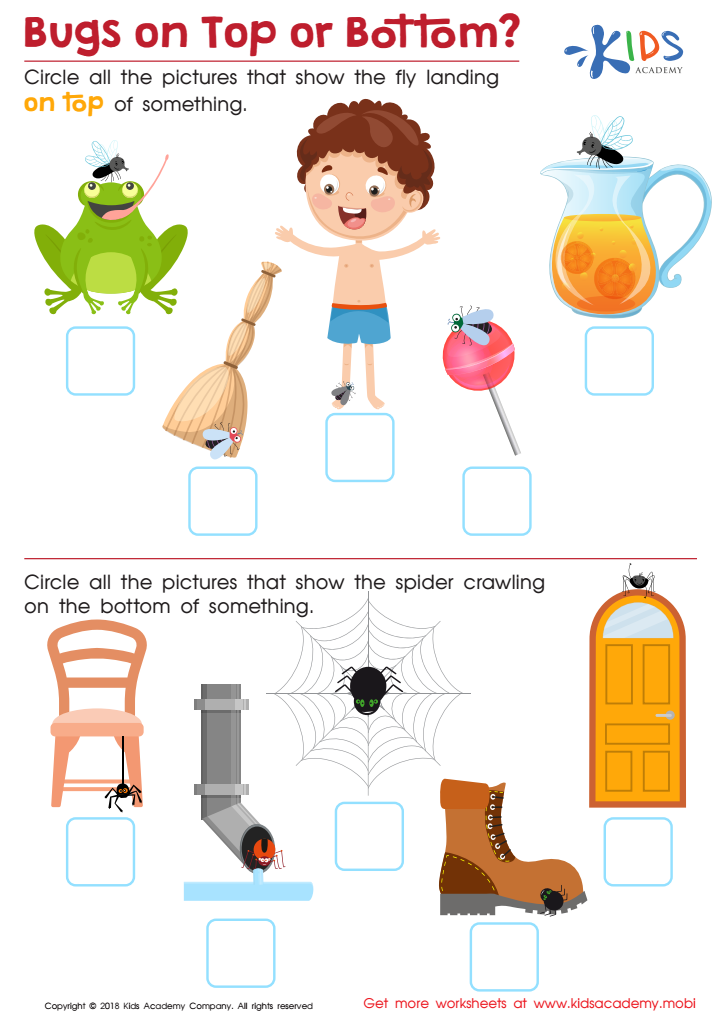
Bugs on Top or Bottom? Worksheet








Understanding directions in math is incredibly important for children aged 5-6 due to its foundational role in their overall cognitive and academic development. At this age, young learners are in the initial stages of grasping basic mathematical concepts, and learning to follow directions can significantly enhance their ability to process and apply new information.
Firstly, following directions in math helps to build strong problem-solving skills. When children learn to follow step-by-step instructions, they develop a sequential understanding, which is essential for grasping more complex mathematical operations later on. It cultivates an attention to detail and patience, skills that are crucial not just in math, but in all areas of learning.
Moreover, this early focus on following directions aids in language development. Math-related instructions often use specific vocabulary, and adhering to these terms helps children become familiar with the language of math. Recognizing and responding to terms like "before", "after", "above", "below", "left", and "right" will also bolster their spatial reasoning—a key component in understanding geometry and other visual-spatial aspects of math.
Lastly, mastering directions fosters a sense of independence and confidence in young learners. Successfully completing tasks after interpreting directions can boost self-esteem and motivate them to tackle more challenging tasks. In sum, understanding directions in math for children aged 5-6 sets a solid groundwork for their future learning, making it a critical point of focus for parents and teachers.








