Understanding fractions Math Worksheets for Ages 5-6 - Page 2
27 filtered results
-
From - To
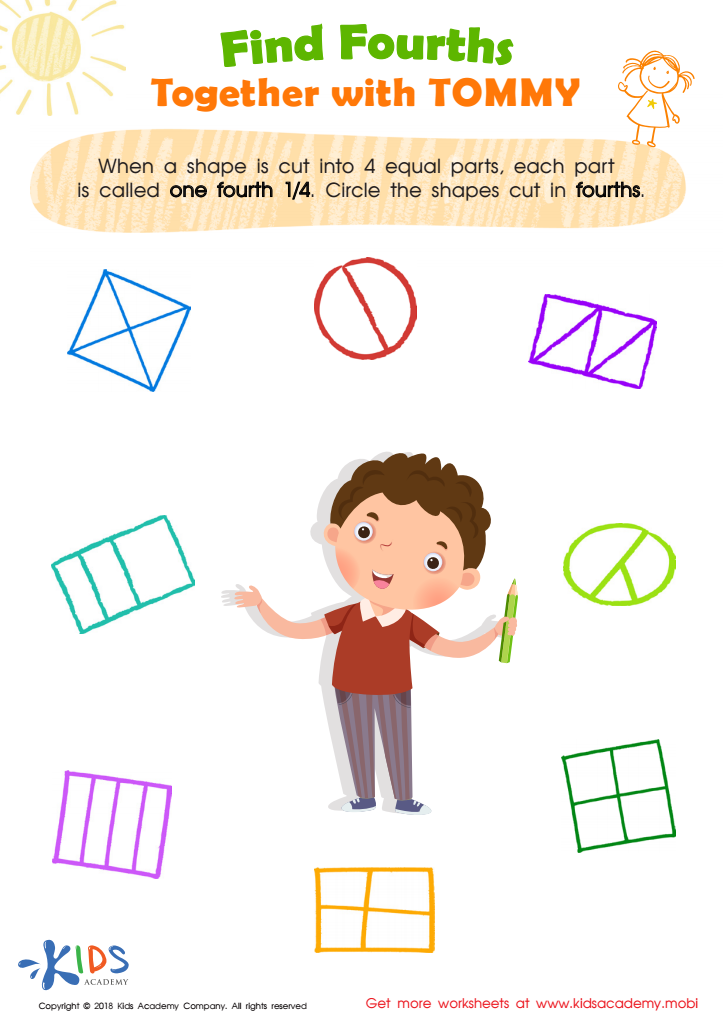
Find Fourths Together with Tommy Worksheet
 Assign to My Students
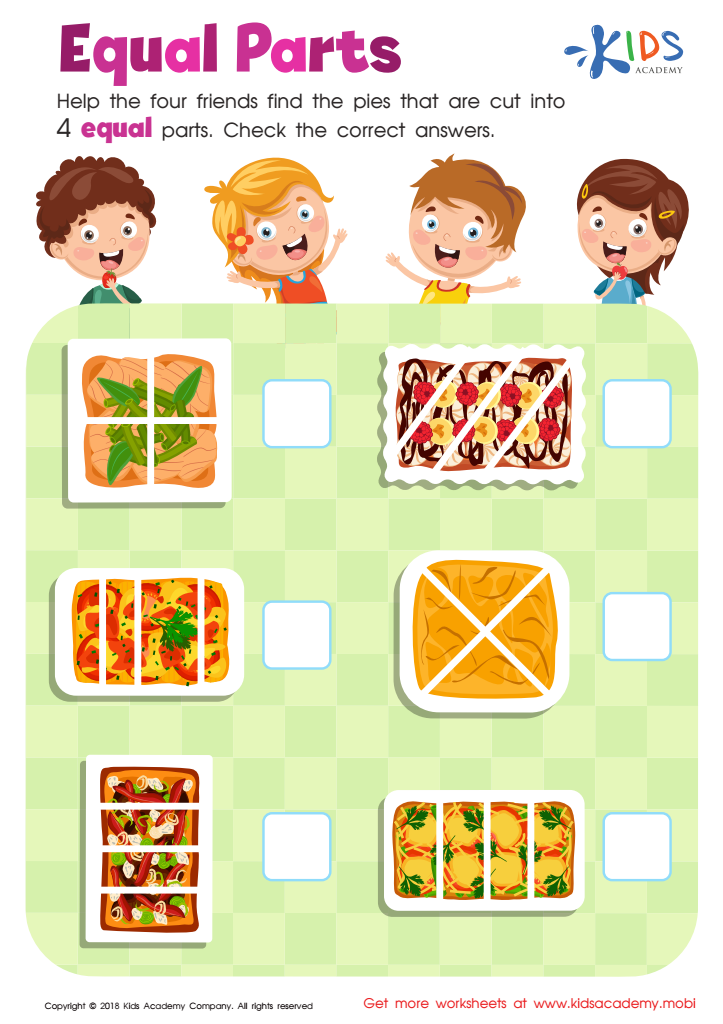
Equal Parts: Food Worksheet
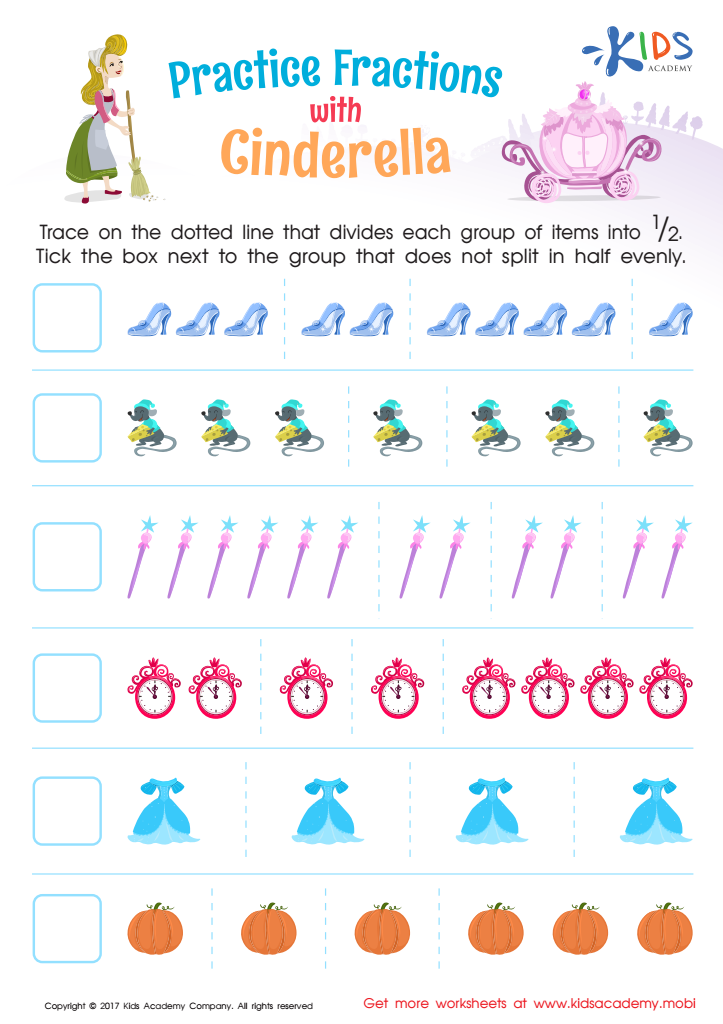
Fractions: Cinderella Printable







Understanding fractions is fundamental in early math education, especially for children ages 5-6. At this developmental stage, children are naturally curious and capable of grasping basic concepts of division and sharing, which are foundational to understanding fractions.
Firstly, fractions help build critical thinking and problem-solving skills. When children learn to identify and work with fractions, they practice dividing whole objects into parts, which fosters a deeper understanding of the concepts of division and ratio. This prepares them for more advanced math topics later on.
Secondly, fractions are pervasive in everyday life. From cooking to telling time, and sharing equally among friends, grasping the basics of fractions helps children navigate the world around them more effectively. By building a strong foundation early, children can relate fragmented quantities to real-world situations, enhancing their practical life skills.
Lastly, introducing fractions early encourages a positive attitude toward math. Many children develop anxiety about math as they grow older. Engaging young learners with fun, hands-on activities involving fractions can make math feel less intimidating and more enjoyable. Therefore, by understanding fractions at an early age, children are likely to develop confidence and an interest in continuing their mathematical journey.
Parents and teachers should see early fraction education as an investment in a child's cognitive development and life skills, making it an essential component of early childhood education.








