Understanding number value Math Worksheets for Ages 5-6
3 filtered results
-
From - To
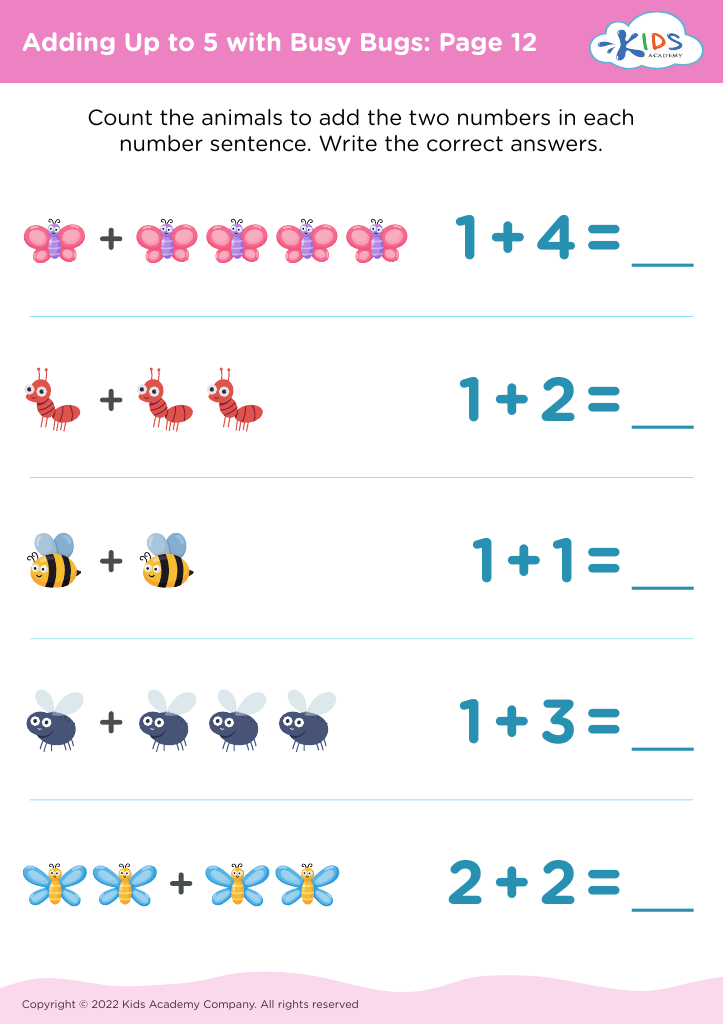
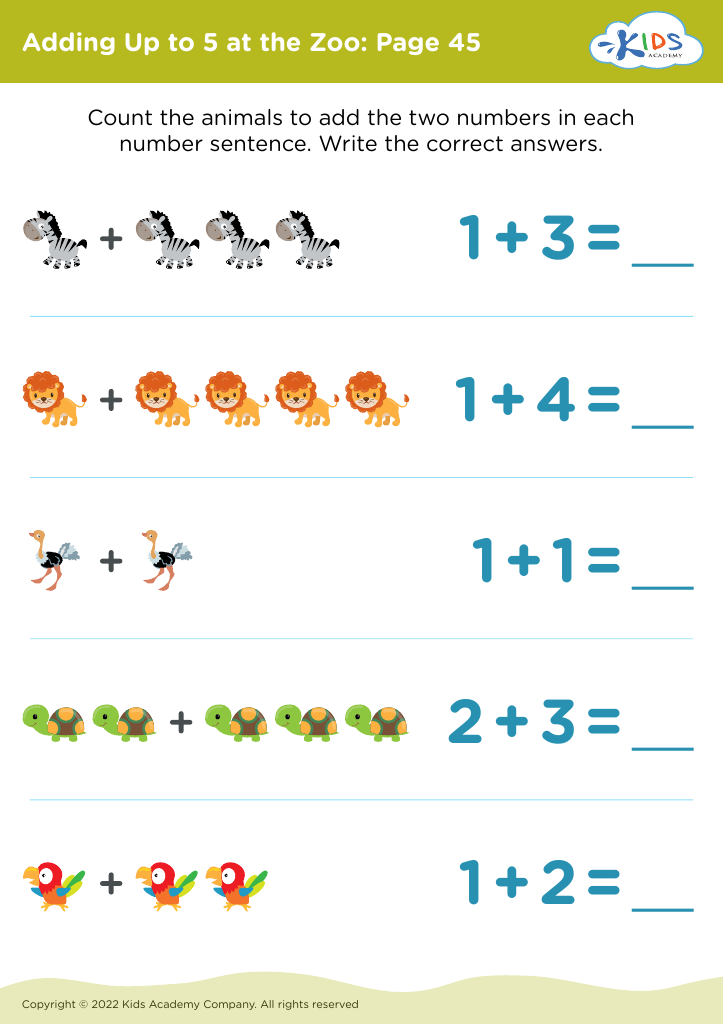
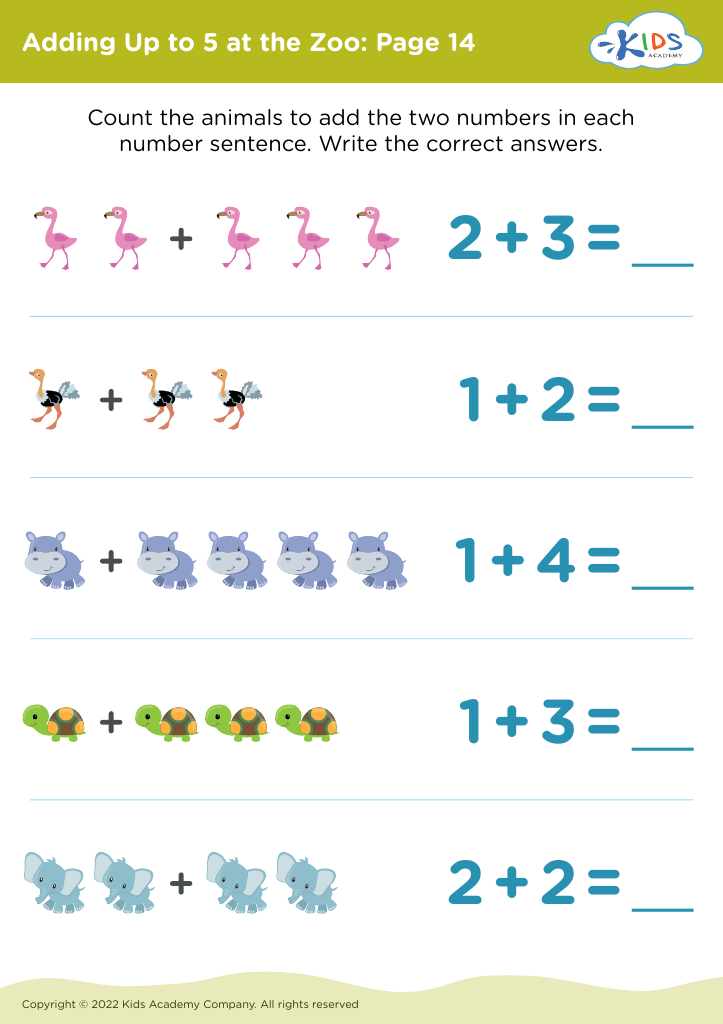
Discover our engaging "Understanding Number Value" math worksheets tailored for ages 5-6, designed to build a solid foundation in number recognition and value comprehension. These worksheets provide fun and interactive activities that help young learners grasp essential math concepts, such as identifying numbers, counting objects, and understanding more or less. With colorful visuals and age-appropriate challenges, children will enhance their mathematical skills while keeping their learning experience enjoyable. Perfect for home or classroom use, these resources foster your child's confidence and proficiency in early math. Get started now and watch your little ones develop a love for numbers!


.jpg)





Understanding number value is fundamental for children aged 5-6 as it serves as the building block for all future mathematical concepts. At this early age, children are developing their cognitive and analytical skills, making it a crucial time to introduce them to the idea that numbers have different values depending on their positioning and context. This foundational knowledge helps them grasp essential skills such as counting, comparing quantities, and performing basic addition and subtraction.
For parents and teachers, focusing on number value encourages a positive attitude towards math. When children see the real-world applications of numbers—like sharing snacks or counting toys—they gain confidence and interest in math. This age is vital for fostering a love of learning, and a solid understanding of number value can prevent difficulties as they progress to more complex topics.
Moreover, early mathematical understanding supports critical thinking and problem-solving skills. By providing children with engaging experiences in recognizing and manipulating numbers, adults can lay the groundwork for later success in academics and beyond. Ultimately, nurturing this understanding equips children not just for future math challenges, but for navigating everyday situations that rely on quantities, patterns, and logical reasoning.








