Color Identification Matching Worksheets for Ages 5-6
3 filtered results
-
From - To
Discover our engaging Color Identification Matching Worksheets designed specifically for children aged 5-6! These interactive activities foster early learning by helping young learners recognize and match vibrant colors. Each worksheet encourages exploration of color names and enhances visual perception skills, making learning both fun and effective. Parents and teachers will find these resources perfect for reinforcing color recognition in a playful way. With colorful illustrations and straightforward instructions, kids will develop essential learning skills essential for their academic journey. Download these printable worksheets today to enrich your child’s educational experience and watch their confidence in color recognition bloom!
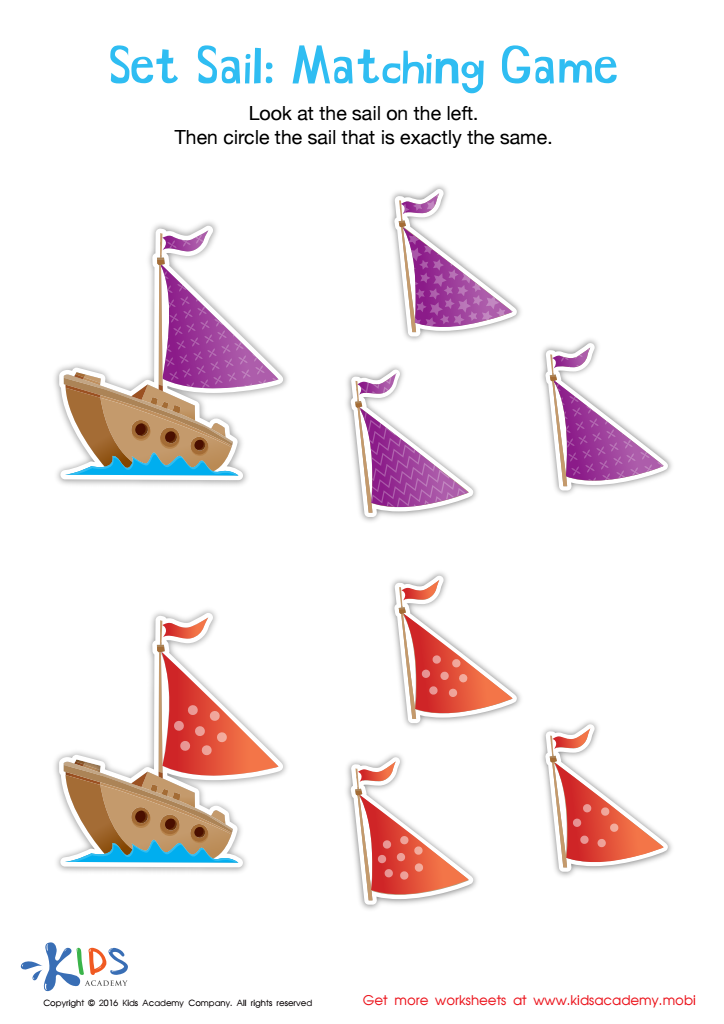
Set Sail Worksheet
 Assign to My Students
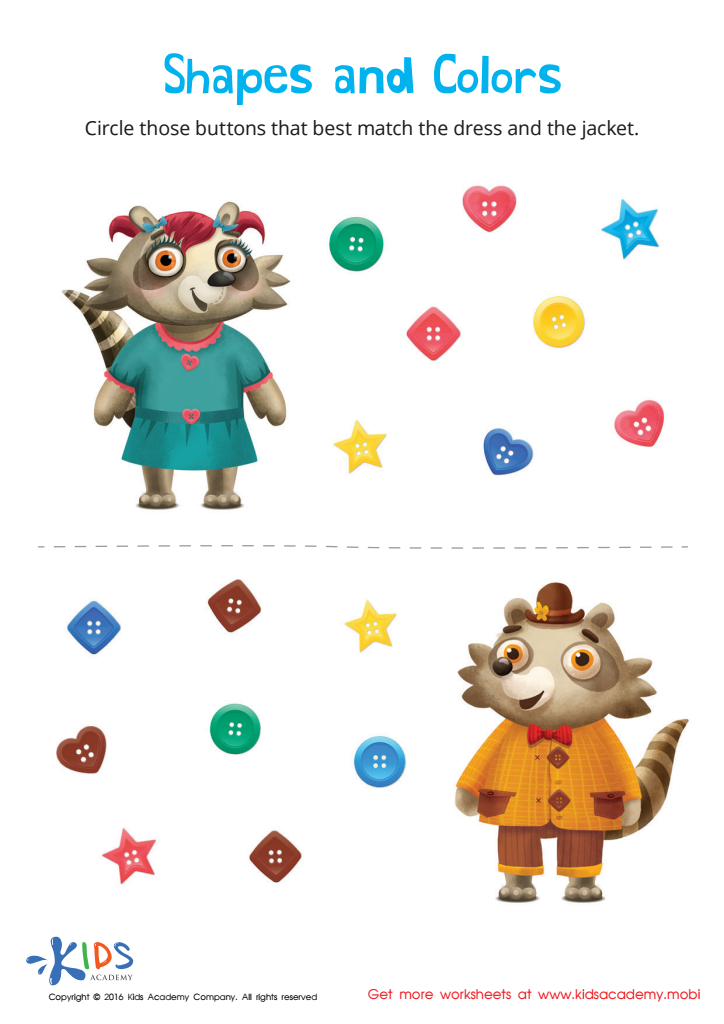
Matching: Shapes and Colors Worksheet








Color identification and matching is a vital skill for children aged 5-6, marking an important developmental milestone in their early education. Firstly, mastering colors helps enhance children's language skills, as they learn to articulate color names and descriptions. This foundational vocabulary enriches their ability to express themselves and interact with peers and adults.
Additionally, recognizing and matching colors promotes cognitive development. It engages children's visual perception and encourages them to categorize and differentiate objects, fostering critical thinking skills. This foundational logic supports future learning in subjects such as math and science, where categorization is essential.
Moreover, color activities ignite creativity and imagination. Engaging children with arts and crafts, for example, supports fine motor skills while allowing them to explore their creative potentials. This creative play not only works as a stress-reliever but also encourages self-expression.
Parents and teachers play a crucial role in facilitating these learning experiences. By incorporating color activities into daily routines or classroom curricula, they can enhance children's engagement and enthusiasm for learning. Ultimately, investing time in color identification and matching prepares children for more complex educational tasks and promotes their overall development, laying a solid groundwork for their future academic journey.








