
Understanding measurements Measurement Worksheets for Ages 5-6
9 filtered results
Difficulty Level
Grade
Age
-
From - To
Subject
Activity
Standards
Discover the world of measurements with our engaging worksheets designed for ages 5-6. At Kids Academy, our "Understanding Measurements" collection helps young learners grasp essential concepts such as length, height, weight, and volume. Through interactive exercises and colorful activities, children will enjoy exploring everyday objects, comparing sizes, and practicing basic measuring skills. Each worksheet is crafted to enhance critical thinking, develop problem-solving abilities, and build a strong foundation in mathematics. Perfect for both classroom and at-home learning, these worksheets make mastering measurements fun and easy. Start your child's educational journey today with Kids Academy!
Favorites
With answer key
Interactive
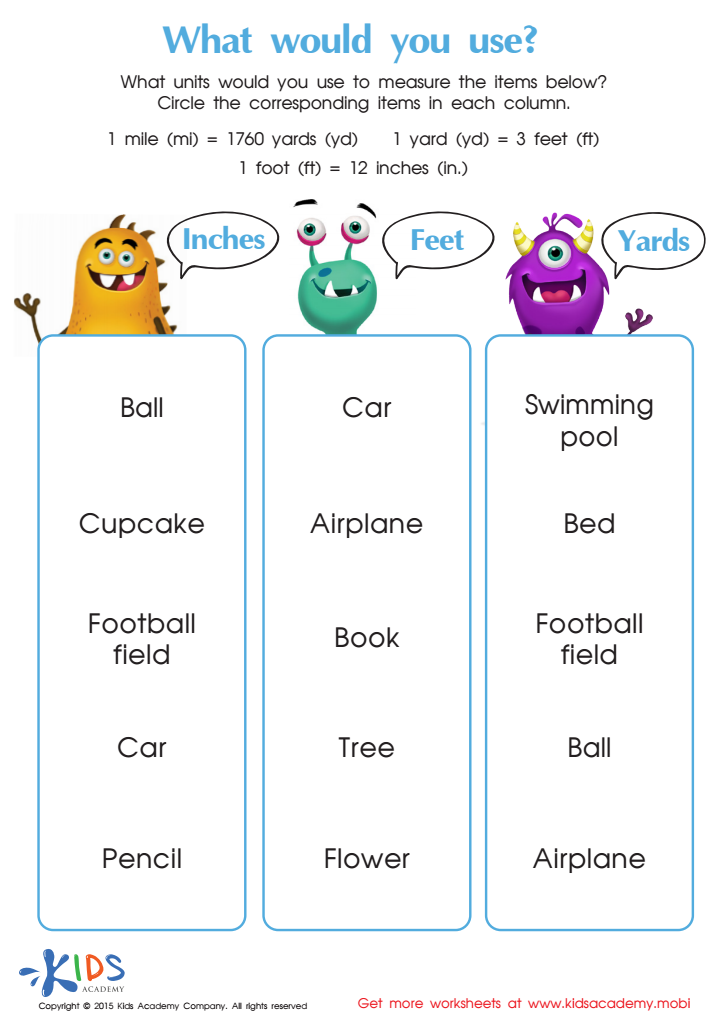
Learning about measuring objects in inches, feet and yards Worksheet
Download, cut and let your preschoolers learn and have fun estimating objects like pencils, airplanes and swimming pools in inches, feet and yards!
 Assign to My Students
Learning about measuring objects in inches, feet and yards Worksheet
Worksheet
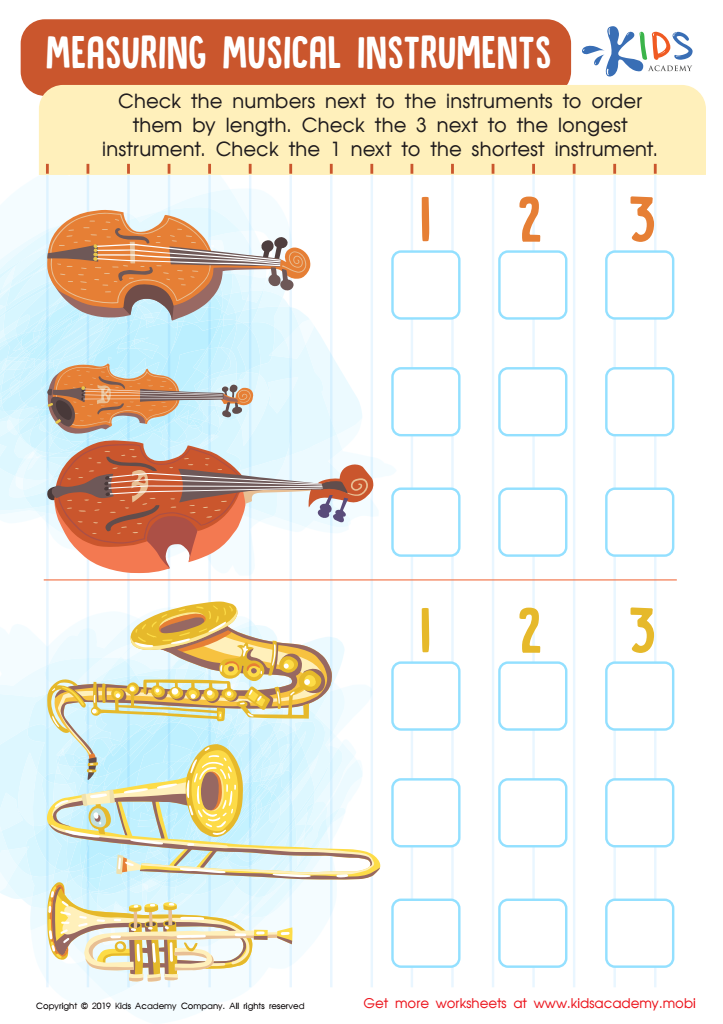
Measuring Musical Instruments Worksheet
Learning measurements can be tricky, but this worksheet makes it easy. Ask your child to identify the instruments in the pictures. Then, order them by length using the numbers. 3 is the longest, 1 is the shortest. Simple exercises like this will help them understand the different metric systems.
Measuring Musical Instruments Worksheet
Worksheet
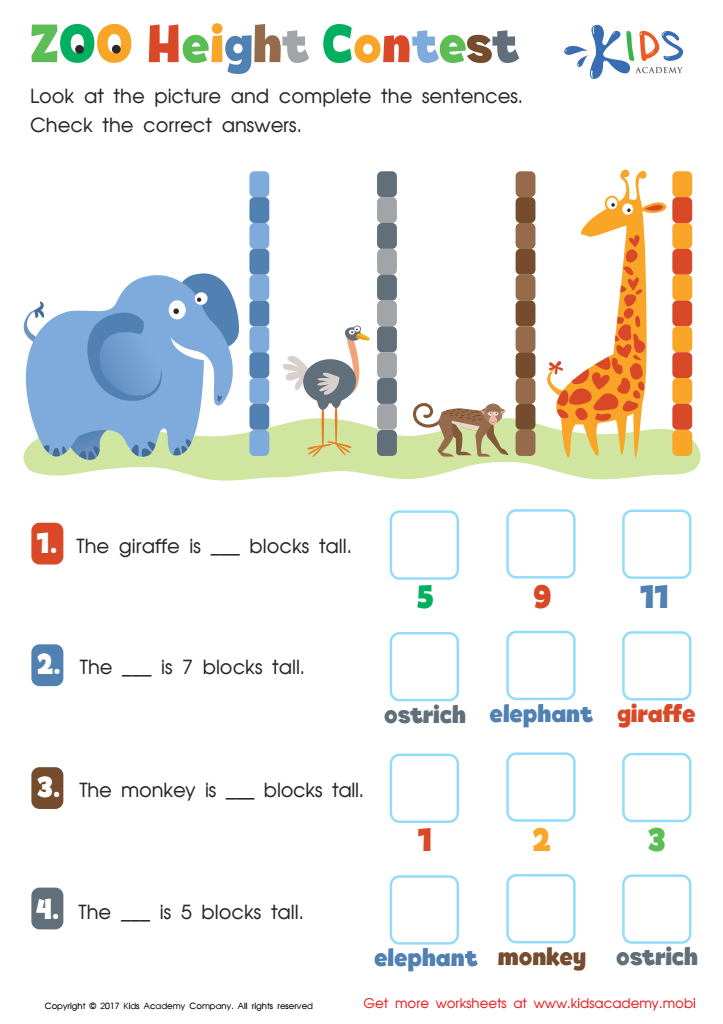
Zoo Height Contest Worksheet
Let's head to the zoo and use colorful blocks to measure your child's favorite animals! With this Kids Academy worksheet, help them practice and prepare for learning measurement. Guide them in looking at the zoo animals and counting blocks to find the height. Then, read the questions and check the box next to the correct answer.
Zoo Height Contest Worksheet
Worksheet
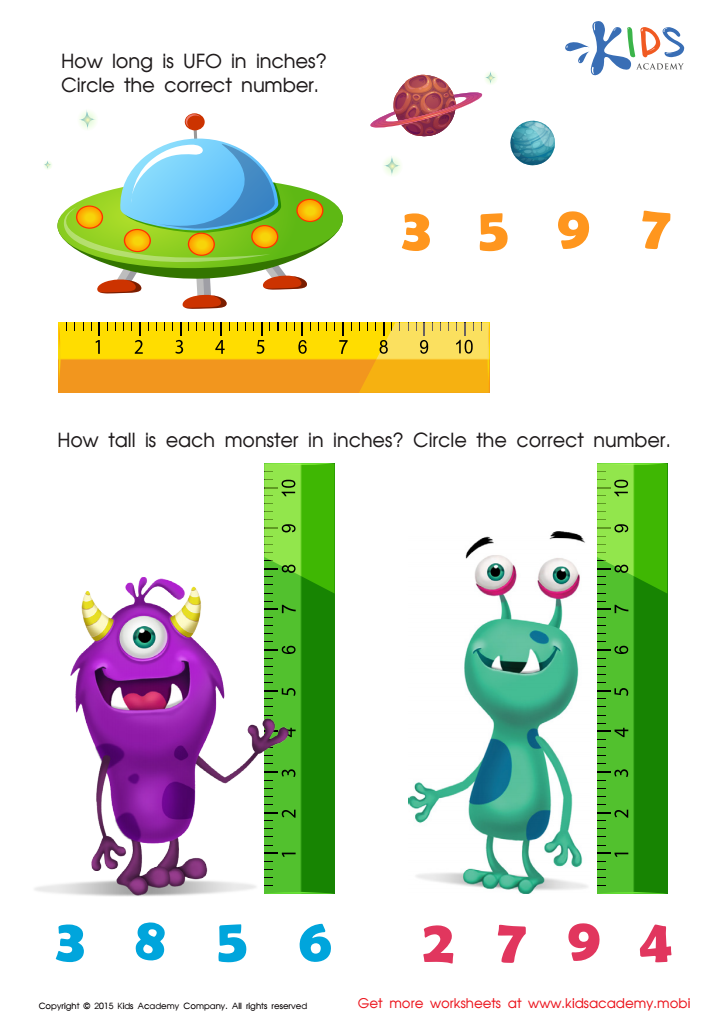
Measuring in Inches Worksheet
Look at the picture, can you measure the UFO & monsters? Write down how long each is. Which is tallest? Circle it. Get more free printable math worksheets for kindergarten at our website.
Measuring in Inches Worksheet
Worksheet
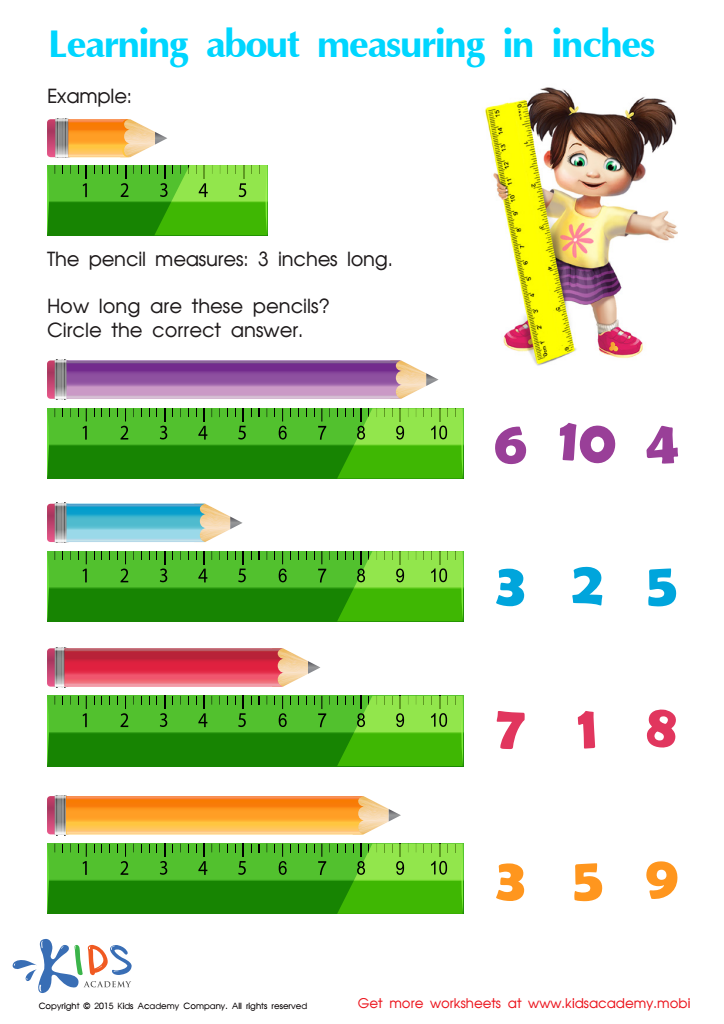
Learning About Measuring In Inches Printable
Print this free worksheet and measure pencils together with kids. See who finds the longest and the shortest! Enjoy learning math with your kids.
Learning About Measuring In Inches Printable
Worksheet
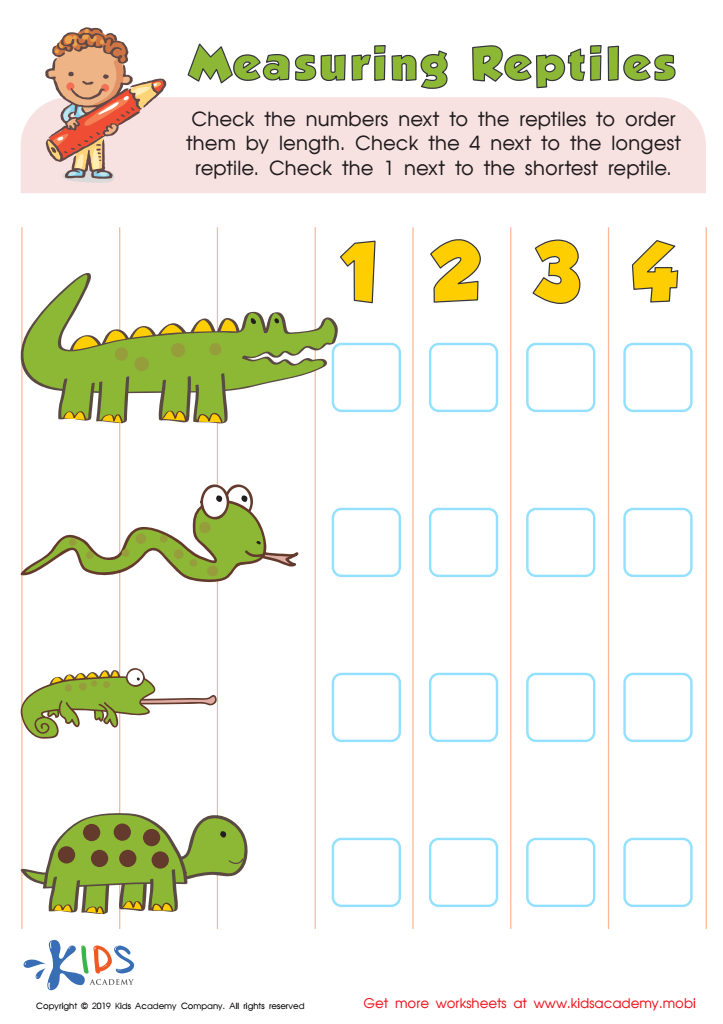
Measuring Reptiles Worksheet
Do your kids know what reptiles are? Ask them to name some and name features. In this activity, your kindergartners will measure with reptiles. Show them the picture and get them to order by length, starting with the one with 4 by the longest reptile, then the one with 1 by the shortest.
Measuring Reptiles Worksheet
Worksheet
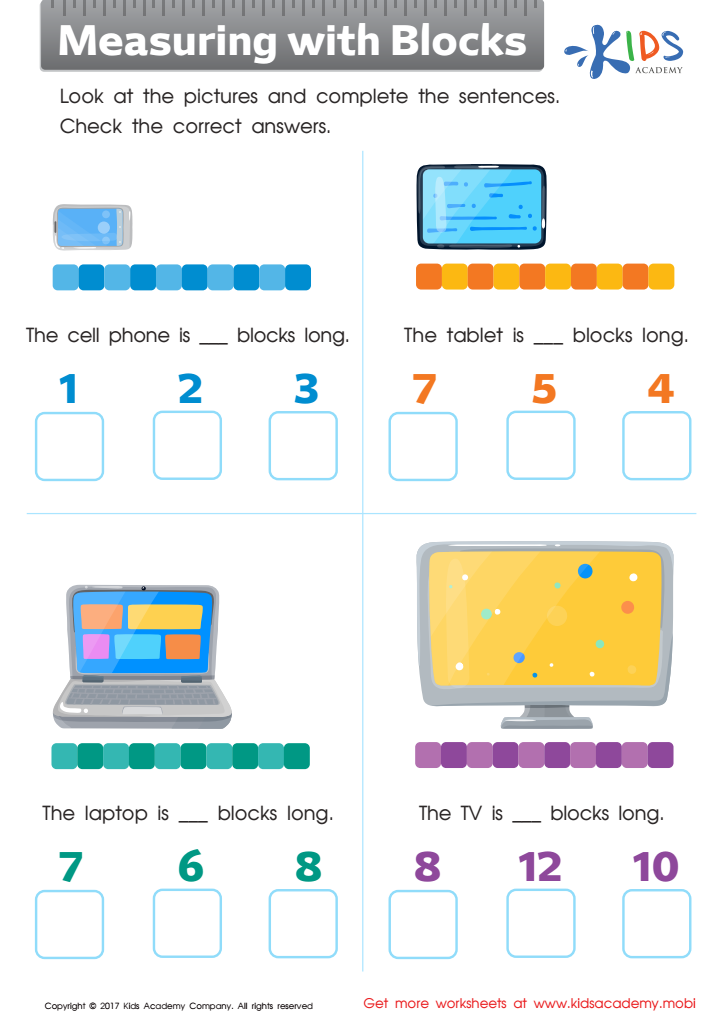
Measuring with Blocks Worksheet
Help your child get ready for math success with this Kids Academy worksheet. It provides colorful blocks to practice measuring objects. Coach them to count the boxes under each picture, then check the box with the right answer. It's a fun way to get acquainted with rulers!
Measuring with Blocks Worksheet
Worksheet
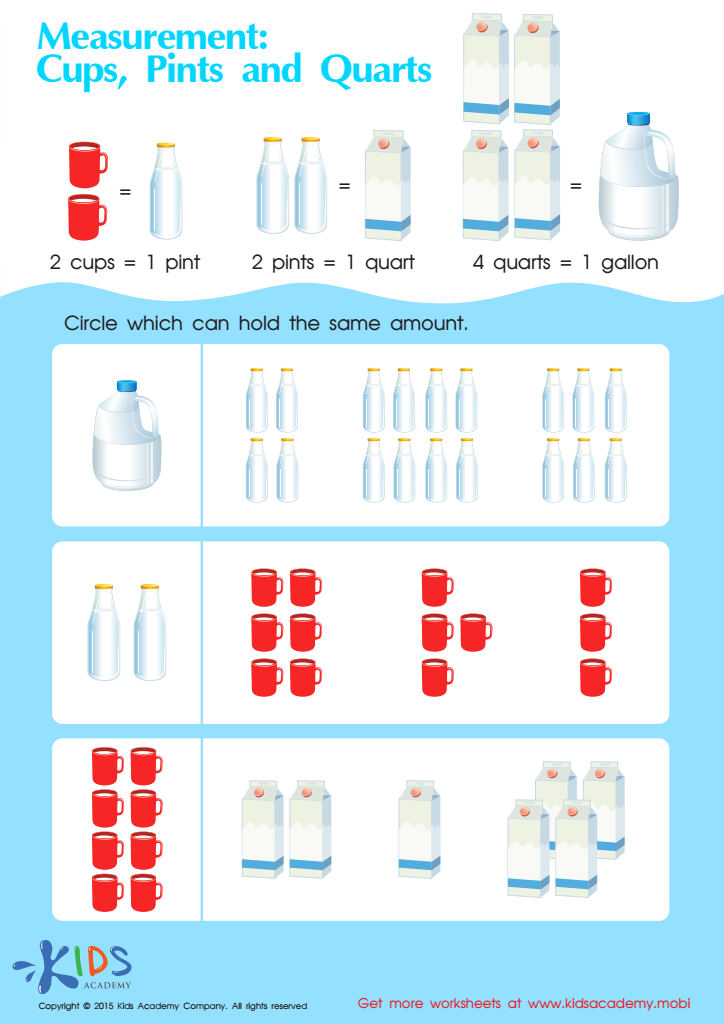
Cups, Pints and Quarts 2 Worksheet
Practice measuring liquids with our free math worksheets. Learn how many cups are in a quart and how many quarts are in a gallon. Accurately calculate the answers and write them in the provided spaces. Visit Kids Academy for a collection of free worksheets and make math fun!
Cups, Pints and Quarts 2 Worksheet
Worksheet
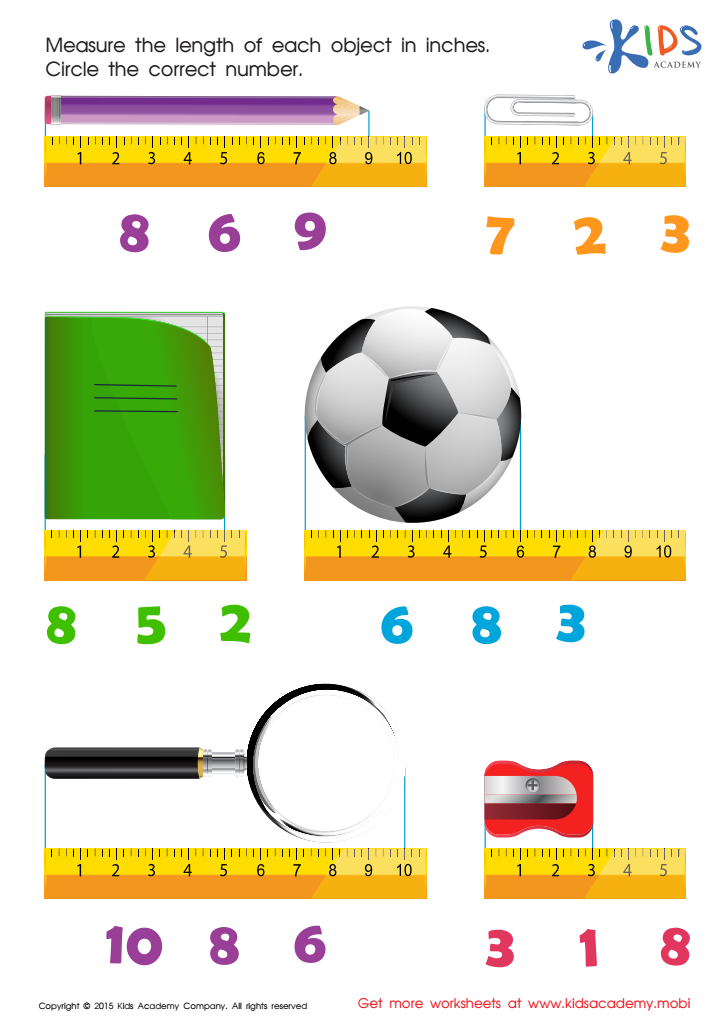
Learning measuring objects in inches Worksheet
Help your little learners gain confidence in using a ruler! Print out our free worksheet, cut out the inch ruler, and let them measure and record objects' width and length. Kids Academy has a variety of math worksheets to make learning math fun! Check out our website for more free printables!
Learning measuring objects in inches Worksheet
Worksheet
Join Kids Academy for Free
Who is primarily going to use this learning content?








Understanding measurements at an early age is critical because it lays the foundation for a child's future success in math and science, enhancing their problem-solving and analytical skills. For children aged 5-6, learning about measurements helps them grasp basic concepts of quantity, size, and comparison, which are essential for everyday life and academic advancement.
Measurements also foster cognitive development by encouraging children to observe, estimate, and differentiate between various objects and quantities. This practice promotes spatial awareness and fine motor skills, as children manipulate objects to understand measurements practically. For instance, when they measure the length of a pencil or compare the volume of water in different containers, they engage in hands-on learning that makes abstract concepts tangible and relatable.
Moreover, early exposure to measurements can boost children's STEM (Science, Technology, Engineering, and Mathematics) enthusiasm, equipping them with the curiosity and confidence to explore, experiment, and innovate. By integrating measurement activities—such as cooking, building projects, or nature walks—parents and teachers can make the learning process enjoyable and meaningful, reinforcing positive attitudes towards learning and collaboration.
In essence, focusing on measurements at an early age nurtures a child's intellectual growth and prepares them for more complex topics in later education, making it a vital aspect of early childhood development.








