Understanding opposites Measurement Worksheets for Ages 5-6
3 filtered results
-
From - To
Discover our "Understanding Opposites Measurement Worksheets" designed specifically for children aged 5-6! These engaging worksheets help young learners grasp the concept of opposites while exploring various measurement skills. From big and small to heavy and light, each activity fosters critical thinking and reinforces vocabulary through fun exercises. With colorful illustrations and easy-to-follow instructions, these worksheets make learning enjoyable and effective. Perfect for teachers and parents, our resources aid in the development of foundational math skills essential for early learners. Download your worksheets today and watch your child flourish in their understanding of opposites!
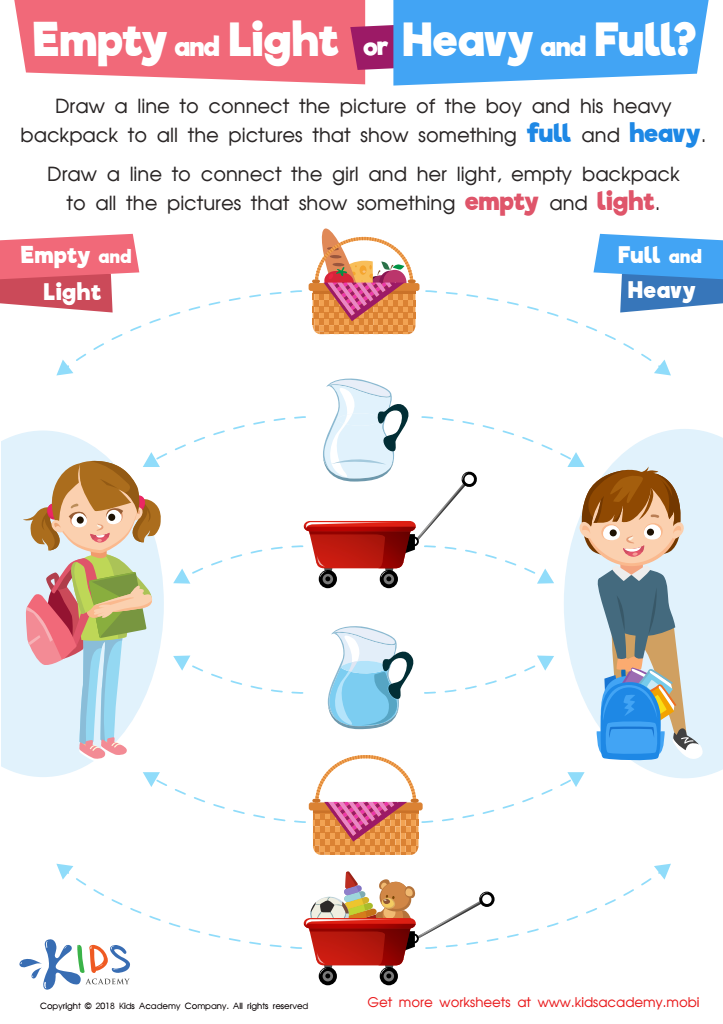
Empty and Light or Heavy and Full? Worksheet
 Assign to My Students
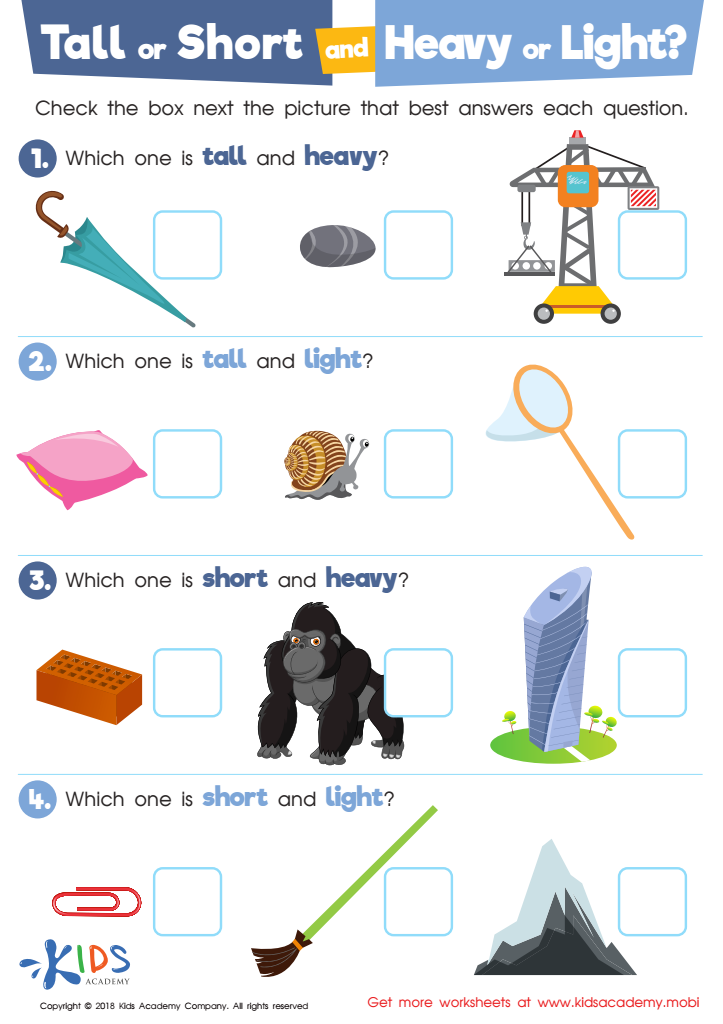
Tall or Short and Heavy or Light? Worksheet
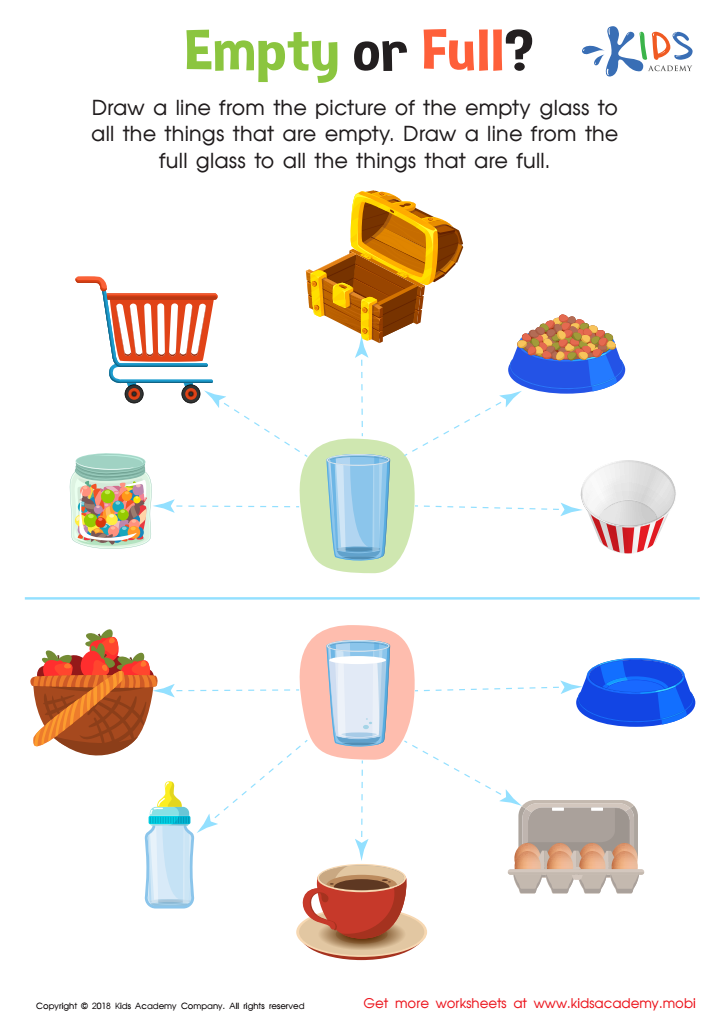
Empty or Full? Worksheet








Understanding opposites and measurement is crucial for children aged 5-6 as it lays the foundation for critical thinking, problem-solving, and language development. At this age, children are naturally curious and eager to explore comparisons, which makes it an ideal time to introduce these concepts. Teaching opposites, such as big/small, hot/cold, and fast/slow, helps children develop their vocabulary and enhances their abstract thinking skills. Recognizing opposites also aids in understanding relationships and contrasts in their environment.
Measurement adds another layer of cognitive development. It introduces children to concepts of size, quantity, and dimension, fostering their logical reasoning. Engaging children in hands-on activities like measuring ingredients for a recipe or comparing classroom items helps them grasp these concepts practically, making learning more meaningful.
Moreover, skills in measurement and understanding opposites set the stage for future Math and Science learning. These early experiences pave the way for more complex mathematical concepts in later grades, ensuring a smoother transition to academic challenges. Parents and teachers should care about these concepts because they are essential for a child’s holistic development, encouraging creativity, effective communication, and a love for learning that can last a lifetime.








