Basic counting skills Numbers 0–10 Worksheets for Ages 5-6
5 filtered results
Difficulty Level
Grade
Age
-
From - To
Subject
Activity
Standards
Explore our engaging "Basic Counting Skills: Numbers 0–10 Worksheets" designed specifically for children ages 5-6! These worksheets are perfect for fostering early numeracy and helping kids grasp fundamental counting concepts. With vibrant illustrations and interactive activities, young learners can practice counting, number recognition, and simple arithmetic in a fun, stress-free environment. Each worksheet guides children through enjoyable exercises, reinforcing their understanding of numbers from 0 to 10. Ideal for both classroom and home learning, these resources support skill development while making learning a joyful experience. Download now and watch your child's confidence in math grow as they master basic counting skills!
Favorites
With answer key
Interactive
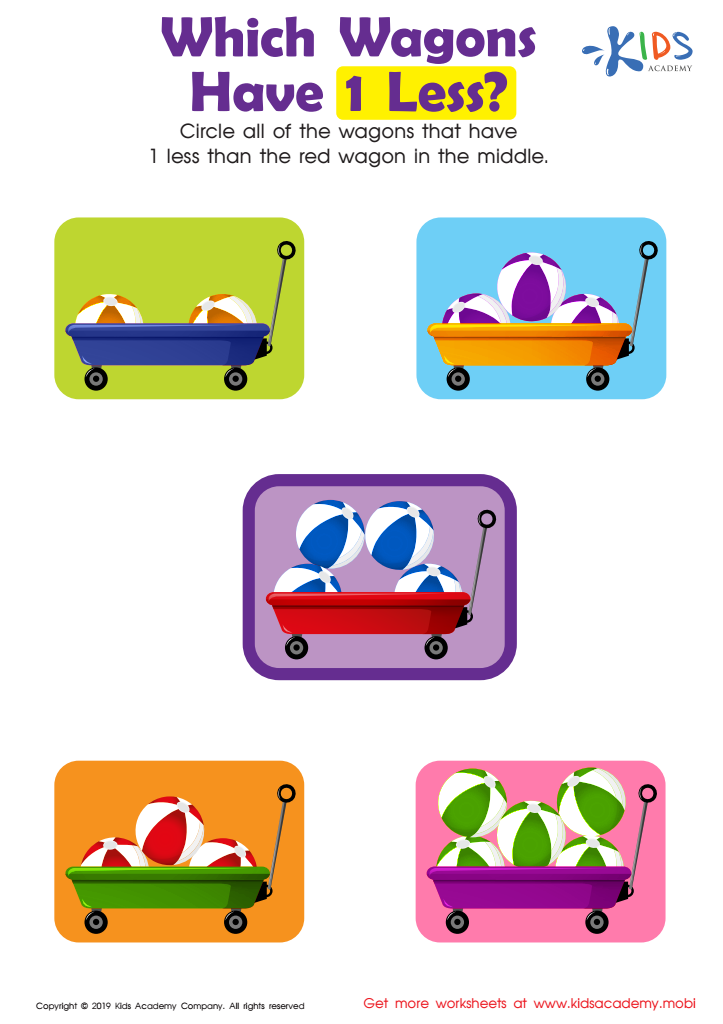
Which Wagons Have 1 Less? Worksheet
Test your kid's counting skills with a simple exercise. Ask them to count the balls in the five wagons shown and to circle the wagons with one less than the red wagon in the middle. This will give their brains a simple task that tests their knowledge of numbers.
 Assign to My Students
Which Wagons Have 1 Less? Worksheet
Worksheet
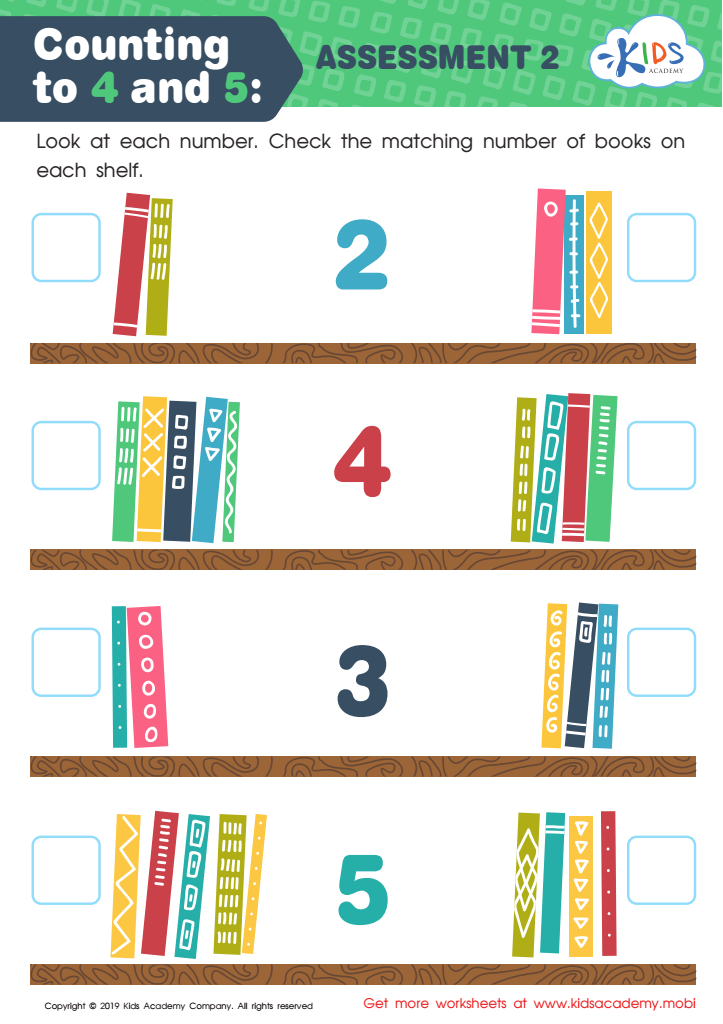
Counting to 4 and 5: Assessment 2 Worksheet
Counting is a key skill for math success. Help your kids get off to a good start by counting the books on each shelf in the pictured printout. Point to each set of books, counting aloud, and then look for the matching number in the centre. With this simple worksheet, your kids can get the practice they need before taking on more advanced math skills.
Counting to 4 and 5: Assessment 2 Worksheet
Worksheet
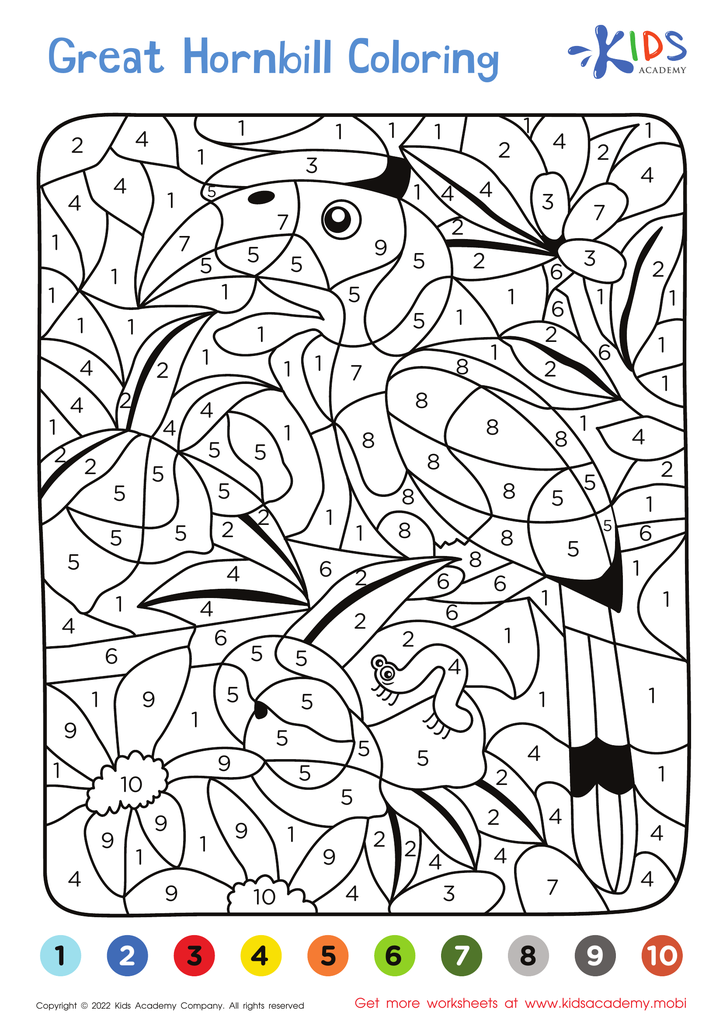
Great Hornbill – Coloring by Numbers
Download our free PDF page, featuring a hornbill for you to color in! Numbers are provided so you can follow along, making the picture come to life. Fun for all ages!
Download our free PDF page and have fun coloring a hornbill according to the numbers! You'll bring the picture to life with every stroke of your creativity. Perfect for all ages!
Great Hornbill – Coloring by Numbers
Worksheet
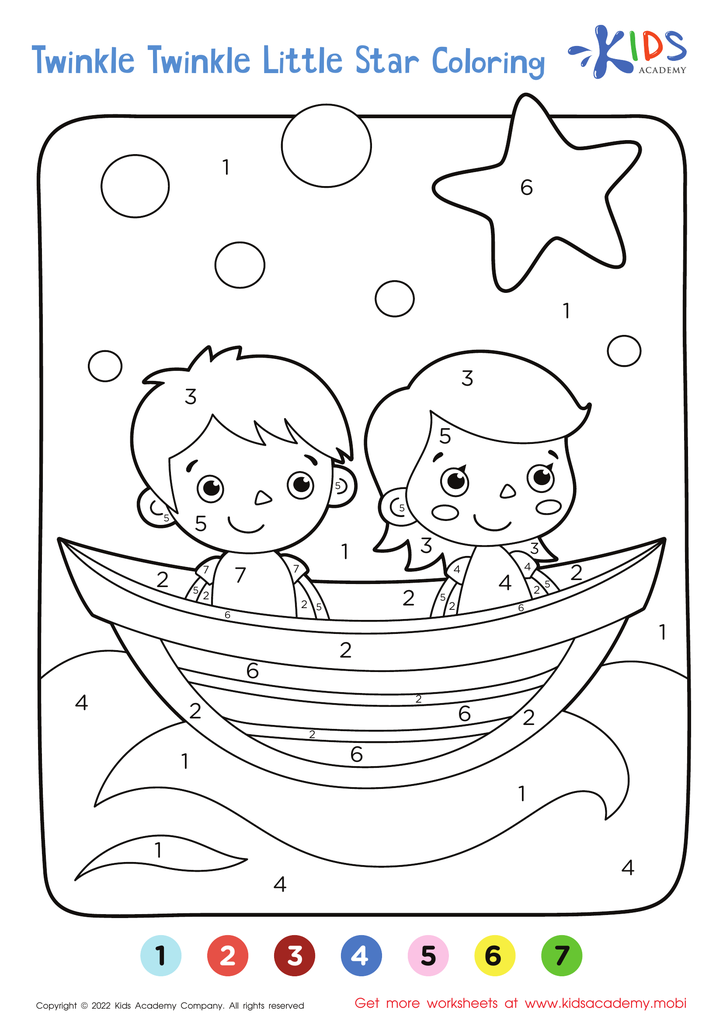
Twinkle, Twinkle, Little Star – Coloring by Numbers
Color a scene from Twinkle Twinkle Little Star with our free coloring page. Download the PDF and use the numbers to bring the nursery rhyme to life. Have fun! (80 words)
Twinkle, Twinkle, Little Star – Coloring by Numbers
Worksheet
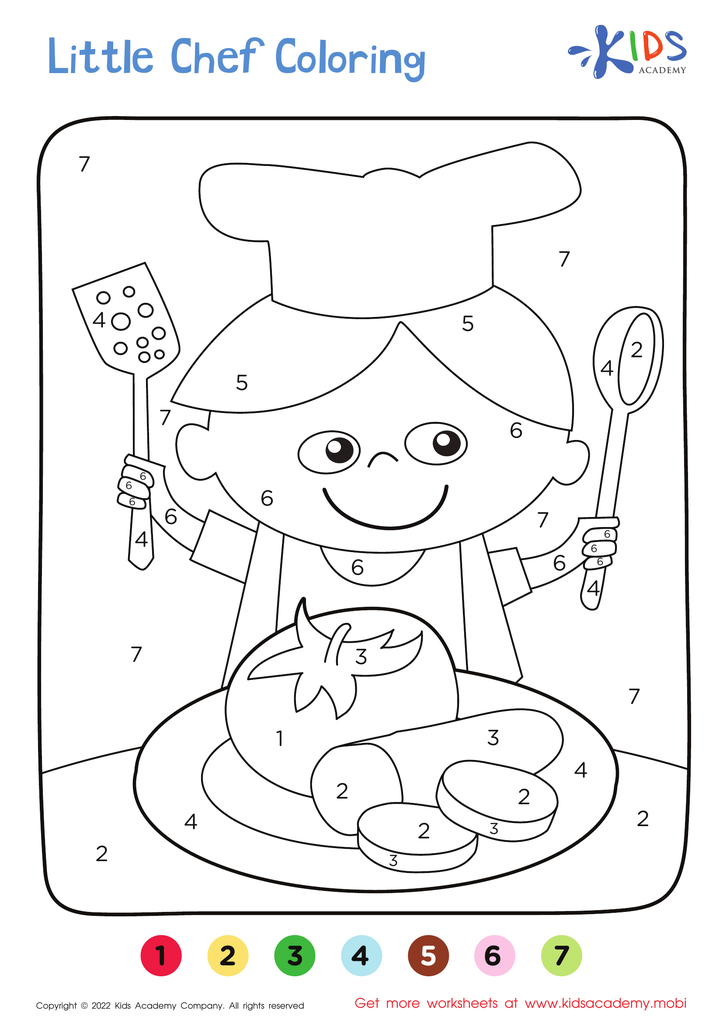
Little Chef – Coloring by Numbers
This PDF page lets you color in a cute little chef! Download it for free and explore your artistic side by using numbers to color in the picture. Let your creativity flow and have some fun!
Little Chef – Coloring by Numbers
Worksheet
Join Kids Academy for Free
Who is primarily going to use this learning content?








Basic counting skills, especially for numbers 0 to 10, are foundational for children aged 5-6. This critical phase of early childhood development serves as a bedrock for future mathematical understanding and overall cognitive growth. Mastering counting enhances children's ability to recognize numbers, which correlates with developing essential skills for later academic success.
For parents and teachers, fostering these skills cultivates a child’s confidence in their mathematical abilities. Competence in basic counting supports problem-solving later on, as children learn to associate quantities with symbols. Furthermore, counting practice can enhance fine motor skills through activities like tracing numbers or manipulating counting objects, fostering an integrated learning approach.
Parents and educators should also consider the social-emotional aspect of learning to count. Engaging in counting games promotes interaction, communication, and cooperative play among peers. It helps children develop language skills as they learn to articulate numbers and concepts of quantity. Overall, reinforcing basic counting skills not only builds a critical foundation for mathematical learning but supports holistic child development—socially, emotionally, and cognitively—ensuring children are well-prepared for future educational challenges.