Pattern recognition Patterns Worksheets for Ages 5-6
5 filtered results
-
From - To
Explore our engaging Pattern Recognition Worksheets designed specifically for children ages 5-6! These fun and colorful activities help young learners develop critical cognitive skills by identifying and creating patterns. Our worksheets encompass various types of patterns, including shapes, colors, and numbers, providing ample opportunities for kids to practice their observation skills. Ideal for classroom or home learning, these resources promote analytical thinking and enhance fine motor skills. With our pattern recognition worksheets, children will gain confidence in recognizing sequences, laying a strong foundation for future math concepts. Download now to inspire your child's learning journey through play and creativity!
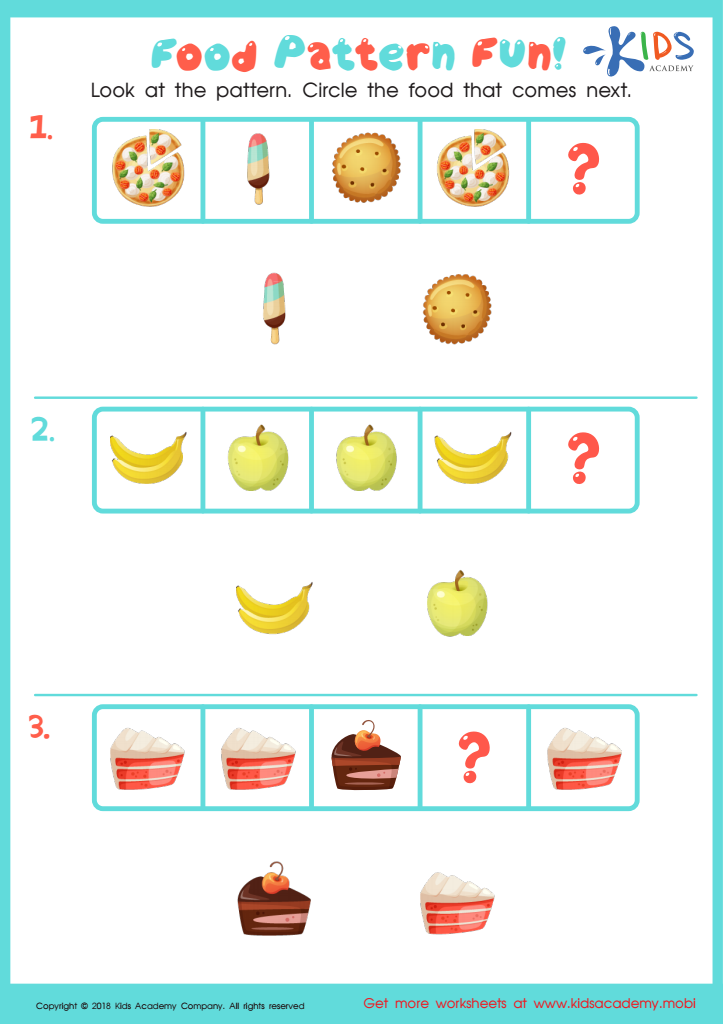
Food Pattern Fun Worksheet
 Assign to My Students
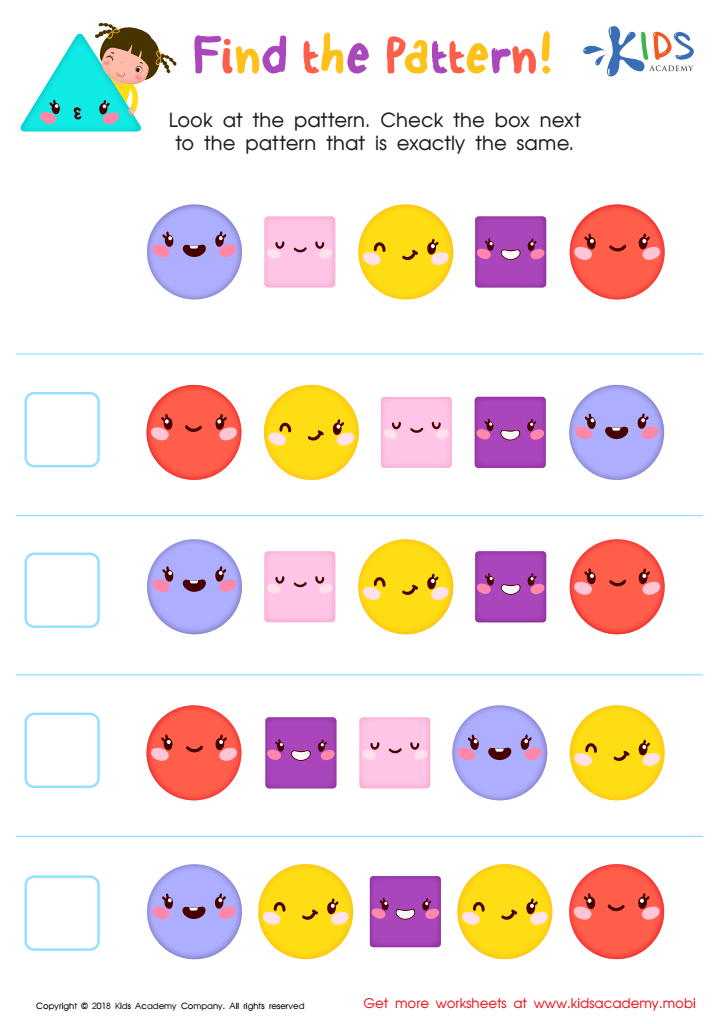
Find the Pattern Worksheet
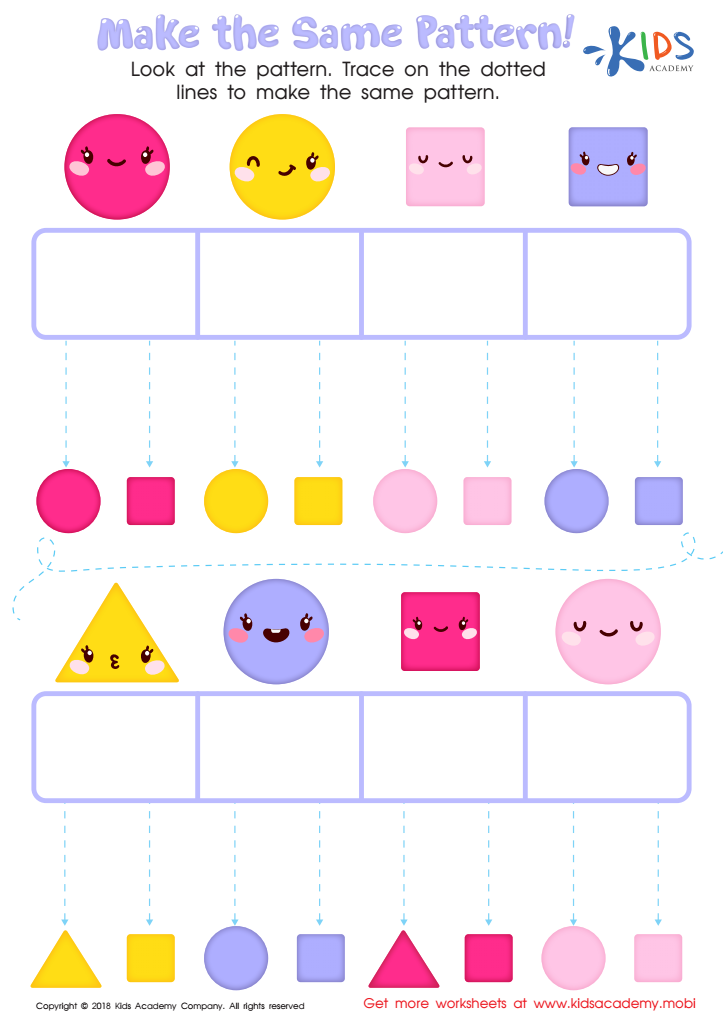
Make the Same Pattern Worksheet
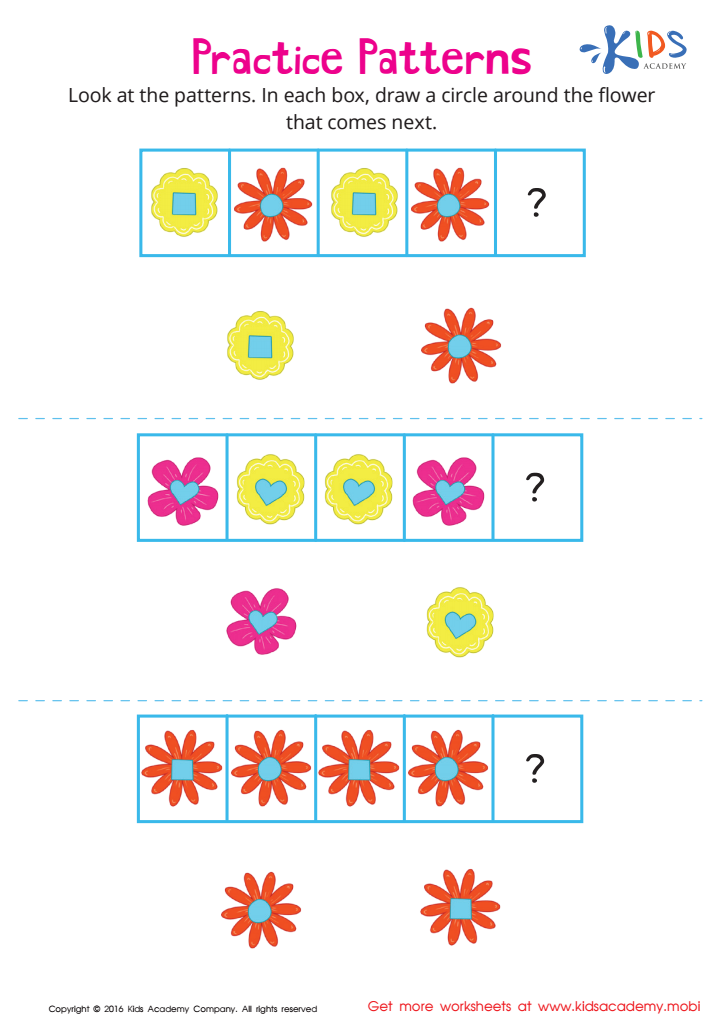
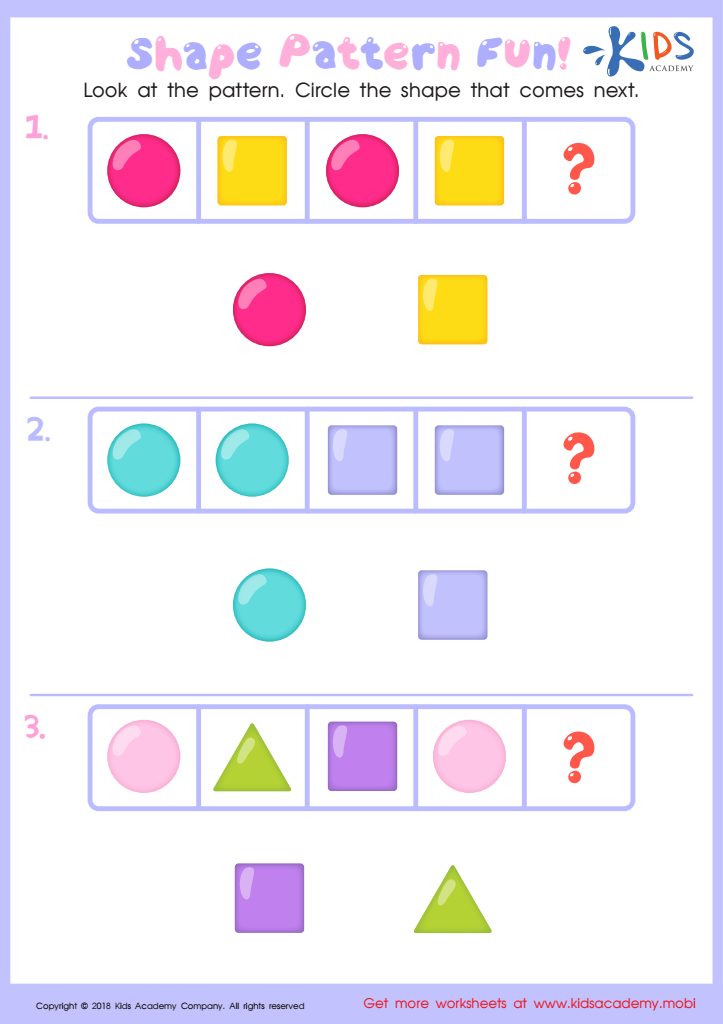
Shape Pattern Fun Worksheet








Pattern recognition is a foundational skill for young children, especially for those aged 5-6. At this critical developmental stage, children begin to make sense of the world around them, and understanding patterns is essential for various aspects of learning and cognitive development. Parents and teachers should care about fostering pattern recognition for several reasons.
Firstly, pattern recognition promotes critical thinking and problem-solving skills. By identifying and understanding patterns, children learn to anticipate what comes next, which enhances their logical reasoning abilities. This skill is also foundational for math, as recognizing numerical patterns lays the groundwork for algebraic thinking later on.
Secondly, engaging with patterns helps improve memory and attention. When children practice recognizing patterns in colors, shapes, or sounds, they strengthen their cognitive abilities, which can lead to better performance academically across subjects.
Lastly, pattern recognition encourages creativity and expression. As children explore patterns in nature, art, or music, they learn to experiment and create, fostering their imaginative skills.
For all these reasons, prioritizing activities that develop pattern recognition helps set the groundwork for lifelong learning, making it a valuable focus for parents and educators alike.








