Cognitive Development Word Problems Worksheets for Ages 5-6
4 filtered results
-
From - To
Unlock your child's cognitive potential with our engaging Cognitive Development Word Problems Worksheets designed for ages 5-6. These creative, age-appropriate worksheets challenge young minds to solve fun, real-life problems while enhancing critical thinking and problem-solving skills. Each worksheet is tailored to support early math concepts, encouraging kids to apply their knowledge in practical contexts. With colorful illustrations and relatable scenarios, our resources make learning enjoyable and effective. Ideal for classroom use or at-home practice, these worksheets foster a love for math while building foundational skills essential for future academic success. Start your child's journey toward confident problem-solving today!
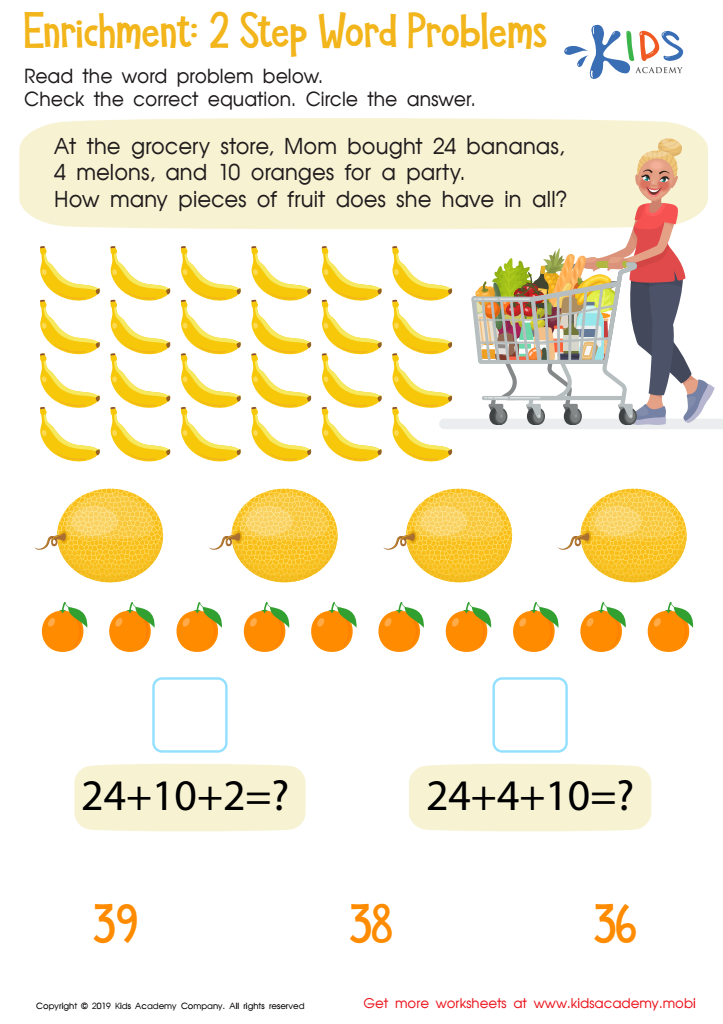
Enrichment -2 Step Word Problems Worksheet
 Assign to My Students
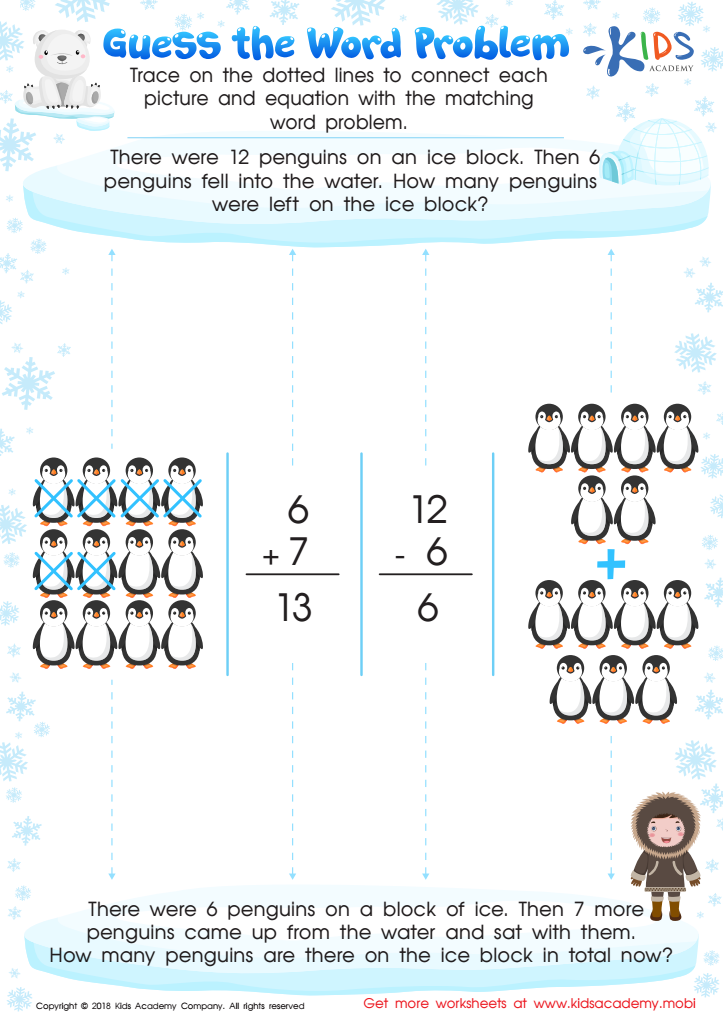
Guess the Word Problem Worksheet
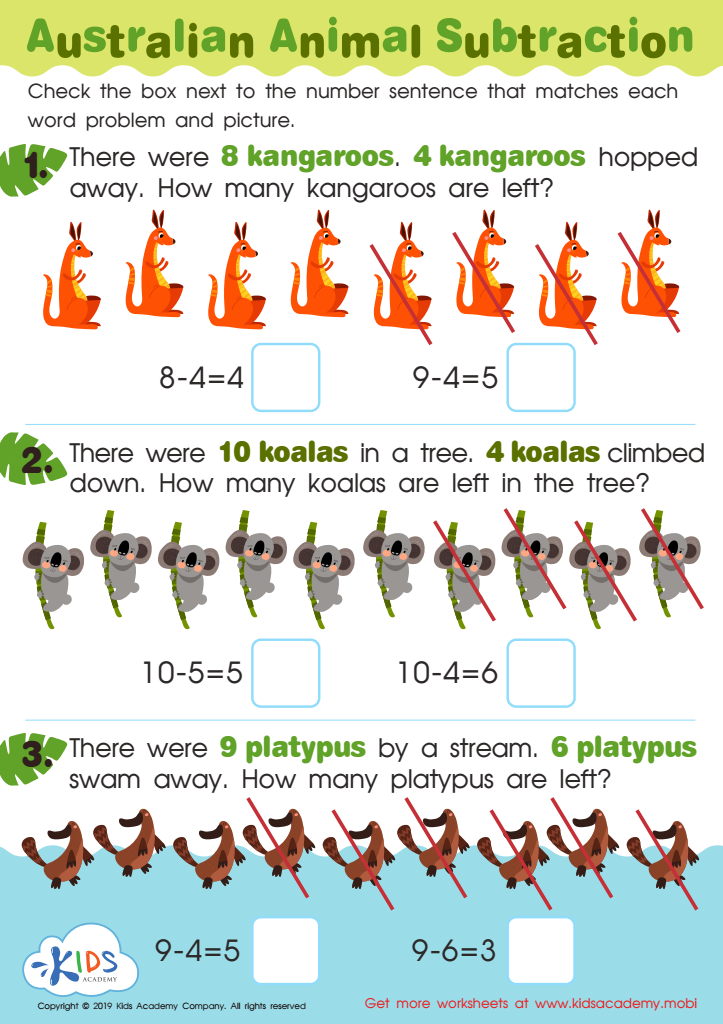
Australian Animal Subtraction Worksheet
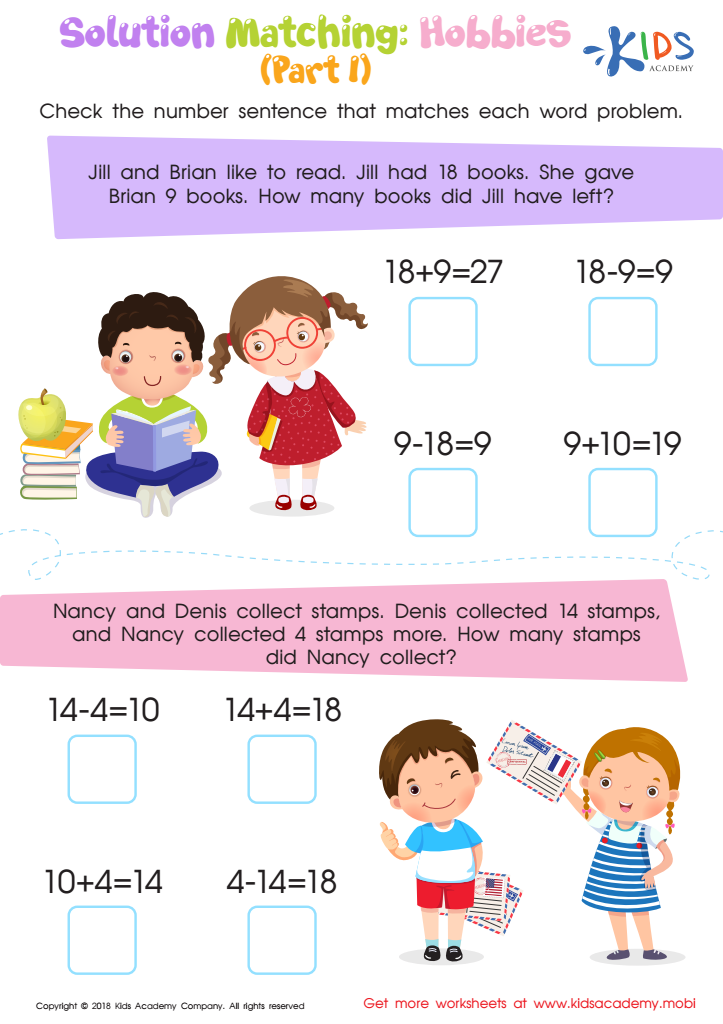
Solution Matching: Hobbies. Part 1 Worksheet








Cognitive development in early childhood, particularly through word problems, is crucial for foundational learning. For children aged 5-6, engaging with word problems helps nurture critical thinking and problem-solving skills essential for academic success. These skills are not only integral to mathematics but also form the basis for understanding more complex concepts later in life. By analyzing word problems, children learn to decipher language, comprehend scenarios, and apply mathematics in practical contexts, bridging the gap between abstract numbers and real-world applications.
Moreover, working on word problems fosters communication and language skills as children express their thought processes. This holistic approach to learning encourages parents and teachers to facilitate discussions that enhance understanding and reasoning. The ability to break down a problem narrative fosters a sense of autonomy and empowerment in young learners, boosting their confidence.
Encouraging engagement with word problems also aligns with developing executive functioning skills like attention, memory, and self-regulation. Parents and teachers play a pivotal role in creating supportive environments, utilizing rich, relatable examples that stimulate curiosity and engagement. Investing effort in cognitive development through word problems ultimately sets the groundwork for lifelong learning, critical thinking, and informed decision-making.








