Visual Learning Word Problems Worksheets for Ages 5-6
5 filtered results
-
From - To
Discover our engaging Visual Learning Word Problems Worksheets designed specifically for children aged 5-6! These worksheets provide young learners with an exciting way to enhance their math skills through vibrant visuals and relatable scenarios. By connecting math concepts to real-life situations, kids will develop critical thinking and problem-solving abilities while enjoying the learning process. Perfect for at-home or classroom use, our worksheets cater to various learning styles, making math fun and accessible. Equip your child with the confidence they need to tackle math word problems and boost their numerical understanding. Start exploring today for a brighter, math-savvy future!
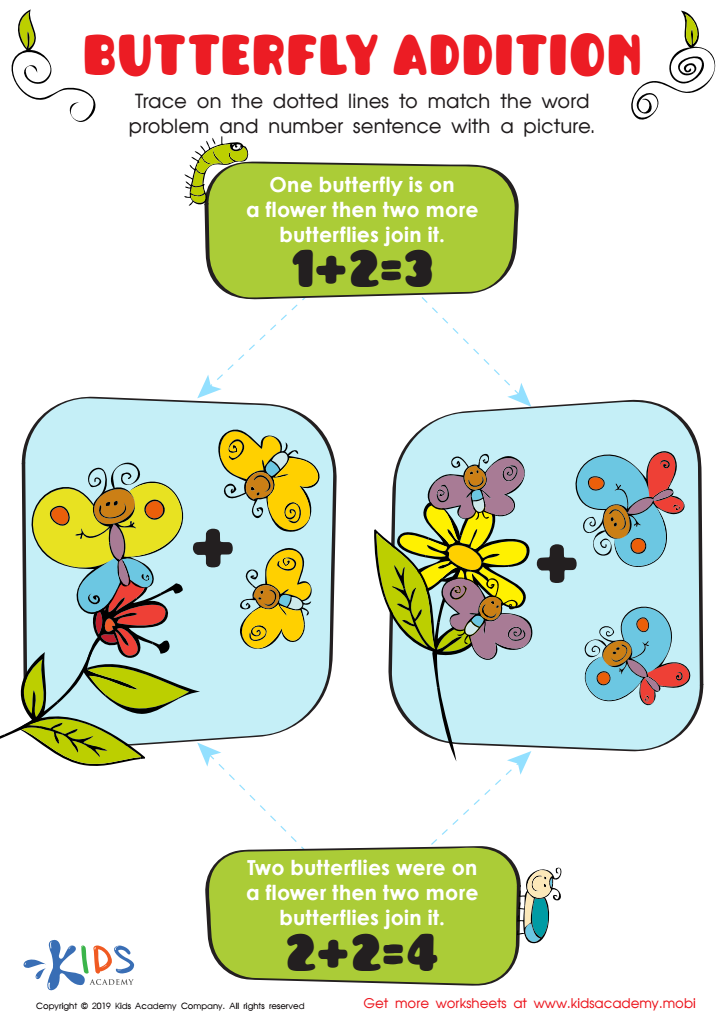
Butterfly Addition Worksheet
 Assign to My Students
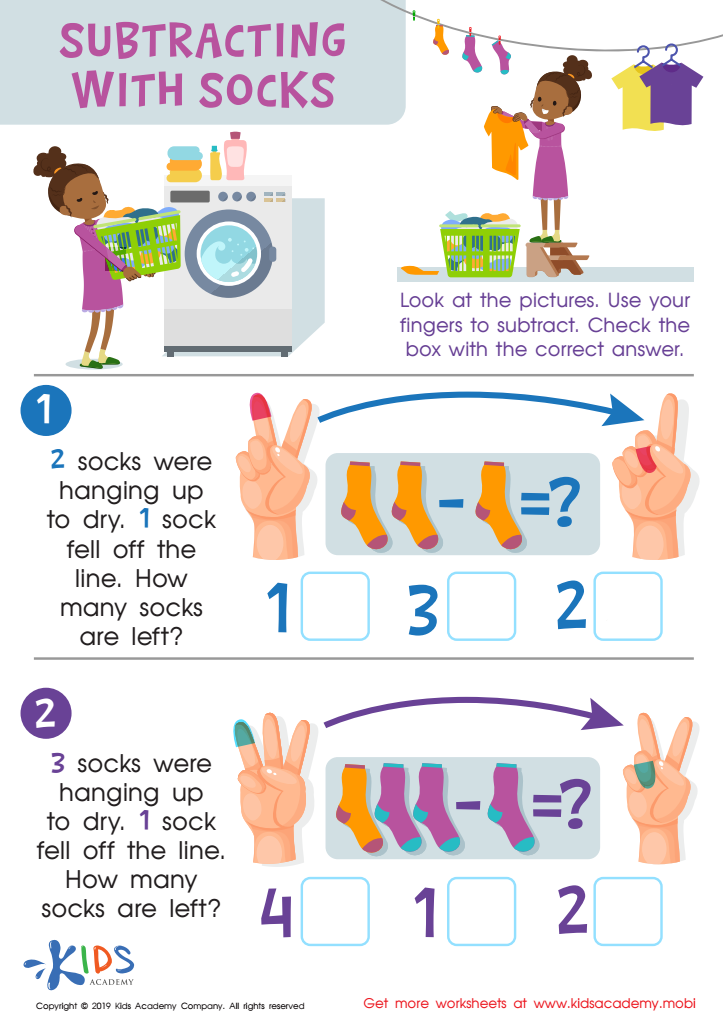
Subtracting Socks Worksheet
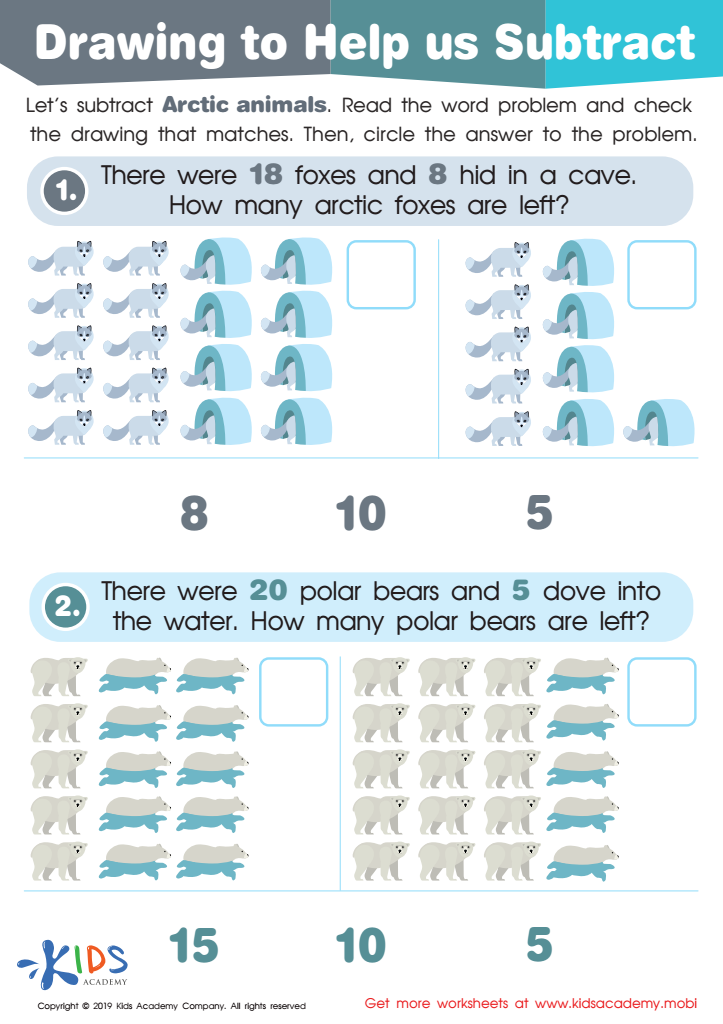
Drawing to Help Us Subtract Worksheet
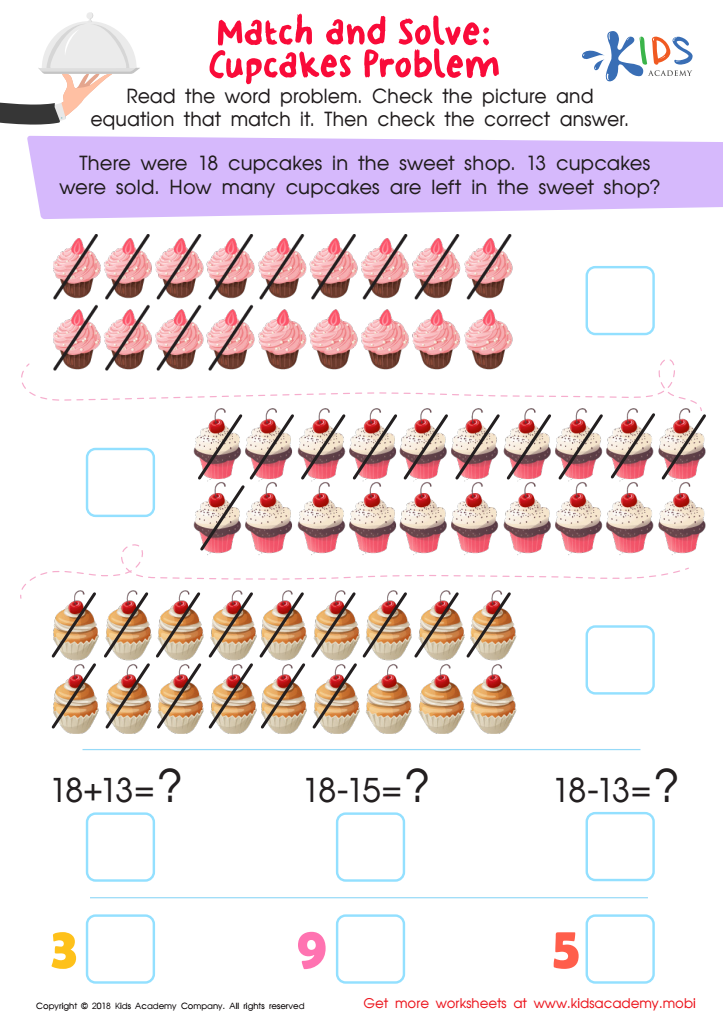
Match and Solve: Cupcakes Problem Worksheet
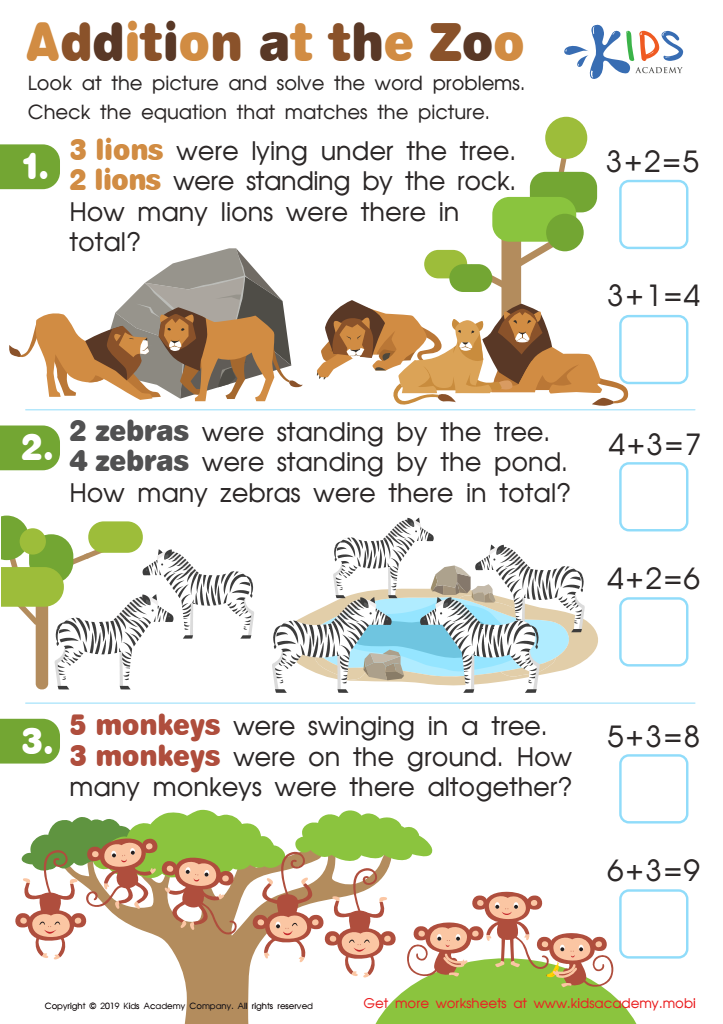
Addition at the Zoo Worksheet



.jpg)




Visual learning word problems are crucial for children aged 5-6 as they bridge the gap between abstract concepts and tangible understanding. At this formative stage, children are developing their cognitive and problem-solving skills, and integrating visual aids can reinforce these abilities. Visual learning helps engage young learners by turning word problems into relatable scenarios, allowing them to picture the problem context, which in turn nurtures their comprehension.
When parents and teachers prioritize visual learning in word problems, they enable children to:
-
Enhance Understanding: Visual aids break down complex information, making it easier for children to grasp fundamental math operations, patterns, or relationships.
-
Boost Engagement: Attractive visuals capture children’s attention, fostering motivation and willingness to tackle challenging concepts.
-
Encourage Critical Thinking: By visualizing problems, children learn to analyze situations and devise solutions systematically rather than purely through rote memorization.
-
Promote Communication Skills: Discussing visual representations helps children articulate their thought processes, encouraging dialogue between peers, teachers, and parents.
In summary, incorporating visual learning into word problems cultivates a strong foundational understanding of math concepts, ultimately equipping children with essential skills for future learning success.








