Basic Addition Building Vocabulary Worksheets for Ages 5-6
3 filtered results
-
From - To
Welcome to our "Basic Addition Building Vocabulary Worksheets for Ages 5-6"! These engaging worksheets are designed to help young learners develop essential math skills while enhancing their vocabulary related to addition concepts. Children will practice simple addition problems through fun activities that combine visual aids and educational games. Our worksheets promote critical thinking and reinforce number recognition, making learning enjoyable. Perfect for home or classroom use, they cater to different learning styles and paces. Boost your child's confidence in math and language skills today with our interactive resources that lay the groundwork for lifelong learning success!
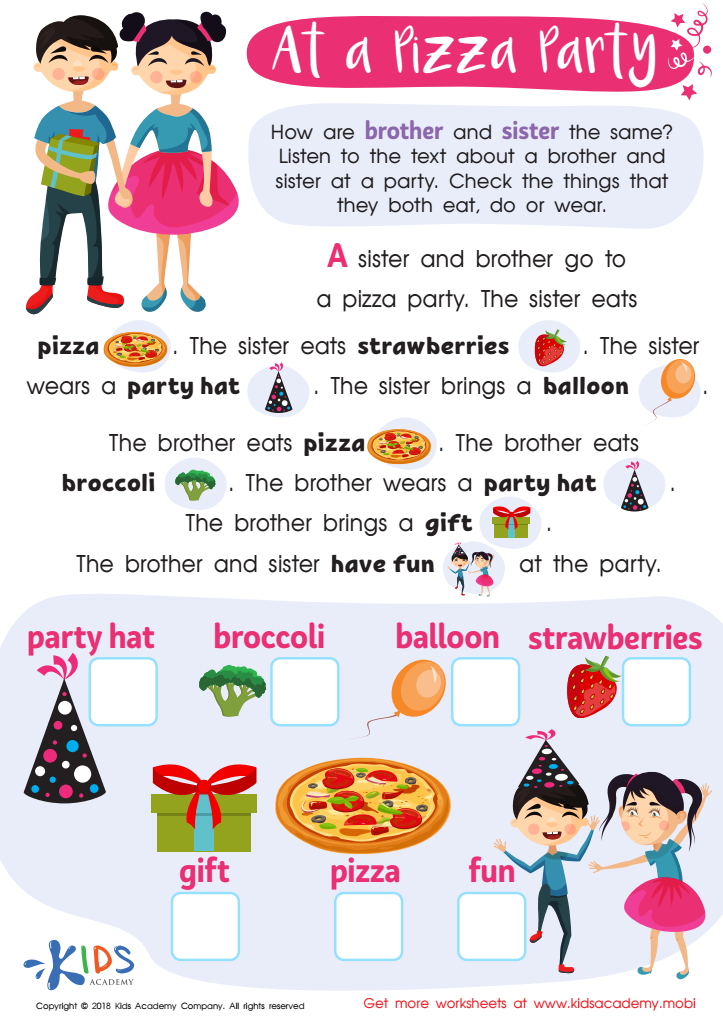
At a Pizza Party Worksheet
 Assign to My Students











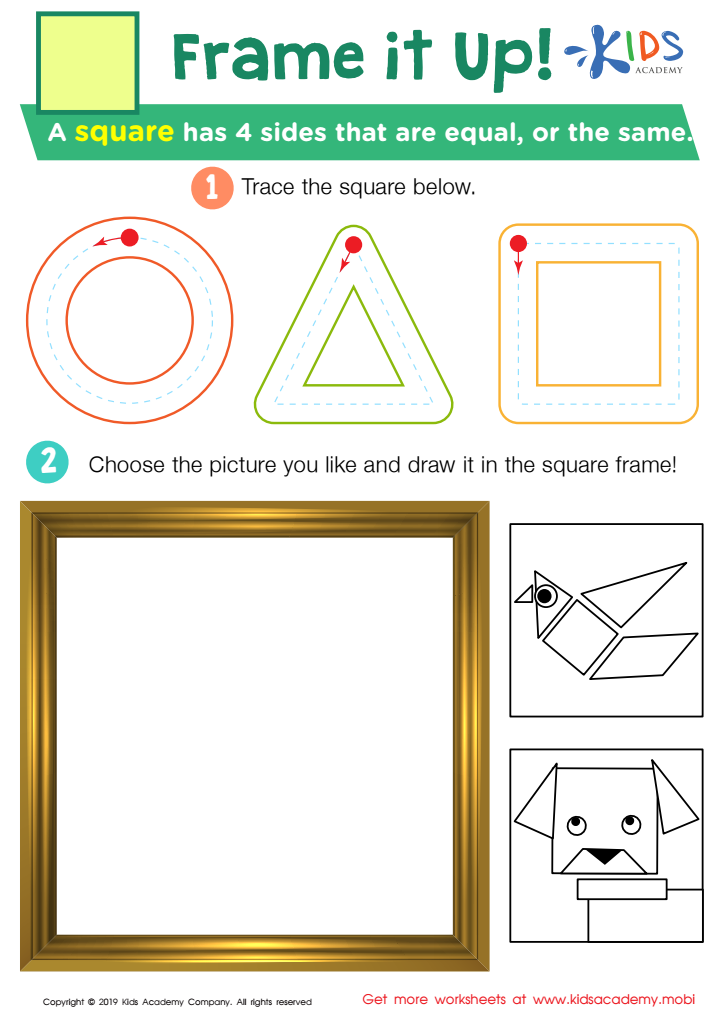
Frame it Up Worksheet
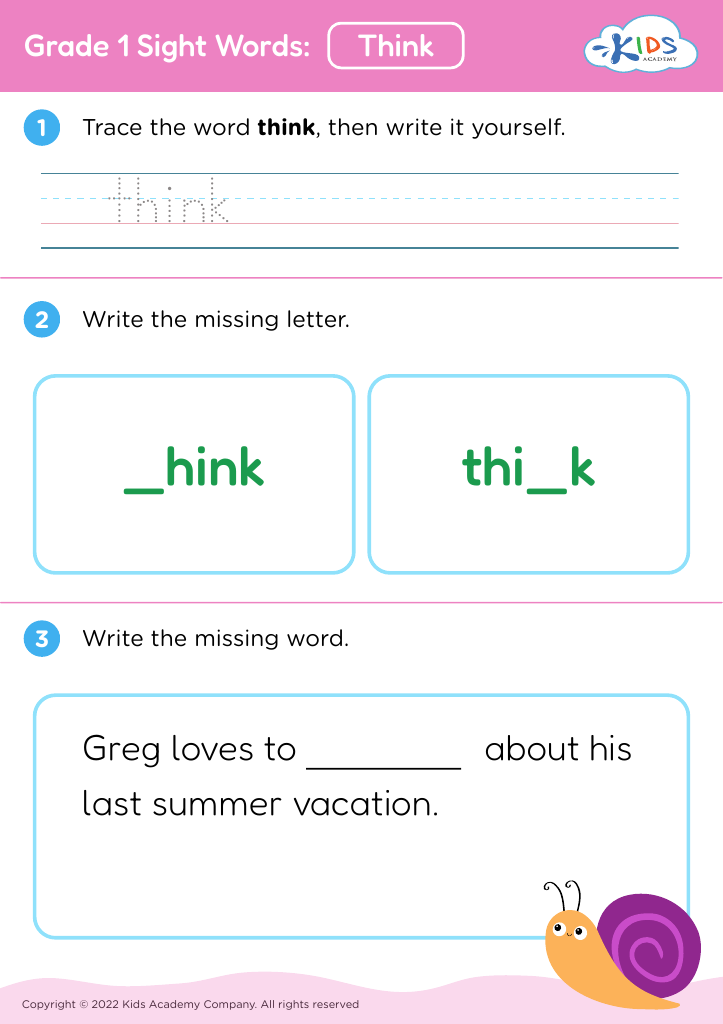



.jpg)




Parents and teachers should prioritize building basic addition vocabulary for children aged 5-6 because early math skills form the foundation for future learning. At this stage, children are not only learning numbers but also developing critical thinking and problem-solving abilities. Understanding basic addition vocabulary—words like "sum," "plus," "equals," and "total"—enables them to comprehend mathematical operations more clearly.
Establishing a robust vocabulary helps young learners communicate their thought processes, facilitating better understanding and retention. It creates a strong link between language and math, essential for their overall academic development. When children are familiar with these terms, they can engage more effectively in classroom discussions, use math confidently in everyday situations, and tackle more complex concepts as they progress.
Moreover, incorporating mathematical vocabulary into playtime and everyday conversations makes learning enjoyable. Parents and teachers can use fun activities or games to reinforce these concepts, fostering a positive attitude toward math. As children develop fluency in basic addition terms, they cultivate a growth mindset, embracing challenges rather than shying away from them. In essence, building a strong foundation in basic addition vocabulary prepares children for a successful academic journey and encourages lifelong learning.








