Contextual understanding Building Vocabulary Worksheets for Ages 5-6
6 filtered results
-
From - To
Explore our engaging "Contextual Understanding Building Vocabulary Worksheets" designed specifically for ages 5-6. These worksheets help young learners grasp the meaning of words through context, nurturing their reading and comprehension skills. With fun activities that include picture associations, sentence completion, and interactive exercises, children can easily connect words with their meanings in real-life situations. Ideal for parents and educators, our worksheets foster vocabulary development while enhancing critical thinking abilities. Equip your little ones with essential language skills—download our printable resources today and watch them thrive in their reading journey! Perfect for home or classroom learning experiences.
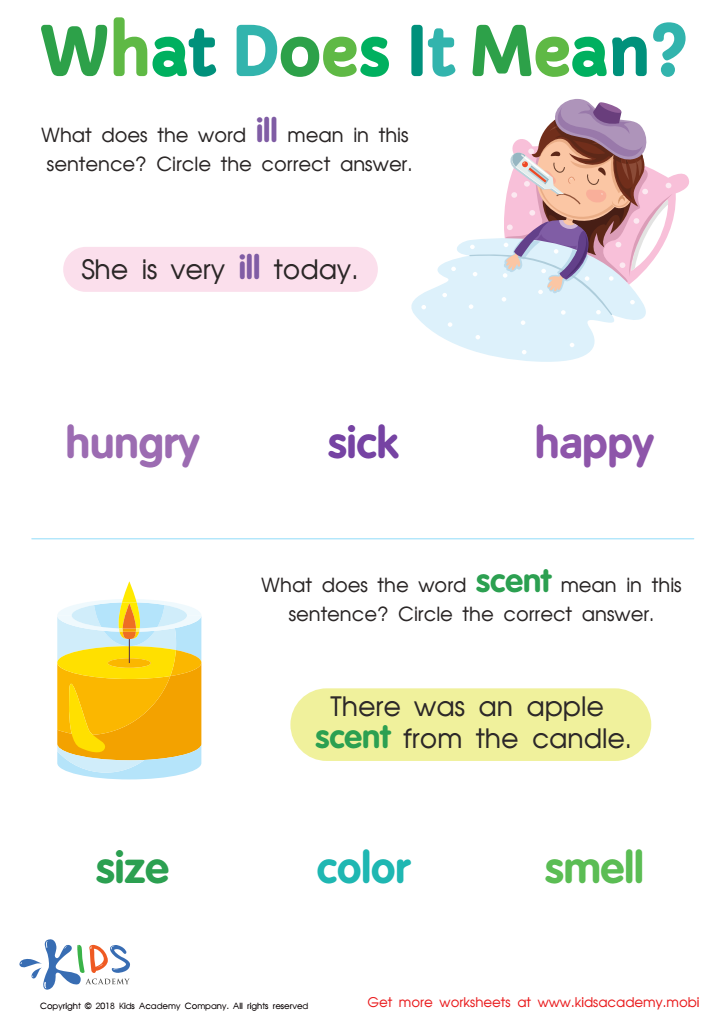
What Does It Mean? Worksheet
 Assign to My Students











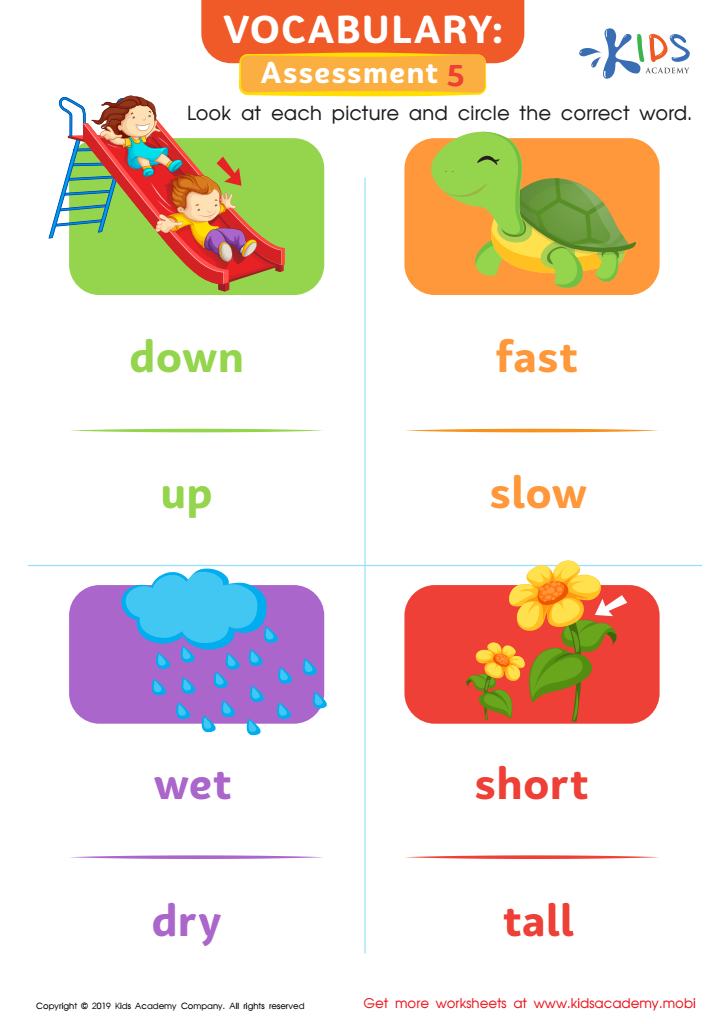
Vocabulary: Assessment 5 Worksheet
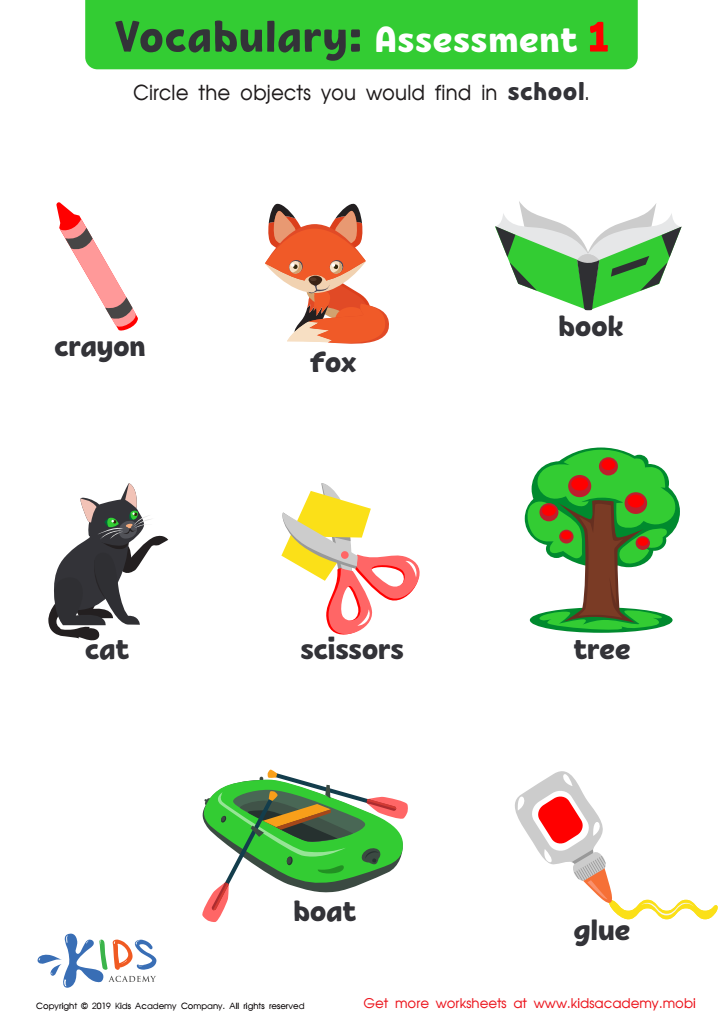
Vocabulary: Assessment 1 Worksheet
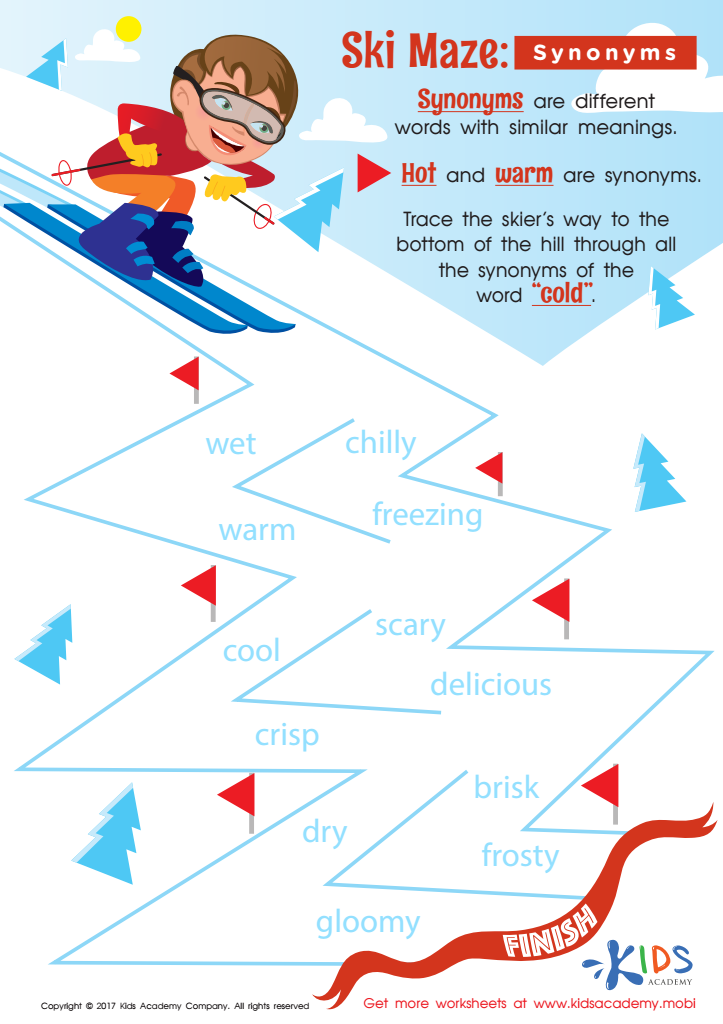
Free Printable Synonym Worksheet
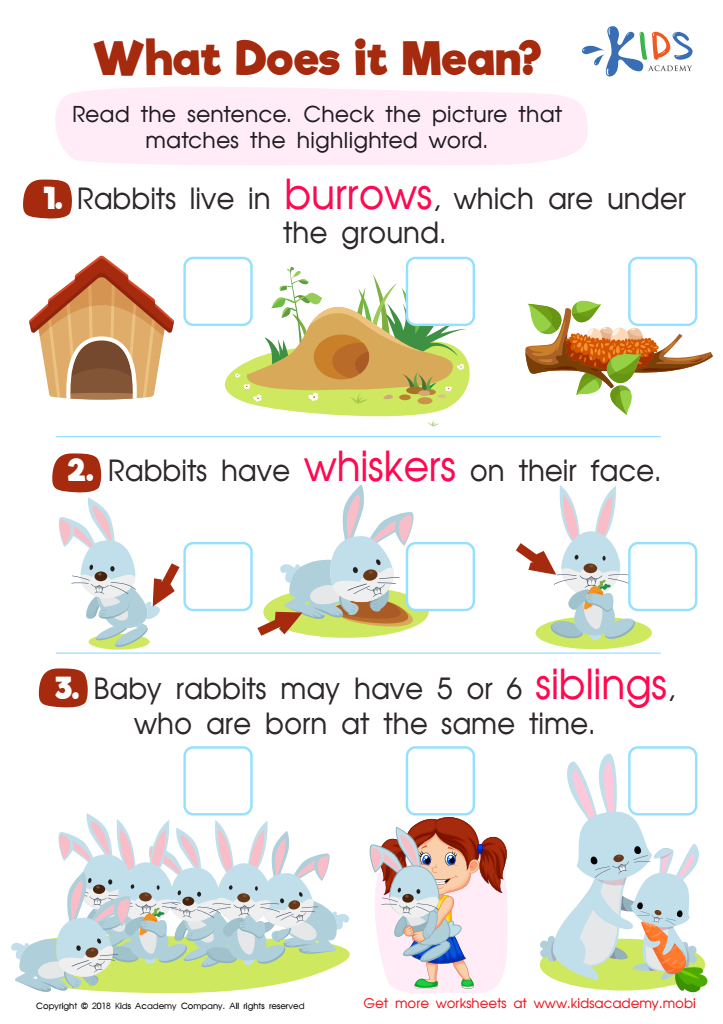
What Does It Mean? Worksheet
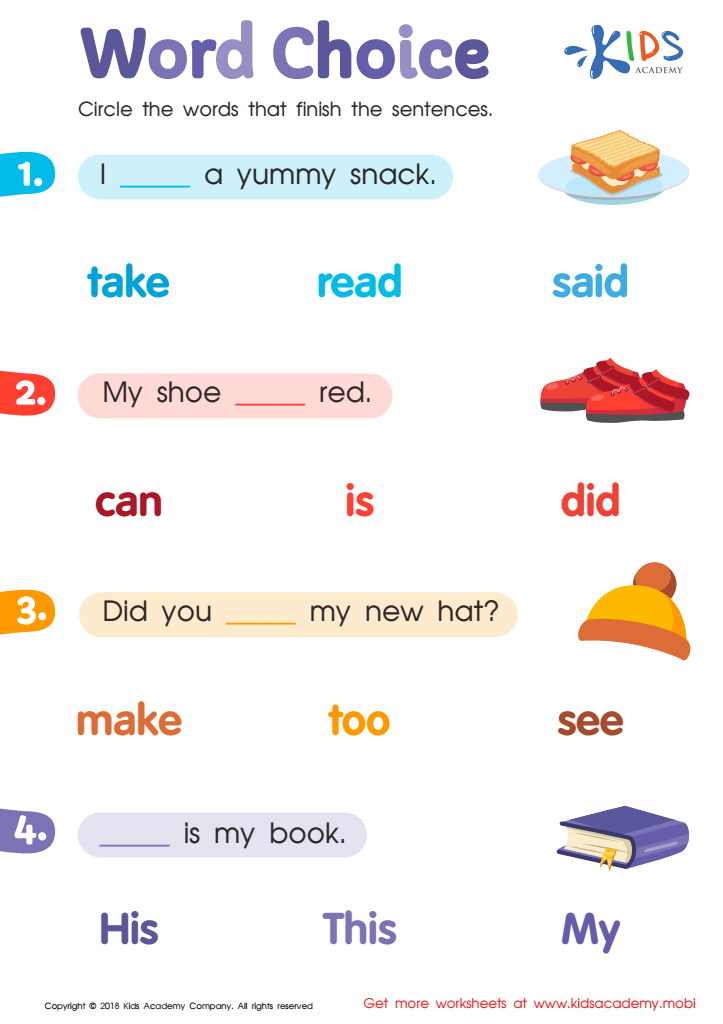
Word Choice Worksheet


.jpg)





Contextual understanding and vocabulary building are crucial components of language development for children aged 5-6. At this age, children are rapidly expanding their comprehension and expression. By fostering contextual understanding, caregivers and teachers help children recognize how words fit into sentences and conversations, enhancing their ability to interpret meaning and tone. This skill not only enriches their vocabulary but also lays the groundwork for effective communication.
When young learners encounter new words within context—such as through storytelling, dialogue, or real-life experiences—they grasp not just the definition but also the usage and emotional nuances behind those words. This deeper understanding encourages them to use new vocabulary in relevant situations, reinforcing their learning.
Furthermore, a robust vocabulary enhances reading comprehension, critical thinking, and cognitive development. Children equipped with a rich vocabulary are more adept at expressing their feelings, thoughts, and ideas, fostering confidence in their communication skills.
Engaging in activities like reading together, playing games that encourage word exploration, and discussing everyday experiences can significantly impact a child's vocabulary growth. Parents and teachers play a pivotal role in facilitating these experiences, ultimately preparing young learners for successful academic journeys and lifelong learning.








